|
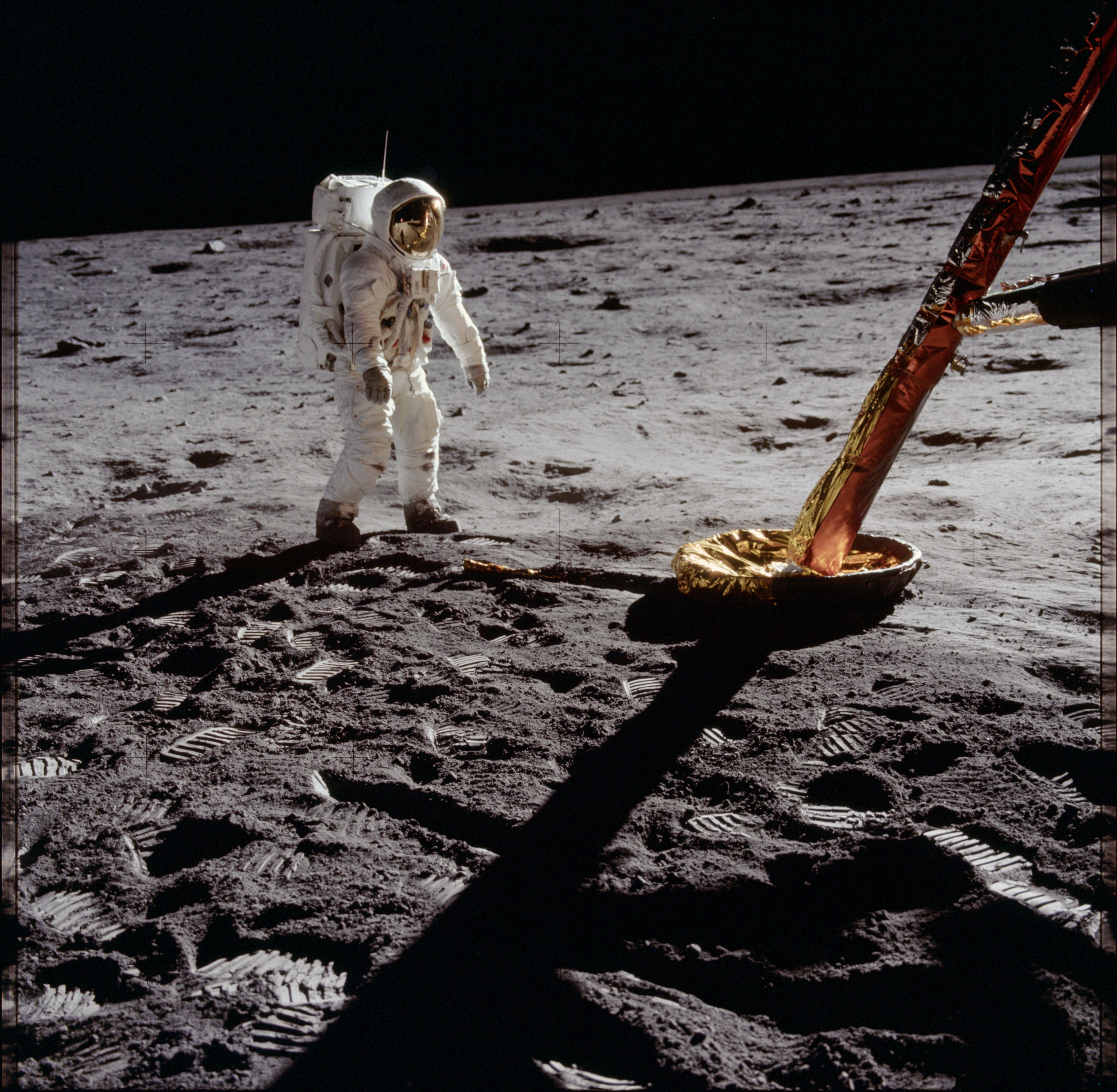
NASA Image Science Division's Apollo
Mission Photographs
Below are my processed versions of the original
images available from NASA's Image Science and Analysis Laboratory which is
also known as the Image Science Division (ISD). The original unprocessed (raw)
film scans may be obtained from Image
Science and Analysis Laboratory, NASA-Johnson Space Center and more
specifically from their search page:
The Gateway to Astronaut
Photography of Earth. Simply select the appropriate Apollo mission (AS11
for example) and then the film roll letter. Alternatively you can search film
rolls by number. To search for all images on film roll 40 from Apollo 11, type
in "AS11-40-*" (without quotes) into the right search field.
I use the ISD scans because their scans reach
deep down into the film grain of their contact dupe films of the original
Apollo mission films and because ISD doesn't perform any color corrections or
other alterations to their scans. In other words the ISD scans represent the
direct output from the film scanner. I spent a lot of time creating custom
gamma and color correction curves for each film roll in order to compensate for
the original film's aging, for color temperature shifts created by the contact
duplication process of making dupes of the original Ektachrome mission films
onto Kodachrome films, and to compensate for the somewhat nonlinear response of
the film emulsion layers. My color correction curves were created relative to
the green channel for two reasons. The first reason is that the scanner slowly
accumulates a weak red undertone in the red channel as it scans. The second
reason for color balancing relative to the green channel is that the blue layer
of the original Ektachrome mission films tends to have the least linear
response, particularly for extremely bright regions.
Hopefully I have the color correction for each
roll of film fairly close to spot on. Interestingly, I have to create custom
color correction profiles for each roll of film. Why? Because each roll of film
was individually developed, contact dupes were then made of the original films,
then those contact dupes of course were separately developed, and then those
contact dupes were scanned by ISD. Thus there are several points at which color
and gamma shifts may occur. Finally, in general I do not attempt to correct for
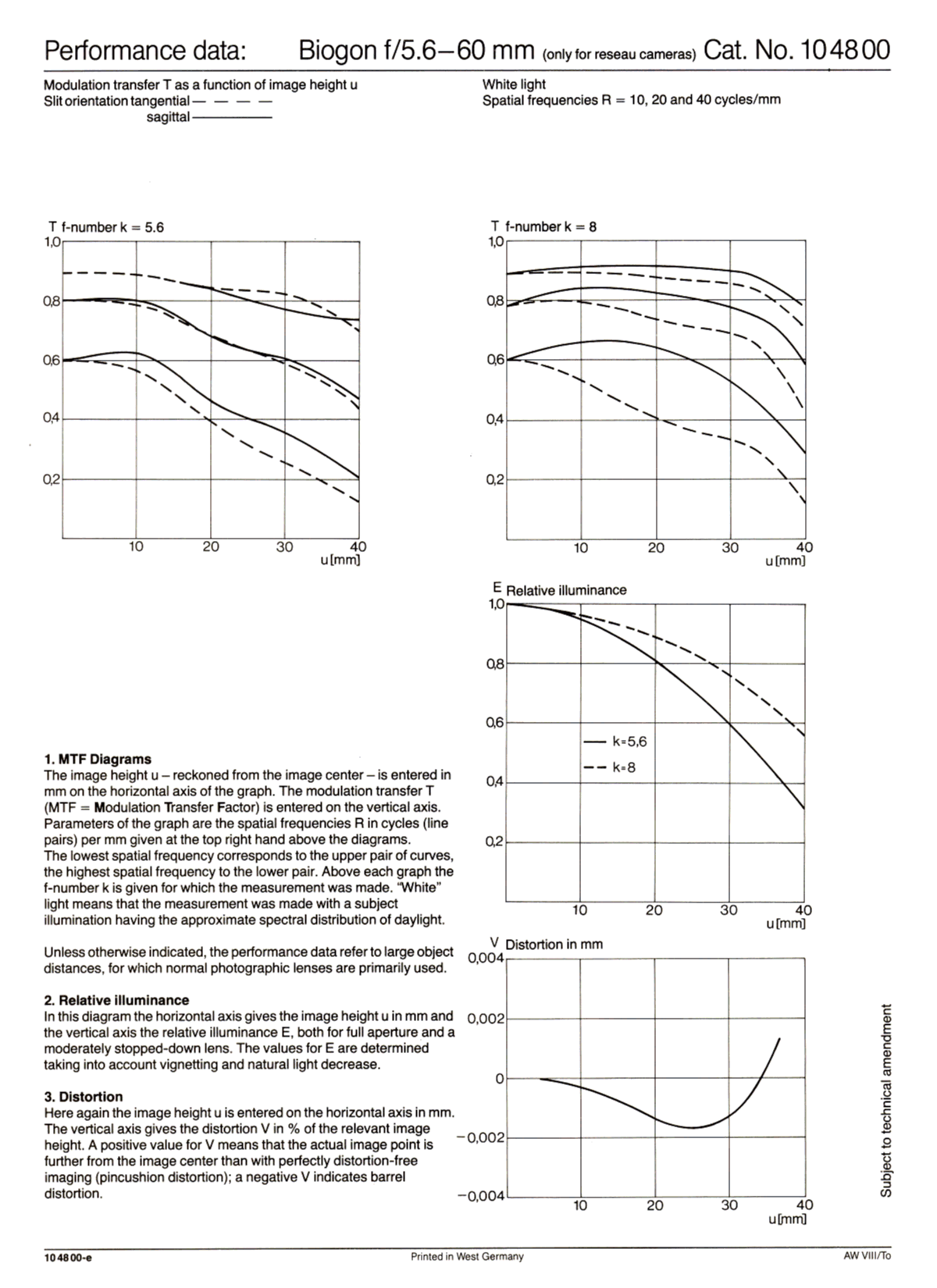
the Zeiss 60mm Biogon's inherent vignetting (light fall-off). Carl Zeiss 60mm
Biogon lens specifications:
Biogon F/5.6 60mm
page 1 (GIF image)
Biogon F/5.6 60mm
page 2 (GIF image)
| Apollo 11 Film Roll
36 Images (AS11-36-*) |
|
|
 |
|
|
Photo
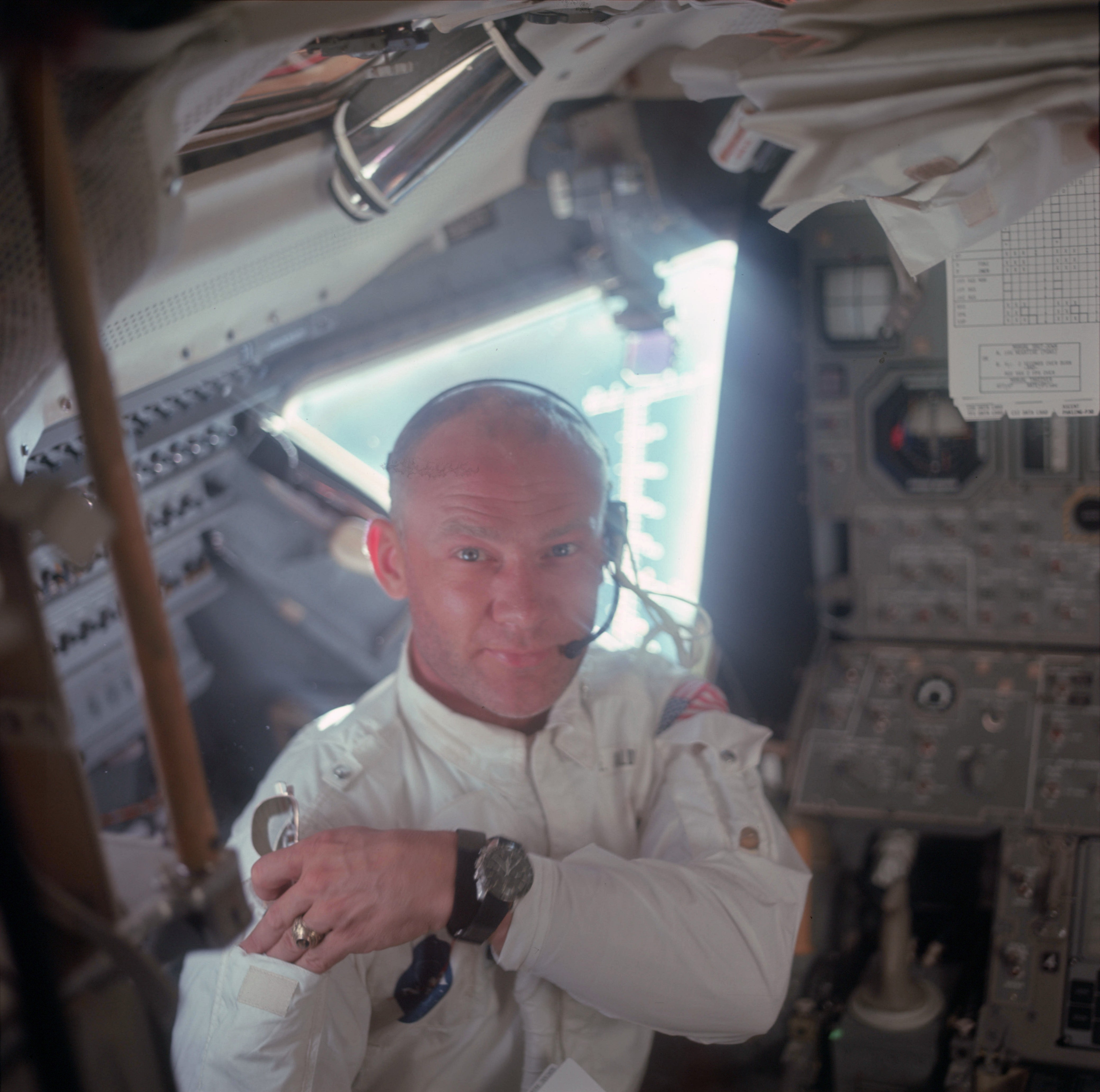
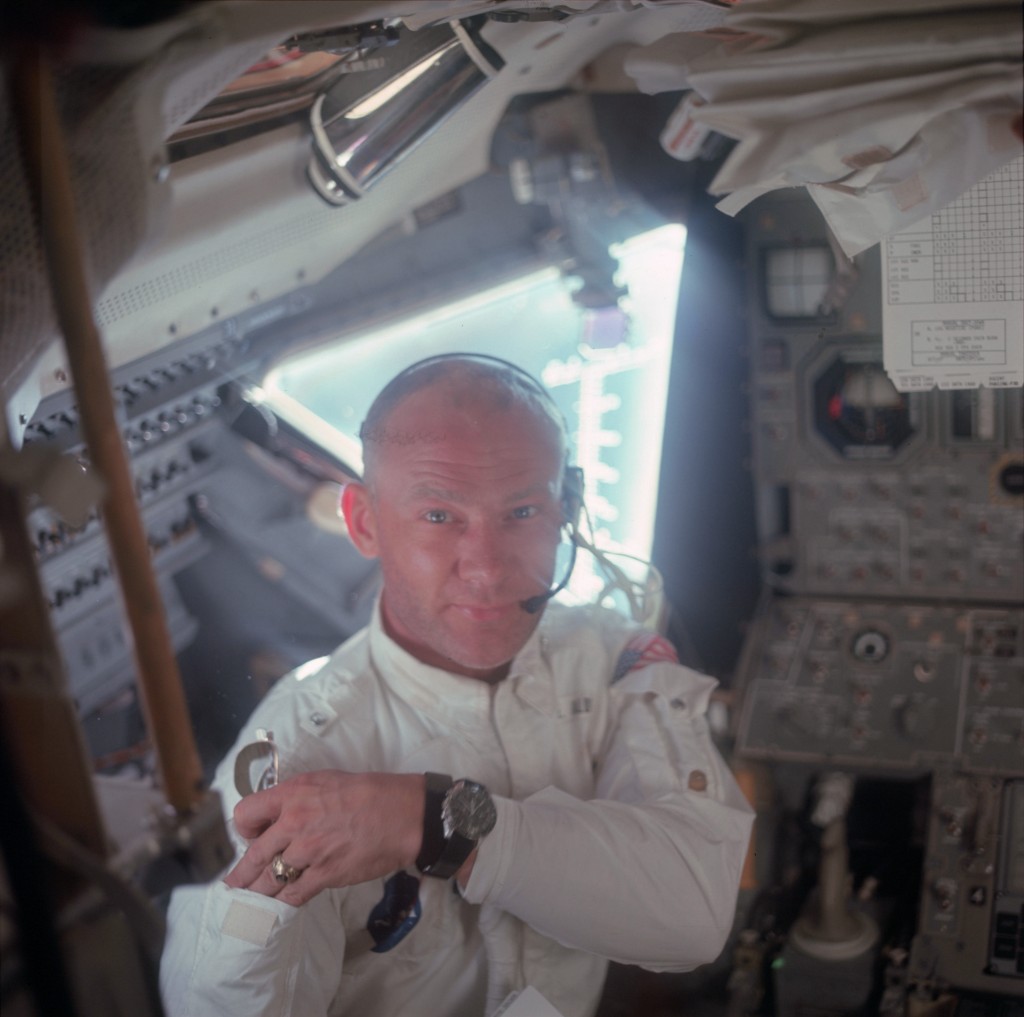
5390 — Aldrin in LM while on the way to the moon. |
|
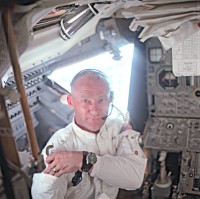
Photo
5390 — My specially enhanced version of the left photo. |
|
|
| Apollo 11 Film Roll
40 Images (AS11-40-*) |
|
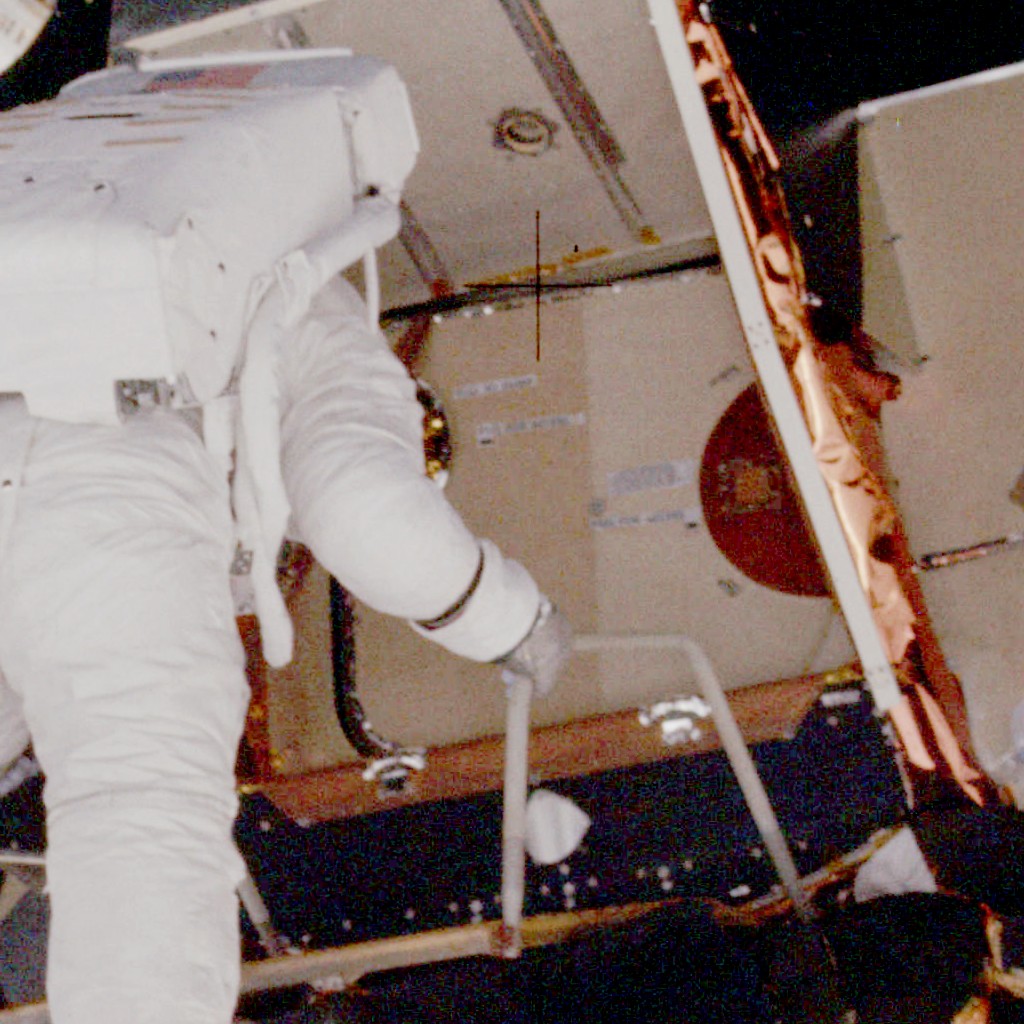
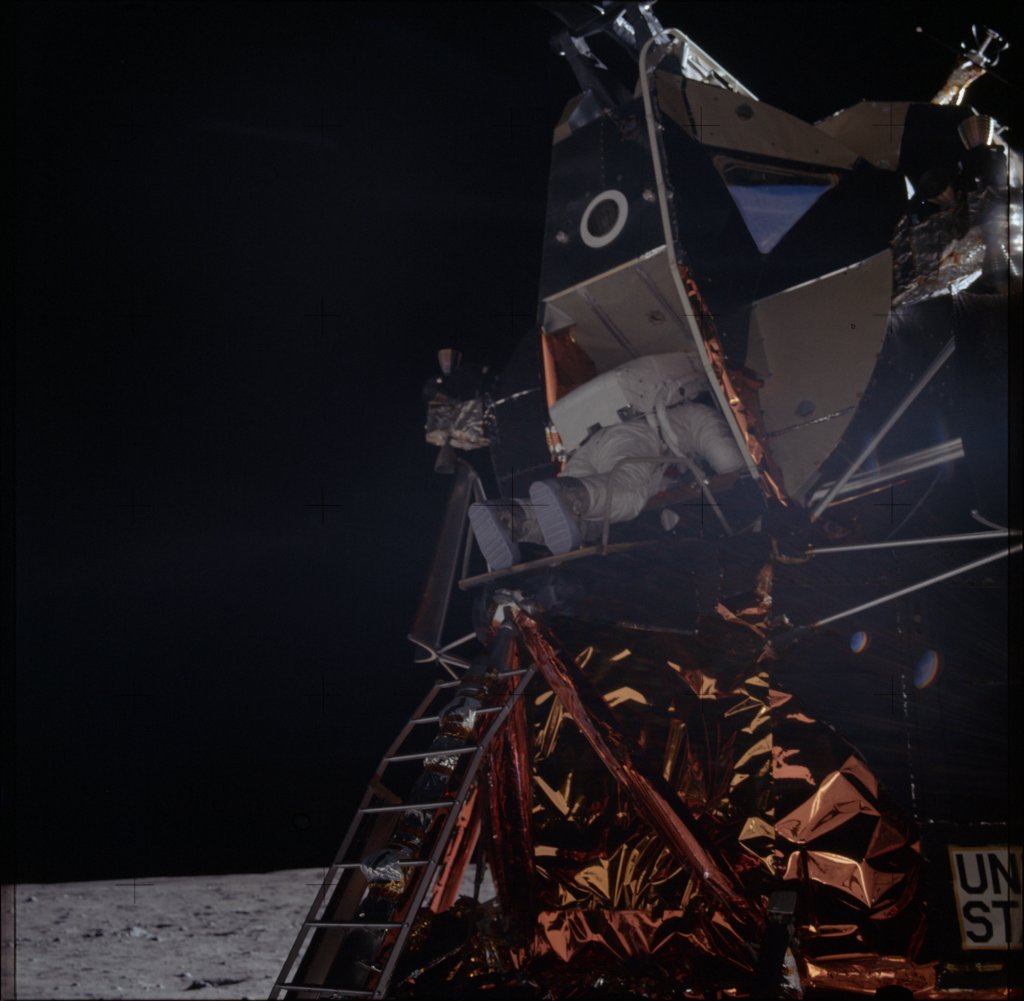
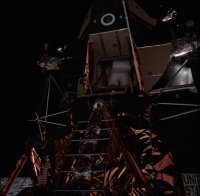 Photo
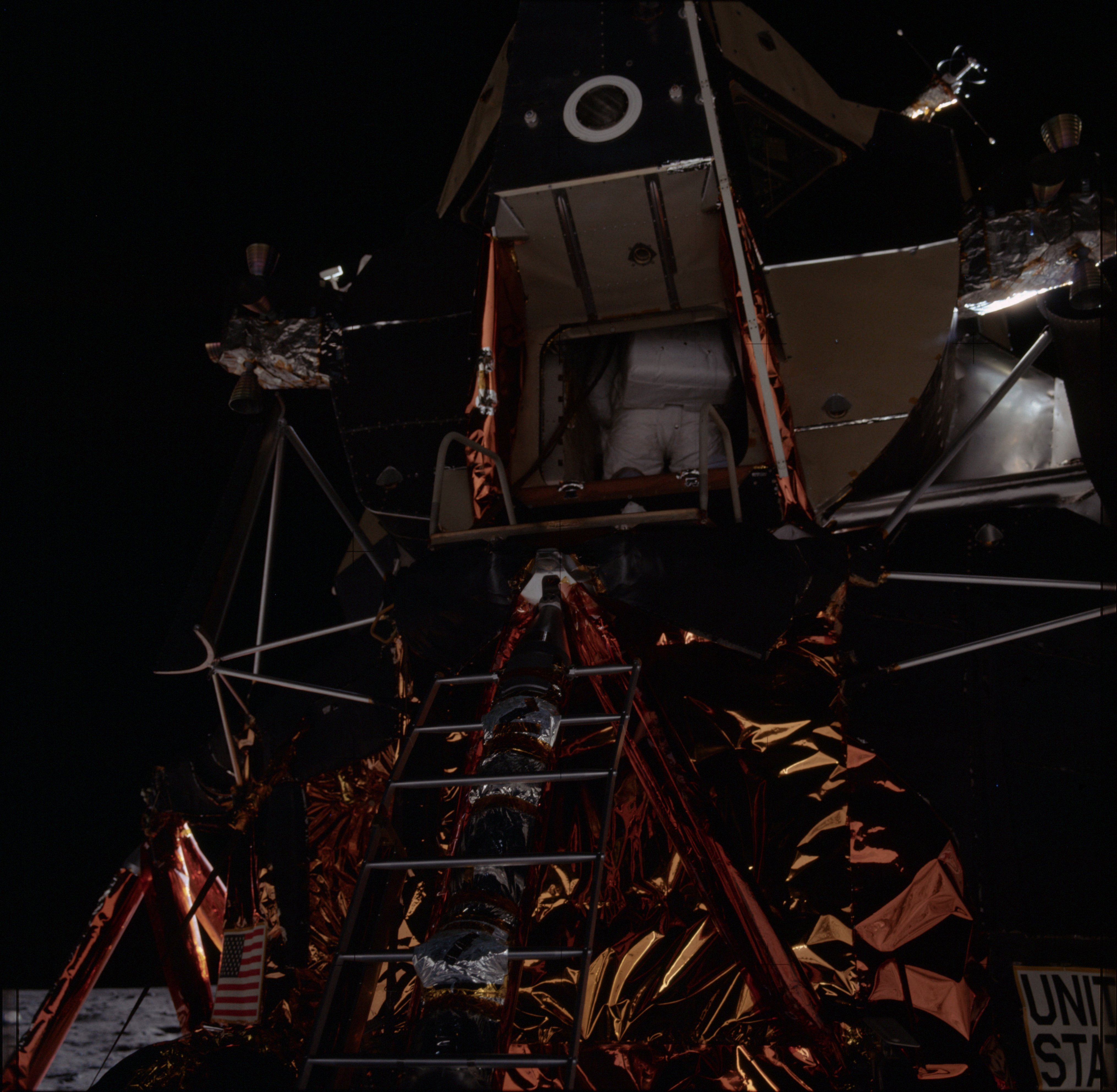
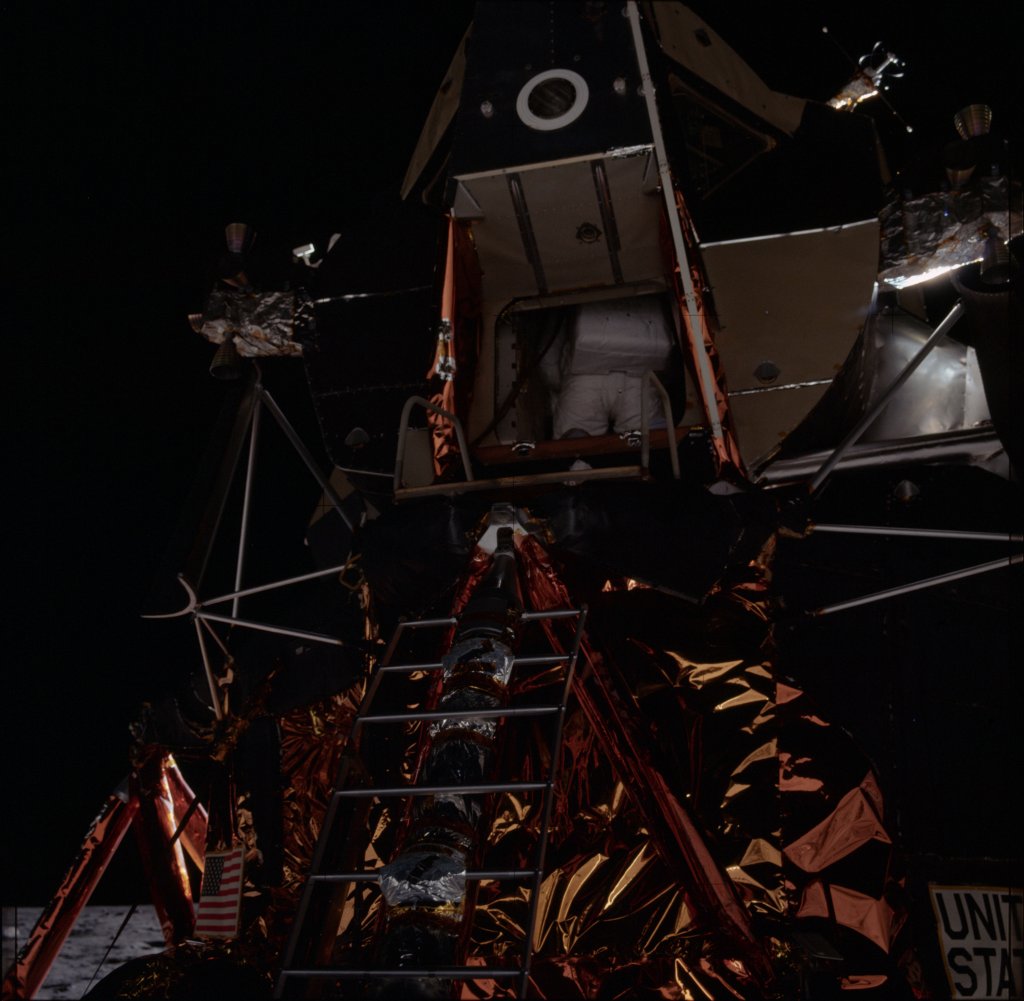
5862 — Aldrin working his way through the LM hatch to start his EVA
and become the second person to set foot on the moon. Photo has been color
balanced. Armstrong likely was not standing fully bathed in sunlight since all
shadows in this photo are extremely dark. This indicates that all LM shadow
illumination strictly comes from the surrounding lunar surface which was not in
the LM's shadow. The strongly gamma enhanced version of this photo, below,
visually confirms this. Photo
5862 — Aldrin working his way through the LM hatch to start his EVA
and become the second person to set foot on the moon. Photo has been color
balanced. Armstrong likely was not standing fully bathed in sunlight since all
shadows in this photo are extremely dark. This indicates that all LM shadow
illumination strictly comes from the surrounding lunar surface which was not in
the LM's shadow. The strongly gamma enhanced version of this photo, below,
visually confirms this.
|
|
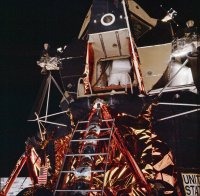 Photo
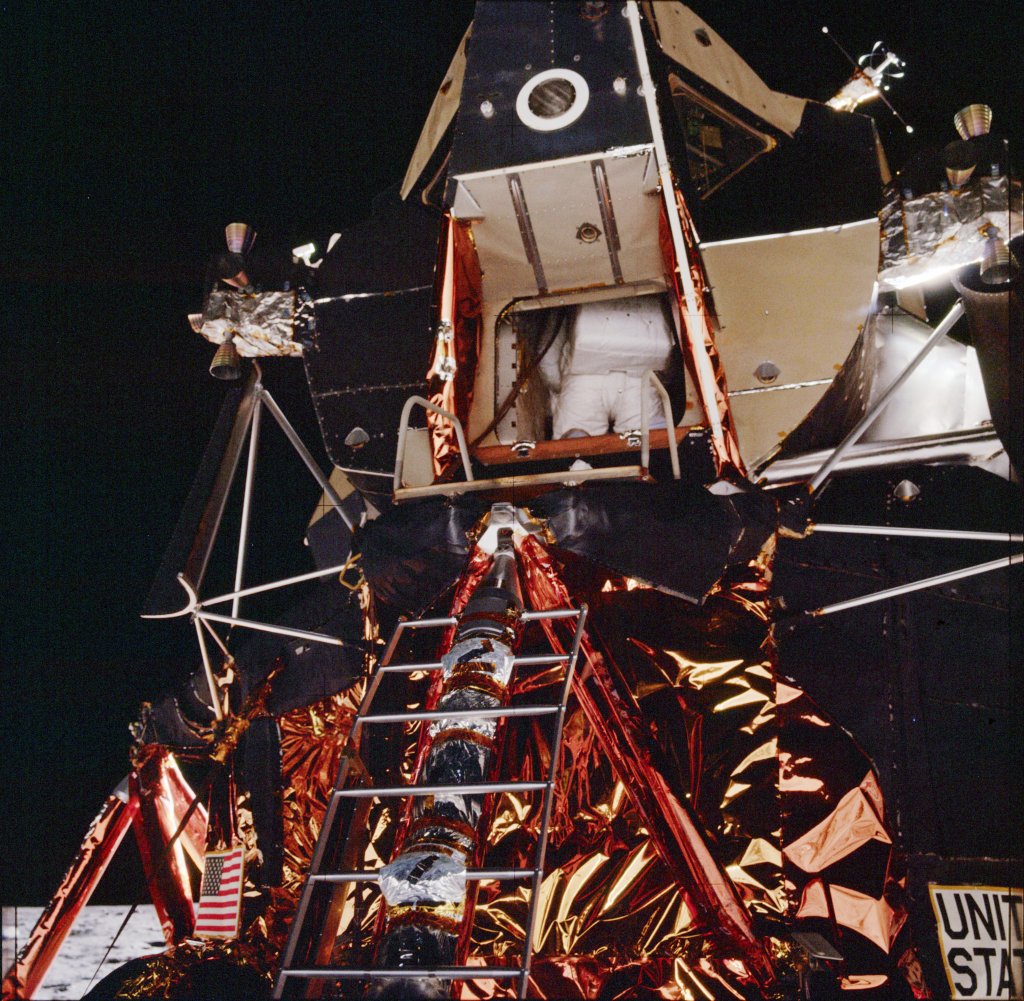
5862 — My strongly enhanced version of the above photo, showing
details of the front of the LM, porch, ladder and MESA area. Note that what
appears to be the flag in the right LM window is not the planted flag on lunar
soil. First, the slant of the window is way too steep for the window to reflect
anything off of the lunar surface. Second, the "flag pole" really is the angle
verniers placed on the inside of the window. Third, the "flag" itself is the
HUD viewfinder which is clearly visible in photo 5930 above. Photo
5862 — My strongly enhanced version of the above photo, showing
details of the front of the LM, porch, ladder and MESA area. Note that what
appears to be the flag in the right LM window is not the planted flag on lunar
soil. First, the slant of the window is way too steep for the window to reflect
anything off of the lunar surface. Second, the "flag pole" really is the angle
verniers placed on the inside of the window. Third, the "flag" itself is the
HUD viewfinder which is clearly visible in photo 5930 above.
|
|
|
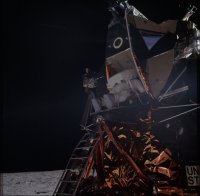 Photo
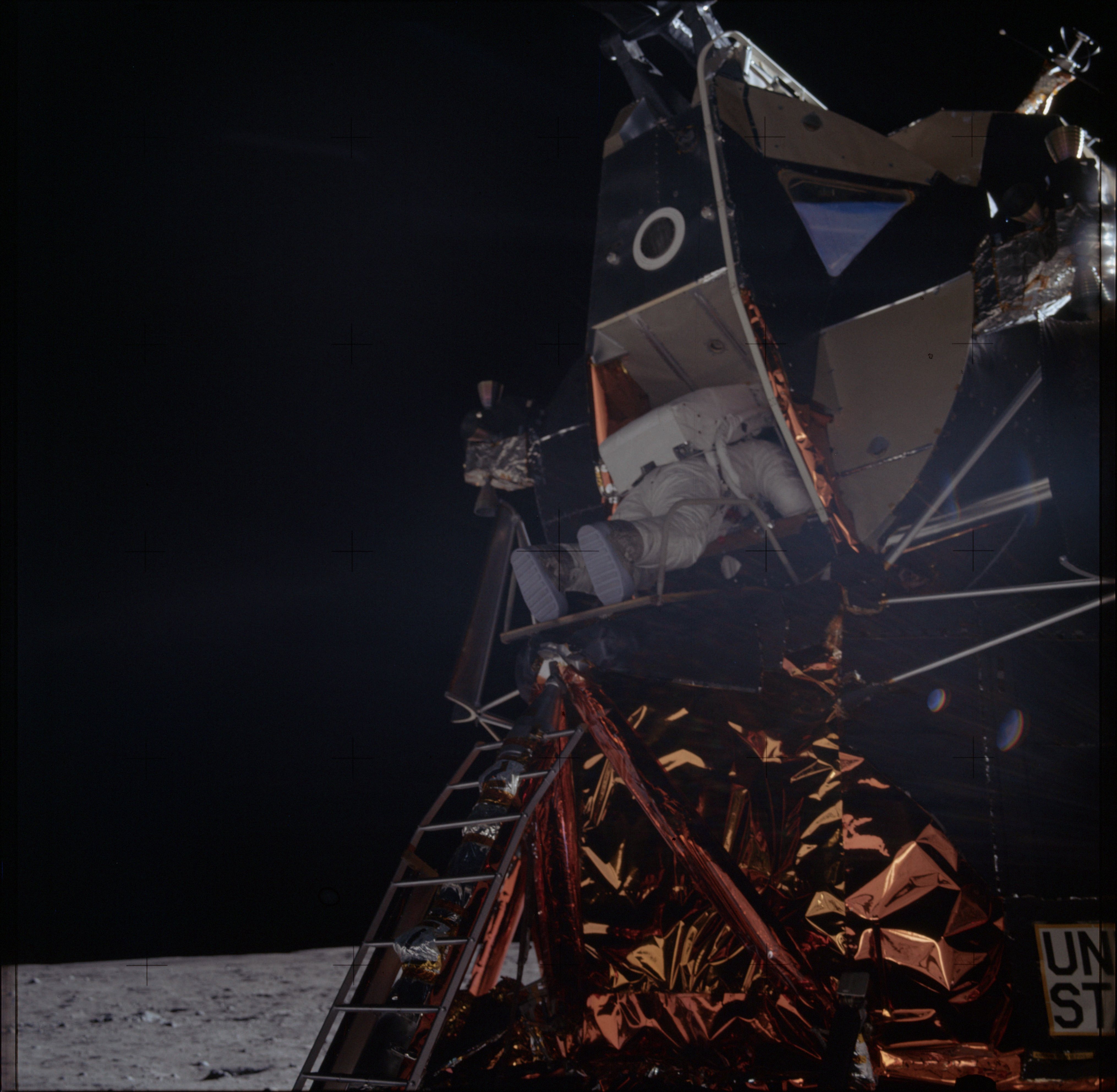
5863 — Aldrin managing to actually get through the LM hatch and onto
the porch. Photo has been color balanced. It is obvious that Armstrong is
standing further to the right of the west LM landing strut compared to the
above photo. It is important to note that Armstrong, standing in this fully sun
exposed position, had his white space suit bathed in full sunlight. Thus his
space suit acted as a diffuse reflector which provided some "fill light" which
helped to illuminate the shadowed areas of the LM. Photo
5863 — Aldrin managing to actually get through the LM hatch and onto
the porch. Photo has been color balanced. It is obvious that Armstrong is
standing further to the right of the west LM landing strut compared to the
above photo. It is important to note that Armstrong, standing in this fully sun
exposed position, had his white space suit bathed in full sunlight. Thus his
space suit acted as a diffuse reflector which provided some "fill light" which
helped to illuminate the shadowed areas of the LM.
|
|
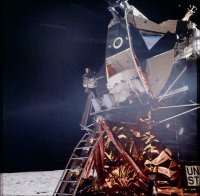 Photo
5863 — My enhanced version of the above photo. The white round thing
to the left of the window is the LM's docking lamp. In this photo Armstrong has
backed away from the LM enough such that the LM's window really is reflecting
the distant lunar surface. The reason for the blue surface reflection likely is
that blue light reflects more strongly off of glass when striking glass at an
angle. Photo
5863 — My enhanced version of the above photo. The white round thing
to the left of the window is the LM's docking lamp. In this photo Armstrong has
backed away from the LM enough such that the LM's window really is reflecting
the distant lunar surface. The reason for the blue surface reflection likely is
that blue light reflects more strongly off of glass when striking glass at an
angle.
|
|
|
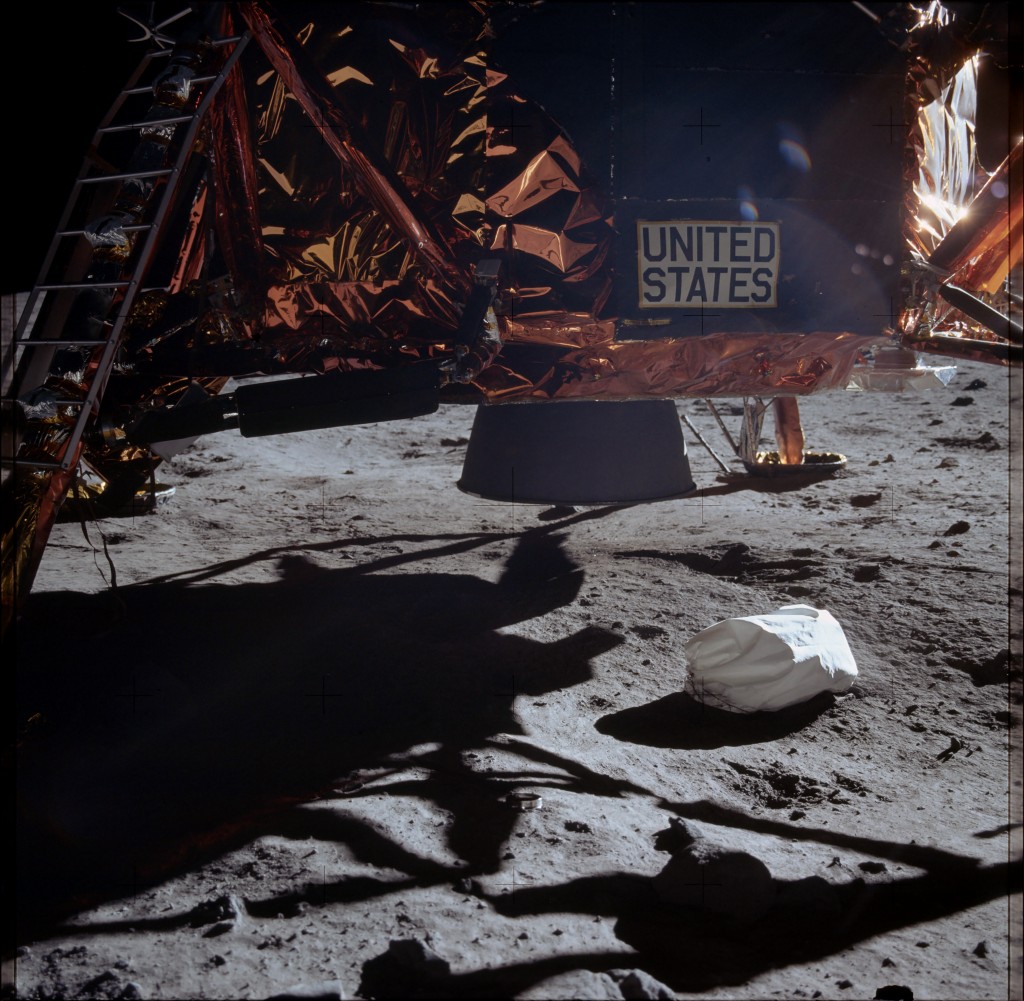
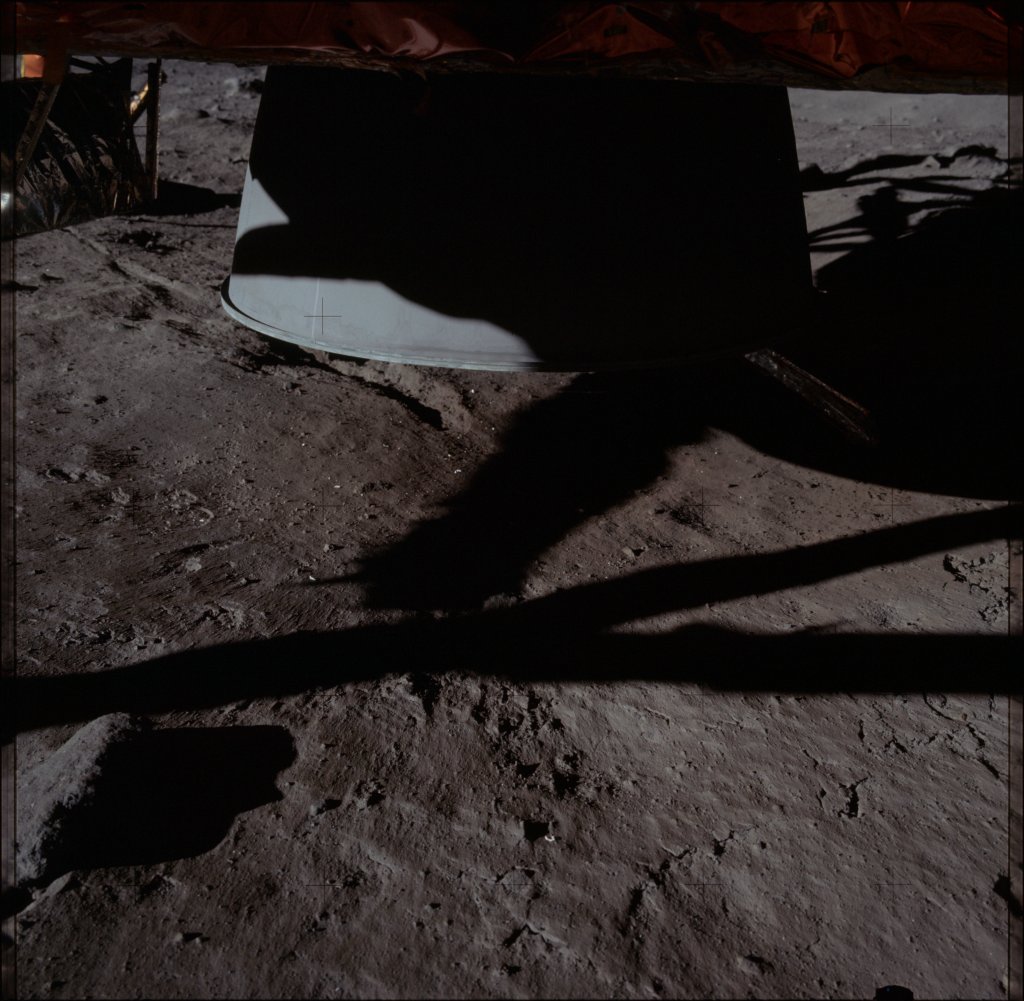
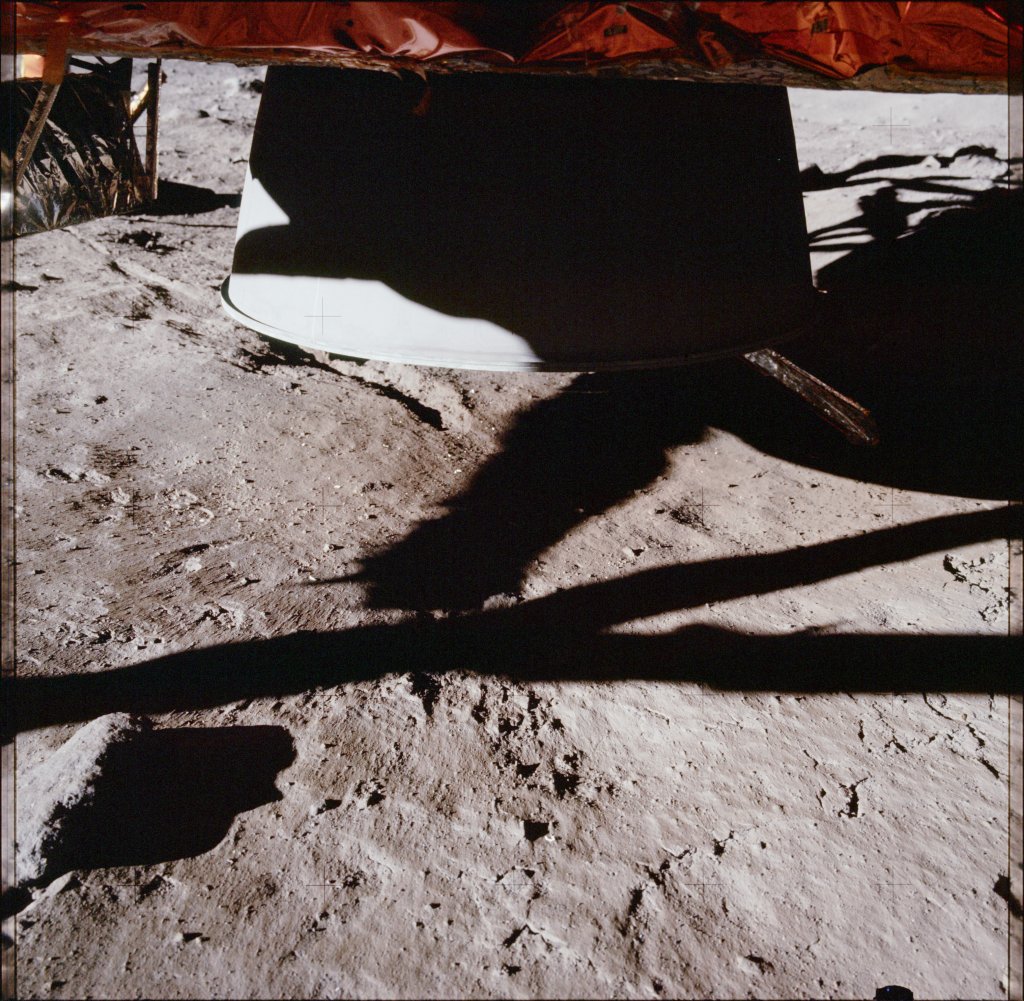
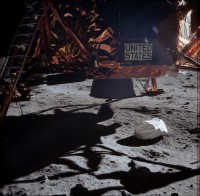 Photo
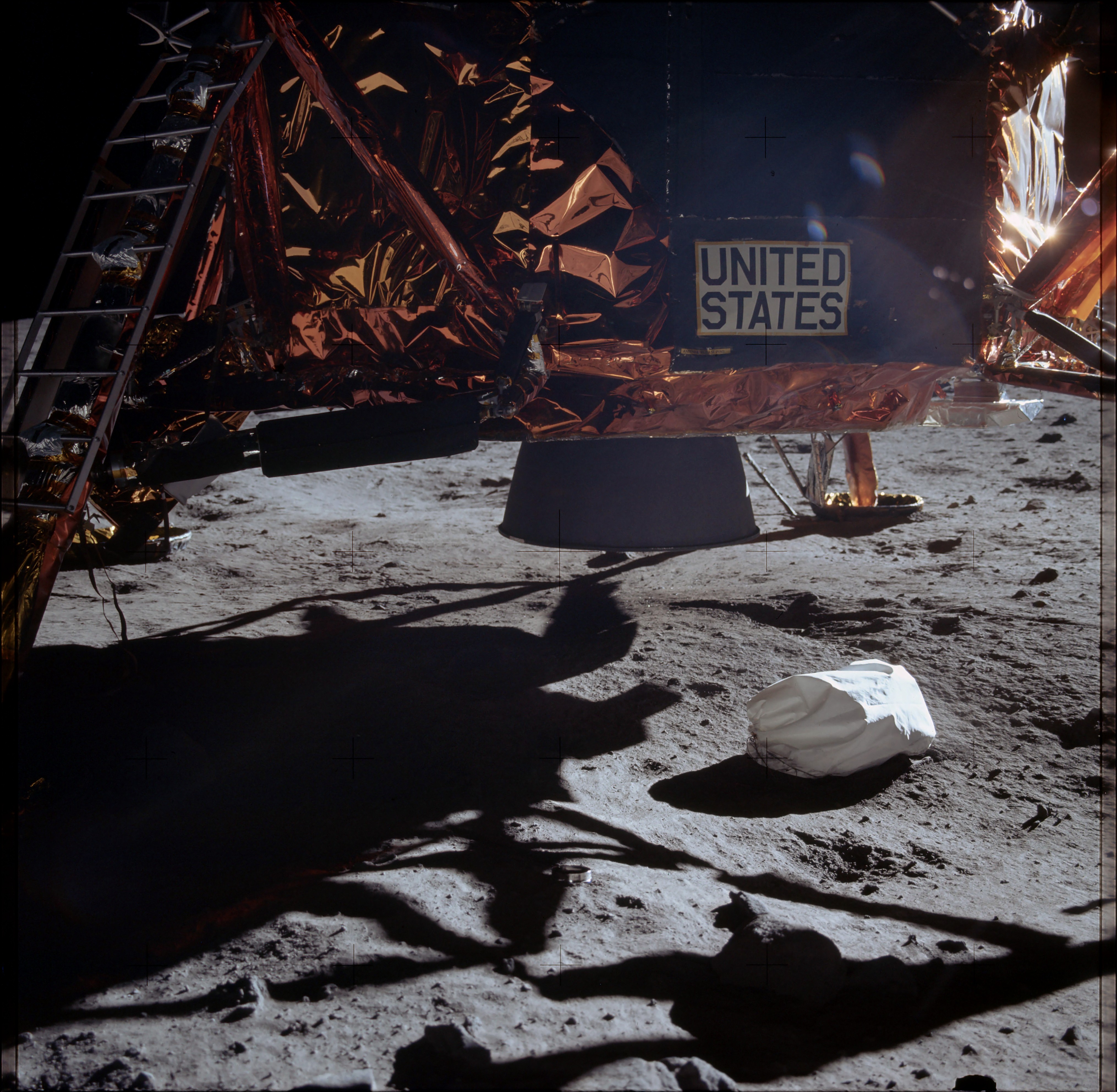
5864 — Photo of the blast crater underneath the Apollo 11 LM descent
stage. Photo has been color corrected, sharpened, film grain noise removed, and
had the brightness levels adjusted to render the upper left corner space
background nearly black. Photo
5864 — Photo of the blast crater underneath the Apollo 11 LM descent
stage. Photo has been color corrected, sharpened, film grain noise removed, and
had the brightness levels adjusted to render the upper left corner space
background nearly black.
Armstrong must have been getting a bit
impatient for Aldrin to wriggle through the LM hatch and get ready to descend
the LM's ladder, so Armstrong passed the time by snapping this and the
following photo before returning his attention to Aldrin. |
|
|
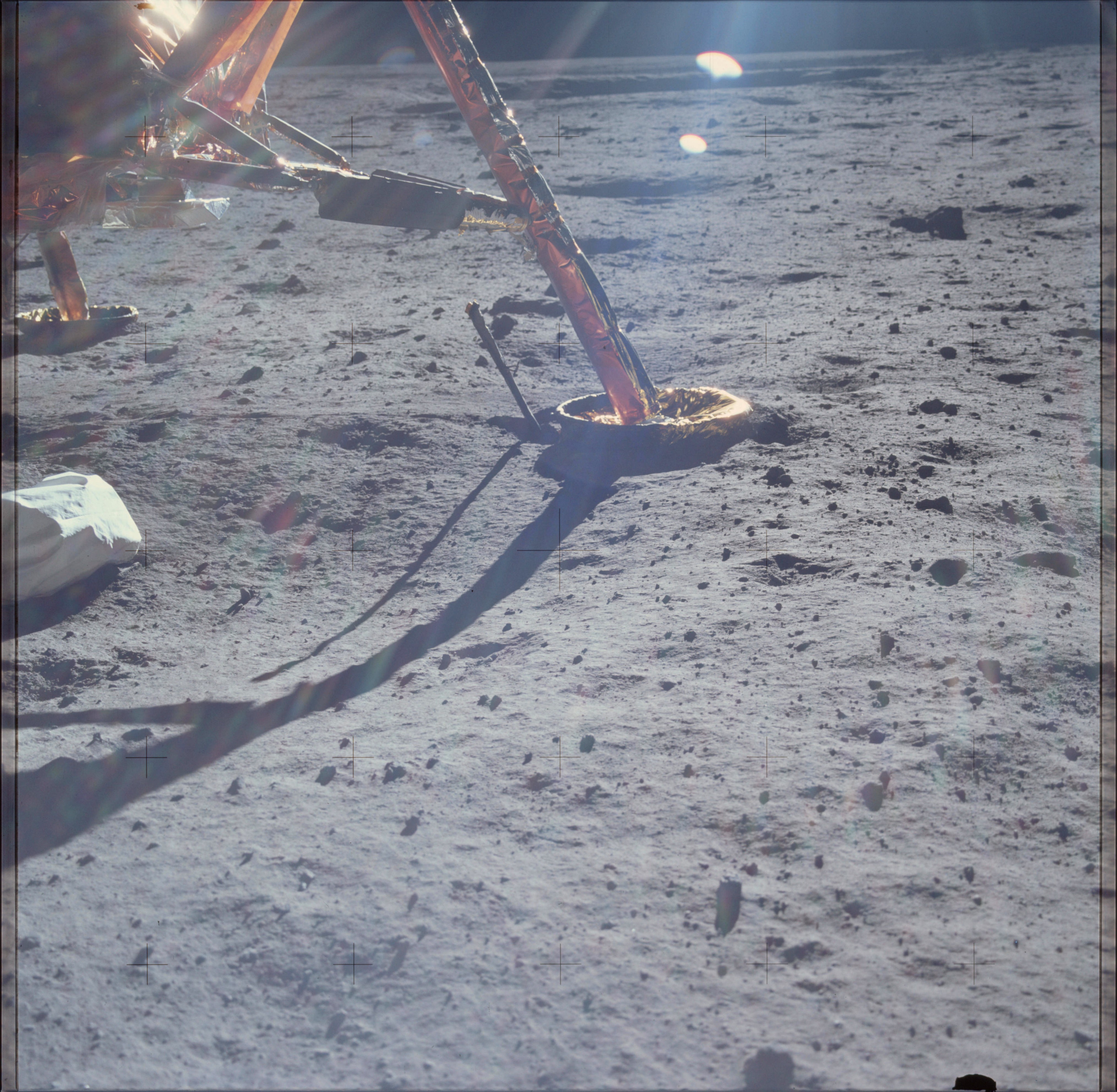
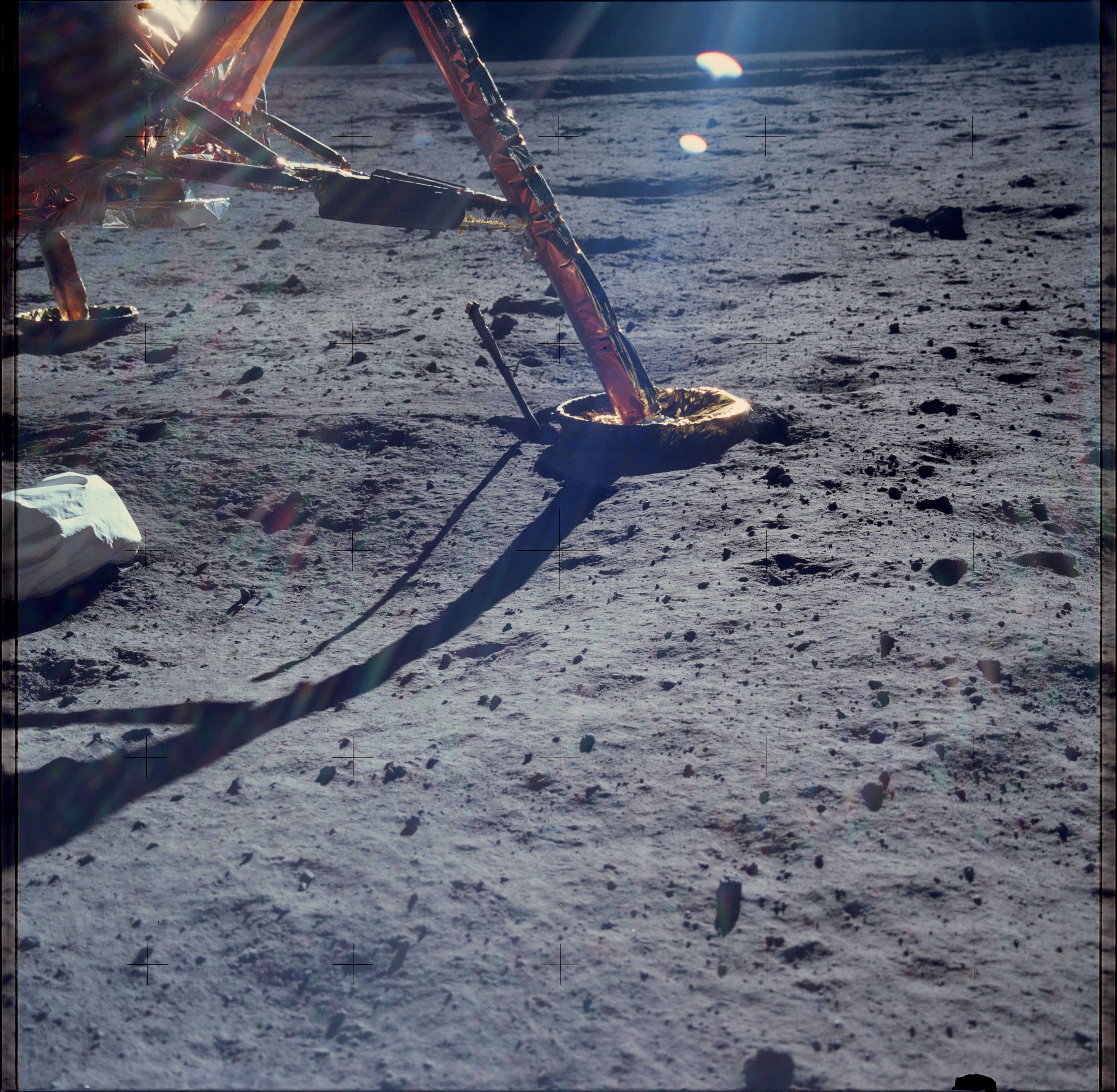
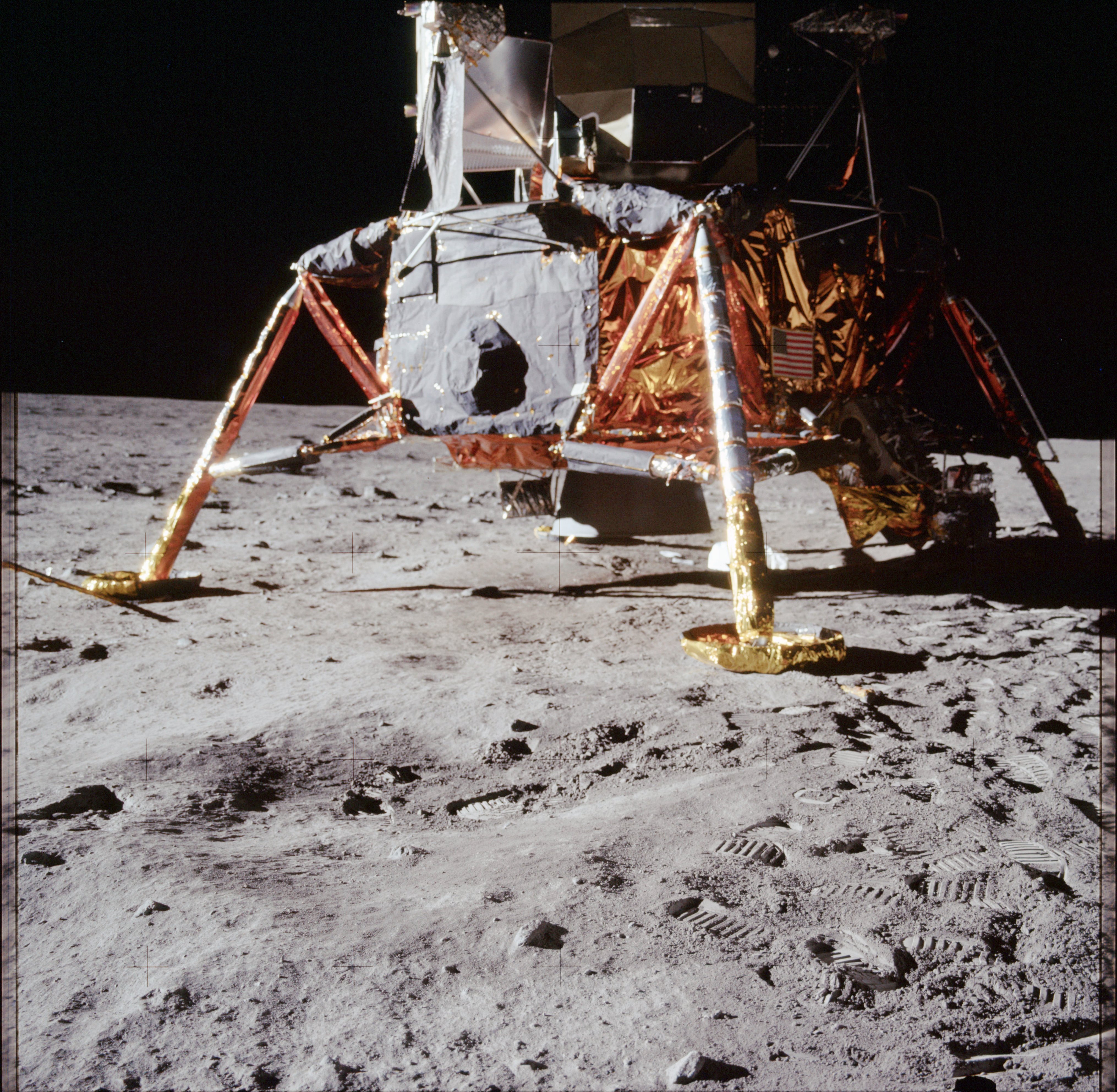
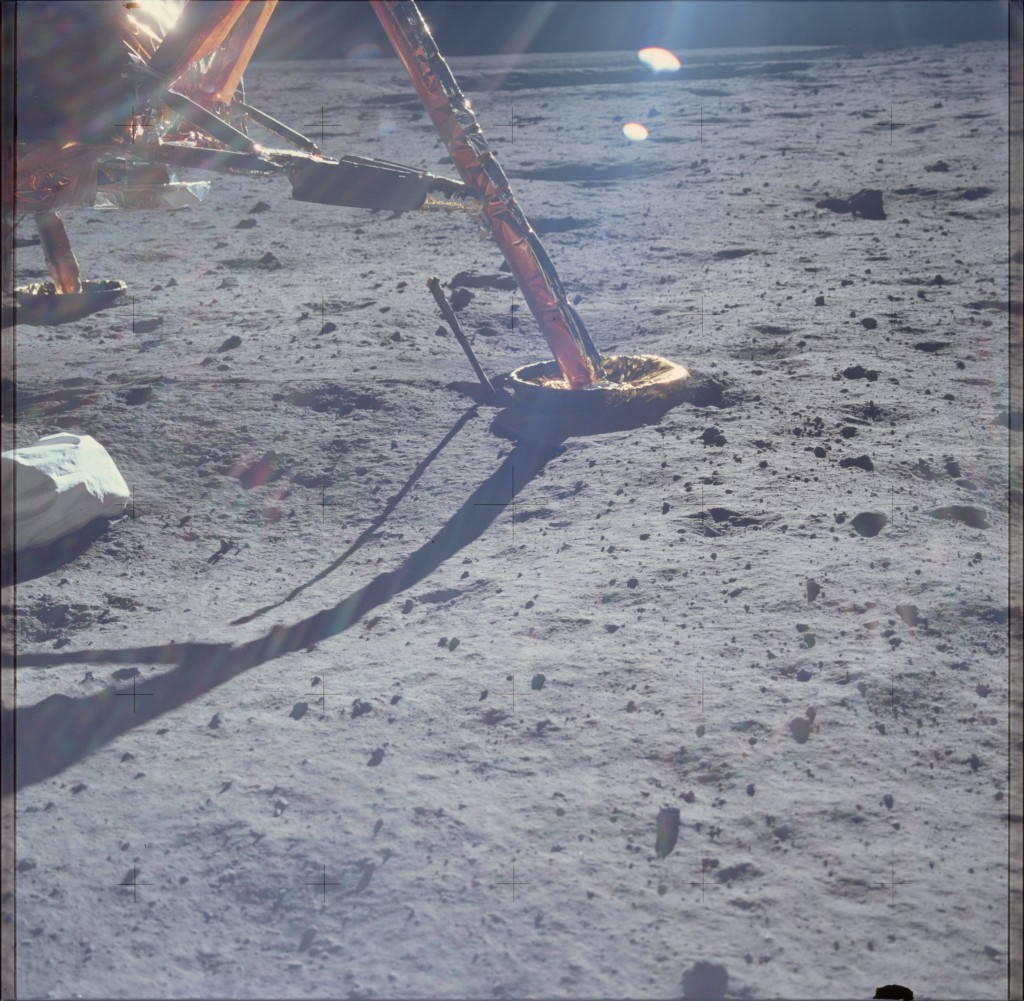
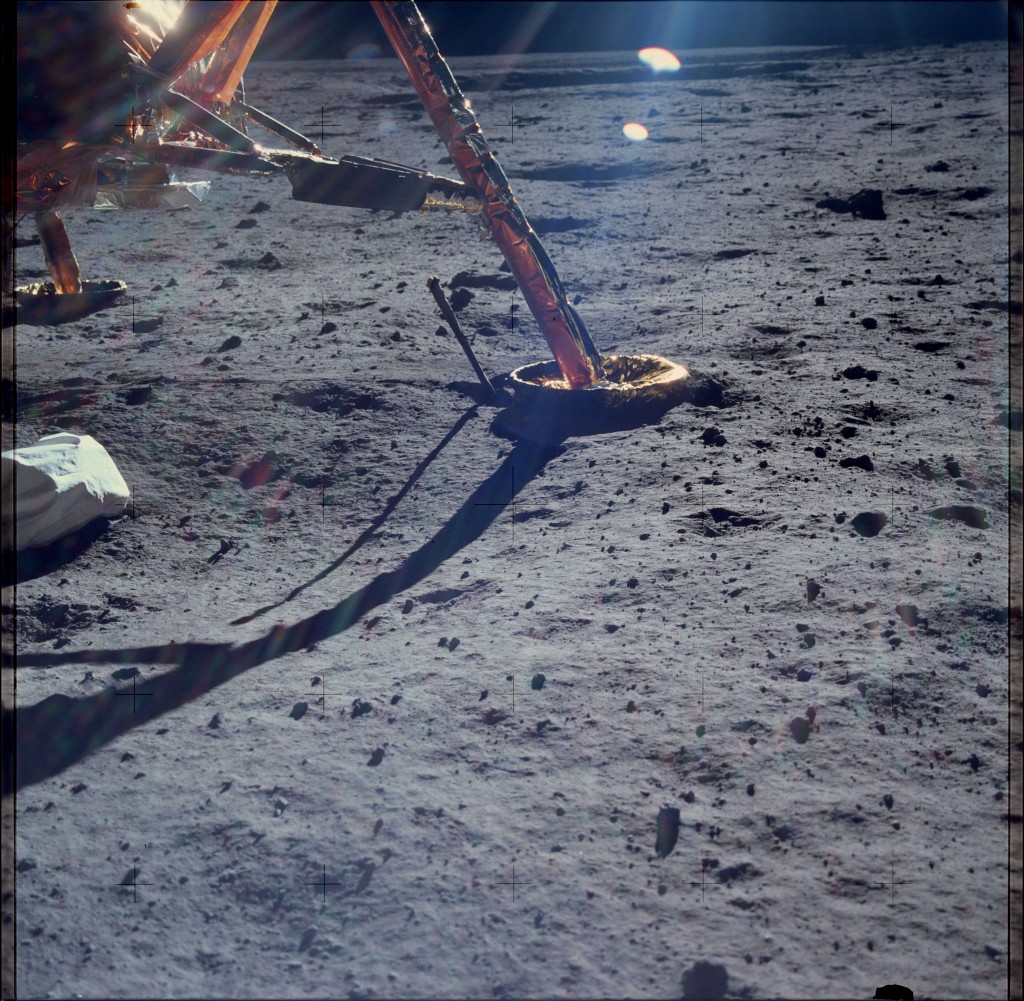
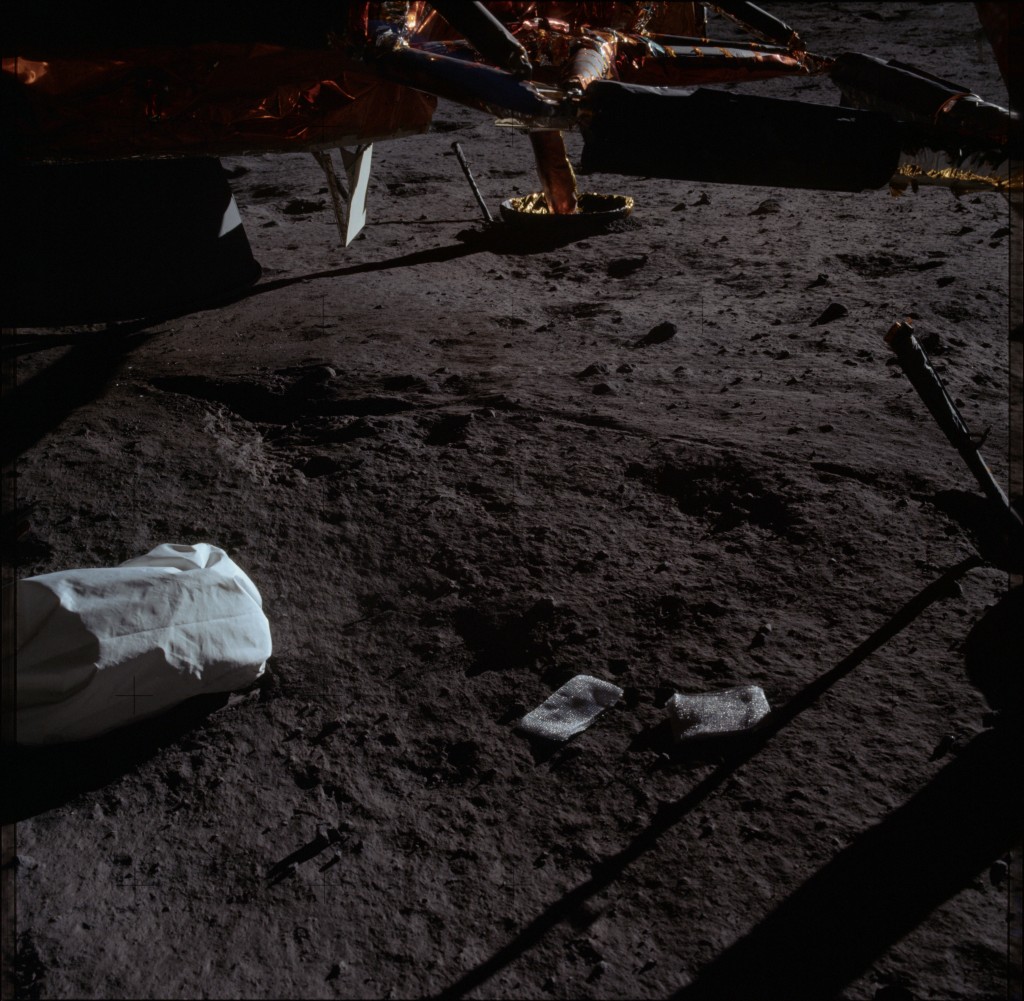
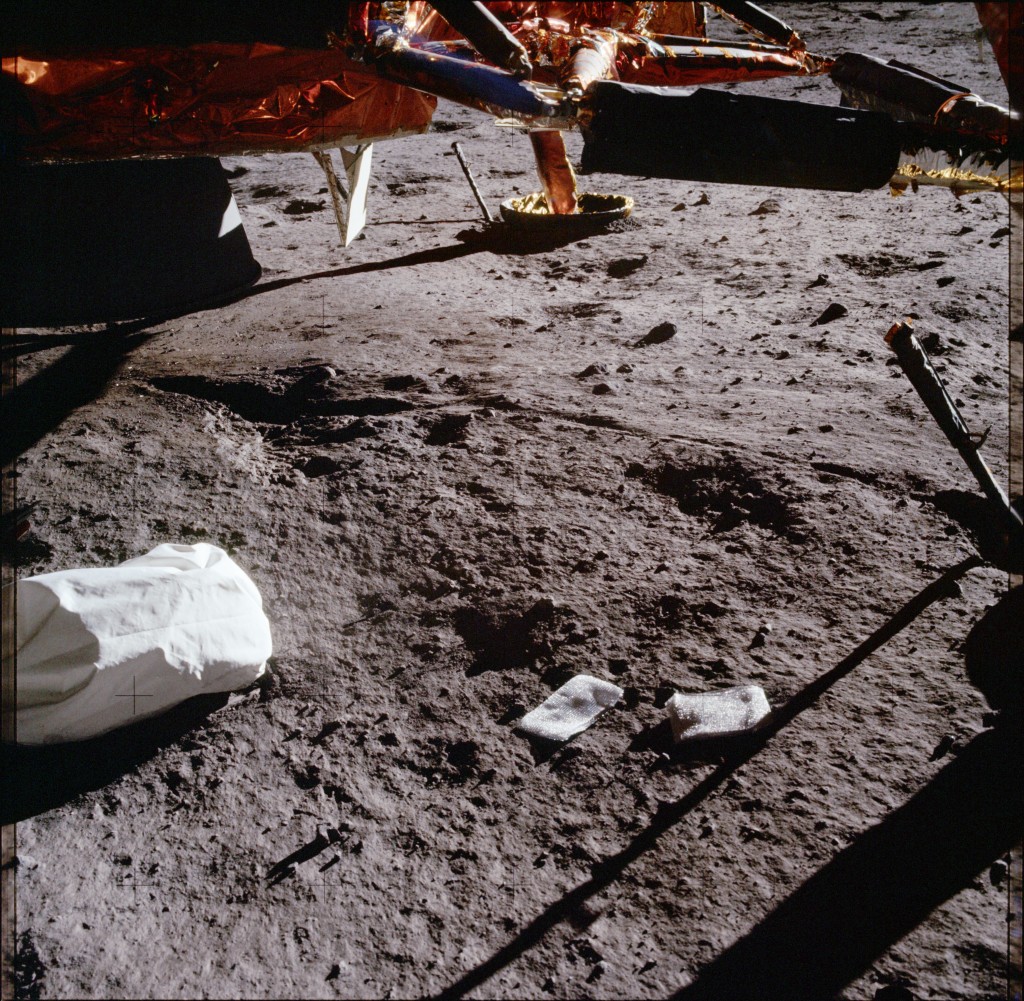
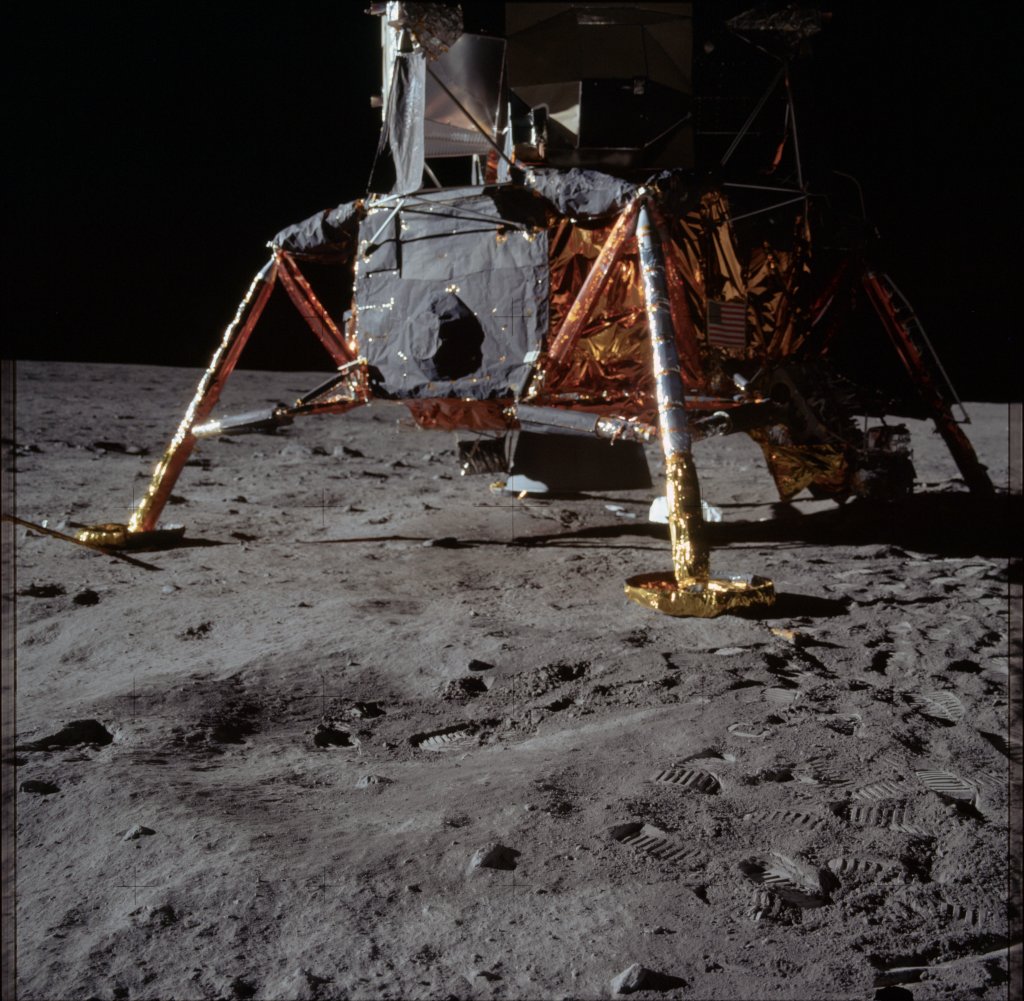
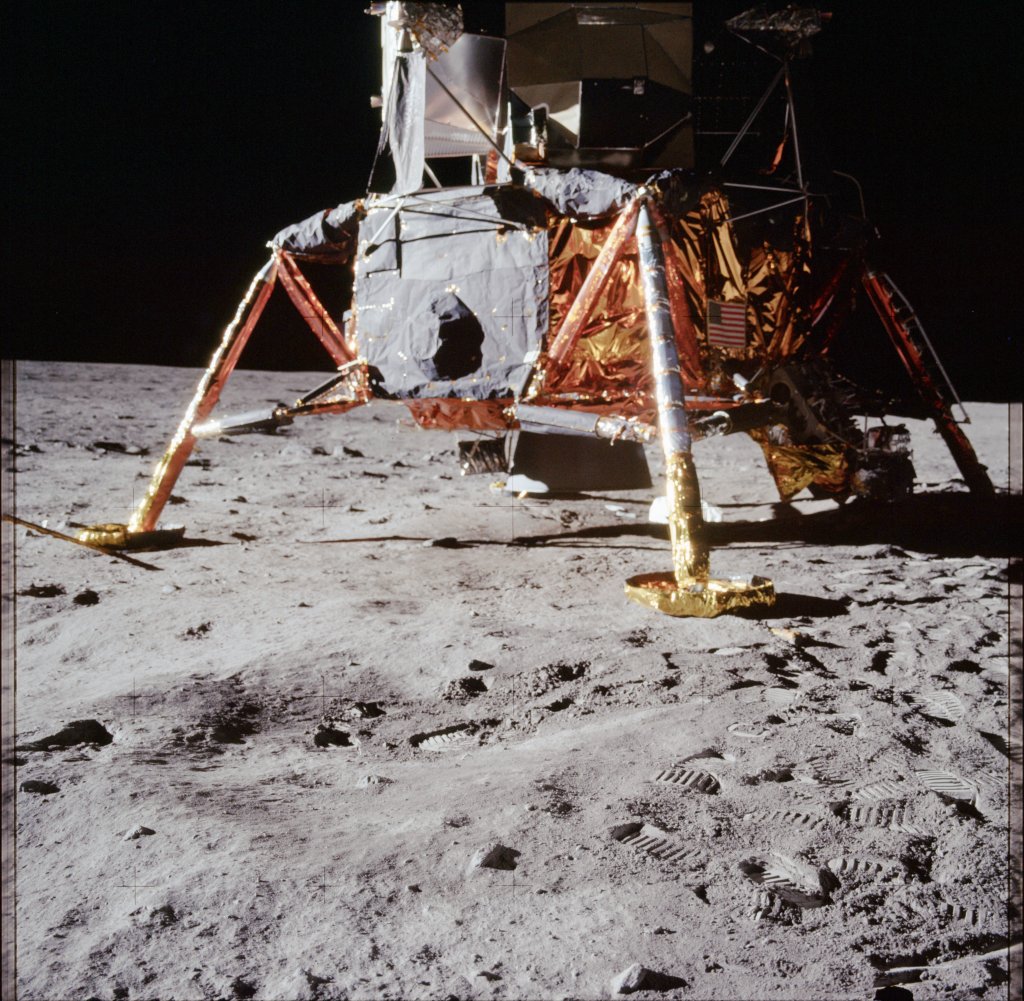
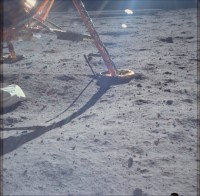 Photo
5865 — Raw, color corrected image, looking east, of terrain under and
southwest of the LM. Looking at the curvatures of the -Y strut and probe, one
can see that a shallow blast crater is present underneath the LM descent stage.
Note that some, but definitely not all, of this blast crater underneath the LM
probably is due to the inherent terrain which was present at the Apollo 11
landing site. Photo
5865 — Raw, color corrected image, looking east, of terrain under and
southwest of the LM. Looking at the curvatures of the -Y strut and probe, one
can see that a shallow blast crater is present underneath the LM descent stage.
Note that some, but definitely not all, of this blast crater underneath the LM
probably is due to the inherent terrain which was present at the Apollo 11
landing site.
|
|
|
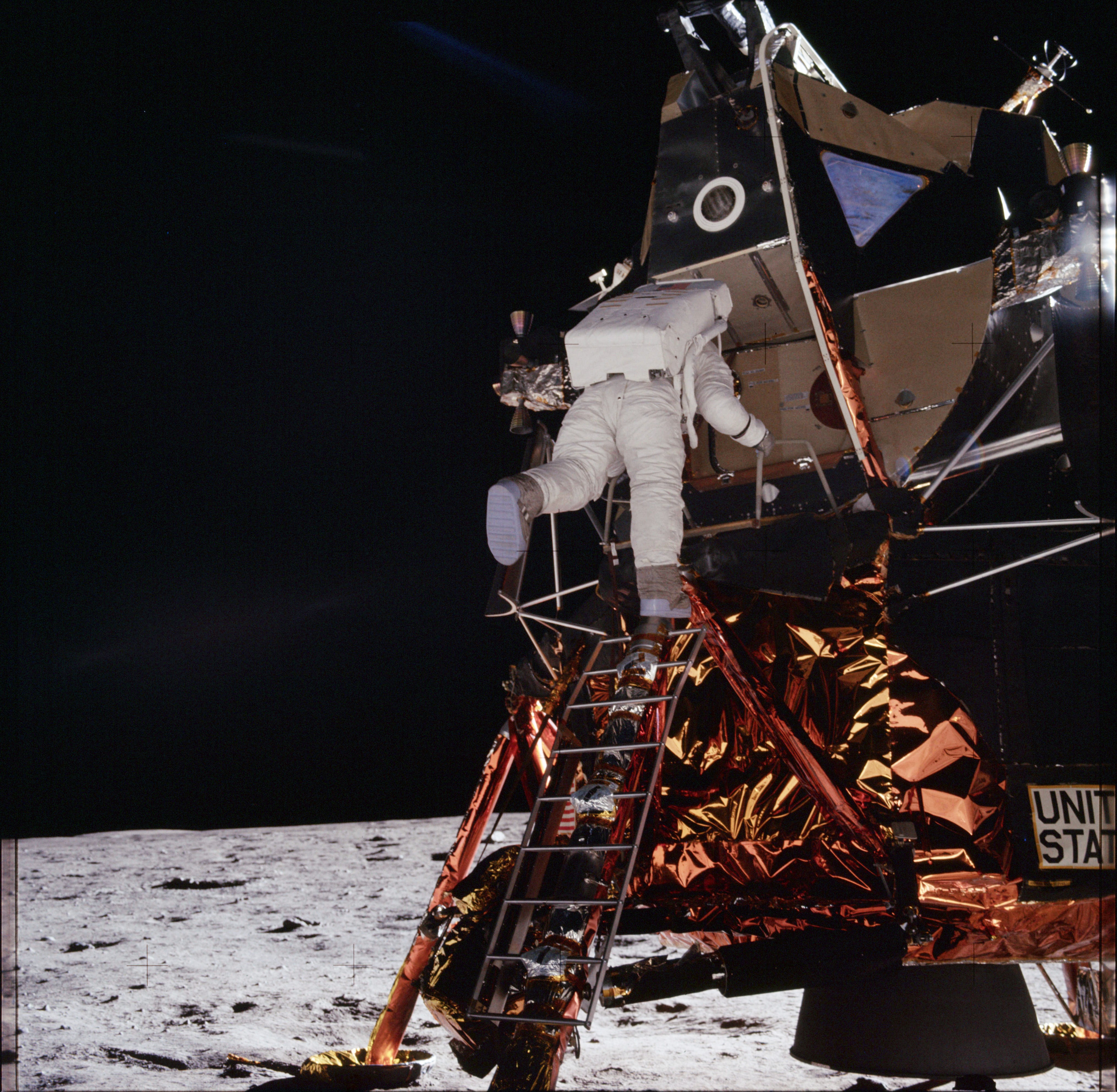
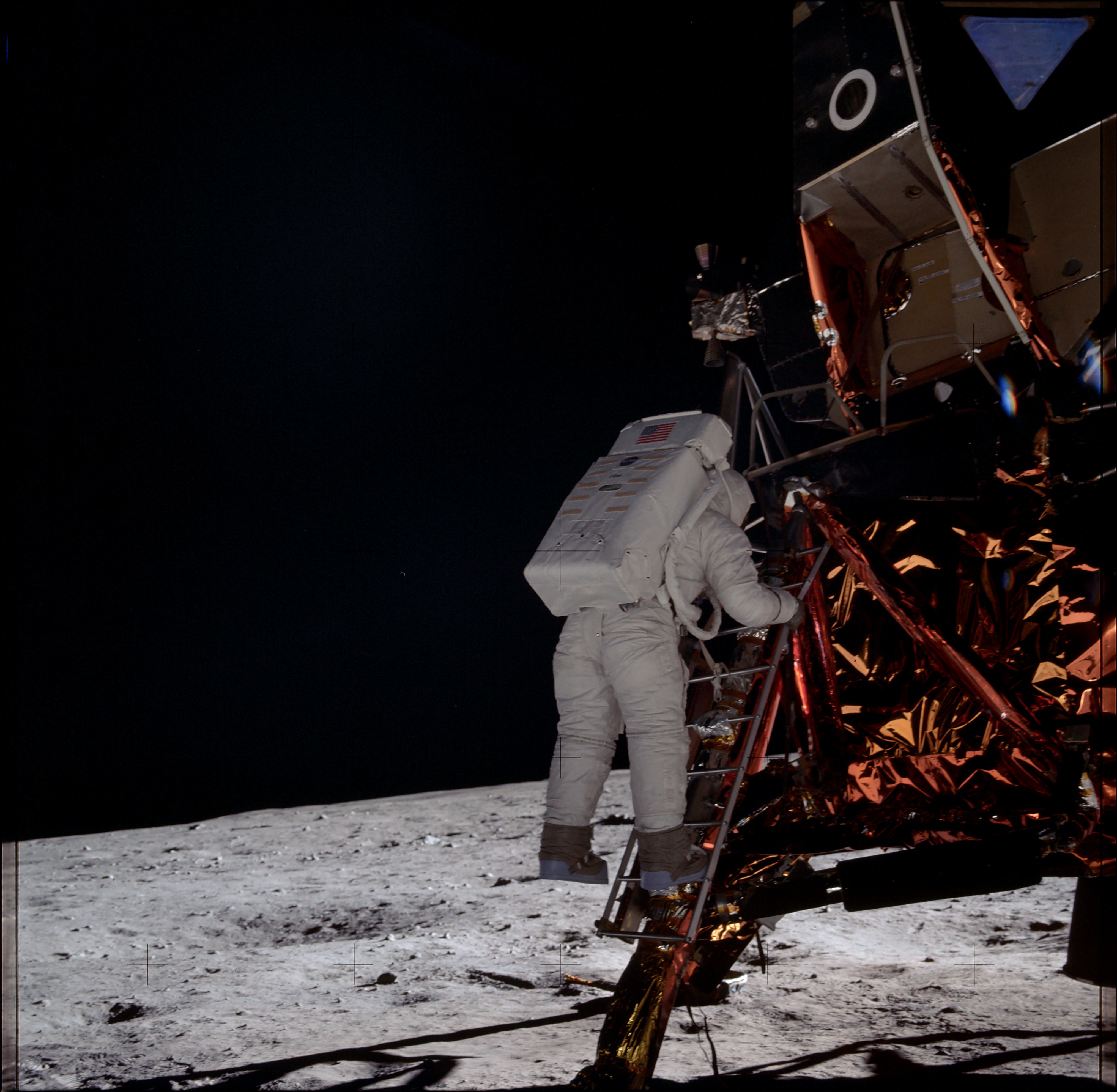
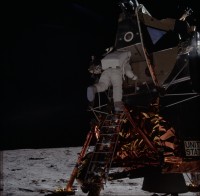 Photo
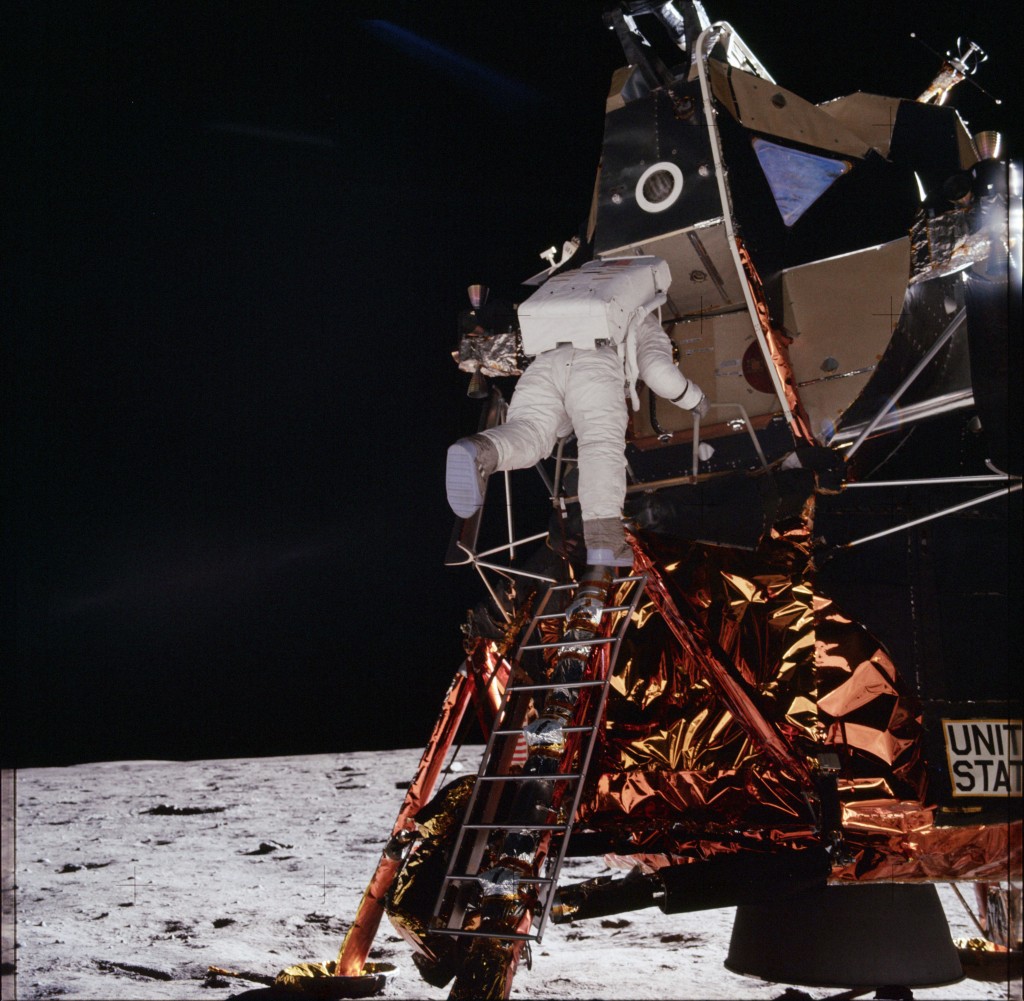
5866 — Aldrin stepping down onto the top of the ladder. Photo has been
color balanced. Photo
5866 — Aldrin stepping down onto the top of the ladder. Photo has been
color balanced.
|
|
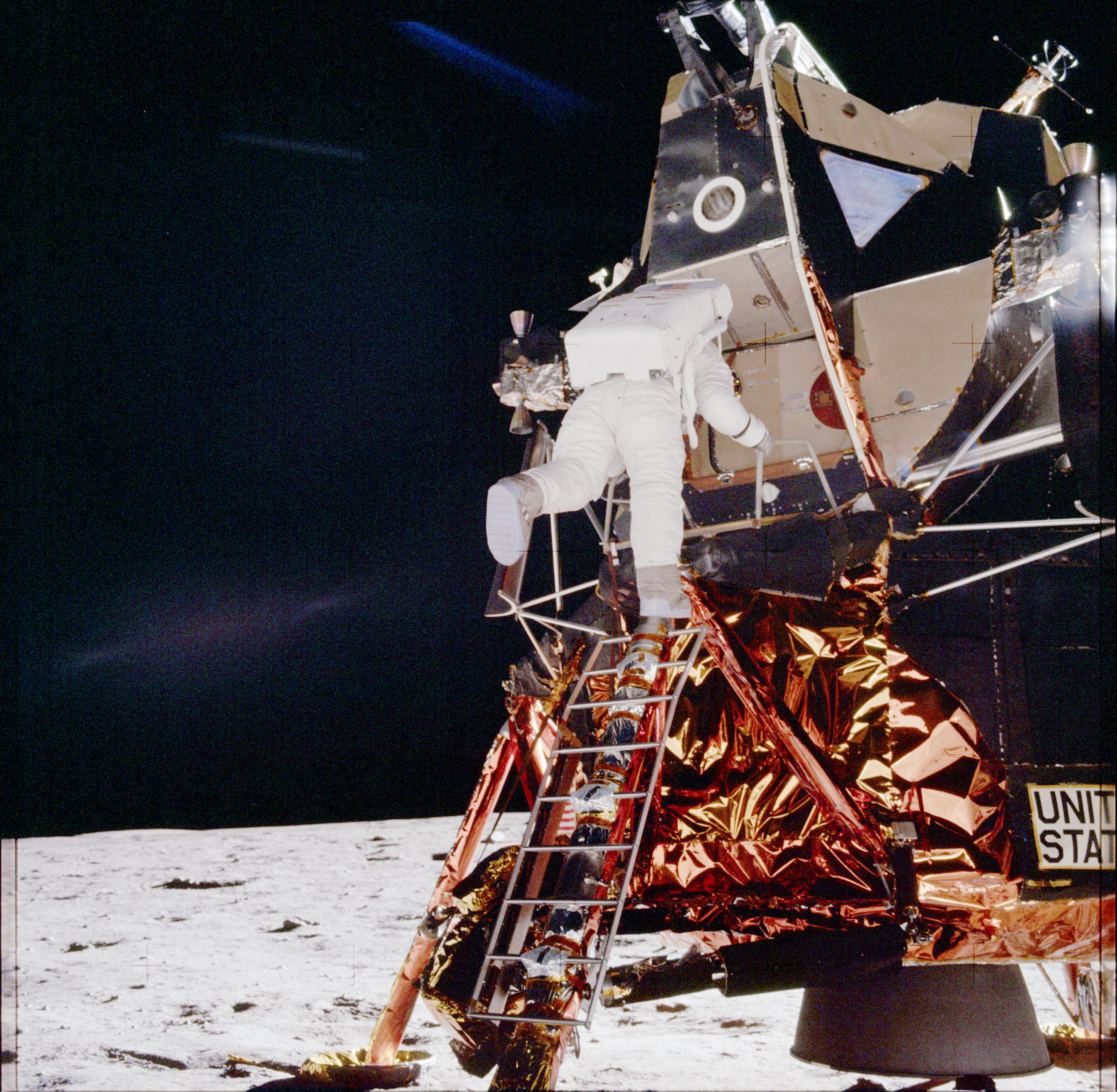
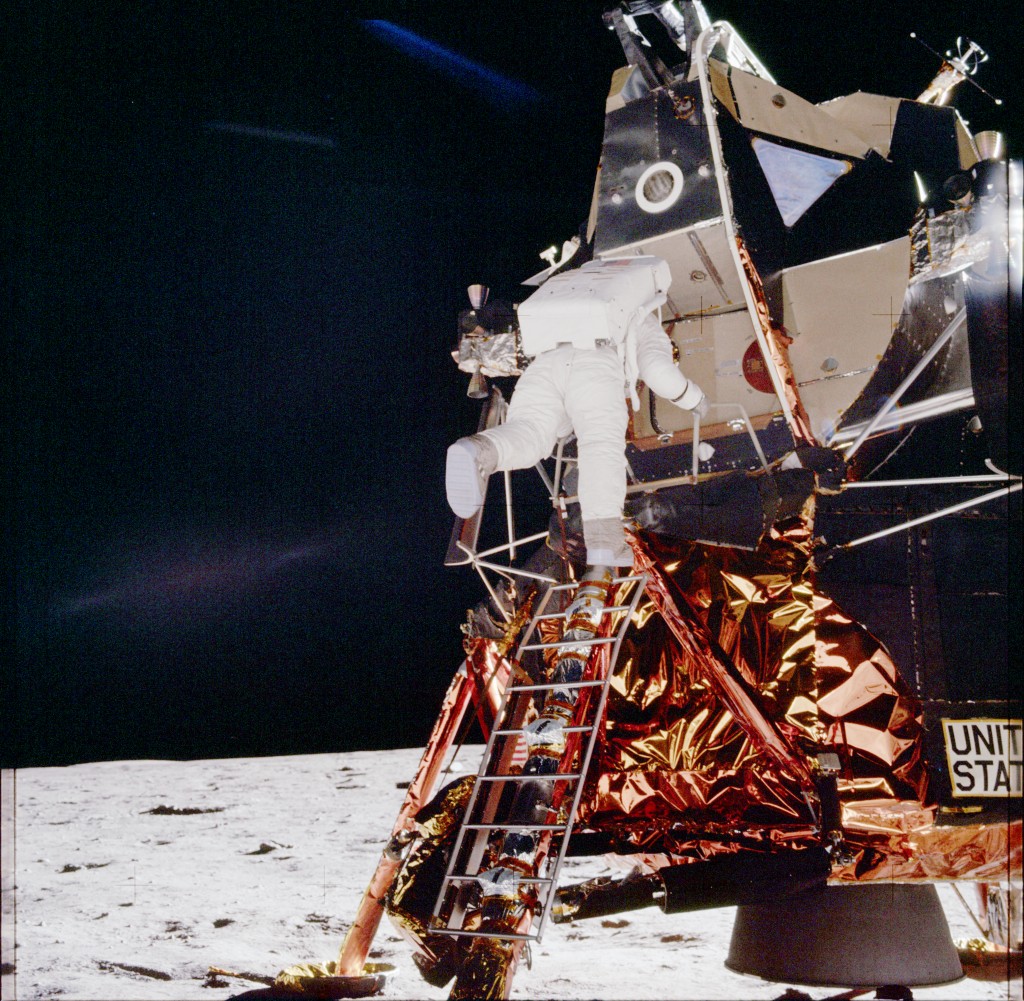
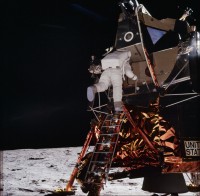 Photo
5866 — Same as above photo, but here I have boosted the gamma in order
to create an aesthetically pleasing version of the original photo. No, that is
not a shadow being cast onto the LM airlock door (see further below). As you
can see, the only light sources illuminating the LM and Aldrin are reflections
from the surrounding lunar surface and from Armstrong's bright white space suit
since Armstrong was standing in full sunlight when this photo and the previous
photo was taken. Photo
5866 — Same as above photo, but here I have boosted the gamma in order
to create an aesthetically pleasing version of the original photo. No, that is
not a shadow being cast onto the LM airlock door (see further below). As you
can see, the only light sources illuminating the LM and Aldrin are reflections
from the surrounding lunar surface and from Armstrong's bright white space suit
since Armstrong was standing in full sunlight when this photo and the previous
photo was taken.
|
|
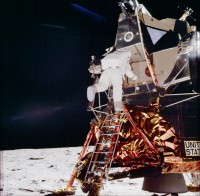 Photo
5866 — This photo version was strongly gamma corrected in order to
show additional details within shadow areas in the original photo. Photo
5866 — This photo version was strongly gamma corrected in order to
show additional details within shadow areas in the original photo.
|
|
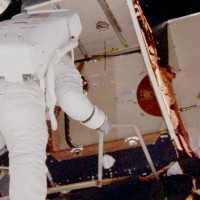 Photo
5866 LM Hatch Close-Up — Here you can clearly see that the right half
of the hatch door has a lighter colored panel. One conspiracy fanatic claims
that Aldrin is casting a shadow onto the left half of the hatch and that this
"shadow" is proof of a secondary light source such as a prop or fill light
located behind Aldrin. Well... Photo
5866 LM Hatch Close-Up — Here you can clearly see that the right half
of the hatch door has a lighter colored panel. One conspiracy fanatic claims
that Aldrin is casting a shadow onto the left half of the hatch and that this
"shadow" is proof of a secondary light source such as a prop or fill light
located behind Aldrin. Well...
|
|
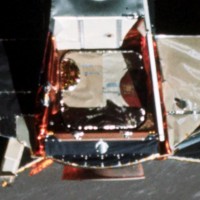 Photo 6642 LM Hatch
Close-Up View — Guess what? The hatch panel really does have
distinctly different colored left and right halves, as seen in this LM hatch
close-up view of the Eagle in lunar orbit. Photo 6642 LM Hatch
Close-Up View — Guess what? The hatch panel really does have
distinctly different colored left and right halves, as seen in this LM hatch
close-up view of the Eagle in lunar orbit.
|
|
|
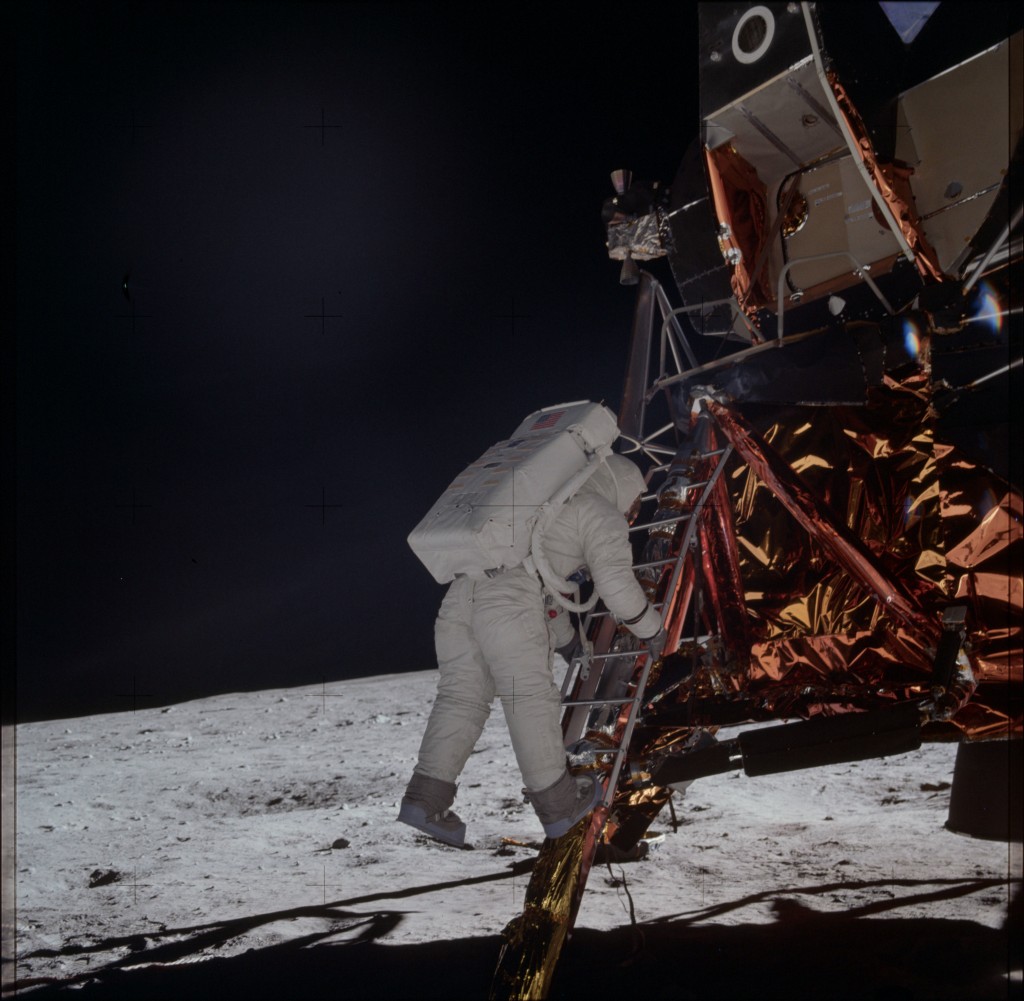
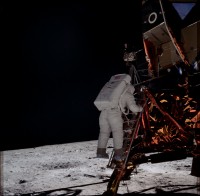 Photo
5867 — My enhanced version of the above photo. I adjusted the exposure
value so that the photo no longer appears to be underexposed, removed image
noise, and then sharpened the photo. I could have boosted the gamma, as I did
for image 5866 above, but instead I preferred to show the correct brightness
range between deep shadows on the LM, the rest of the LM and Aldrin's space
suit, and the lunar surface. It is obvious that Aldrin is back illuminated by
the lunar surface, and side illuminated by bright reflections off of
Armstrong's space suit since Armstrong was bathed in sunlight when this photo
was taken. Photo
5867 — My enhanced version of the above photo. I adjusted the exposure
value so that the photo no longer appears to be underexposed, removed image
noise, and then sharpened the photo. I could have boosted the gamma, as I did
for image 5866 above, but instead I preferred to show the correct brightness
range between deep shadows on the LM, the rest of the LM and Aldrin's space
suit, and the lunar surface. It is obvious that Aldrin is back illuminated by
the lunar surface, and side illuminated by bright reflections off of
Armstrong's space suit since Armstrong was bathed in sunlight when this photo
was taken.
|
|
|
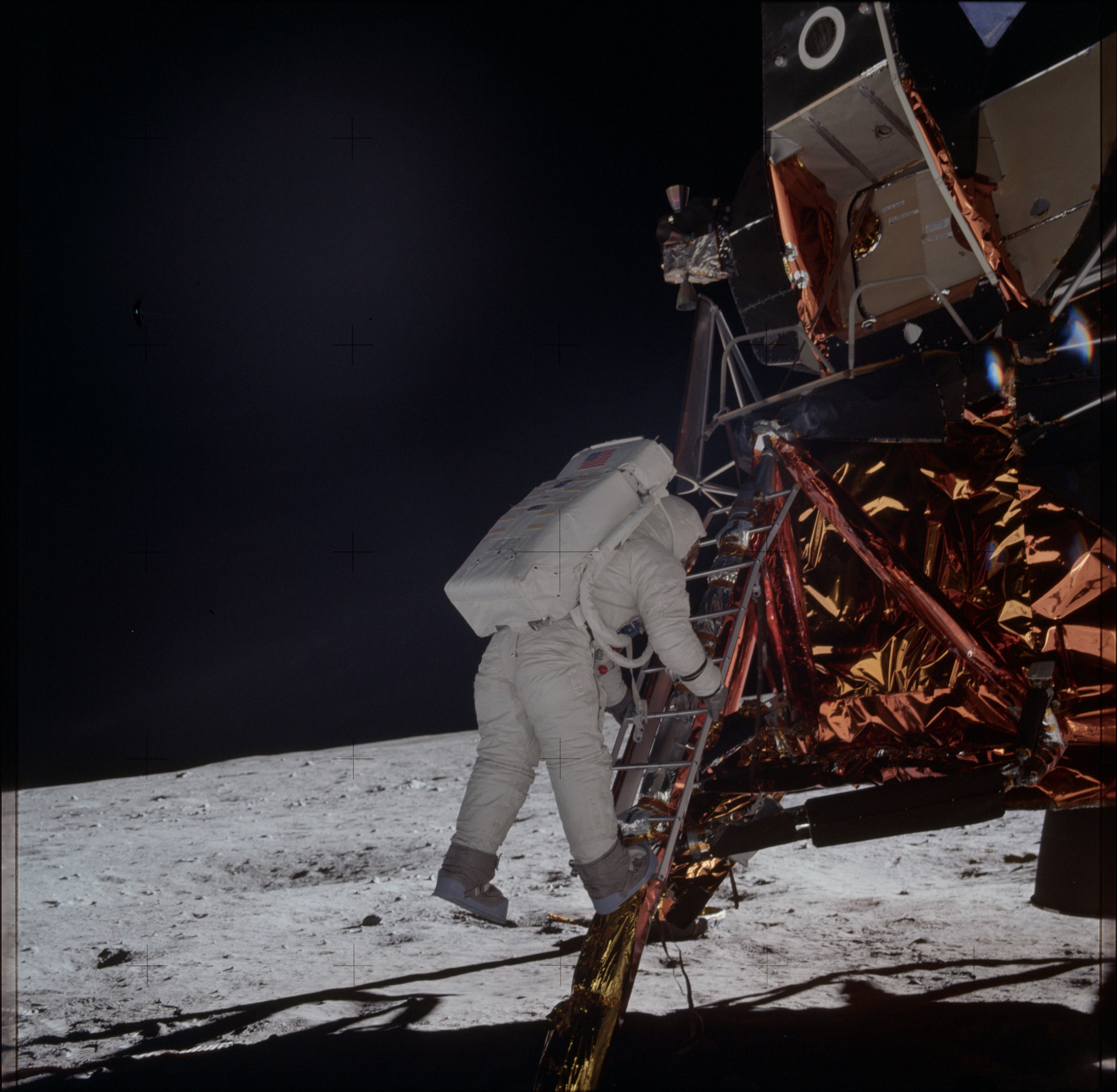
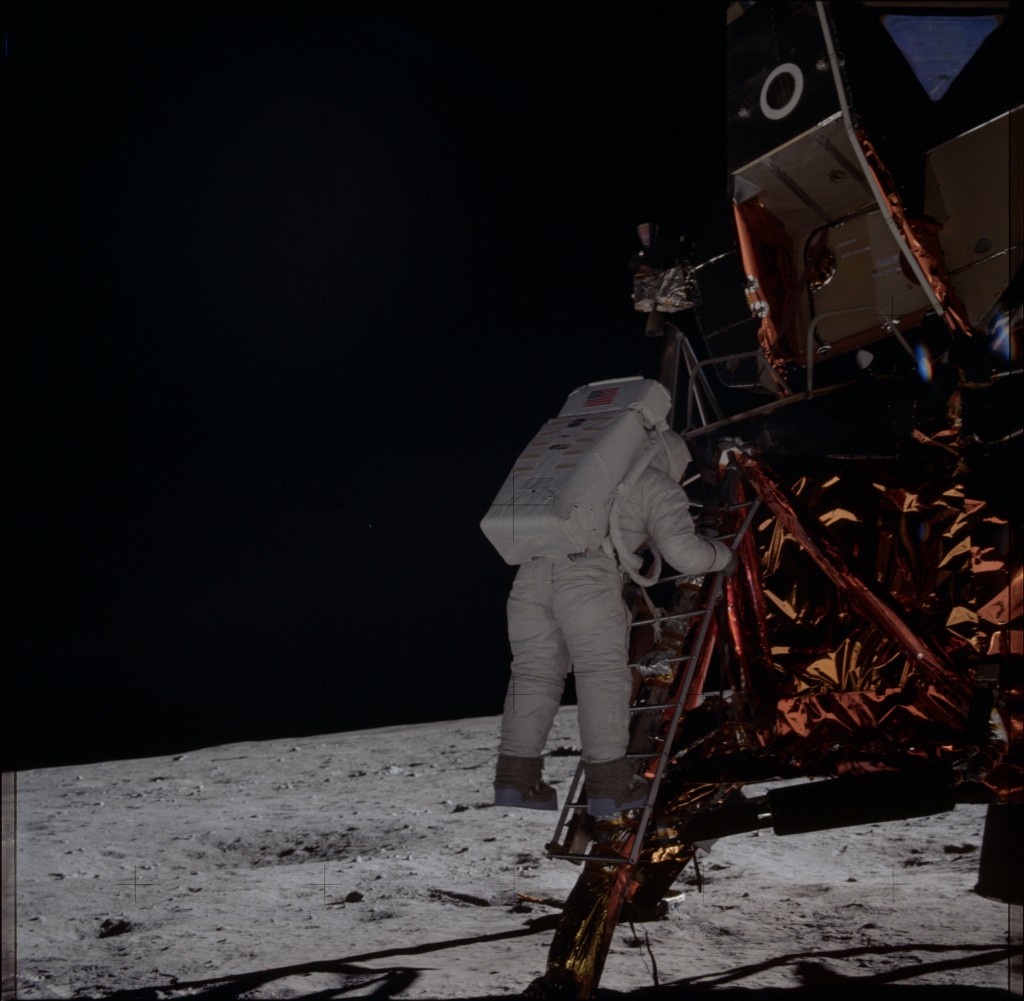
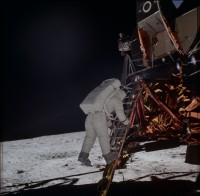 Photo
5868 — Aldrin descending the LM's ladder. Photo has been color
balanced, but no other image processing has been done. Yet this photo is
exposed at 2 EV brighter than the above two photos. Armstrong apparently
decided to quadruple the exposure time for this photo since the depth of field
for this and the above two photos appears to be the same. Judging by the lack
of depth of field, I would guess that Armstrong already had the 60mm Biogon
lens aperture set to its maximum F/5.6 aperture when this and the above photos
of Aldrin descending the LM were taken. Photo
5868 — Aldrin descending the LM's ladder. Photo has been color
balanced, but no other image processing has been done. Yet this photo is
exposed at 2 EV brighter than the above two photos. Armstrong apparently
decided to quadruple the exposure time for this photo since the depth of field
for this and the above two photos appears to be the same. Judging by the lack
of depth of field, I would guess that Armstrong already had the 60mm Biogon
lens aperture set to its maximum F/5.6 aperture when this and the above photos
of Aldrin descending the LM were taken.
|
|
|
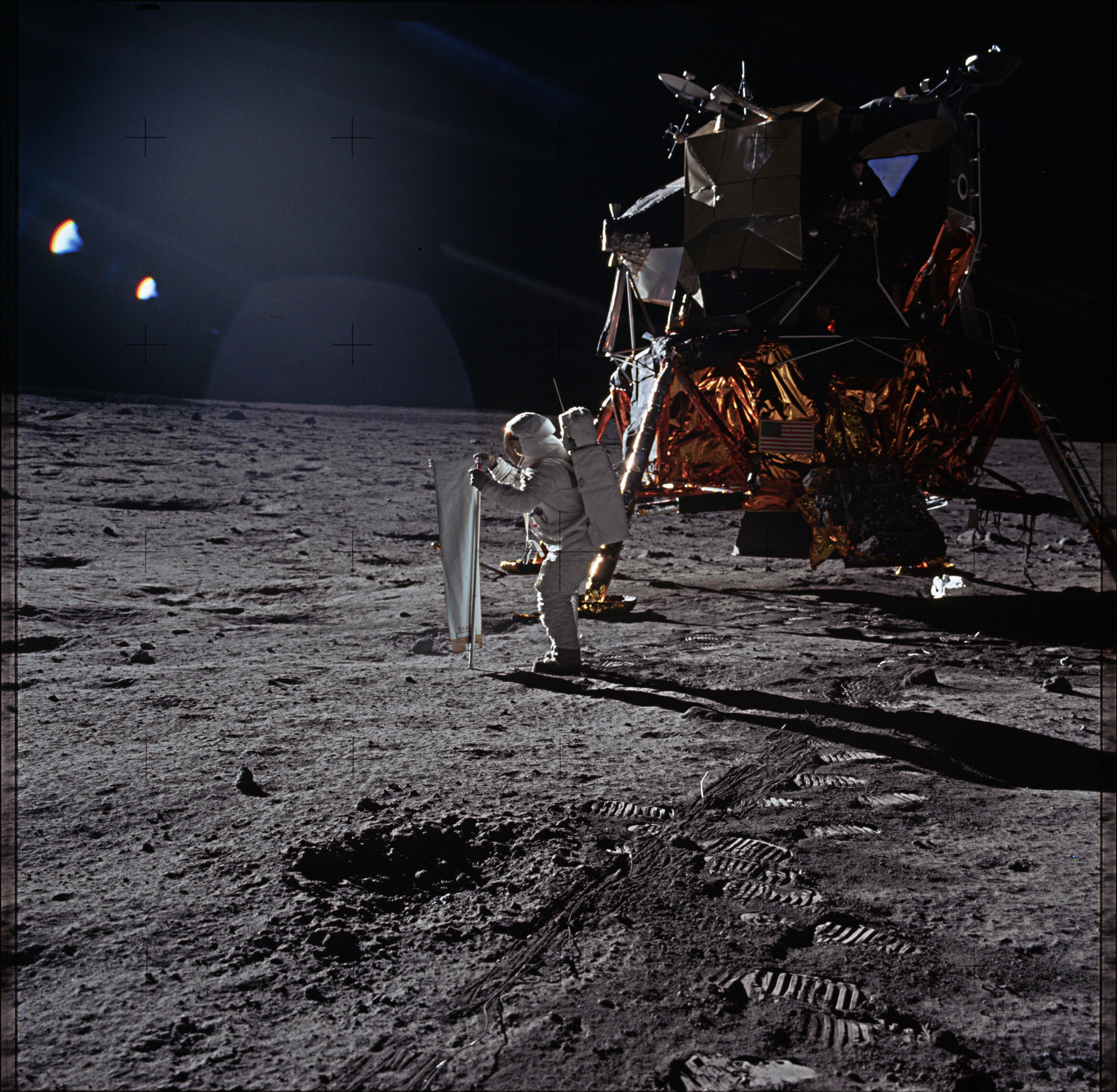
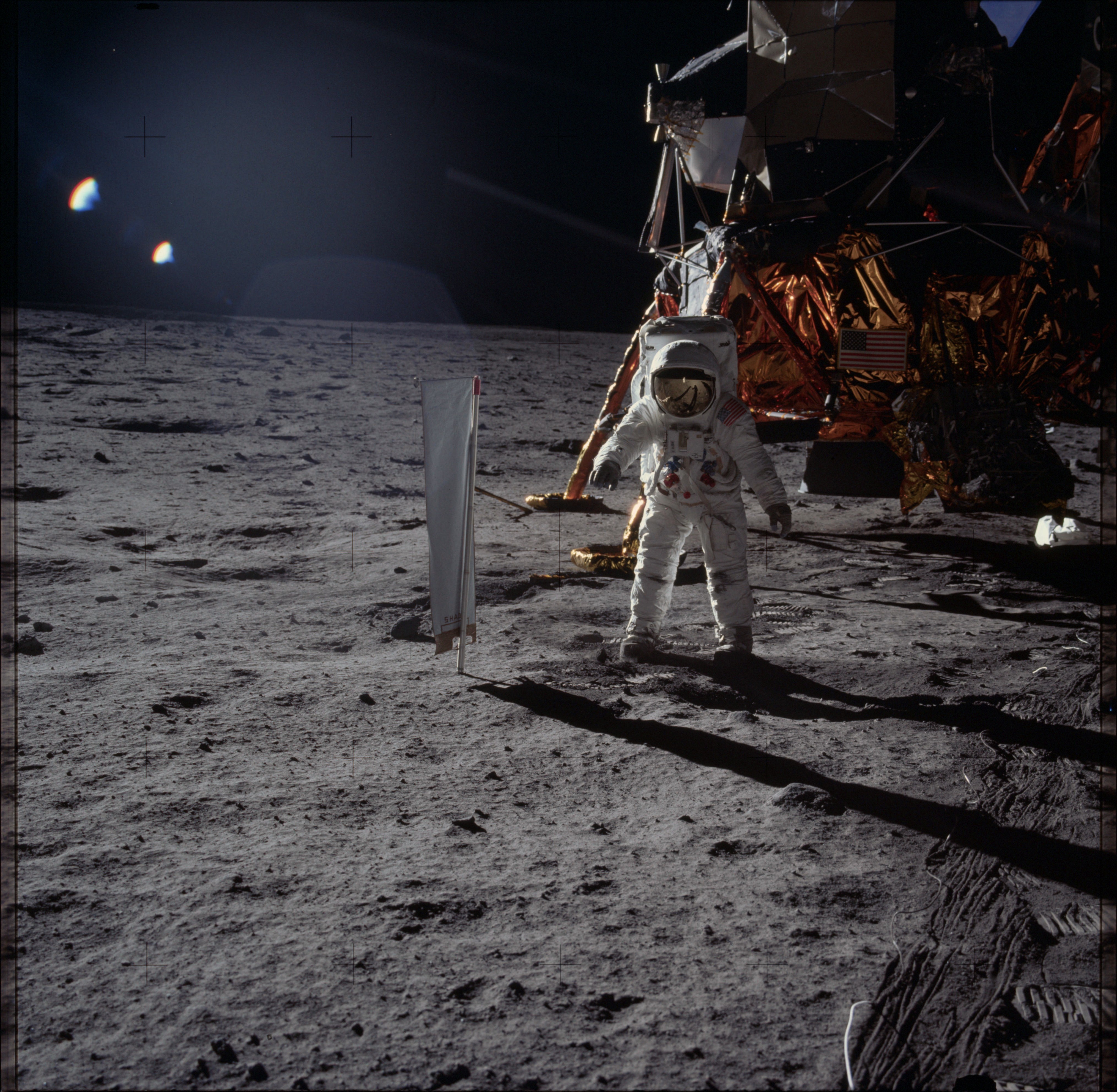
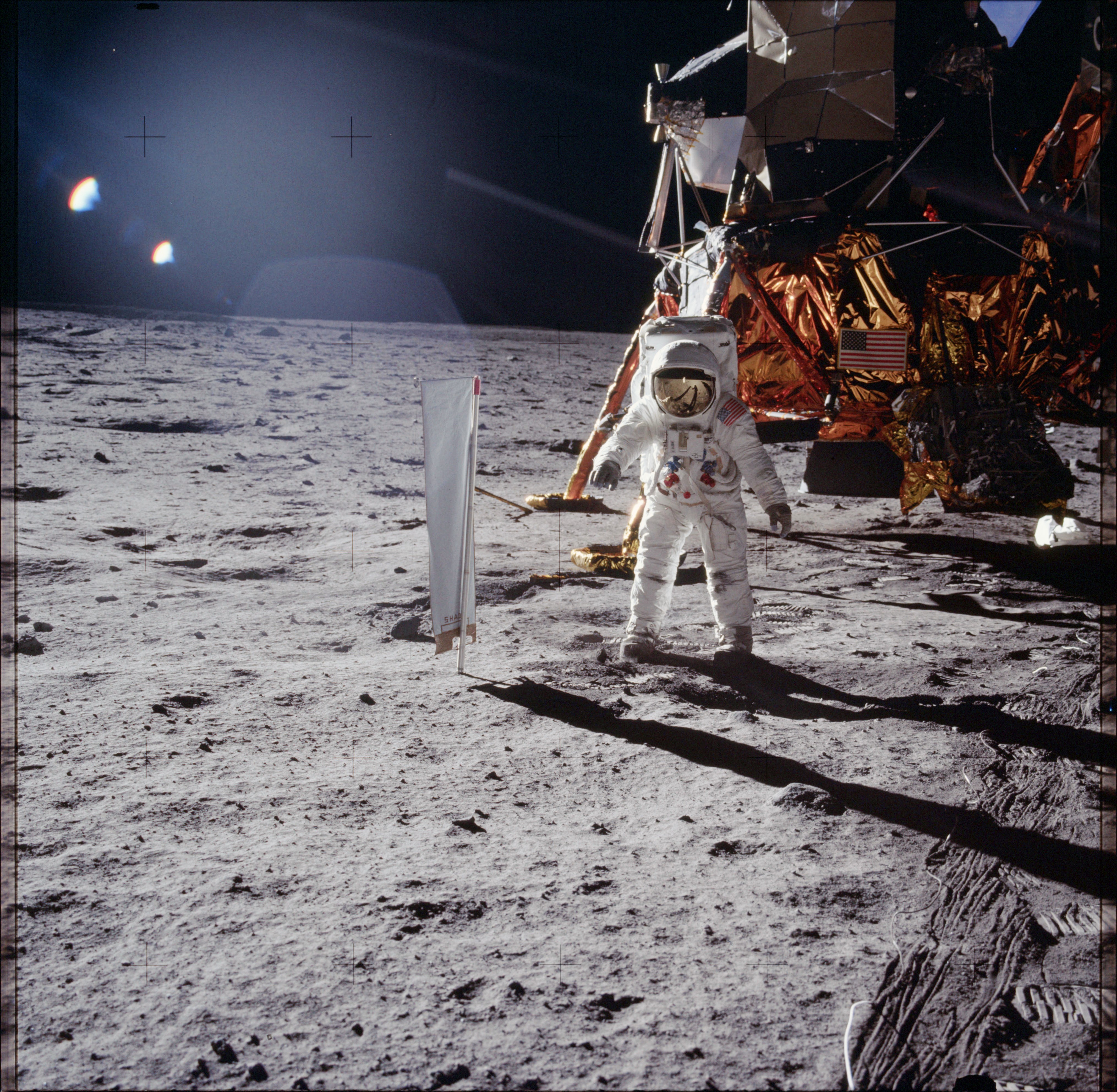
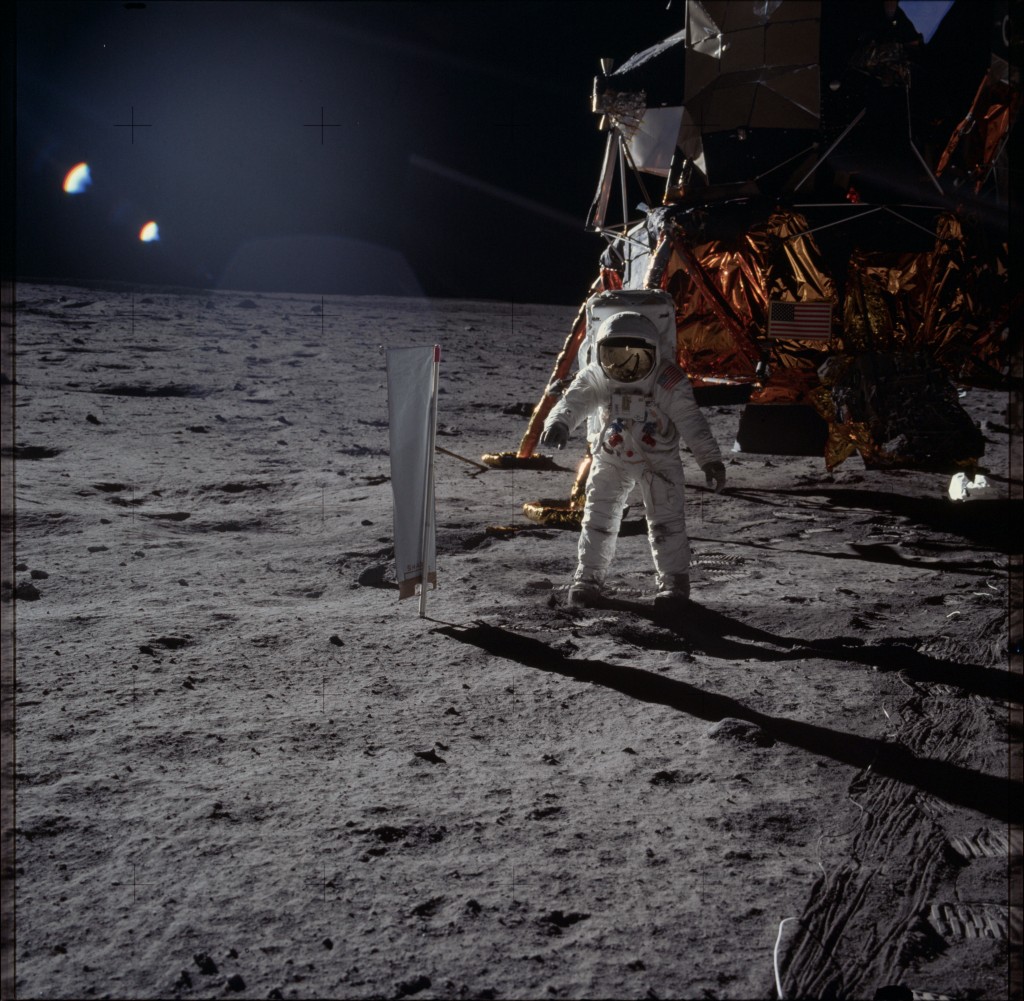
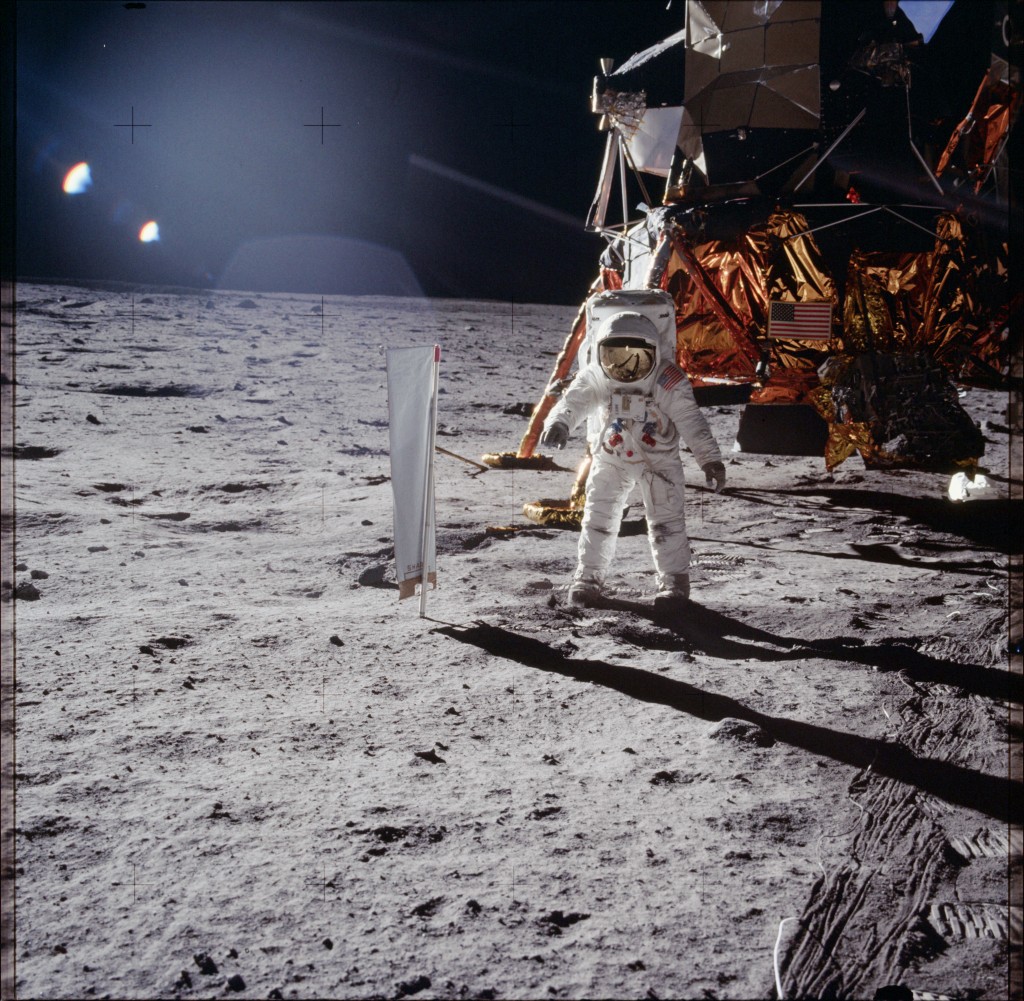
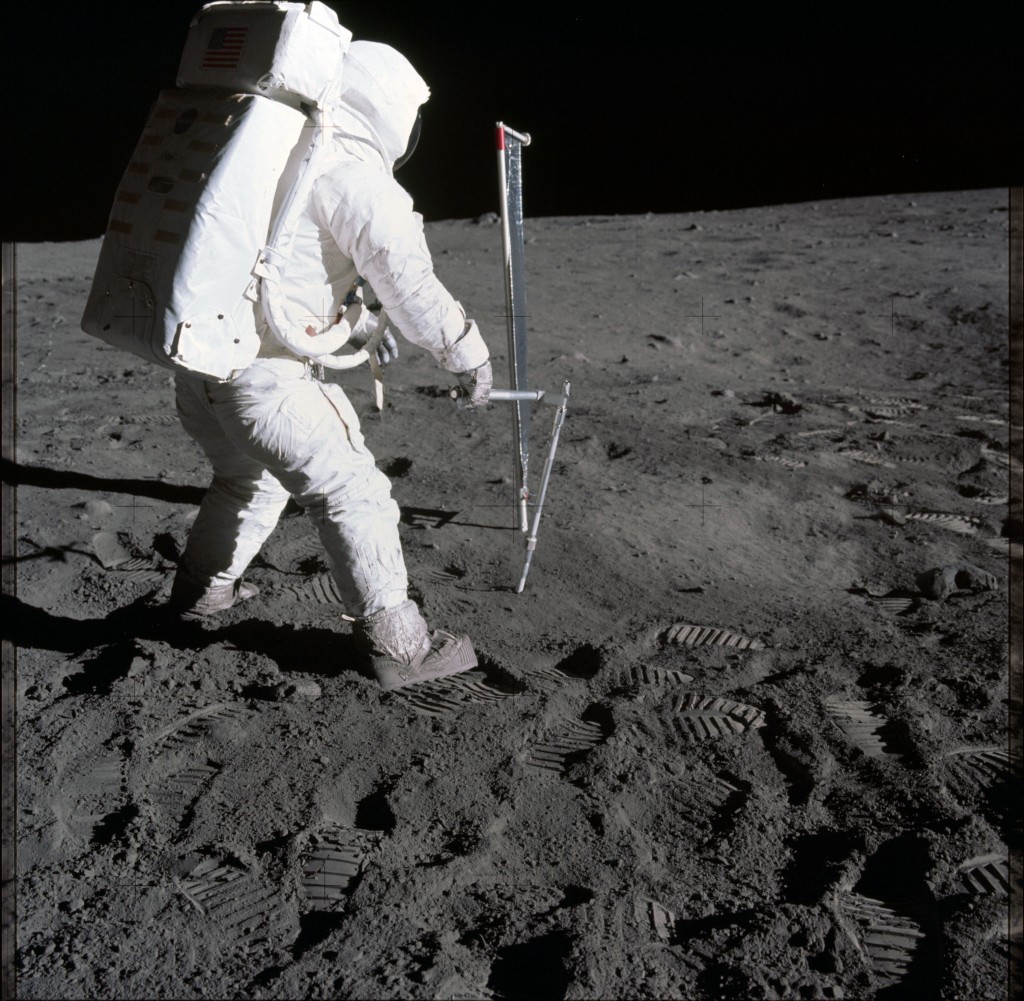
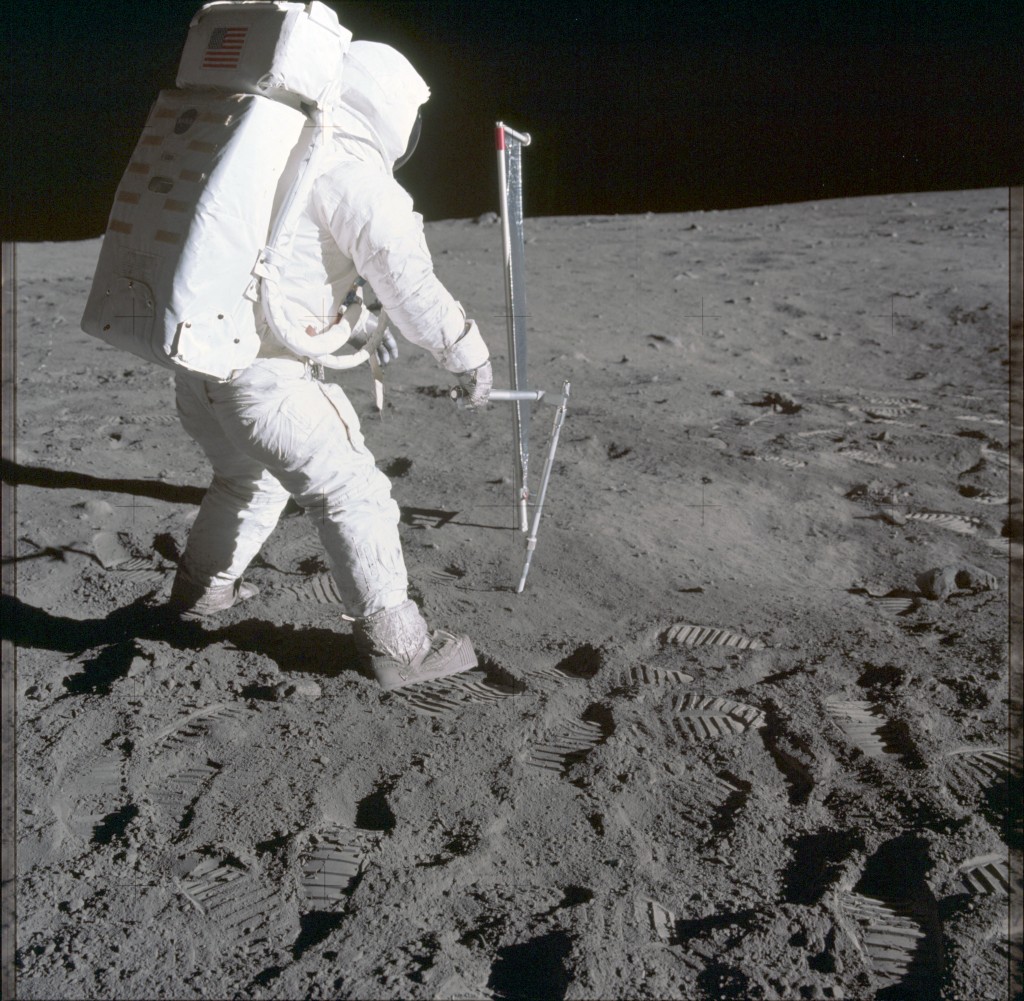
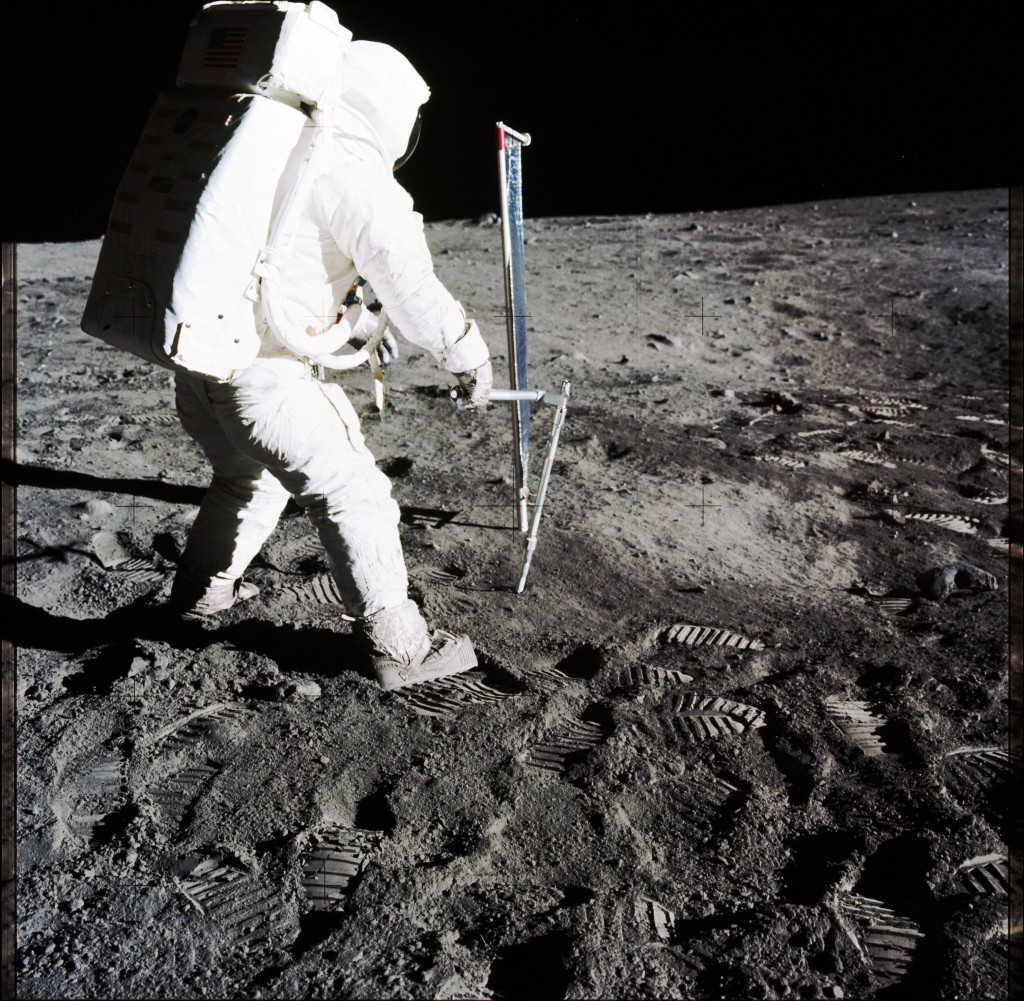
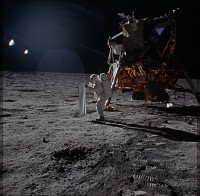 Photo
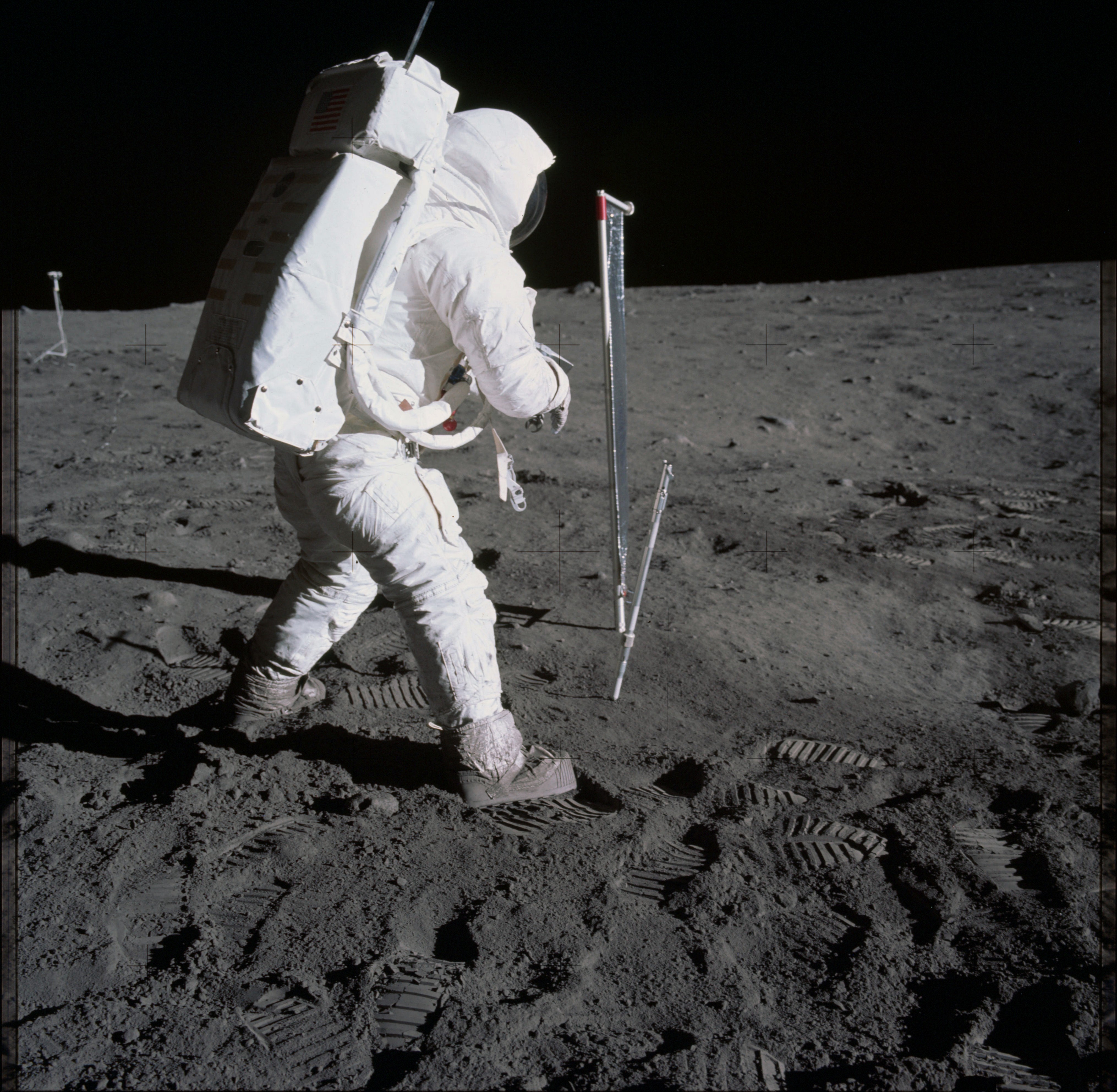
5872 — Aldrin setting up the solar wind collector experiment. I
applied a moderate hard light filter (to boost contrast) in addition to color
balancing this photo since the sun's glare had somewhat fogged the photo,
causing a general reduction in contrast throughout the entire photo. Photo
5872 — Aldrin setting up the solar wind collector experiment. I
applied a moderate hard light filter (to boost contrast) in addition to color
balancing this photo since the sun's glare had somewhat fogged the photo,
causing a general reduction in contrast throughout the entire photo.
|
|
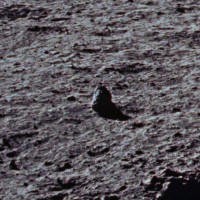 Bluish colored rock
in above photo 5872 — This rock, visible foreground left of Aldrin in
photo 5872, caught my attention since it has a distinctly bluish hue compared
to the surrounding lunar surface. I wonder if this particular rock was
collected by Armstrong and Aldrin during their brief EVA. Bluish colored rock
in above photo 5872 — This rock, visible foreground left of Aldrin in
photo 5872, caught my attention since it has a distinctly bluish hue compared
to the surrounding lunar surface. I wonder if this particular rock was
collected by Armstrong and Aldrin during their brief EVA.
|
|
|
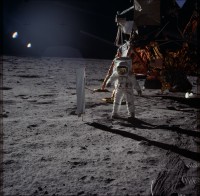 Photo
5873 — Portrait of Aldrin standing next to the solar wind collector
experiment. Photo has been color balanced. Photo
5873 — Portrait of Aldrin standing next to the solar wind collector
experiment. Photo has been color balanced.
|
|
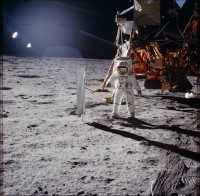 Photo
5873 — Above photo, but with strong gamma applied to bring out shadow
details. Photo
5873 — Above photo, but with strong gamma applied to bring out shadow
details.
|
|
|
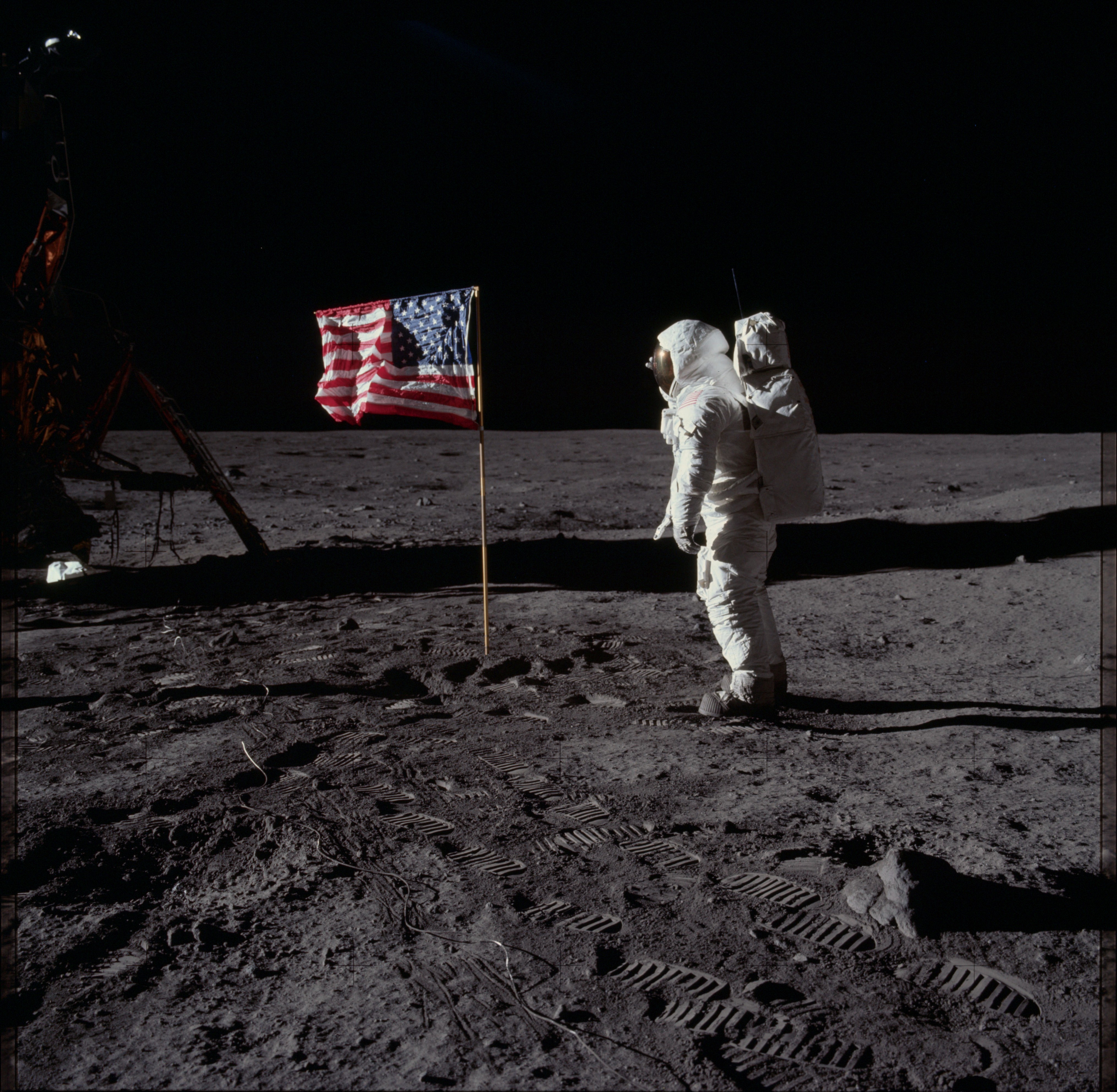
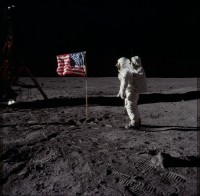 Photo
5874 — Aldrin posing next to and saluting the USA flag. Photo
5874 — Aldrin posing next to and saluting the USA flag.
|
|
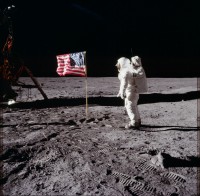 Photo
5874 — My enhanced version of the above photo. Photo
5874 — My enhanced version of the above photo.
|
|
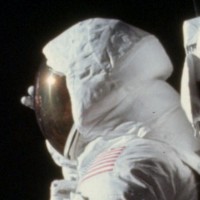 Close-up view of Aldrin saluting
the USA flag. Close-up view of Aldrin saluting
the USA flag.
|
|
|
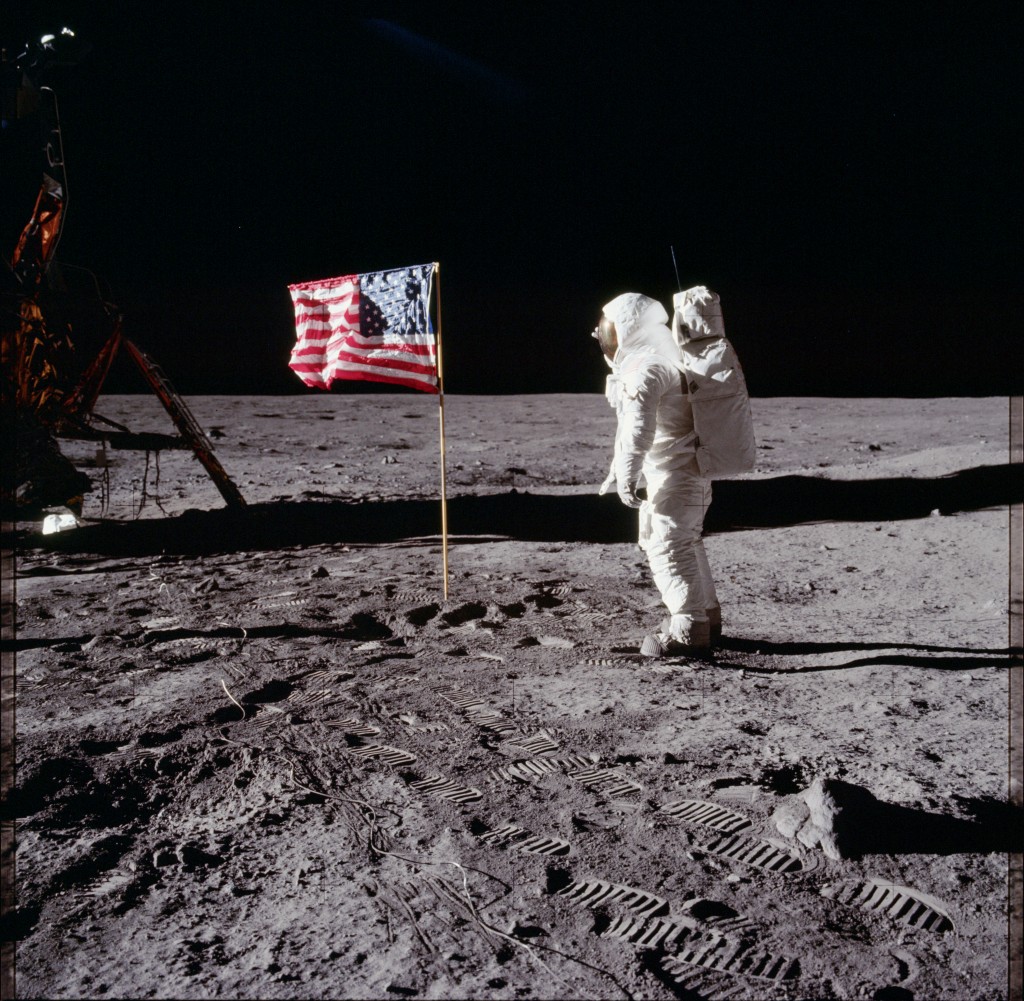
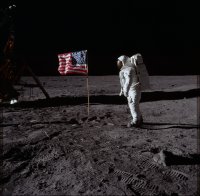 Photo
5875 — Aldrin posing next to the USA flag, but in this photo Aldrin
has finished saluting the USA flag and has turned his head to look at
Armstrong. Note that you can clearly see Aldrin's face through his visor. I'm
not sure, but it looks like Aldrin is grinning from cheek to cheek. If I was
standing in his shoes then I would have been grinning like a maniac too. After
all, what are the odds of you and one other person being the first two people
to set foot upon and walk on the moon? Obviously the feelings experienced by
Aldrin and Armstrong were way better than winning any lottery. Photo
5875 — Aldrin posing next to the USA flag, but in this photo Aldrin
has finished saluting the USA flag and has turned his head to look at
Armstrong. Note that you can clearly see Aldrin's face through his visor. I'm
not sure, but it looks like Aldrin is grinning from cheek to cheek. If I was
standing in his shoes then I would have been grinning like a maniac too. After
all, what are the odds of you and one other person being the first two people
to set foot upon and walk on the moon? Obviously the feelings experienced by
Aldrin and Armstrong were way better than winning any lottery.
|
|
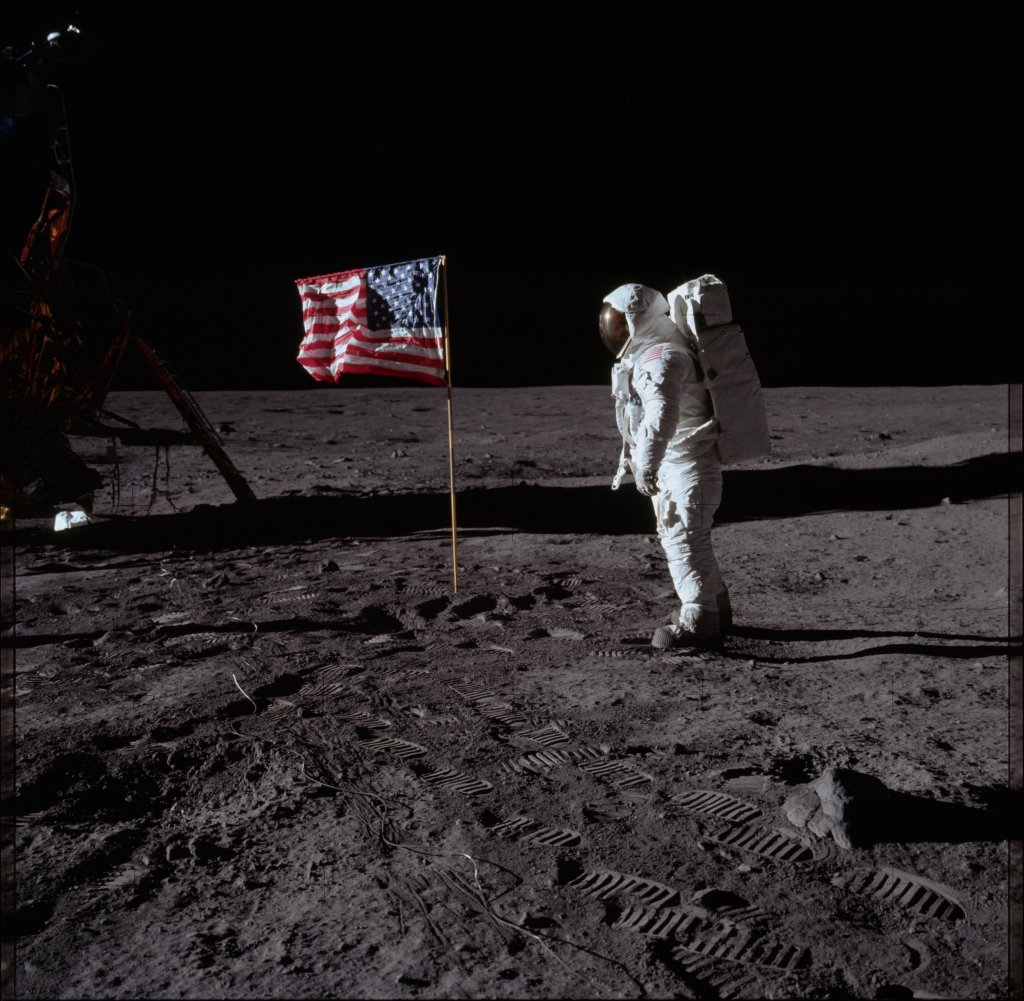
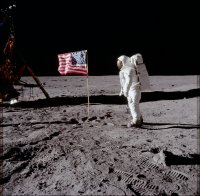 Photo
5875 — My enhanced version of the above photo. Photo
5875 — My enhanced version of the above photo.
|
|
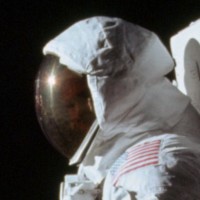 Close-up view of Aldrin after he
has saluted the USA flag. Close-up view of Aldrin after he
has saluted the USA flag.
|
|
|
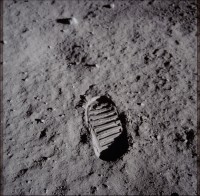 Photo
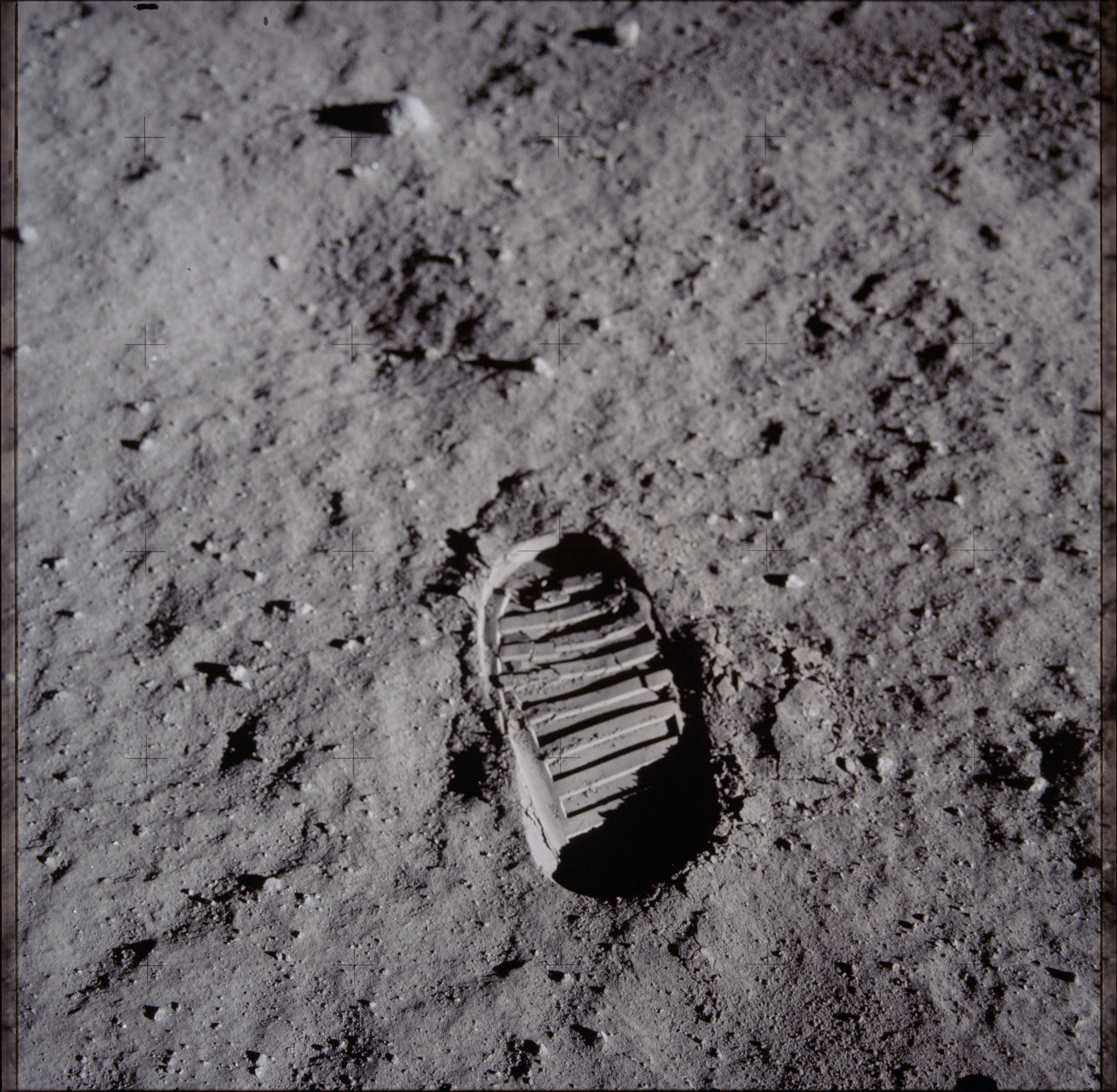
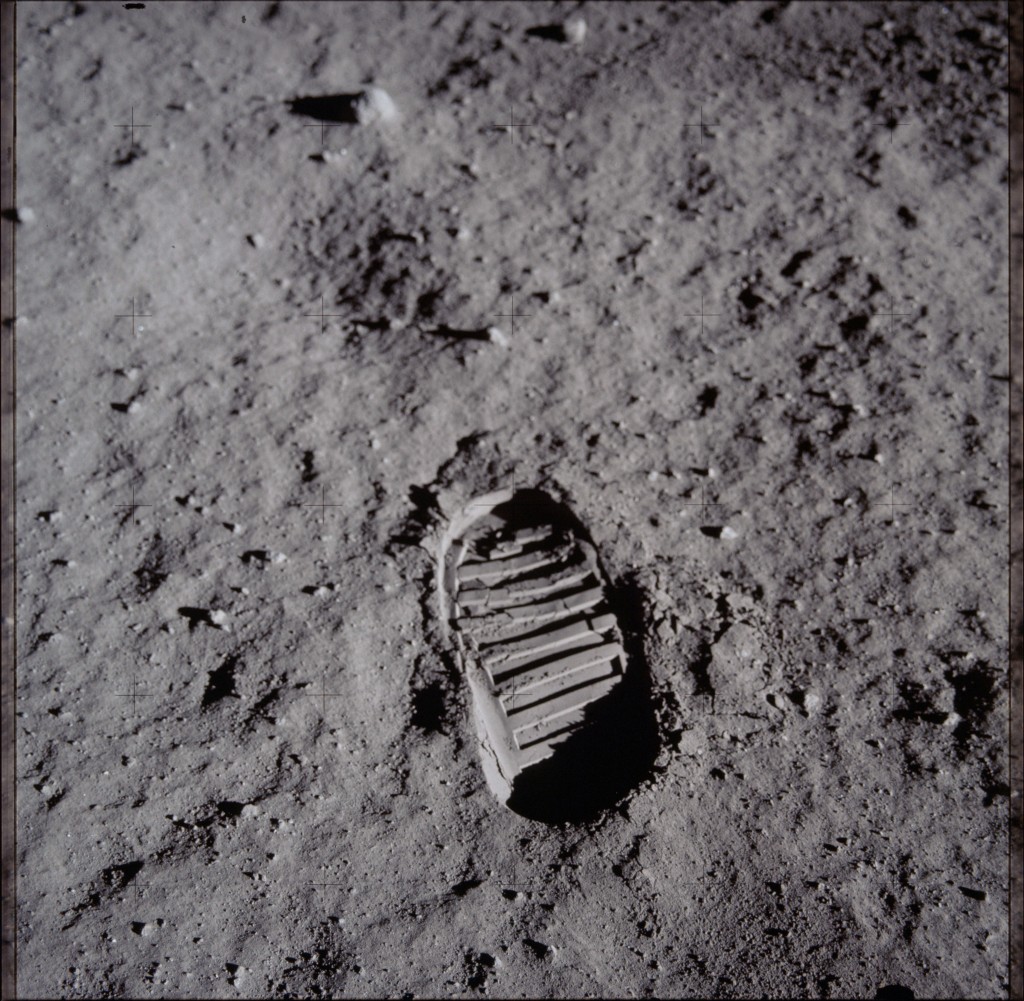
5877 — This photo, along with photo 5903 below, probably are the most
recognizable photographs ever taken in human history. Contrary to popular
belief, this is not Armstrong's first step on the moon. It was taken after
Aldrin already was on the lunar surface. Neil photographed this patch of lunar
surface just before he took this photograph after making this footprint.
Obviously his intention was to show scientists how much the soil compresses
when stepped on. I wonder if Armstrong knew just how famous this photograph
would become when he took this photo. Photo
5877 — This photo, along with photo 5903 below, probably are the most
recognizable photographs ever taken in human history. Contrary to popular
belief, this is not Armstrong's first step on the moon. It was taken after
Aldrin already was on the lunar surface. Neil photographed this patch of lunar
surface just before he took this photograph after making this footprint.
Obviously his intention was to show scientists how much the soil compresses
when stepped on. I wonder if Armstrong knew just how famous this photograph
would become when he took this photo.
|
|
|
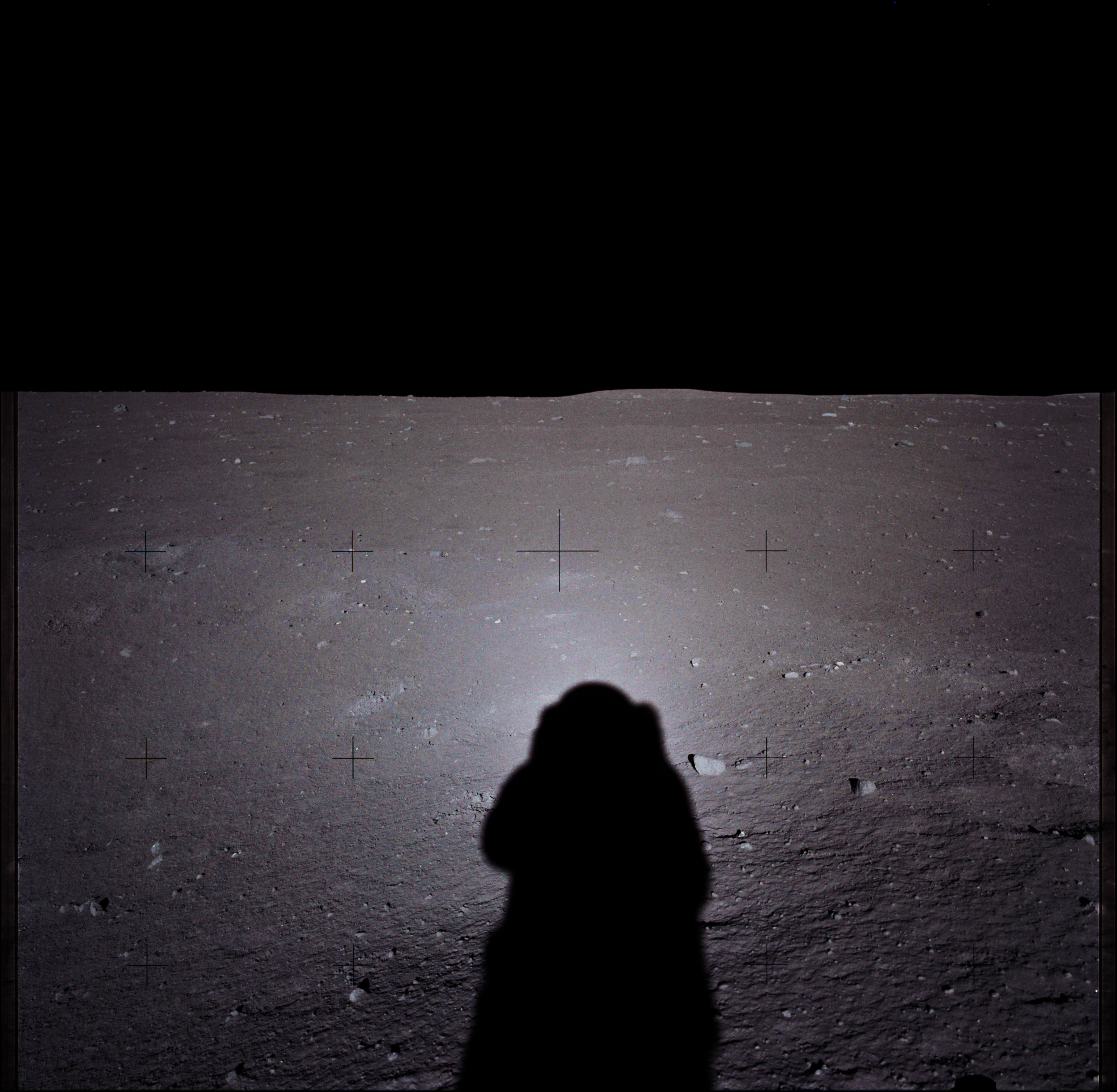
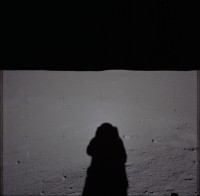 Photo
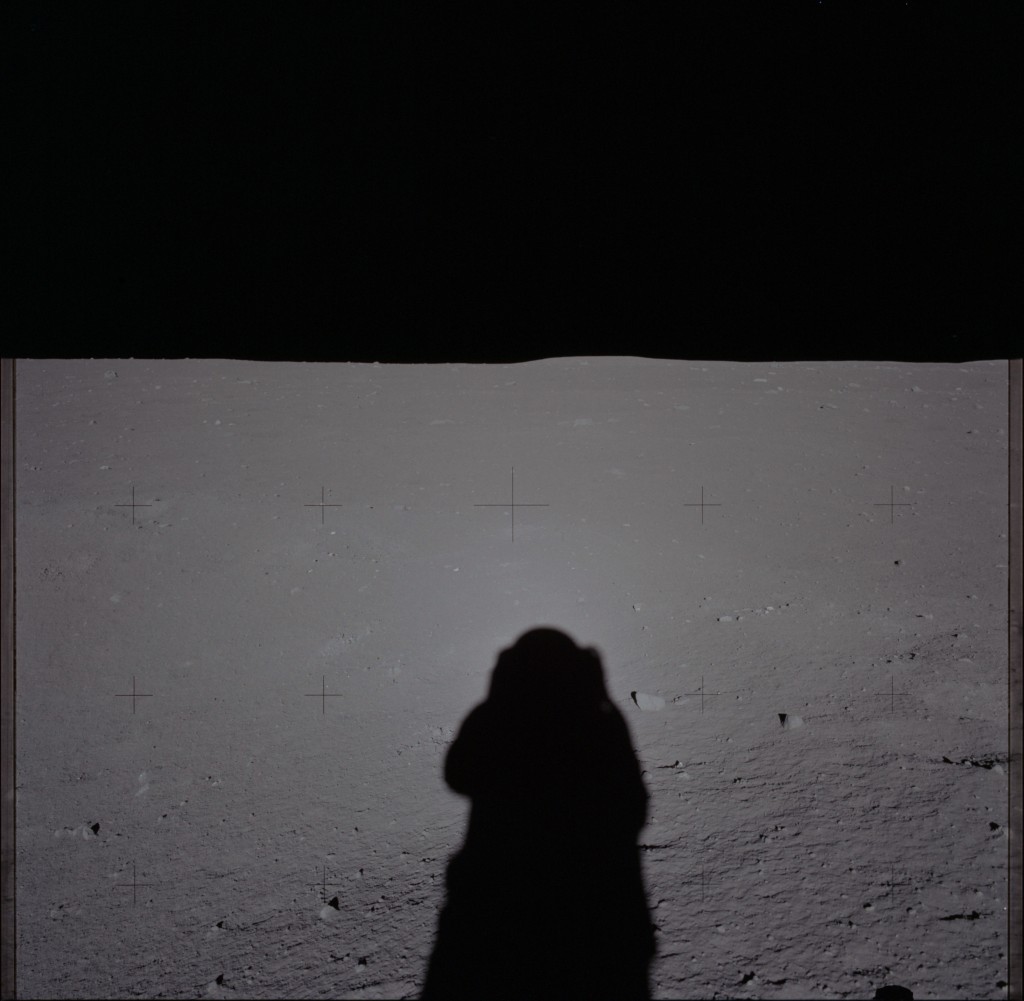
5882 — This photo nicely shows the Heiligenschein (German for
"aureole" or "halo", literally "Holy shine") which is an optical phenomenon
that creates a bright spot around the shadow of the viewer's head. It is
created when the surface on which the shadow falls has special optical
characteristics. The special optical characteristics of the lunar surface which
produces this Heiligenschein phenomenon are created by the very tiny glass
beads within the lunar soil. These glass beads are created by millions of years
of micrometeorite impacts. Photo
5882 — This photo nicely shows the Heiligenschein (German for
"aureole" or "halo", literally "Holy shine") which is an optical phenomenon
that creates a bright spot around the shadow of the viewer's head. It is
created when the surface on which the shadow falls has special optical
characteristics. The special optical characteristics of the lunar surface which
produces this Heiligenschein phenomenon are created by the very tiny glass
beads within the lunar soil. These glass beads are created by millions of years
of micrometeorite impacts.
|
|
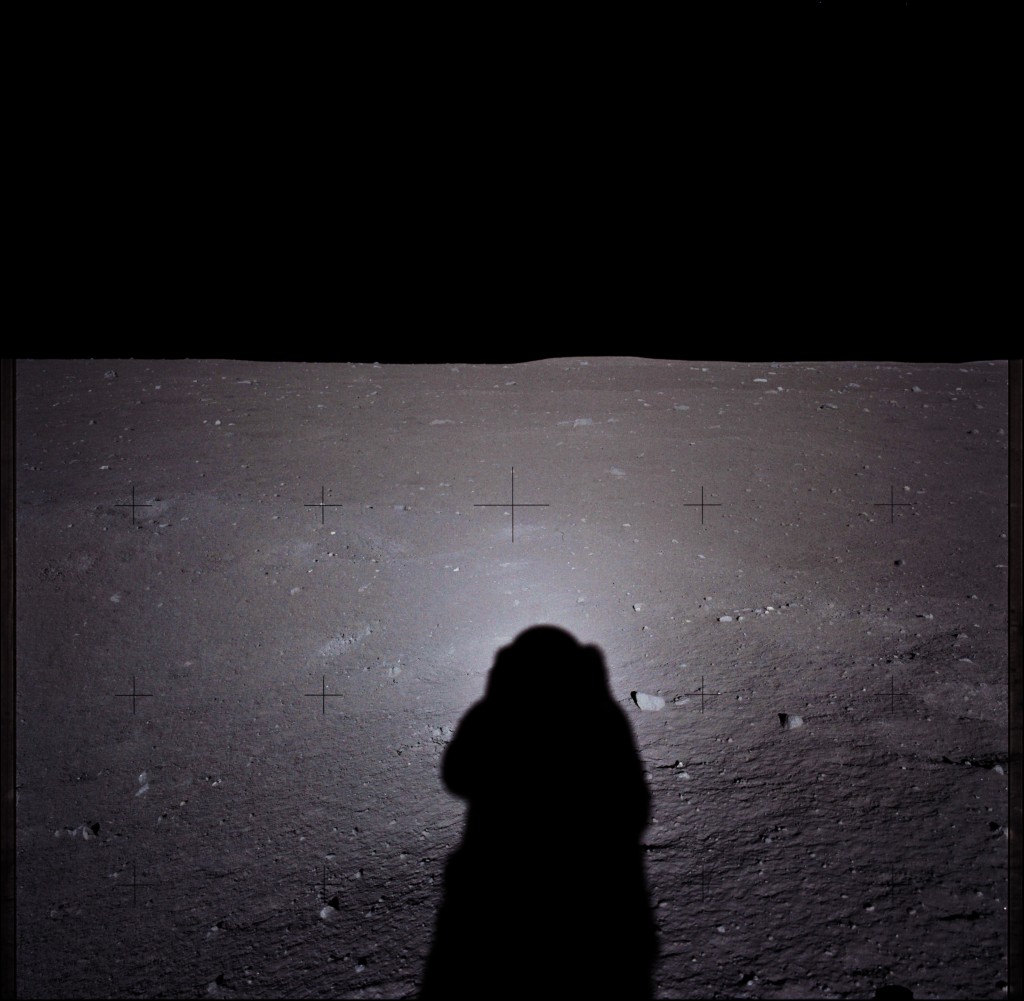
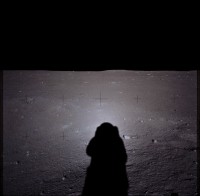 Photo
5882 — Above photo, but enhanced in order to bring out terrain
details. It is interesting to see that the entire lunar surface is strewn with
boulders. Also note that most of the large boulders tend to have a bluish hue
compared to the surrounding soil. Photo
5882 — Above photo, but enhanced in order to bring out terrain
details. It is interesting to see that the entire lunar surface is strewn with
boulders. Also note that most of the large boulders tend to have a bluish hue
compared to the surrounding soil.
|
|
|
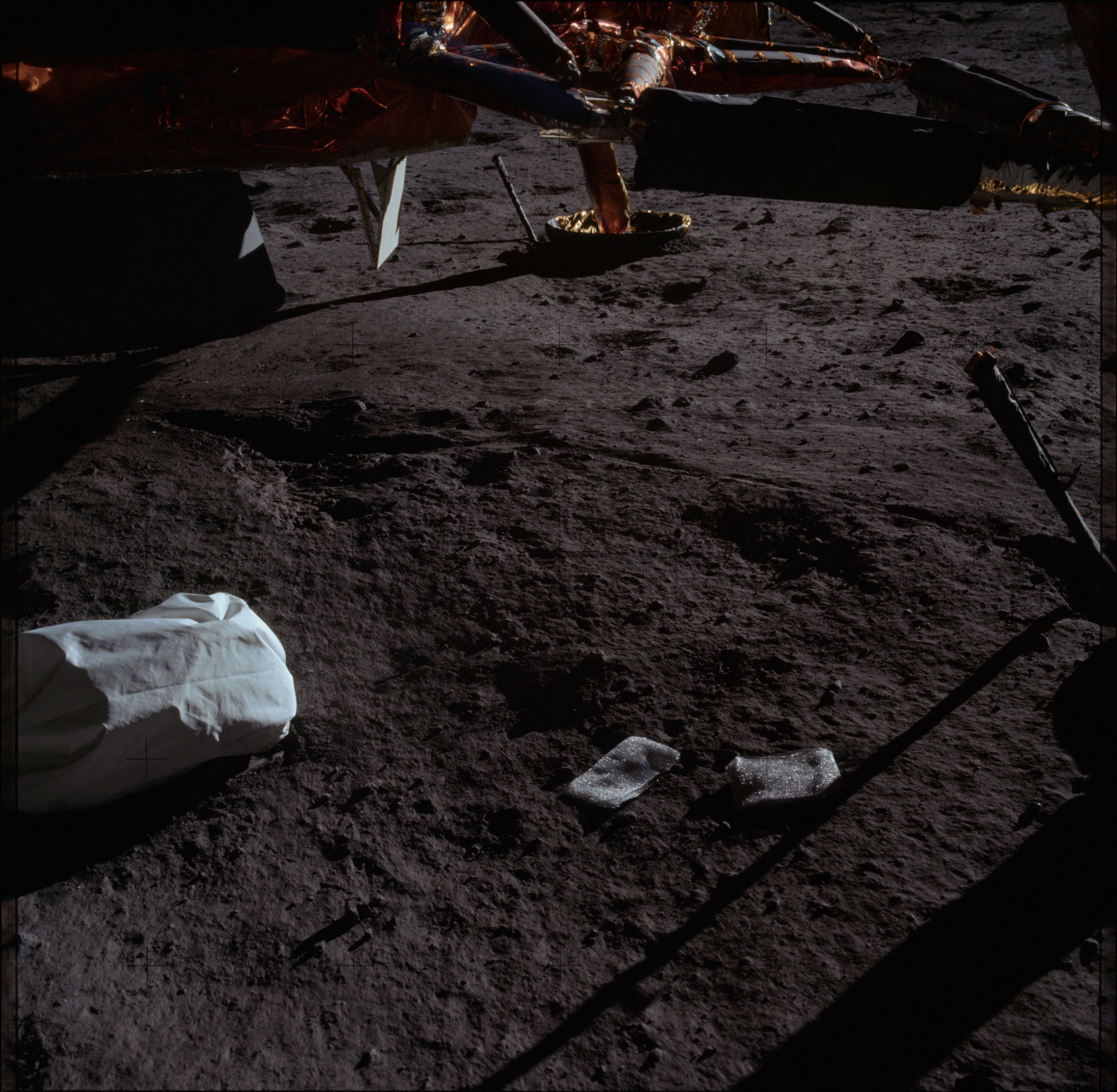
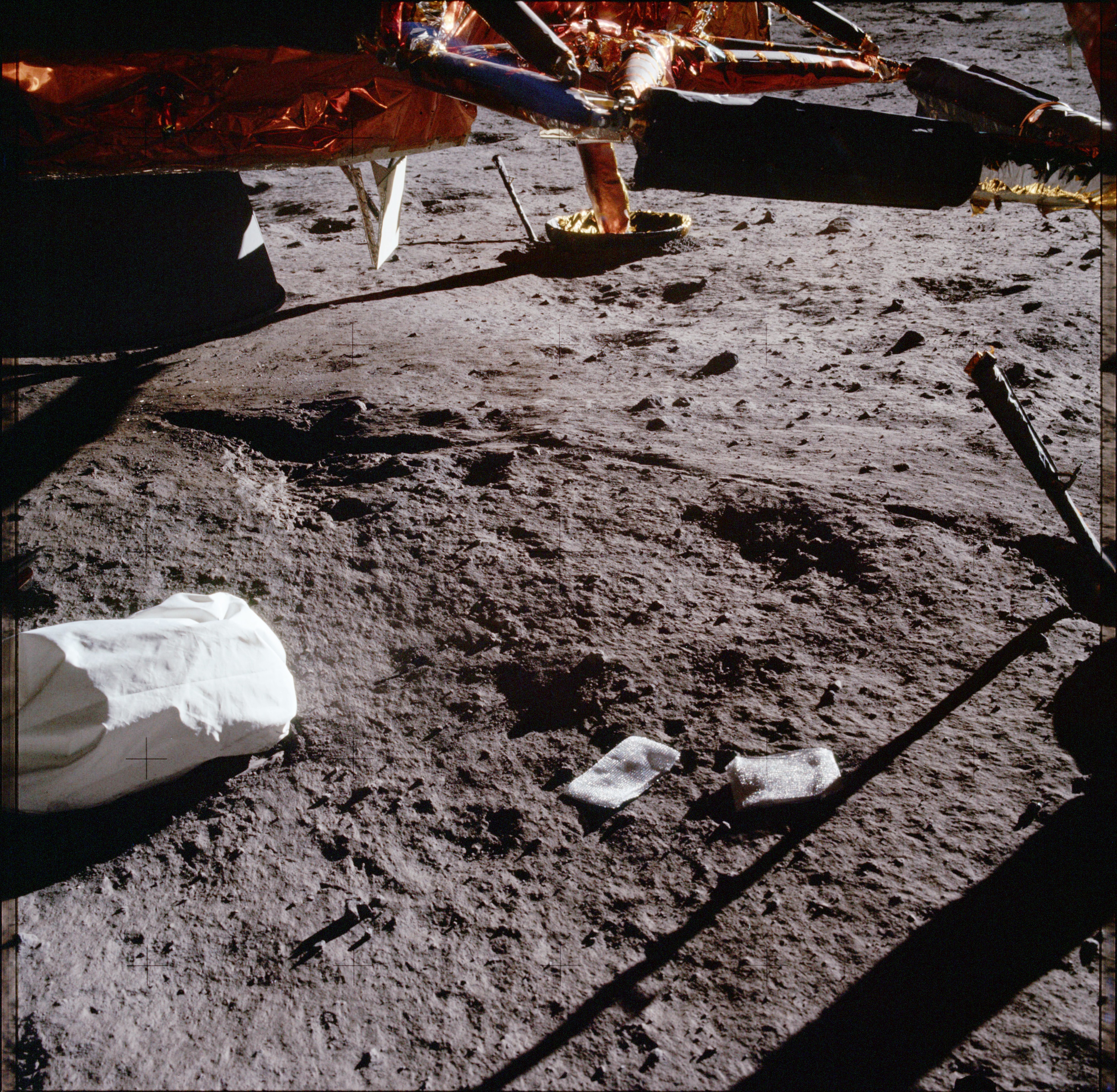
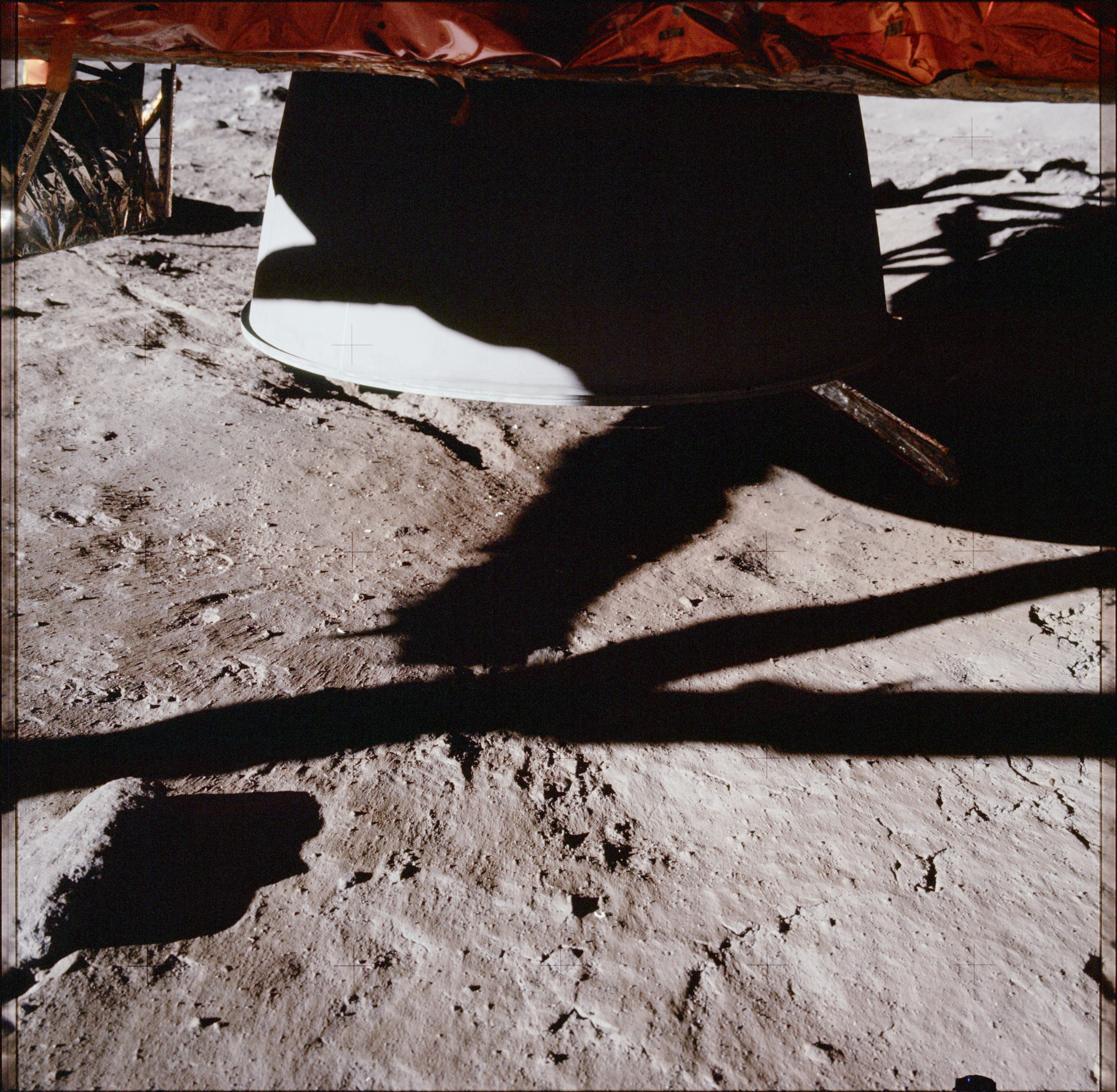
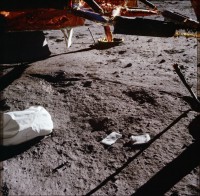 Photo
5892 — Enhanced version of above photo. Note the missing lunar topsoil
as well as the surface scarring underneath the LM's descent engine. Photo
5892 — Enhanced version of above photo. Note the missing lunar topsoil
as well as the surface scarring underneath the LM's descent engine.
|
|
|
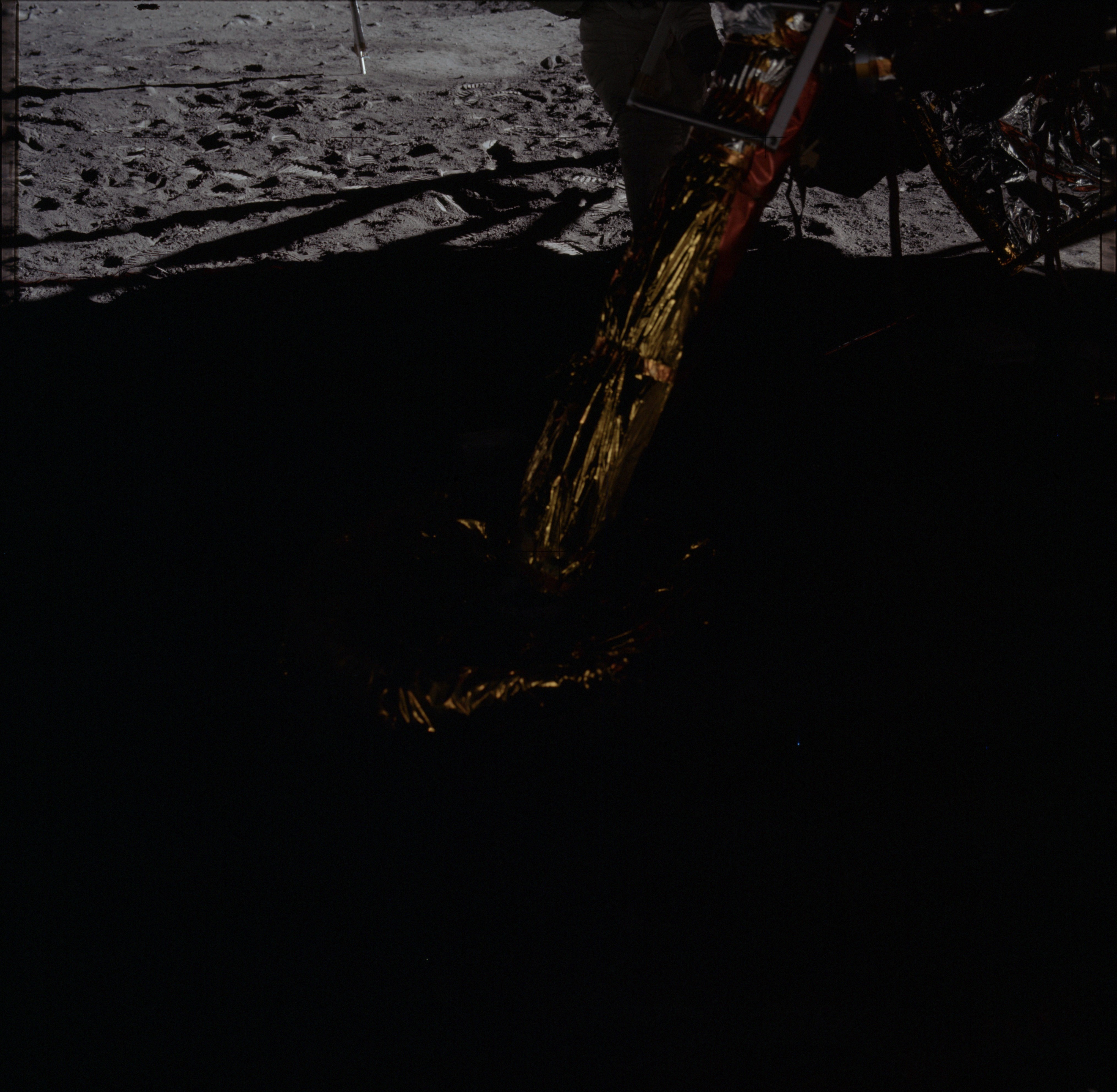
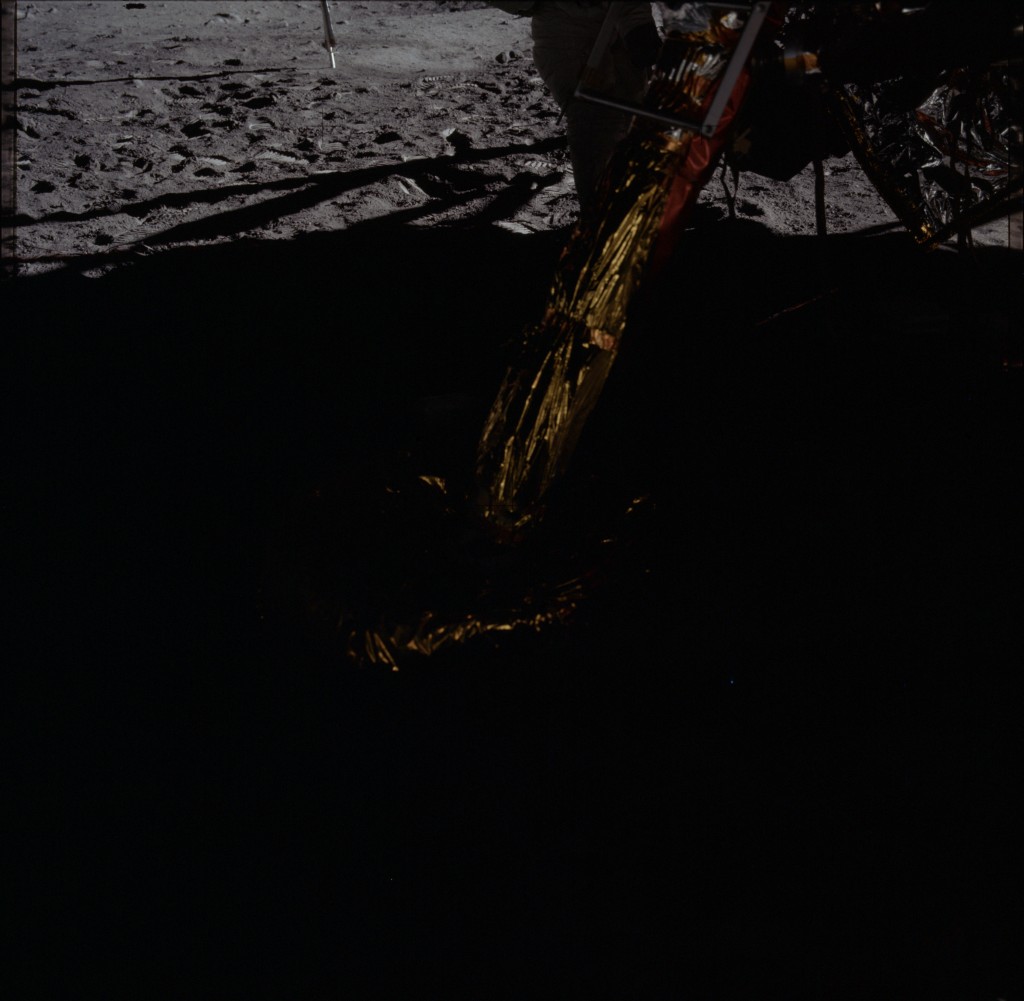
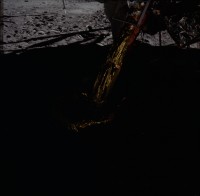 Photo
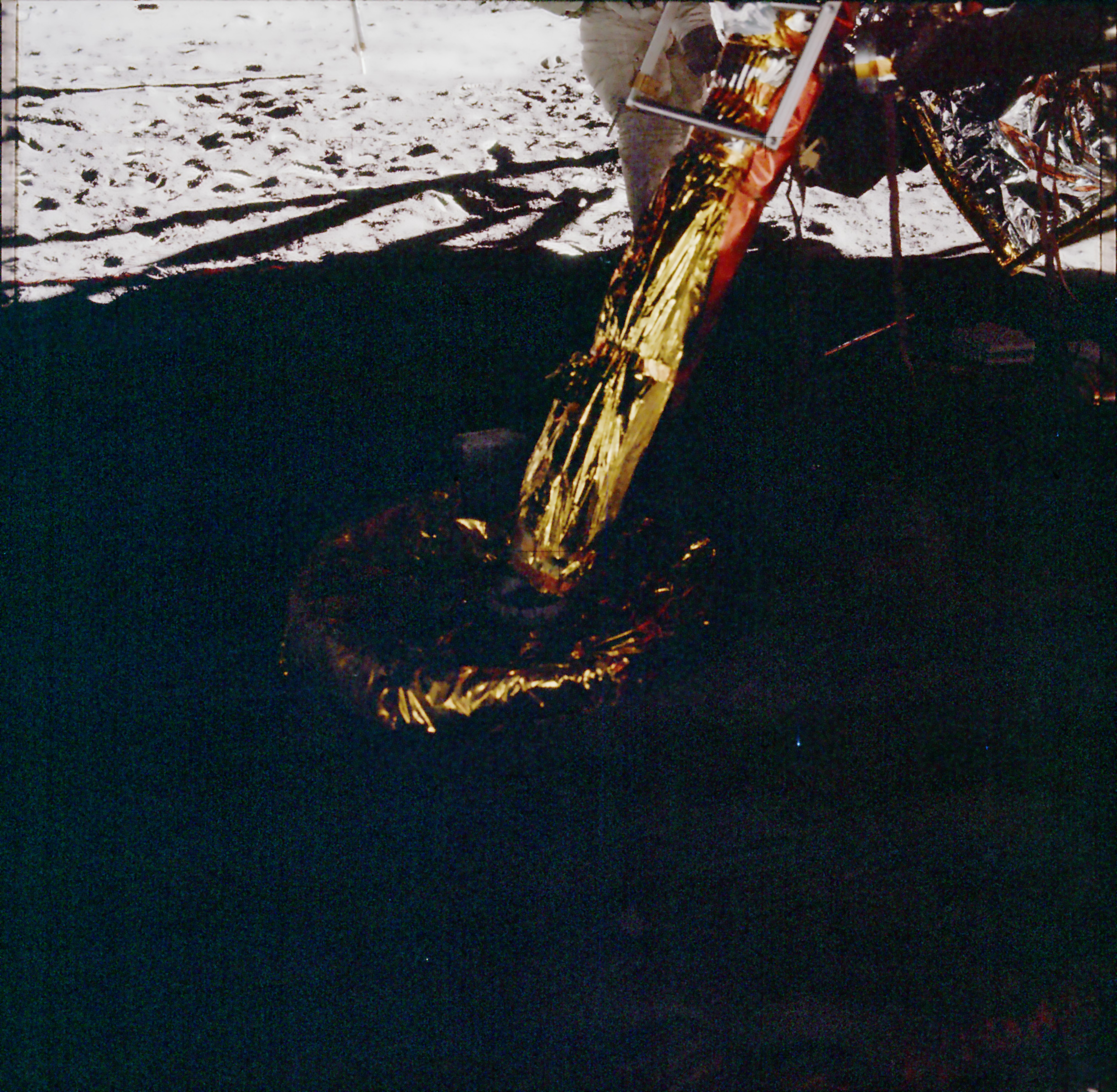
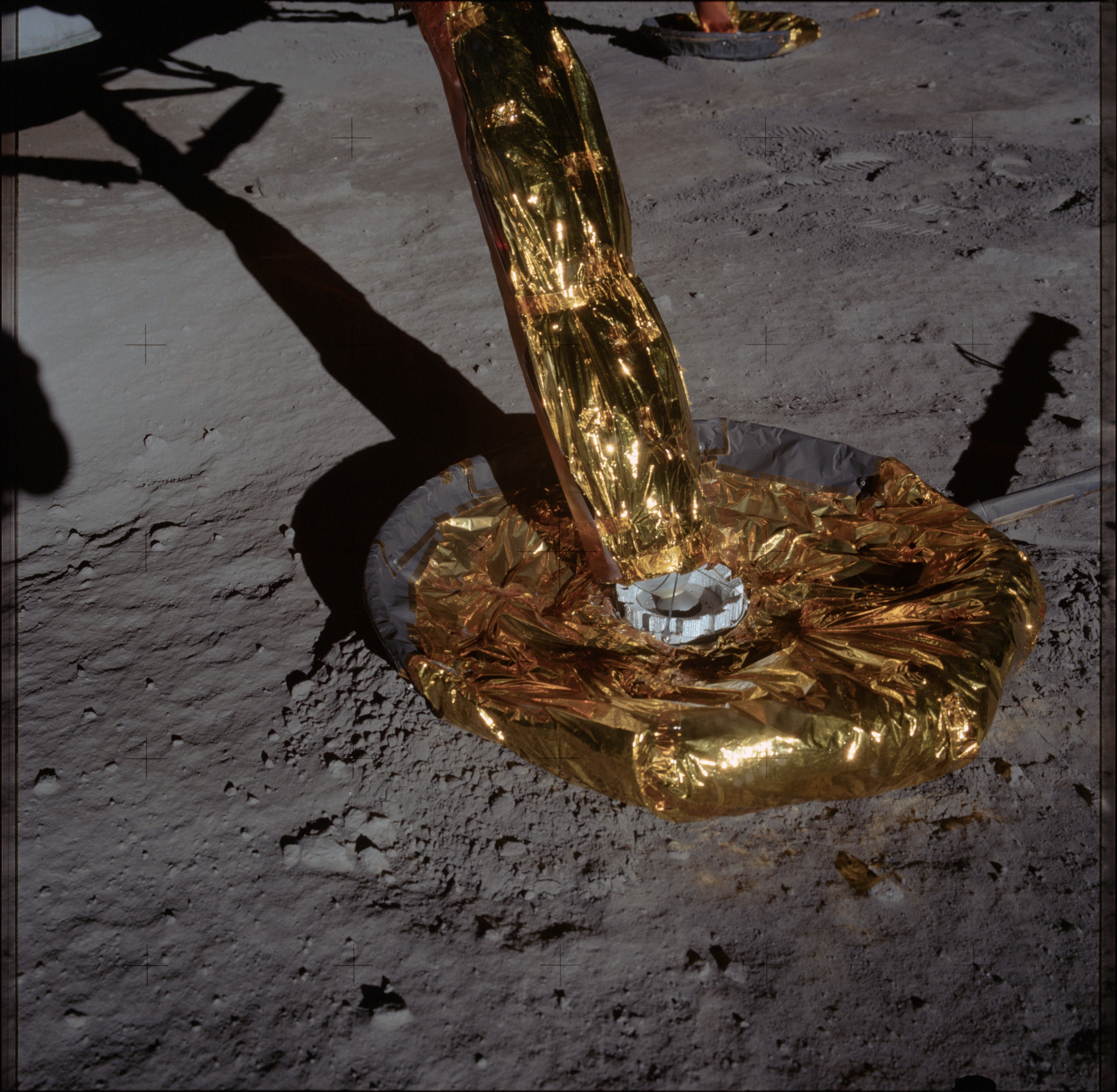
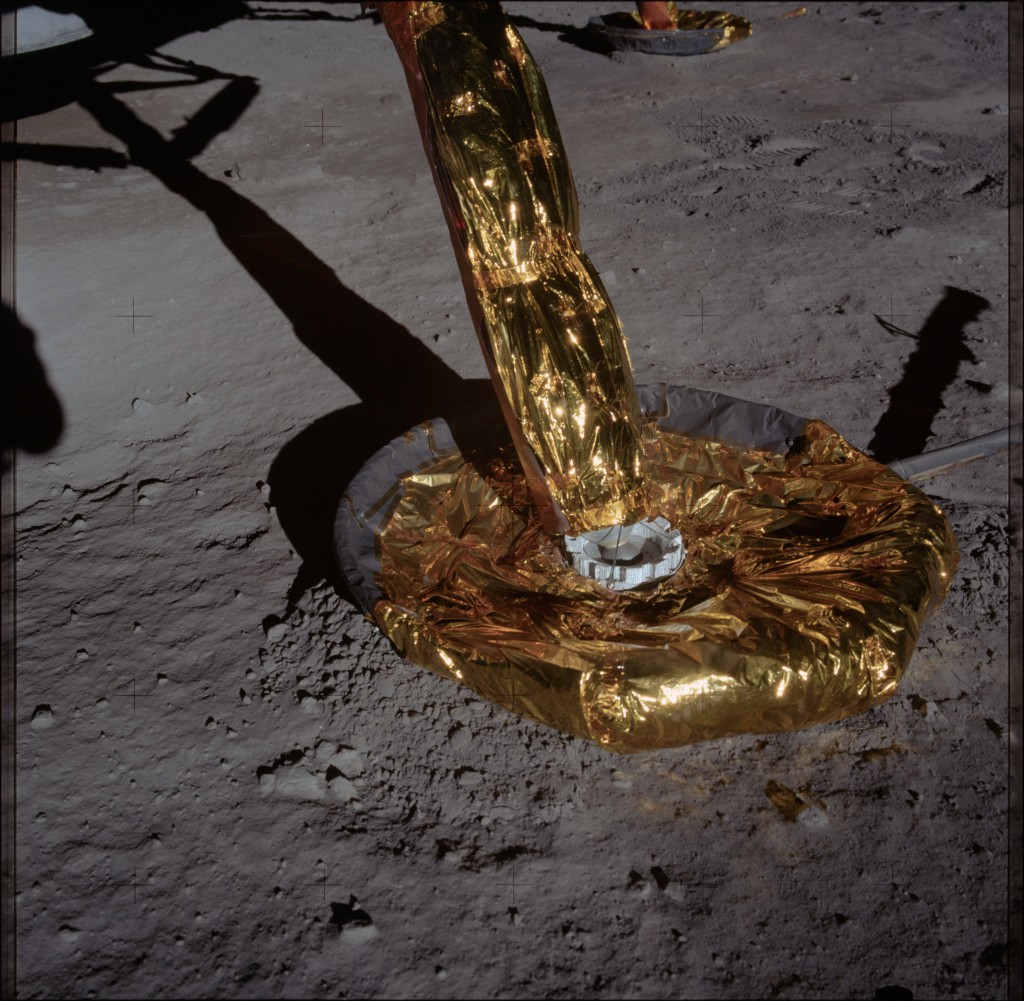
5895 — View of the Eagle's +Z footpad. The Eagle's +Z lander leg and
footpad is famous since this is the leg and footpad which Armstrong stepped off
of in order to be the first human being to set foot upon the moon's surface on
July 20, 1969. This is ISD's raw image which only has been color balanced. This
photo is very dark since Armstrong forgot to increase the exposure value (EV)
by either opening up the aperture, increasing the exposure time, or both.
Judging by the very limited depth of field, it appears that the 60mm Biogon
lens already was set to its largest or maximum aperture of F/5.6. Photo
5895 — View of the Eagle's +Z footpad. The Eagle's +Z lander leg and
footpad is famous since this is the leg and footpad which Armstrong stepped off
of in order to be the first human being to set foot upon the moon's surface on
July 20, 1969. This is ISD's raw image which only has been color balanced. This
photo is very dark since Armstrong forgot to increase the exposure value (EV)
by either opening up the aperture, increasing the exposure time, or both.
Judging by the very limited depth of field, it appears that the 60mm Biogon
lens already was set to its largest or maximum aperture of F/5.6.
|
|
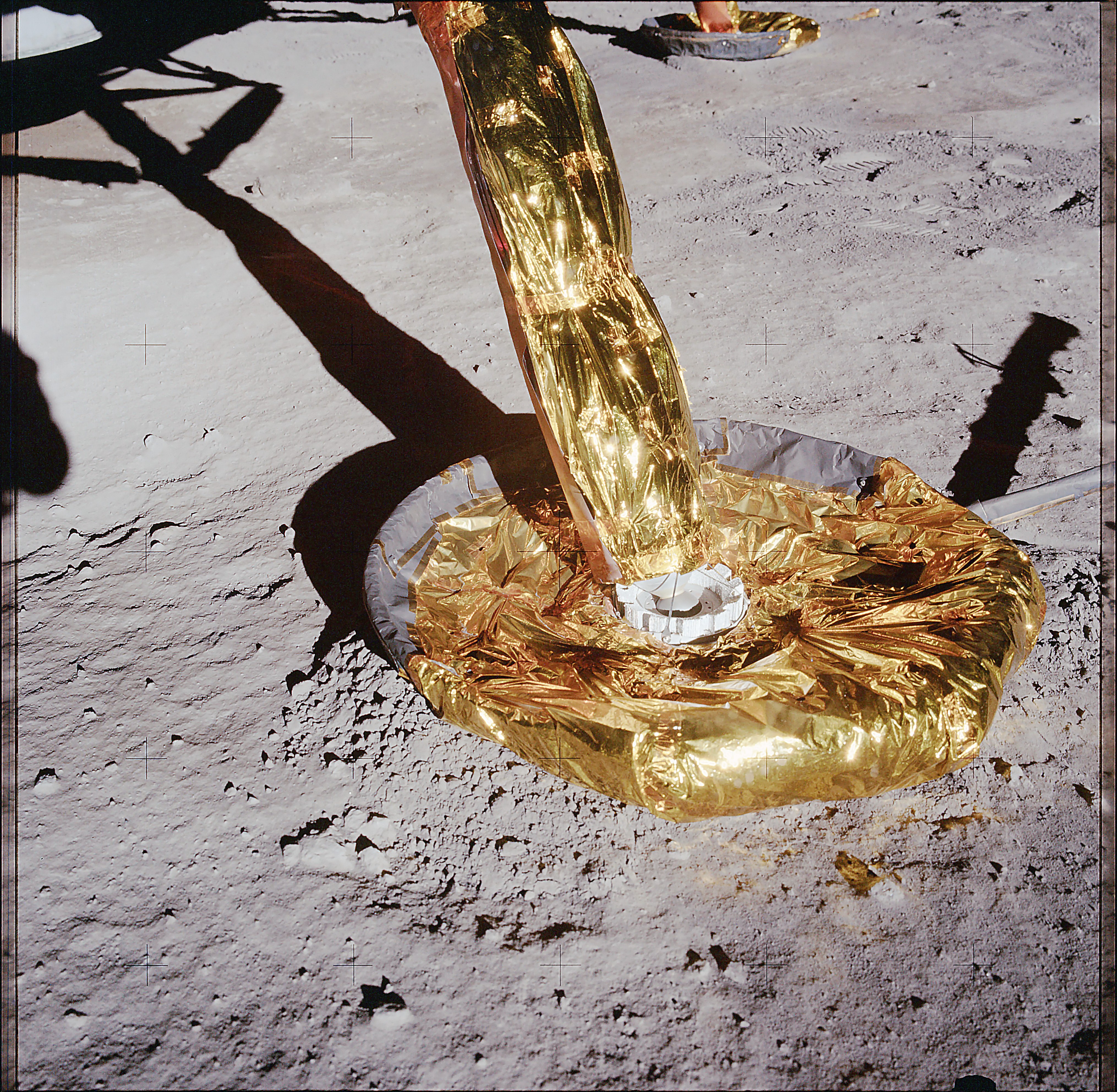
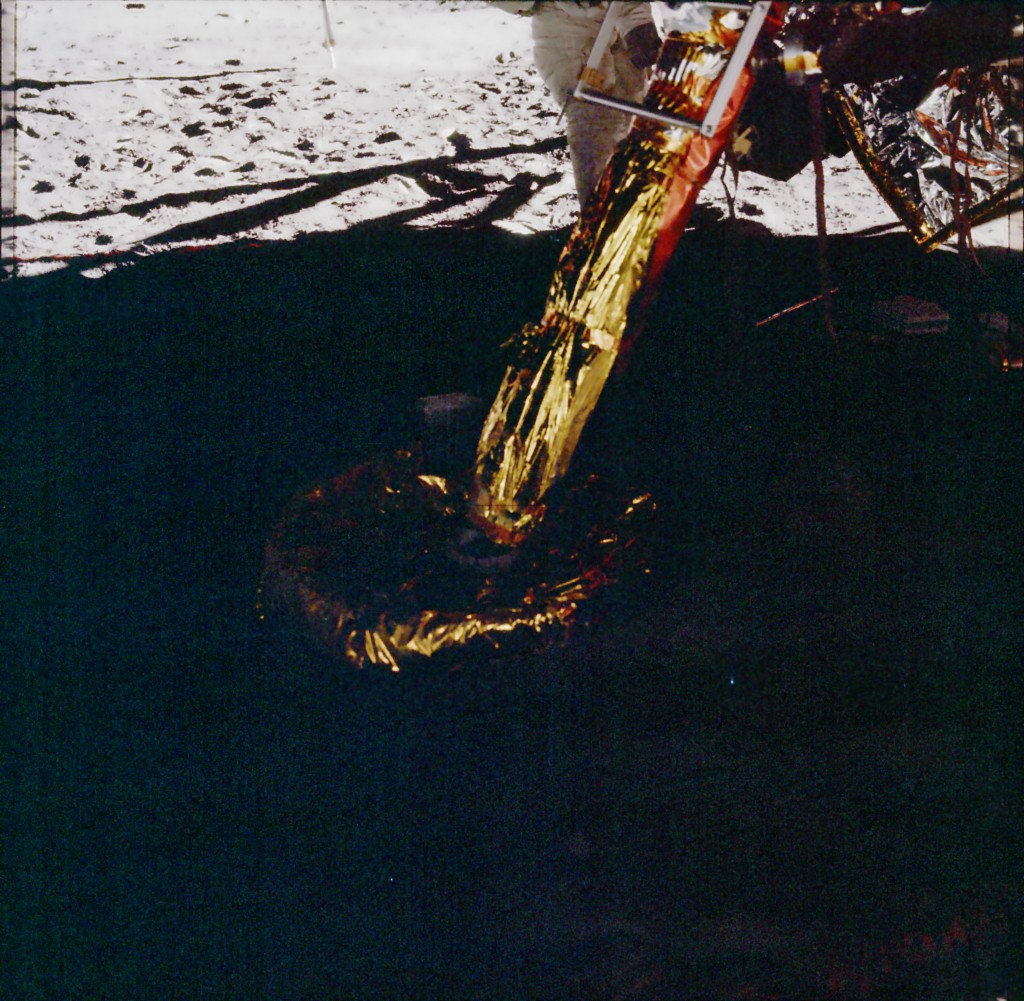
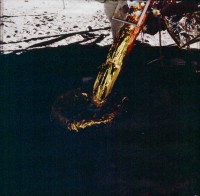 Photo
5895 — Above photo after applying strong gamma correction and a noise
filter. I thought that this enhanced version of the above photo was worth
including on this web page since perhaps some of the Grumman engineers are
still alive and will recall wrapping this very lander strut and footpad with
the multiple layers of insulating Mylar foil. Photo
5895 — Above photo after applying strong gamma correction and a noise
filter. I thought that this enhanced version of the above photo was worth
including on this web page since perhaps some of the Grumman engineers are
still alive and will recall wrapping this very lander strut and footpad with
the multiple layers of insulating Mylar foil.
The noise filter blurs extremely bright areas
when it is adjusted to remove noise from extremely dark areas. Aldrin can be
seen at the top of the photo standing next to the LM's MESA. Note that the
solar wind collector experiment already has been deployed by
Armstrong. |
|
|
|
|
|
|
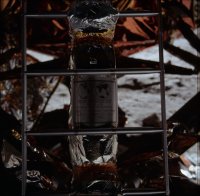
Photo
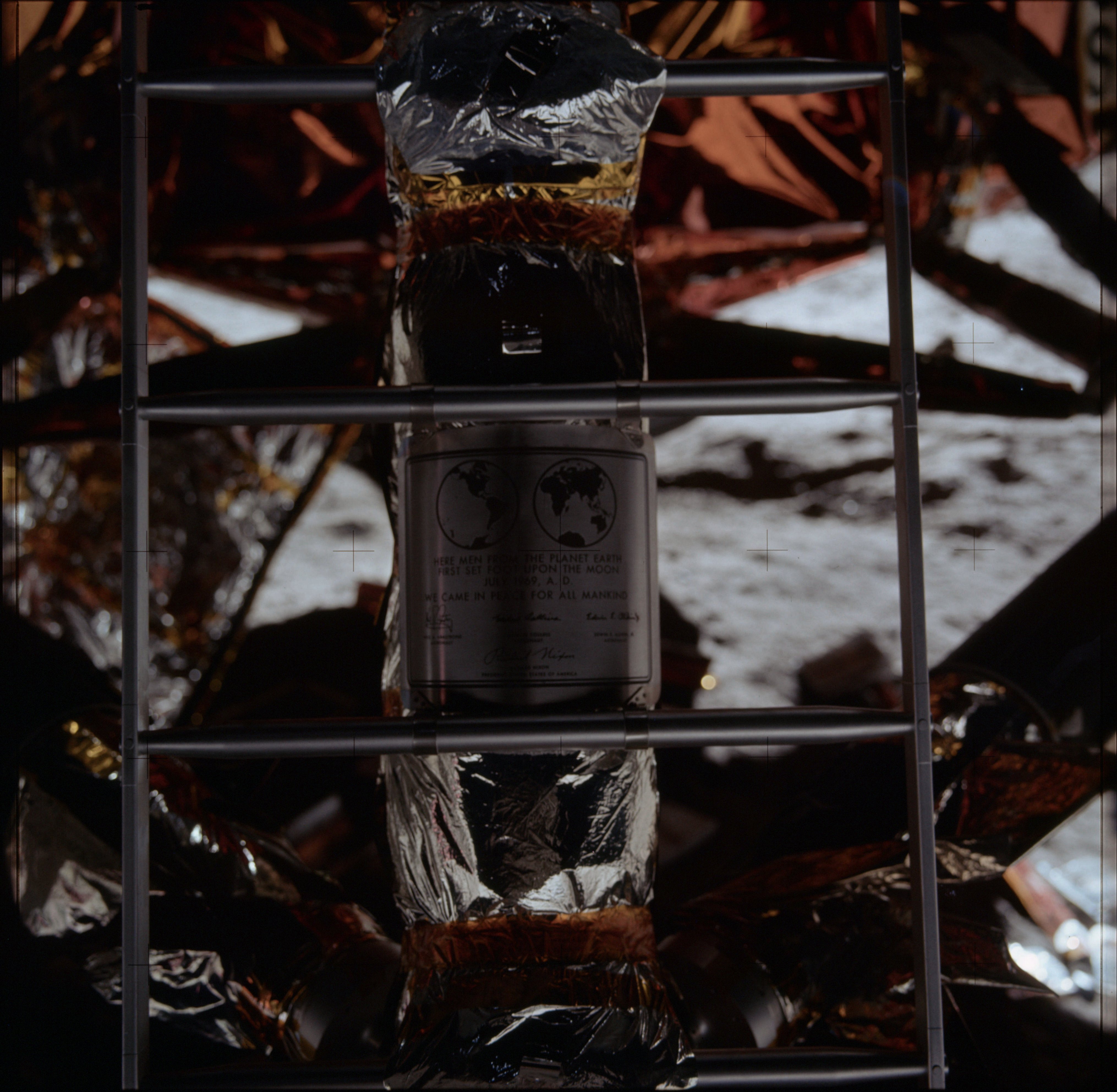
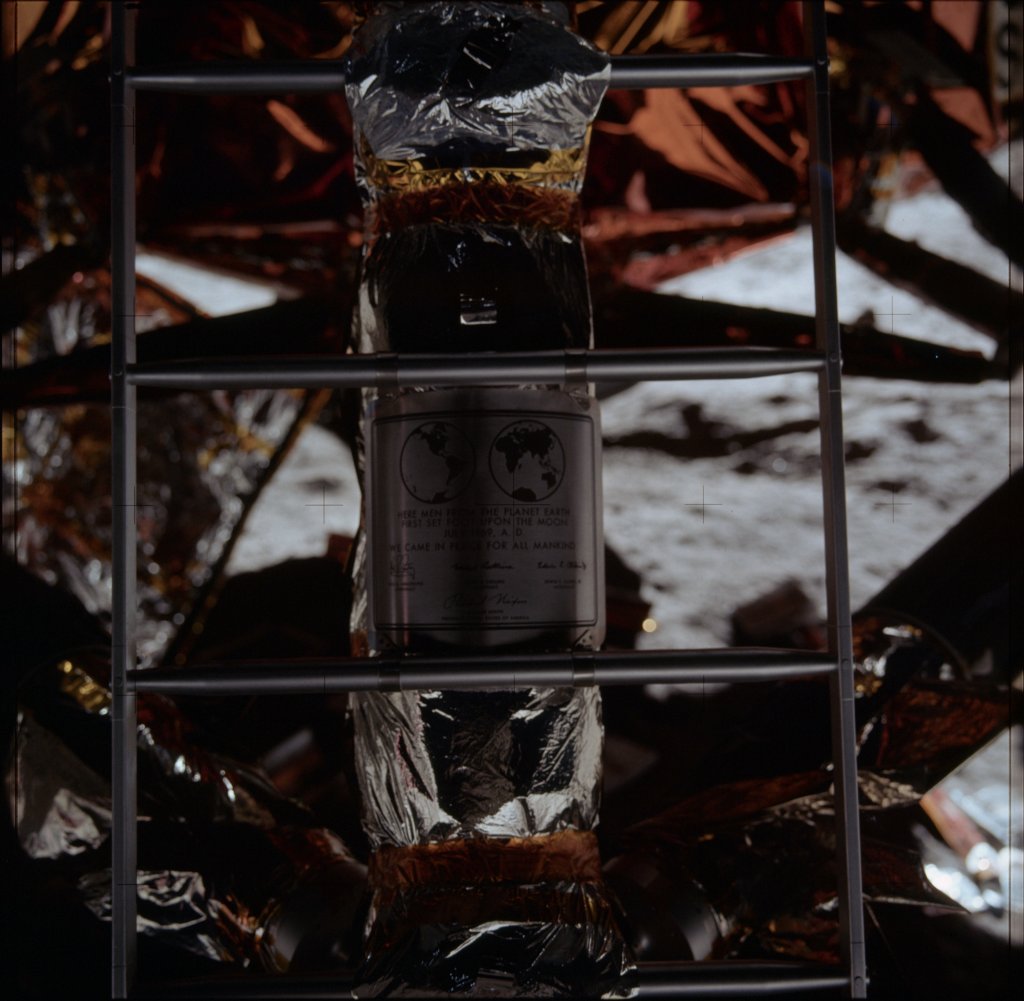
5899 — The famous photo of the plaque attached to the LM's landing
gear. |
|
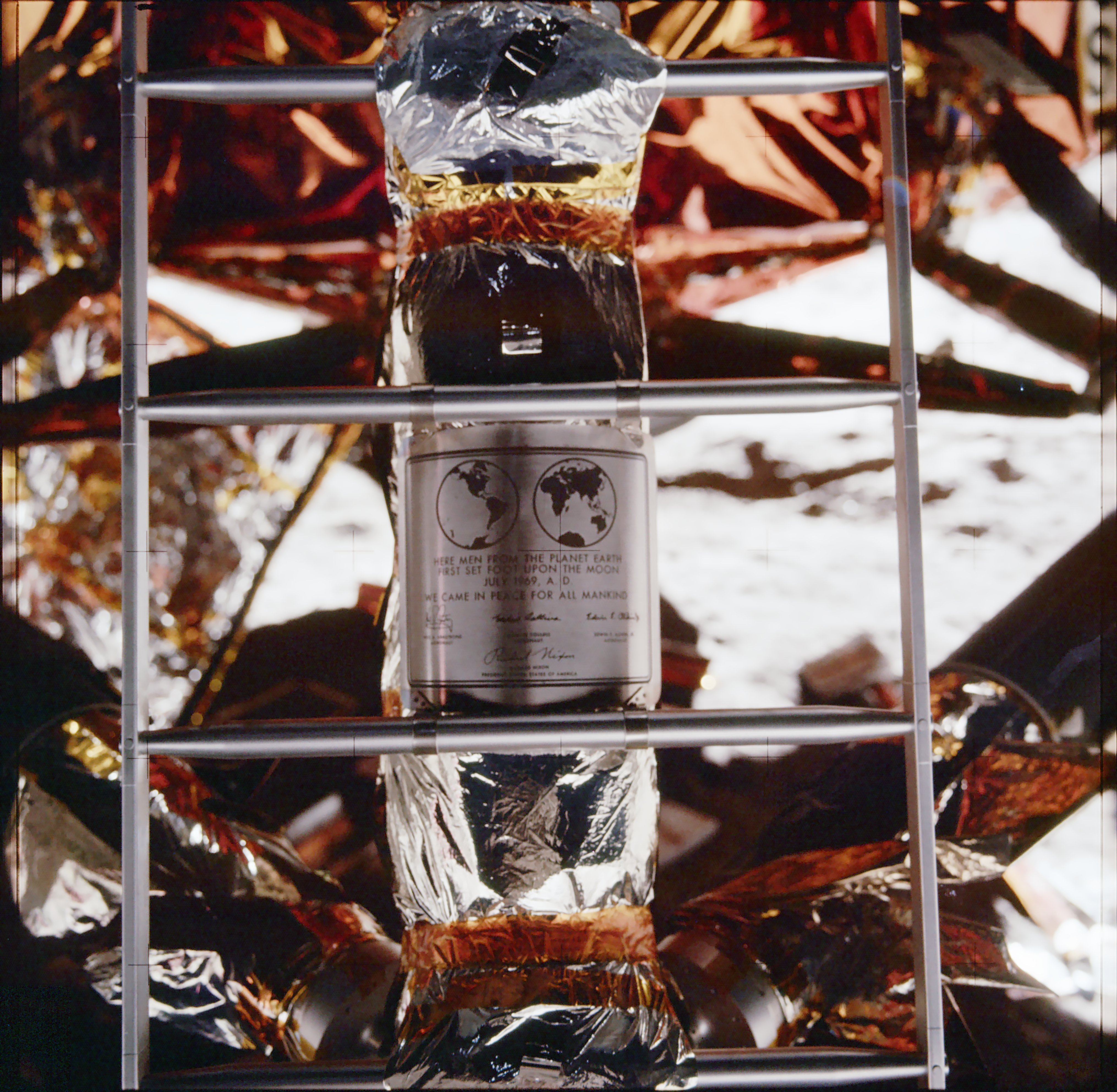
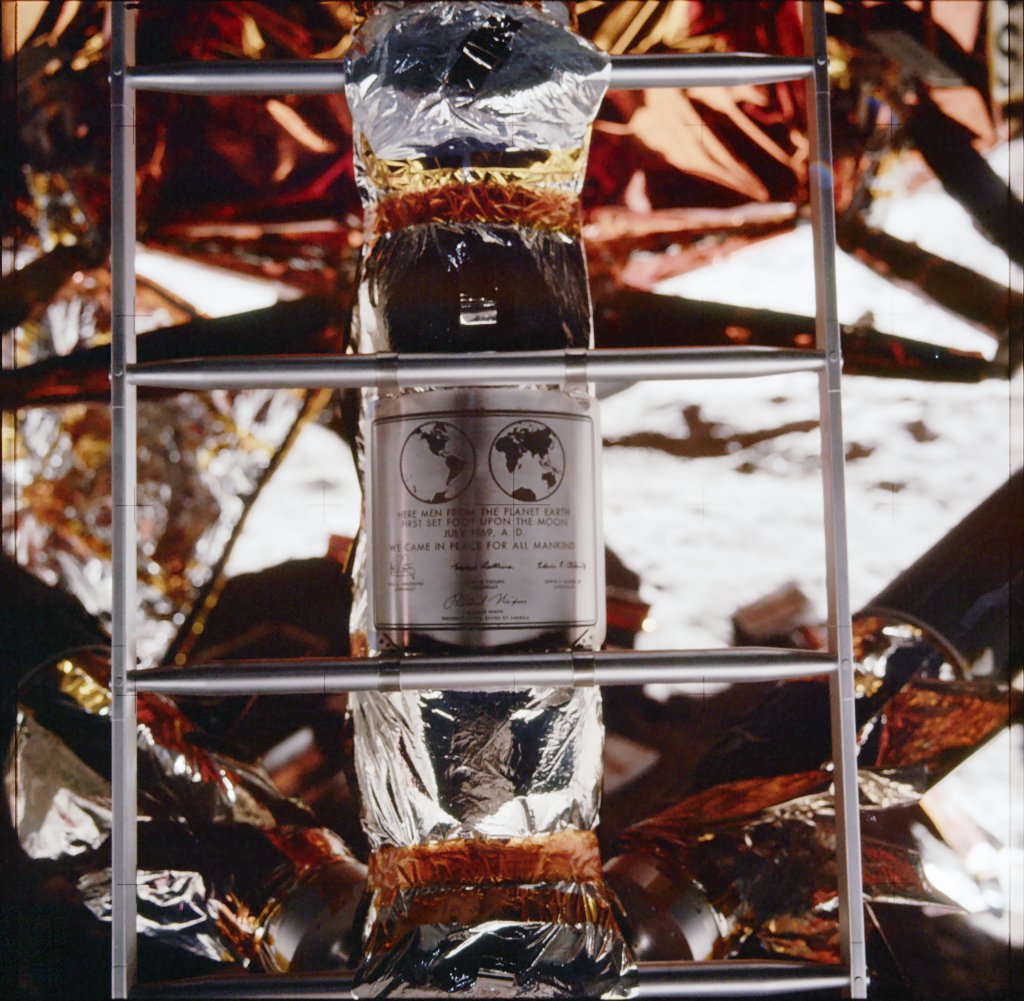
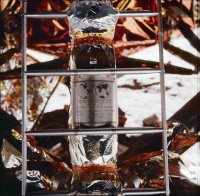
Photo
5899 — My enhanced version of left photo. |
|
|
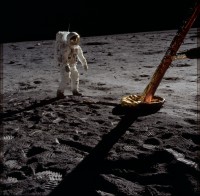 Photo
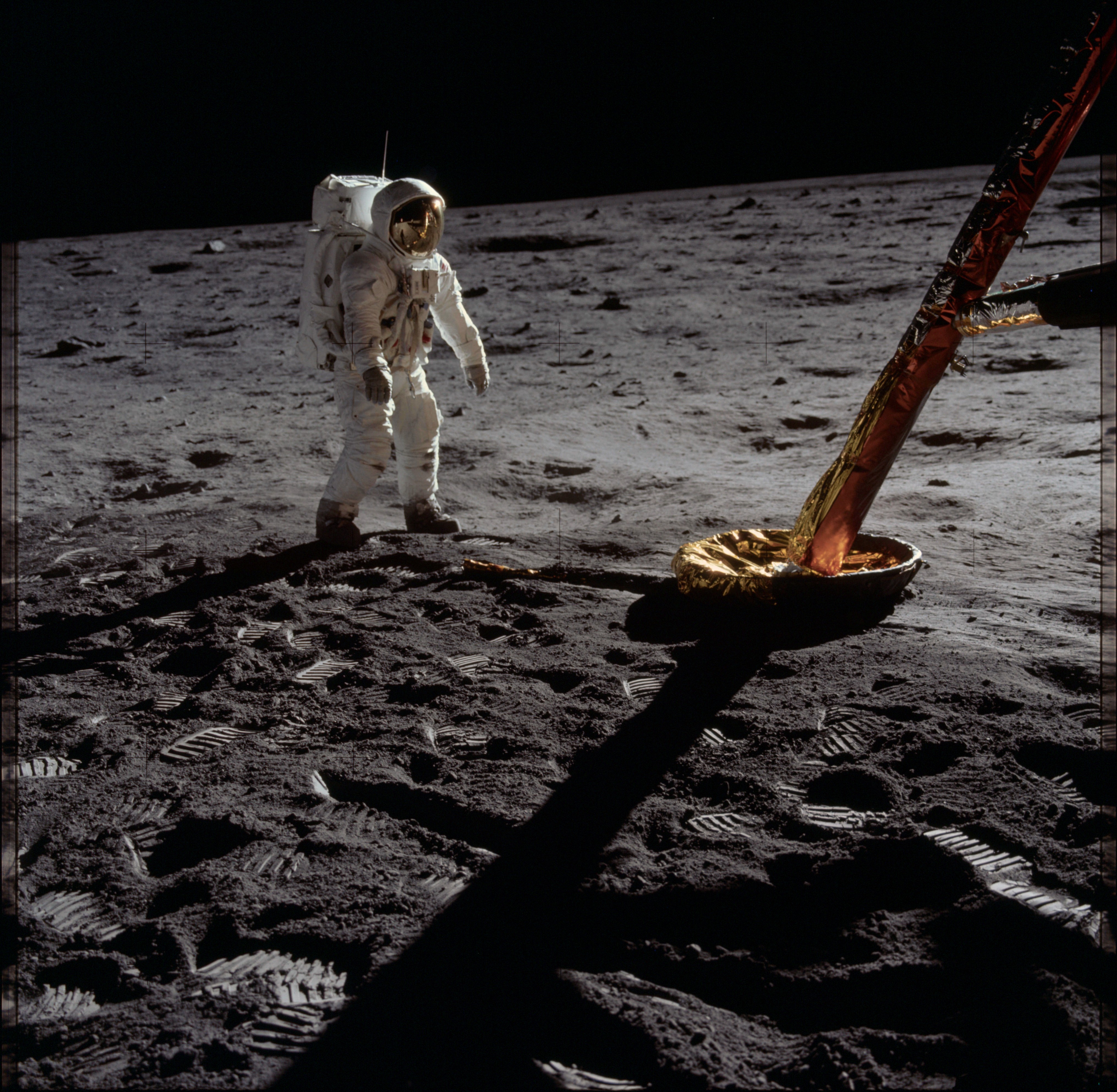
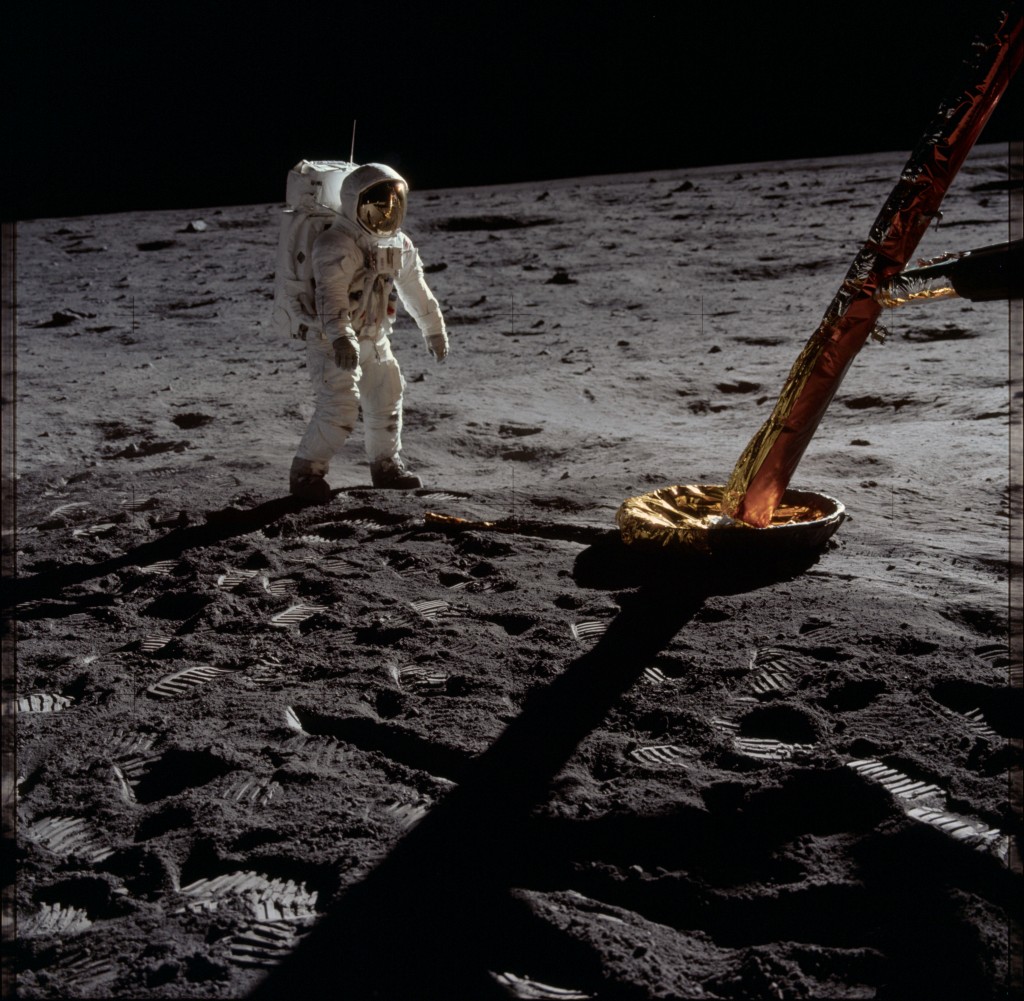
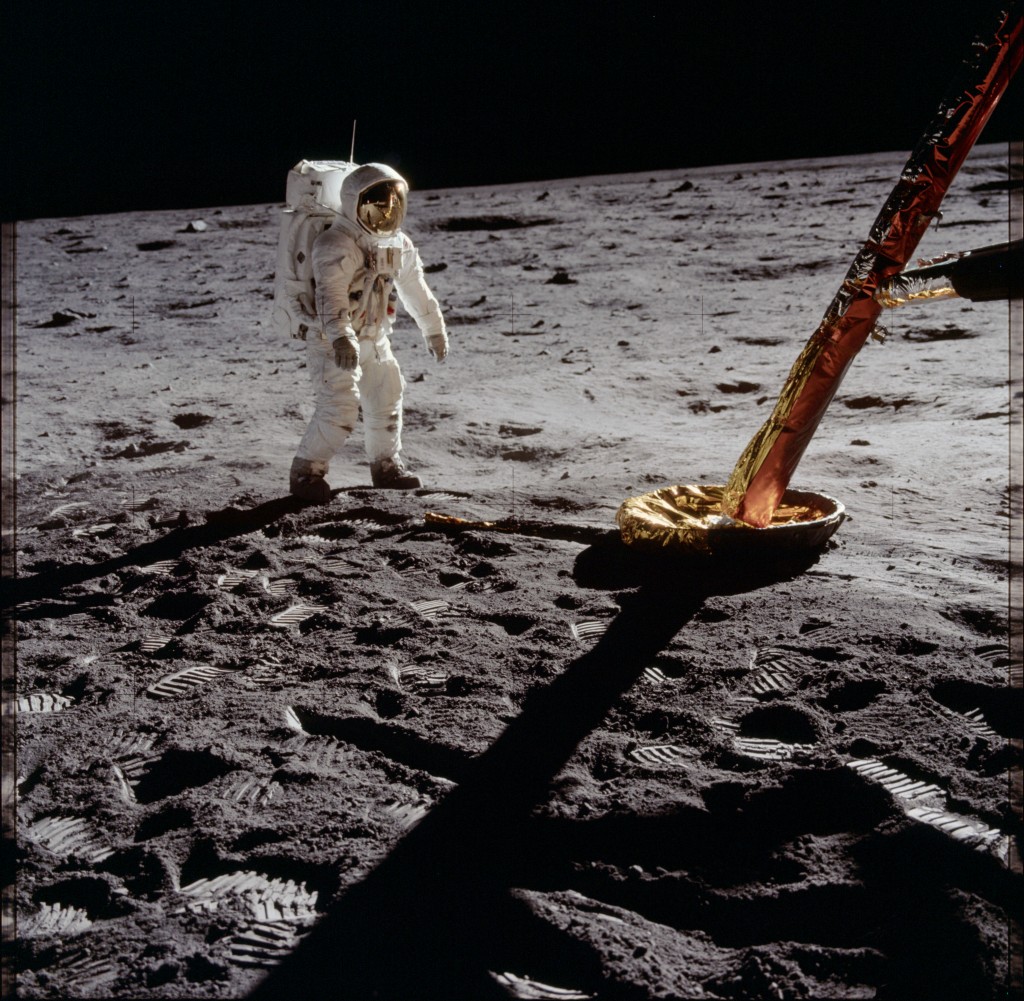
5902 — Buzz Aldrin on the moon, just after he finished descending the
LM ladder and stepping off the footpad. This photo has been color balanced and
has had vignetting removed. Note the LM descent engine's blast trail which
sweeps from left to right and just behind Aldrin in this photo. Photo
5902 — Buzz Aldrin on the moon, just after he finished descending the
LM ladder and stepping off the footpad. This photo has been color balanced and
has had vignetting removed. Note the LM descent engine's blast trail which
sweeps from left to right and just behind Aldrin in this photo.
|
|
|
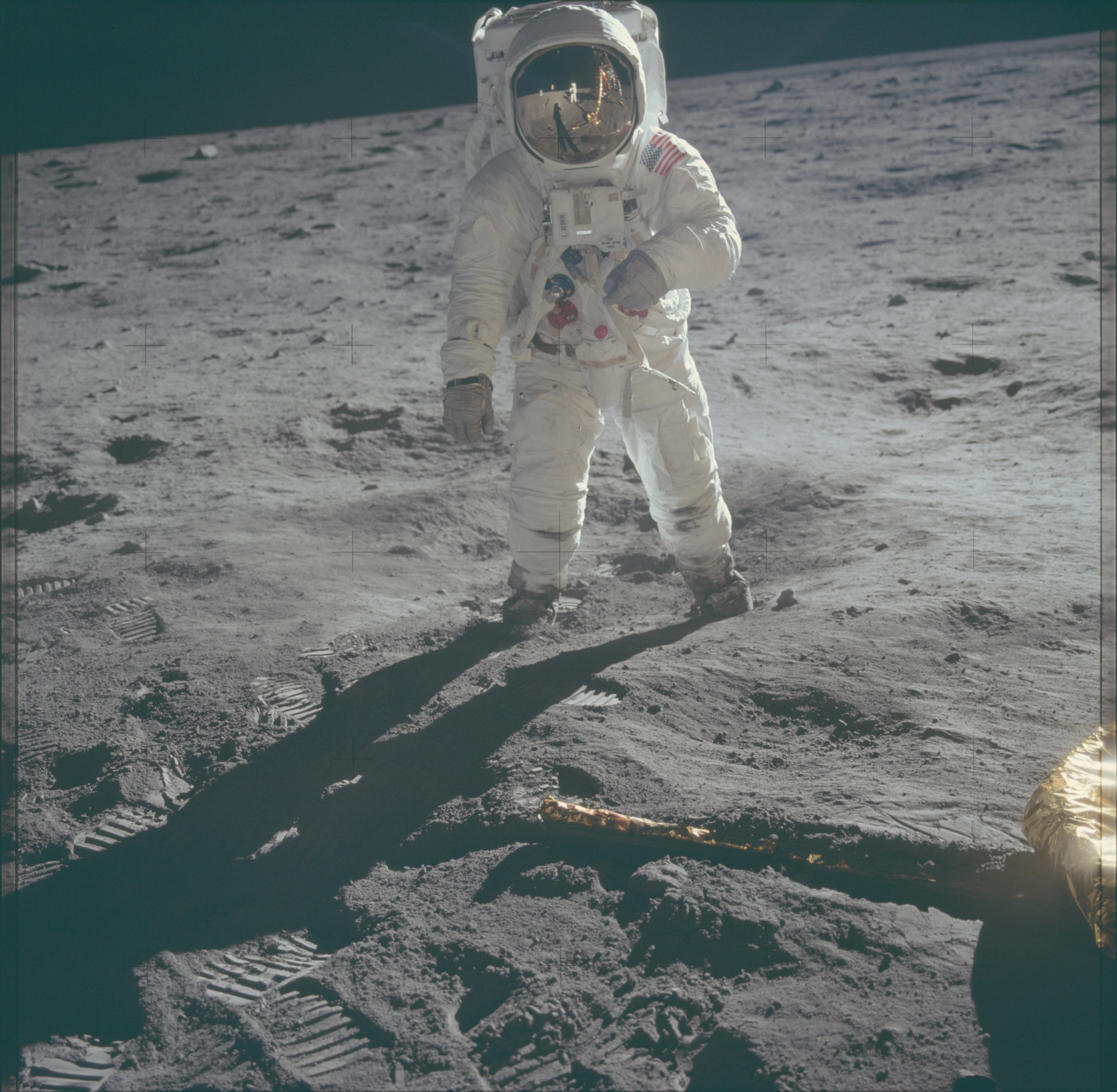
The "Man On The Moon"
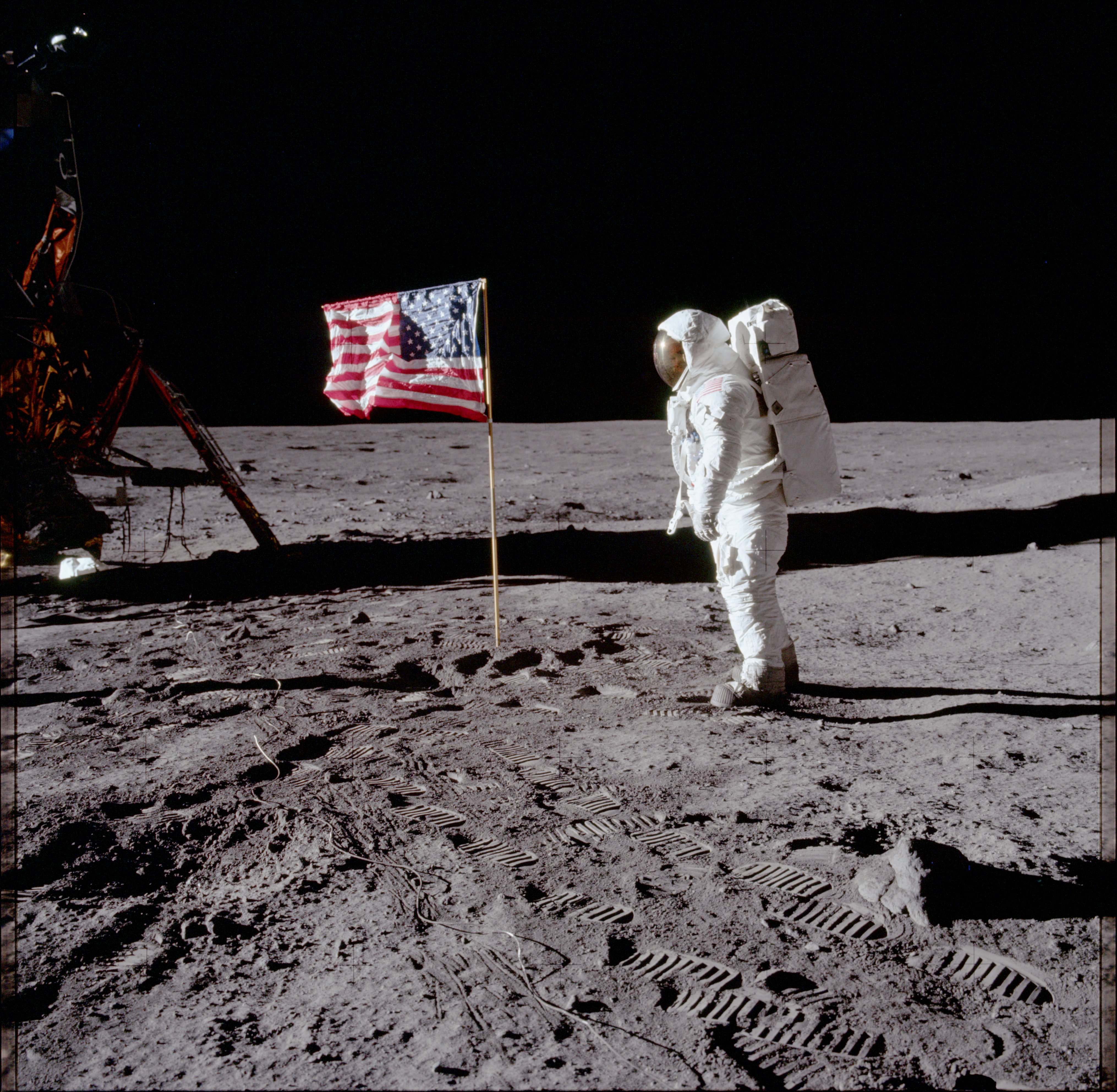
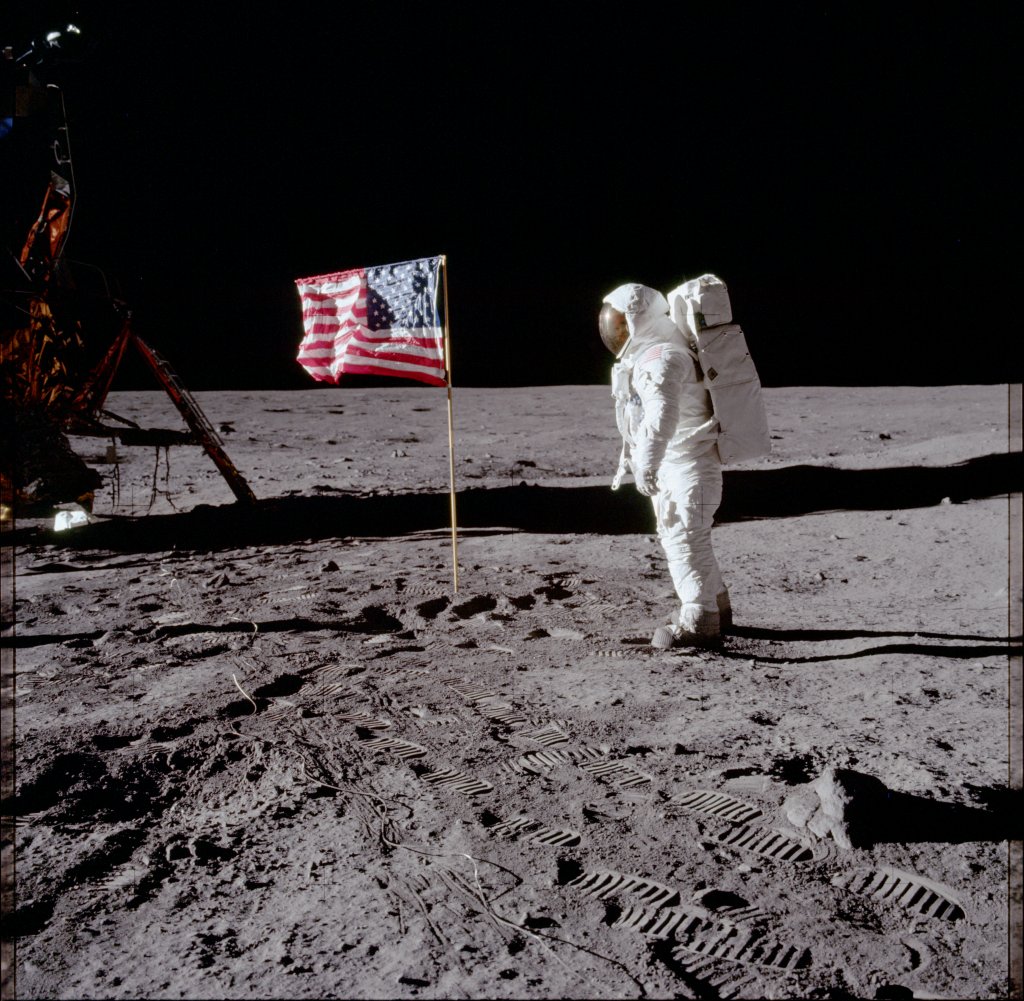
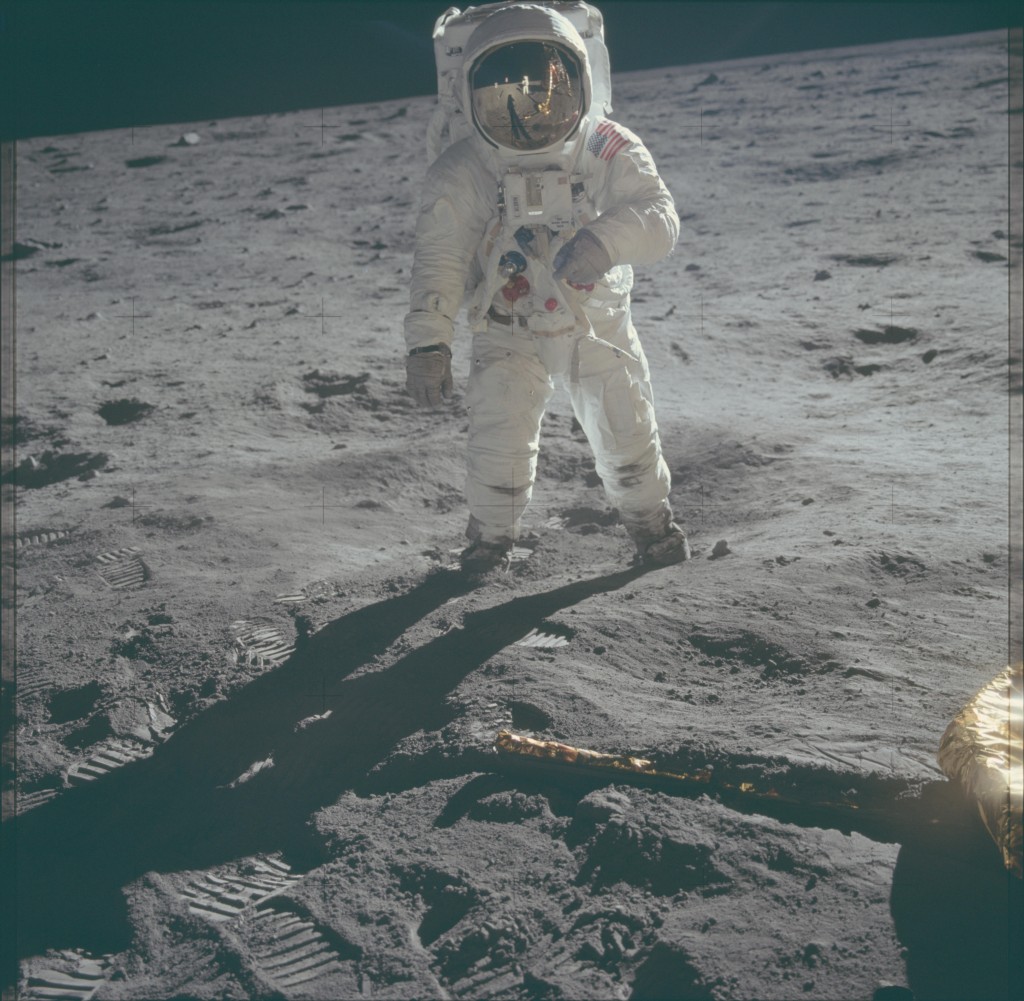
Photo 5903 — Probably the most famous and most widely recognized
photograph ever taken.
|
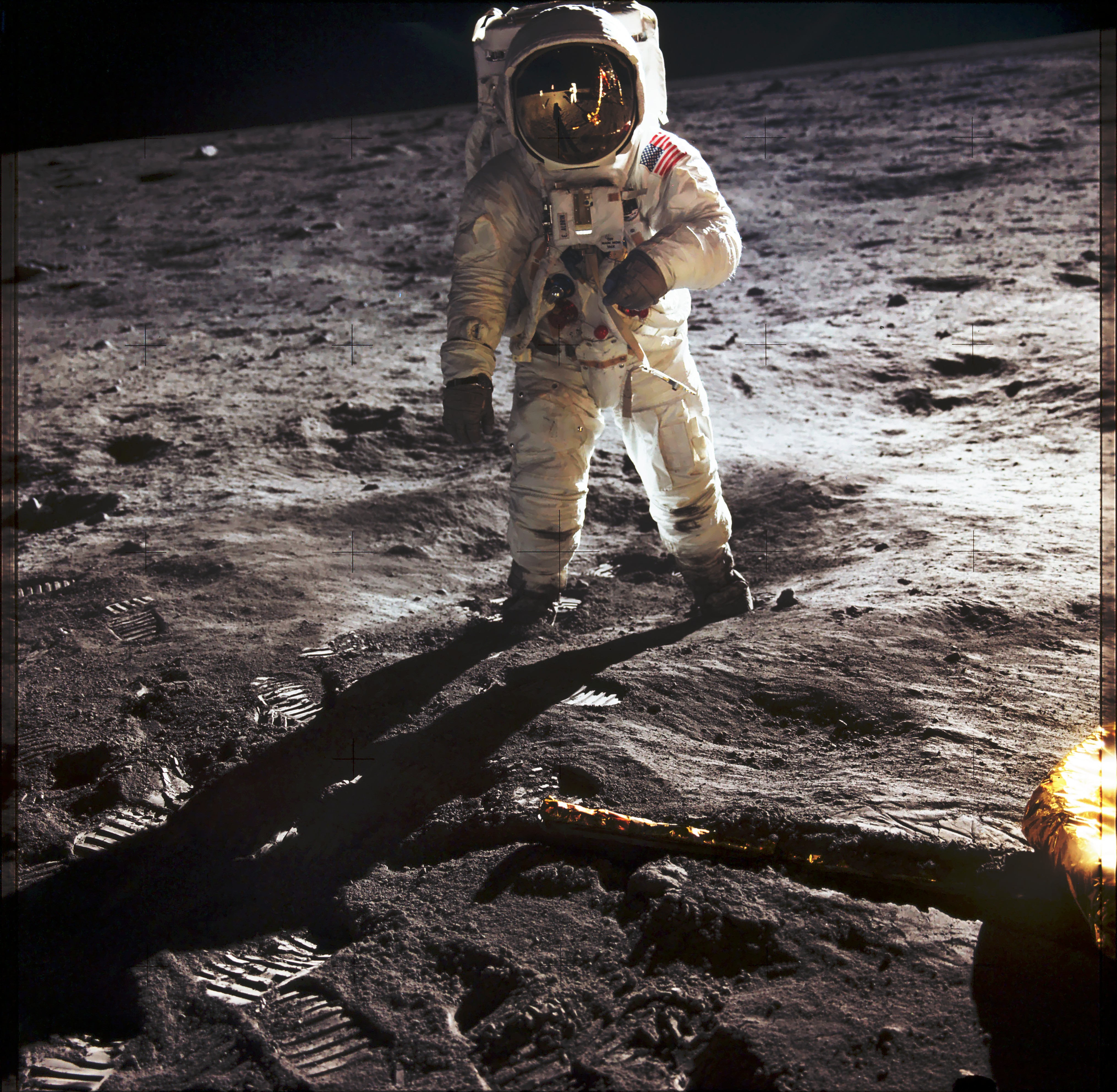
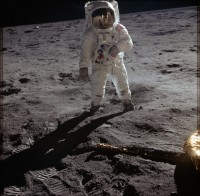 Photo
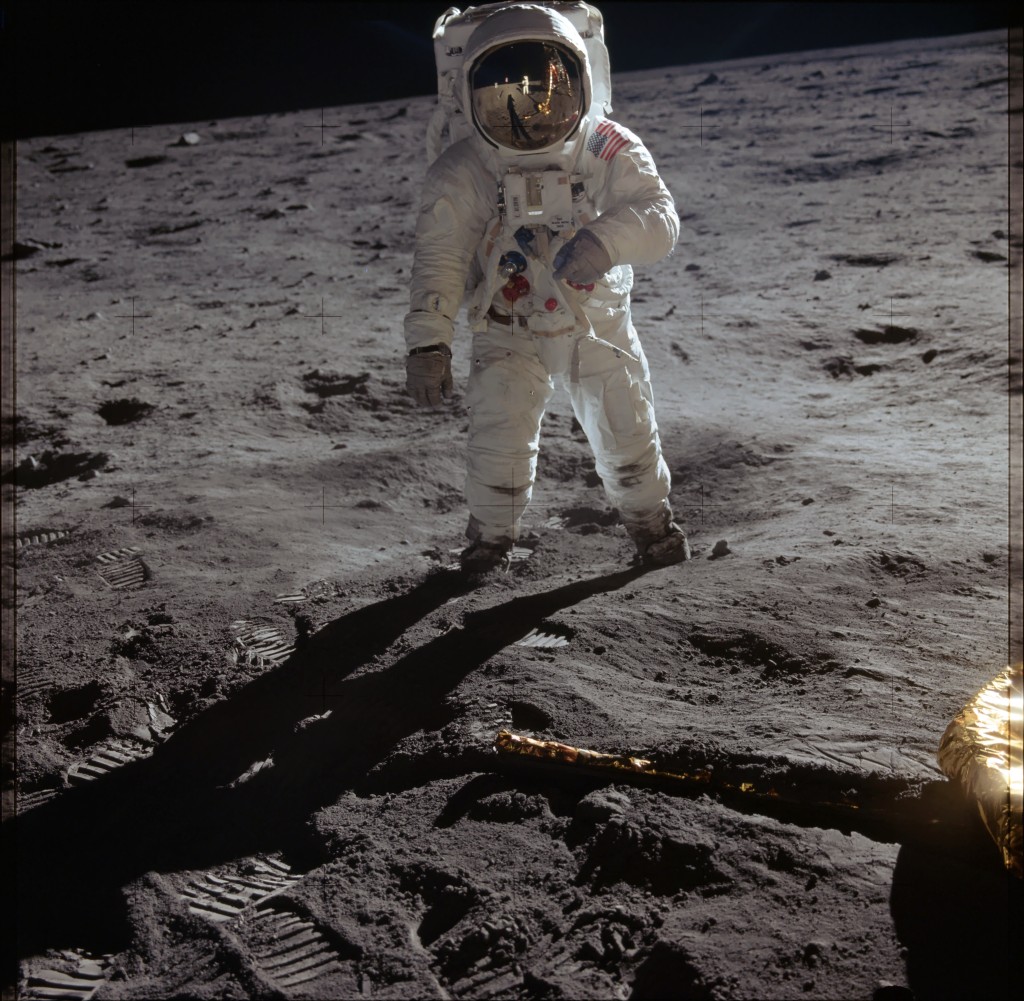
5903 (cropped, noise removed, color balanced, lens vignetting removed)
— The famous "Man On The Moon" photo of Aldrin. This is one photo where I
removed the Biogon 60mm F/5.6 lens's inherent vignetting in order to show that
the lunar surface was evenly illuminated by the sun. This photo is as close to
a true view of what Armstrong saw, in terms of color, brightness and contrast,
when he photographed Aldrin. Photo
5903 (cropped, noise removed, color balanced, lens vignetting removed)
— The famous "Man On The Moon" photo of Aldrin. This is one photo where I
removed the Biogon 60mm F/5.6 lens's inherent vignetting in order to show that
the lunar surface was evenly illuminated by the sun. This photo is as close to
a true view of what Armstrong saw, in terms of color, brightness and contrast,
when he photographed Aldrin.
Be sure to look closely at Aldrin's watch in
the full resolution photo version and note that the watch shows 11:14 PM CDT.
Aldrin had his watch set to Houston Texas CDT since this was the time used by
mission control. Thus photo 5903 was taken at 11:14 PM CDT on July 20, 1969, or
04:14 AM UT on July 21, 1969. NASA's Apollo Lunar Surface Journal says that the
photo was taken within 5 minutes of the time shown on Aldrin's watch.
The brighter patch behind Aldrin definitely
was caused by the LM's descent engine. See enhanced versions of photos 5902
above, 5963 and 5964 further below, which show the same bright descent engine
blast pattern.
In any event, technically this photo is
perfectly exposed since the brightest portions of Aldrin's suit just come close
to reaching fully saturation and since there still are extremely faint details
present in the deep shadow areas.
I am still working on calculating the
perspective distortion for photo 5903 since Armstrong tilted the Hasselblad
camera with its 60mm Biogon lens approximately 20 degrees down relative to the
horizon in order to take photo 5903. A lot of that tilt was due to the natural
"lean forward" stance position needed to counter the weight of the personal
life support system (PLSS) backpack. Armstrong also had the presence of mind to
rotate the camera clockwise since he figured that if he didn't, then the sun's
glare would be in the upper right of the frame and would completely wash out
the photo. He probably also figured on getting a fair amount of the extremely
bright gold colored Mylar covered landing pad and strut out of the photo as
well. Or perhaps Armstrong just got lucky when he took this photo!
Aldrin admits that Armstrong was a far better
photographer than he was. This likely is why the majority of the Apollo 11 EVA
photos were taken by Armstrong. Armstrong also had an uncanny knack for getting
the exposures right. In all of his photos the brightest whites in the scenes
come really close yet don't oversaturate the film. Apparently Armstrong took
his assignment really seriously when NASA told the astronauts to take the
camera equipment home with them and shoot tons of photos in order to gain
experience using the camera gear. |
|
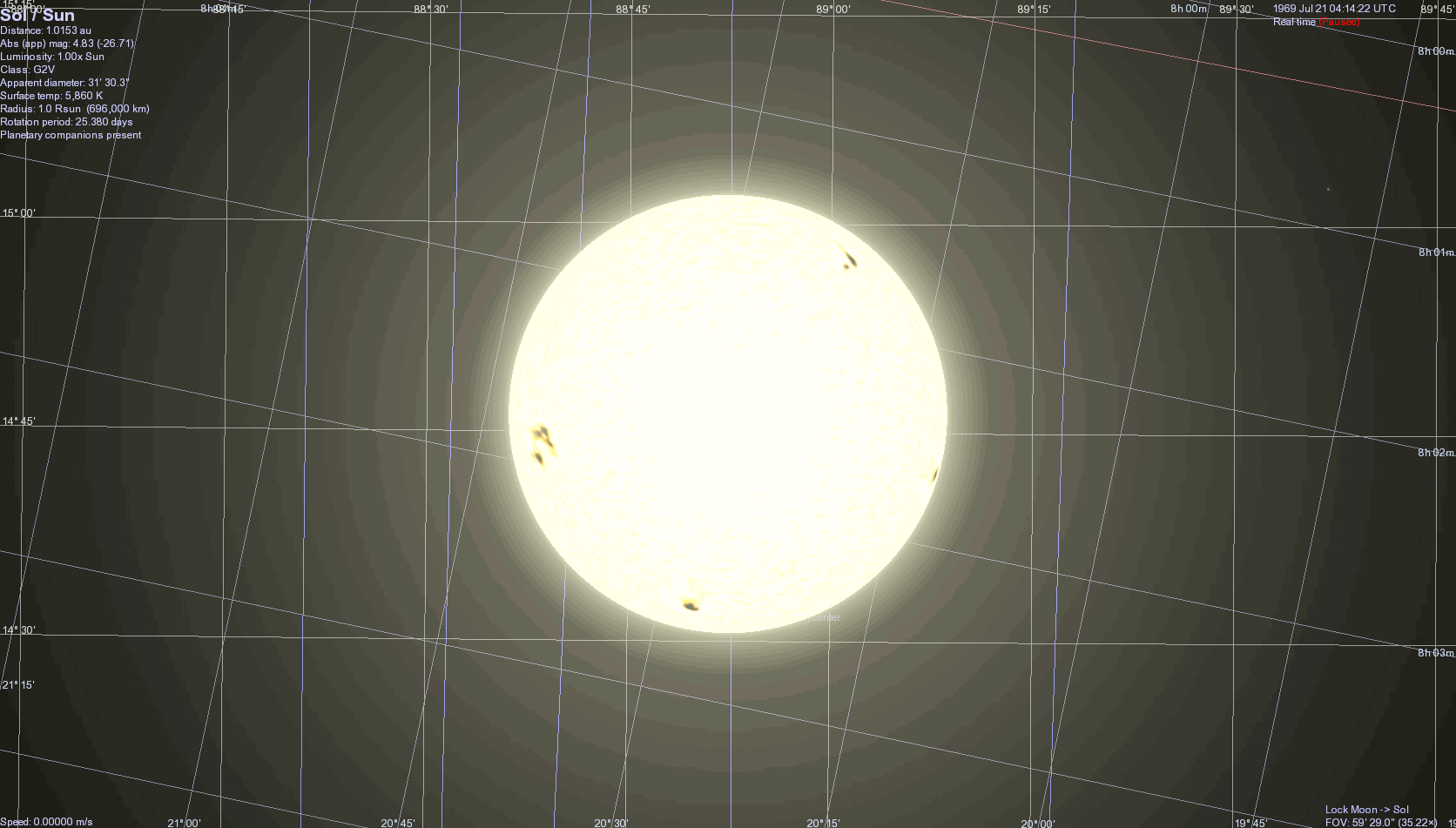
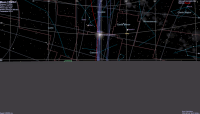 How high was the sun above the
horizon when photo 5903 was taken? — At the Apollo 11 landing site on
July 21, 1969 at 04:14UT when this photo was taken, the sun was at an altitude
of approximately 14.75 degrees above the horizon. The screen shot at left is
from a program called Celestia. It is a view from the Apollo 11 landing site on
the lunar surface on July 21, 1969 at 04:14UT. How high was the sun above the
horizon when photo 5903 was taken? — At the Apollo 11 landing site on
July 21, 1969 at 04:14UT when this photo was taken, the sun was at an altitude
of approximately 14.75 degrees above the horizon. The screen shot at left is
from a program called Celestia. It is a view from the Apollo 11 landing site on
the lunar surface on July 21, 1969 at 04:14UT.
|
|
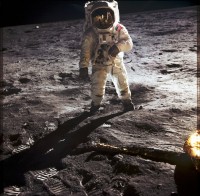 Photo
5903 with lognormal curves applied— This version of the above famous
5903 photo should dispel all Apollo hoax conspiracy claims that a second light
source was present in the photo. As you can clearly see, the only illumination
of Aldrin is the sun itself, the gold and bronze colored Mylar covering the LM
struts and descent stage, the moon surface itself, and reflections off of
Armstrong's white space suit. Not convinced? Examine the close-up views of
Aldrin's visor reflection, further below, to see all of the bright objects
which illuminated the shadow side of Aldrin's spacesuit. Photo
5903 with lognormal curves applied— This version of the above famous
5903 photo should dispel all Apollo hoax conspiracy claims that a second light
source was present in the photo. As you can clearly see, the only illumination
of Aldrin is the sun itself, the gold and bronze colored Mylar covering the LM
struts and descent stage, the moon surface itself, and reflections off of
Armstrong's white space suit. Not convinced? Examine the close-up views of
Aldrin's visor reflection, further below, to see all of the bright objects
which illuminated the shadow side of Aldrin's spacesuit.
|
|
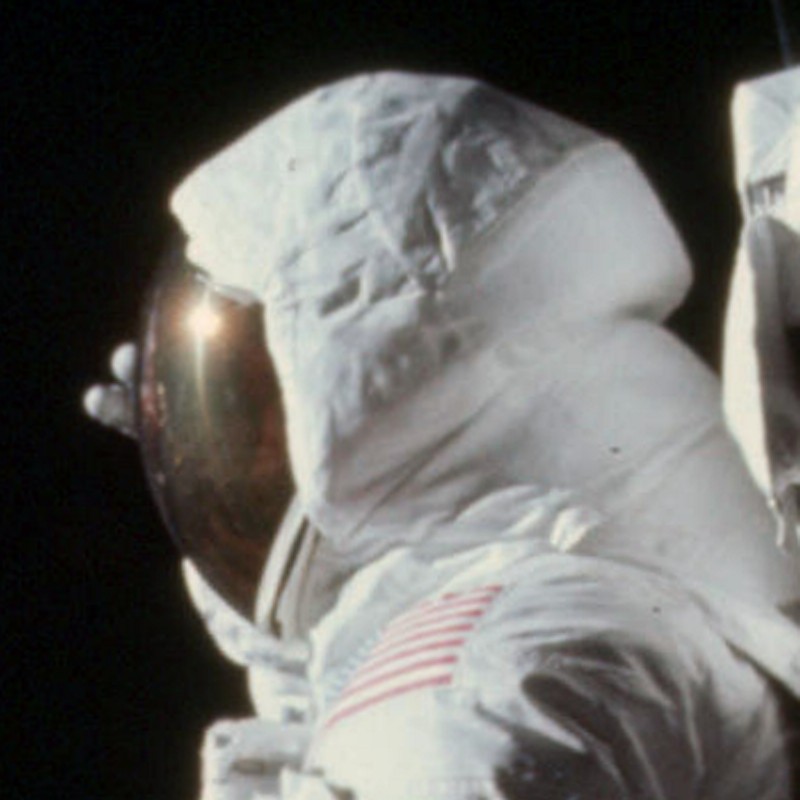
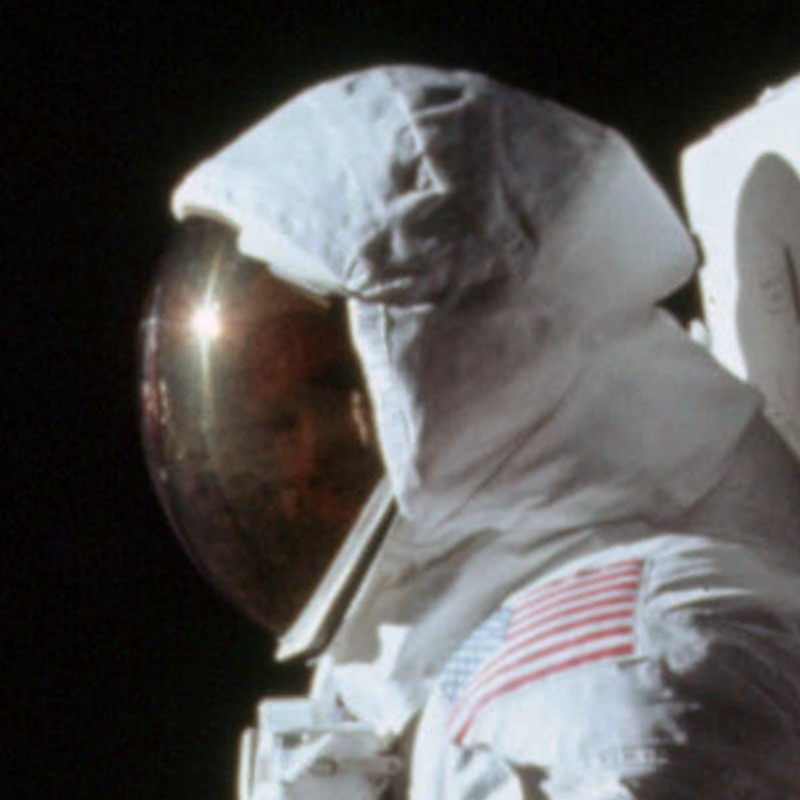
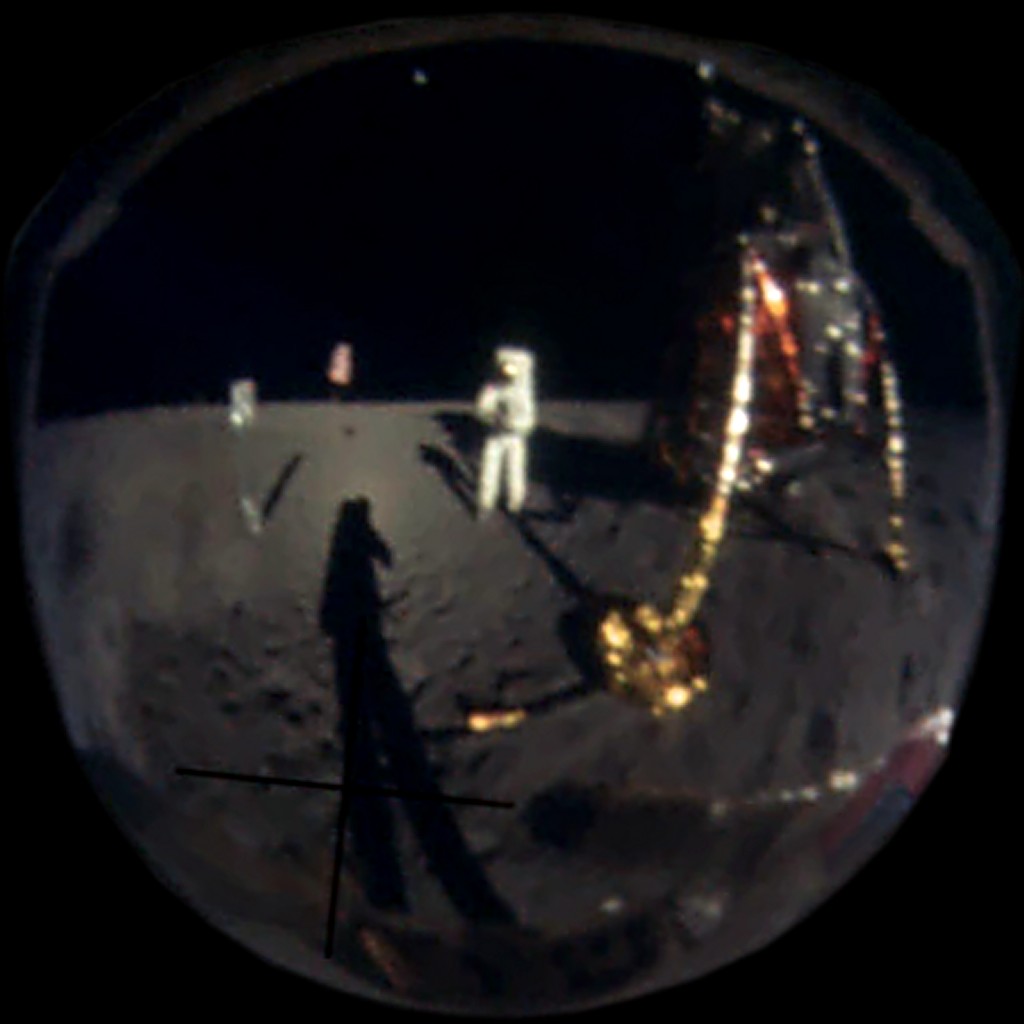
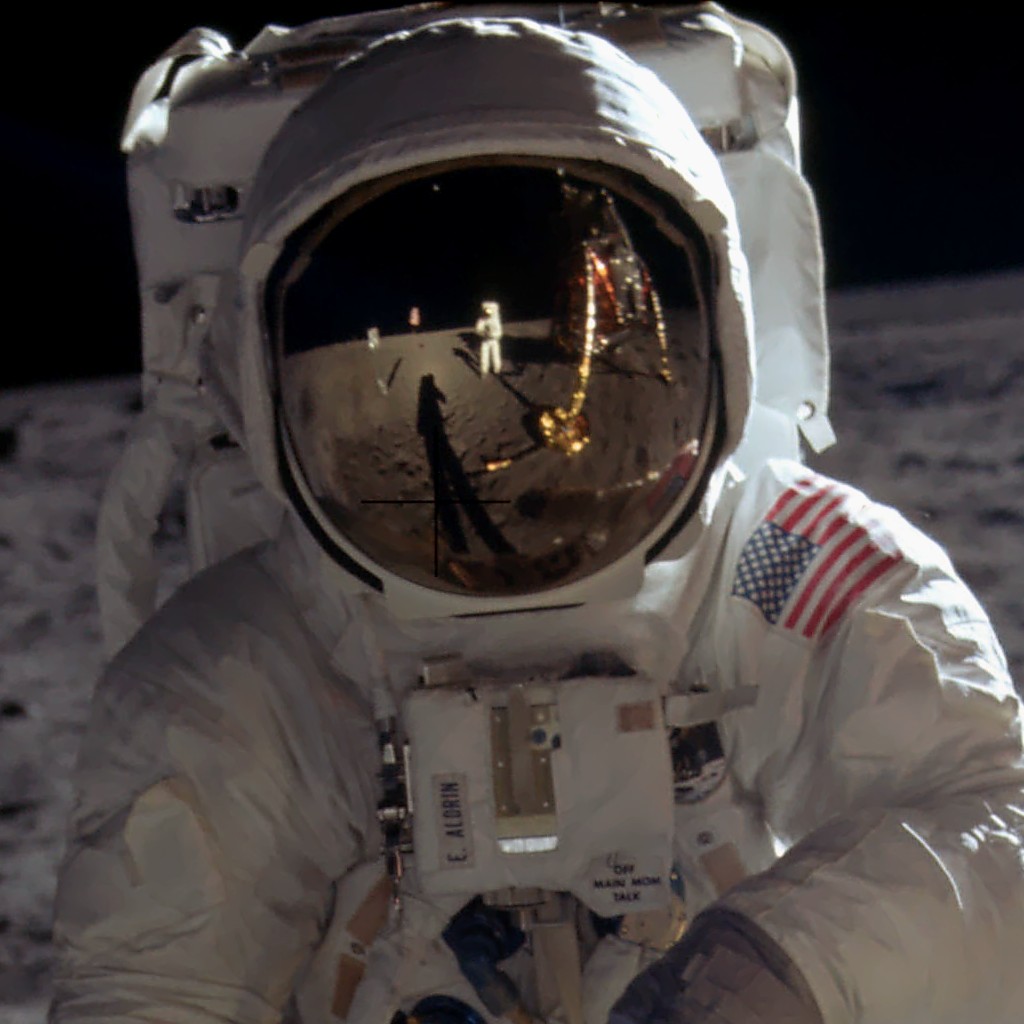
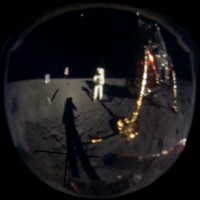 Visor close-up from photo
5903 — Here I have removed the visor's gold tint and rotated the view
to make the horizon horizontal. Note that the apparent visible phase of the
Earth is misleading since the Earth's reflection from near the edge of the
visor is greatly distorted by the spherically shaped visor. If you look closely
at the image, it appears that the Biogon lens has some slight inherent on-axis
astigmatism. This instead may have been caused by Armstrong not holding the
camera quite steady enough for the given the exposure time, or by Aldrin
slightly moving during the exposure. Visor close-up from photo
5903 — Here I have removed the visor's gold tint and rotated the view
to make the horizon horizontal. Note that the apparent visible phase of the
Earth is misleading since the Earth's reflection from near the edge of the
visor is greatly distorted by the spherically shaped visor. If you look closely
at the image, it appears that the Biogon lens has some slight inherent on-axis
astigmatism. This instead may have been caused by Armstrong not holding the
camera quite steady enough for the given the exposure time, or by Aldrin
slightly moving during the exposure.
|
|
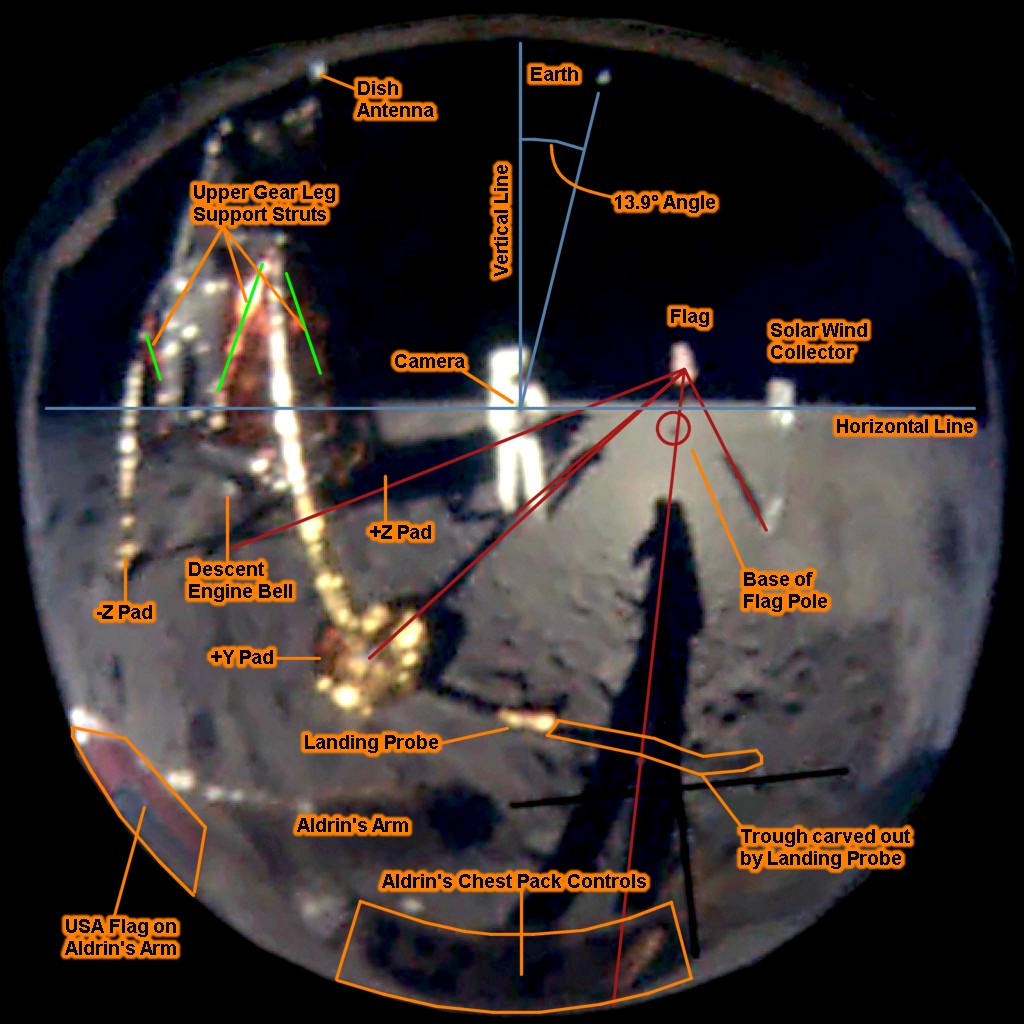
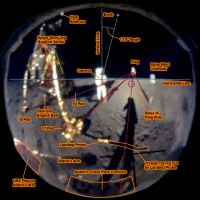 Mirrored, strongly enhanced and
labeled visor close-up from photo 5903 — This particular image is
extremely important due to what image information is truly shown in the
reflection off of Aldrin's visor. This photo is mirrored compared to the above
photo in order to show what Aldrin saw through his visor. Mirrored, strongly enhanced and
labeled visor close-up from photo 5903 — This particular image is
extremely important due to what image information is truly shown in the
reflection off of Aldrin's visor. This photo is mirrored compared to the above
photo in order to show what Aldrin saw through his visor.
First, note that the Earth is offset to the
right at a 13.9 degree angle relative to the camera and vertical. Second, this
image allows us to determine exactly where Aldrin was standing relative to the
LM, based on his position relative to the horizontally bent +Y pad landing
probe, based on the reflected perspective for the upper support struts for the
+Y main strut, and based on how much of the nearer upper -Z strut which is
visible and not occluded by the side of the LM descent stage.
I have drawn in burgundy colored lines from
the bases of various objects in order to establish the vanishing point for all
of the shadows. I also circled the flag's shadow in burgundy. It is obvious
that the ground upon which the LM was sitting sloped up towards the western
horizon since the vanishing point for the shadows is above the horizon. In
particular, also note where the shadow of the top of the LM and Dish antenna
hit the ground just to the right of Armstrong's elbow. The fact that the top of
the LM's shadow is foreshortened also indicates that the ground further west
from the LM progressively slopes up further away from the LM. Another
indication that the ground slopes up towards the west horizon is provided by
the length of Aldrin's shadow. Since the sun was at an altitude of 14.8 degrees
when this photo was taken, we can calculate that Aldrin's shadow should have
been nearly 25 feet long, assuming that the space suits were 6-1/2 feet tall.
Thus the end of Aldrin's shadow, if the ground surrounding the LM and under the
LM was level, should have fallen further back from the base of the solar wind
particle collector pole if the ground was perfectly level. |
|
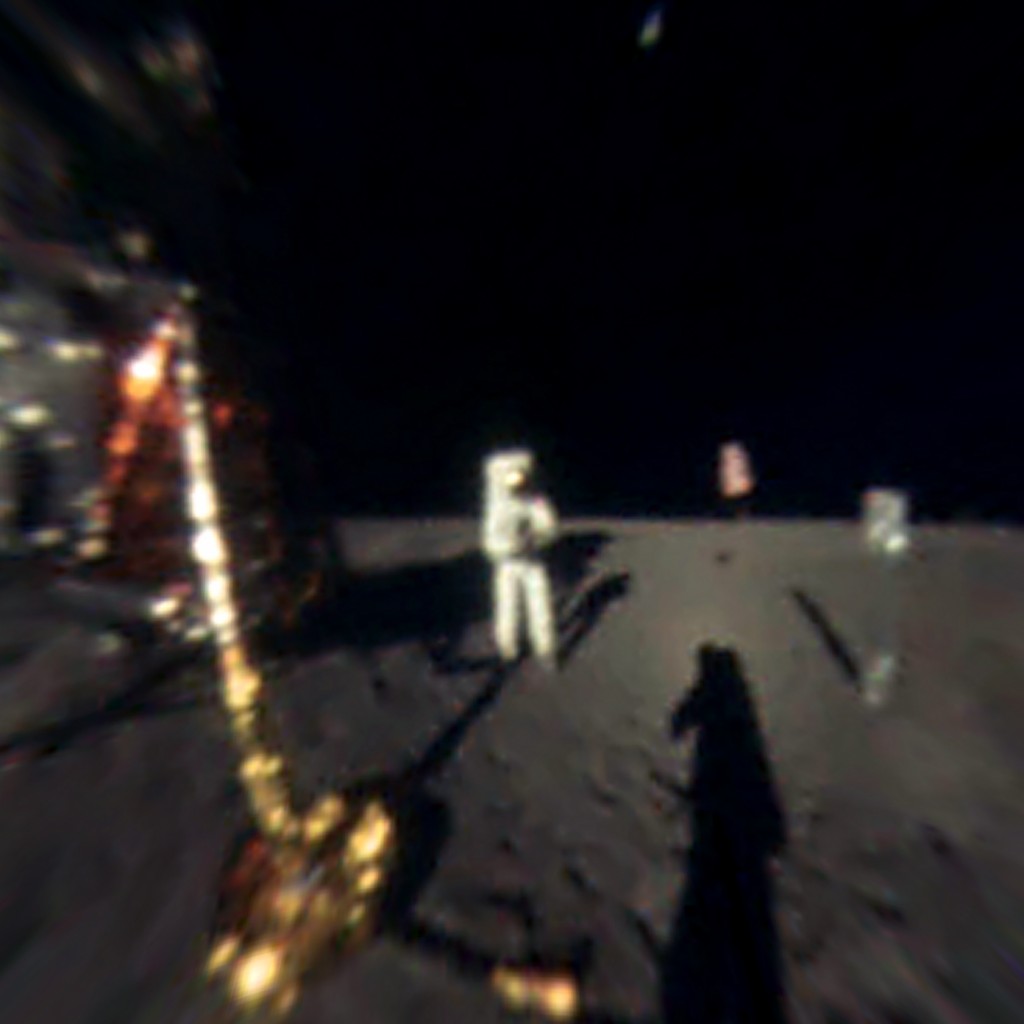
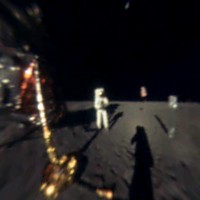 Photo
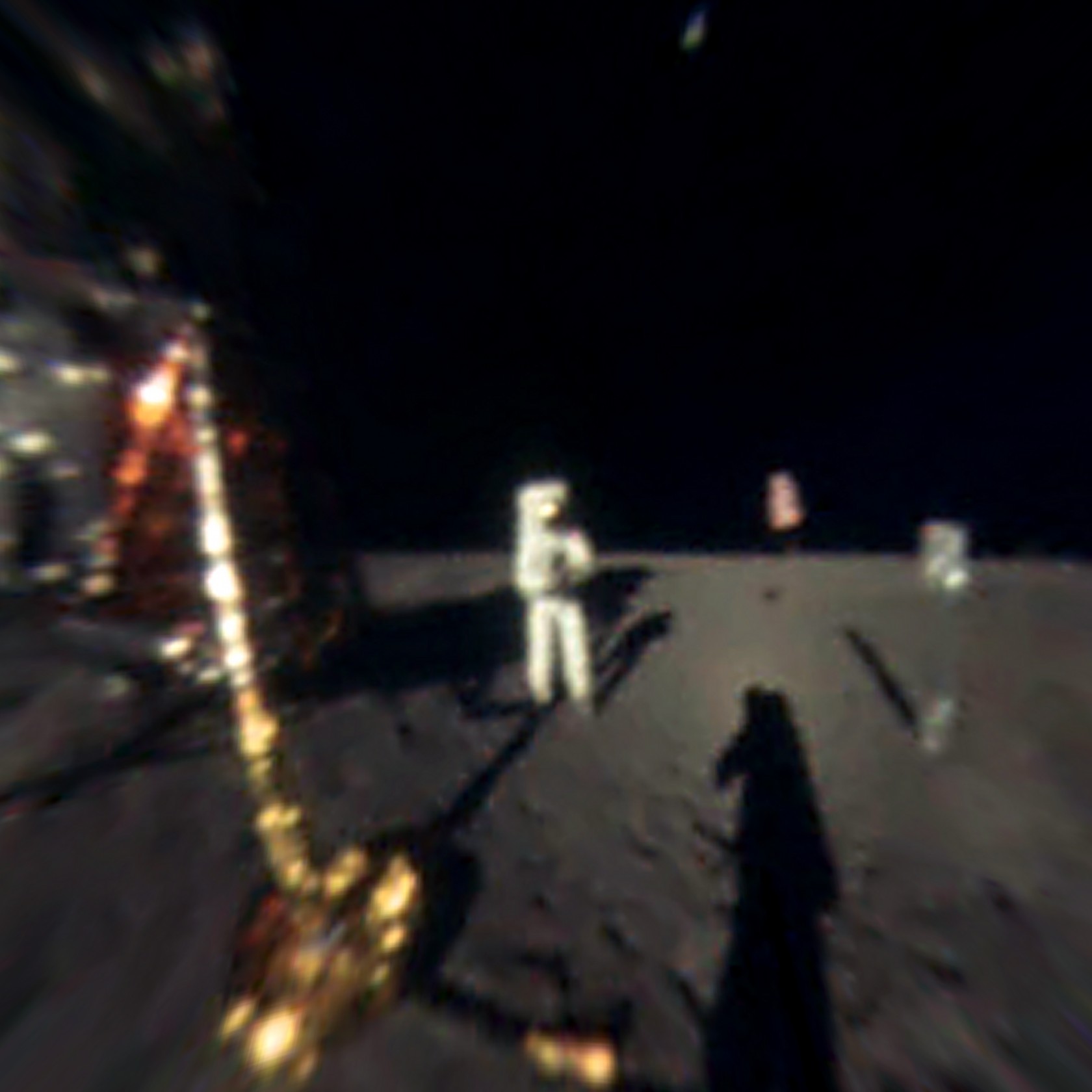
5903 (Aldrin's Visor View, distortion corrected) — My processed and
distortion corrected view of the reflection in Aldrin's visor in the above 5903
photo. I have mirrored this image left-to-right in order to show what Aldrin
saw from inside his visor when Armstrong shot the famous 5903 "Man On The Moon"
photo. Yes, that is indeed the Earth above and somewhat to the right of
Armstrong. You can also see that Armstrong had his gold colored visor pulled
down when he shot the famous 5903 photo of Aldrin. Photo
5903 (Aldrin's Visor View, distortion corrected) — My processed and
distortion corrected view of the reflection in Aldrin's visor in the above 5903
photo. I have mirrored this image left-to-right in order to show what Aldrin
saw from inside his visor when Armstrong shot the famous 5903 "Man On The Moon"
photo. Yes, that is indeed the Earth above and somewhat to the right of
Armstrong. You can also see that Armstrong had his gold colored visor pulled
down when he shot the famous 5903 photo of Aldrin.
|
|
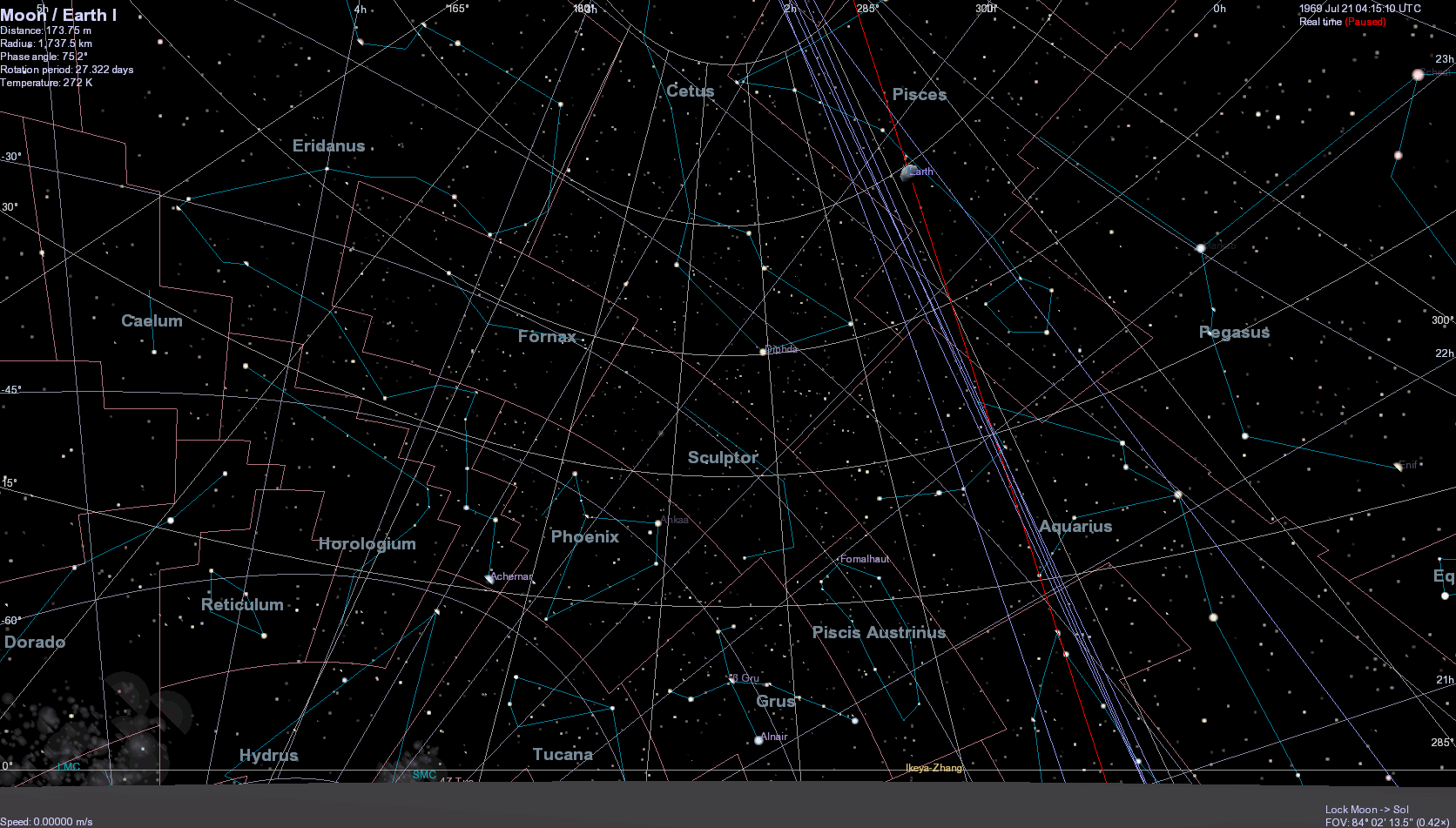
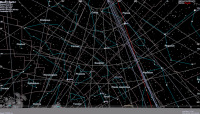 So, just where was the Earth in
the moon's sky above Aldrin's head? — Celestia gives us this answer.
The Earth was at an altitude of almost exactly 59 degrees above the western
lunar horizon on a bearing of 273 degrees along the western lunar horizon. The
real kicker is when you compare a close-up of Celestia's representation of the
Earth and its phase to the close-up of the Earth in photo 5924 further
below. So, just where was the Earth in
the moon's sky above Aldrin's head? — Celestia gives us this answer.
The Earth was at an altitude of almost exactly 59 degrees above the western
lunar horizon on a bearing of 273 degrees along the western lunar horizon. The
real kicker is when you compare a close-up of Celestia's representation of the
Earth and its phase to the close-up of the Earth in photo 5924 further
below.
|
|
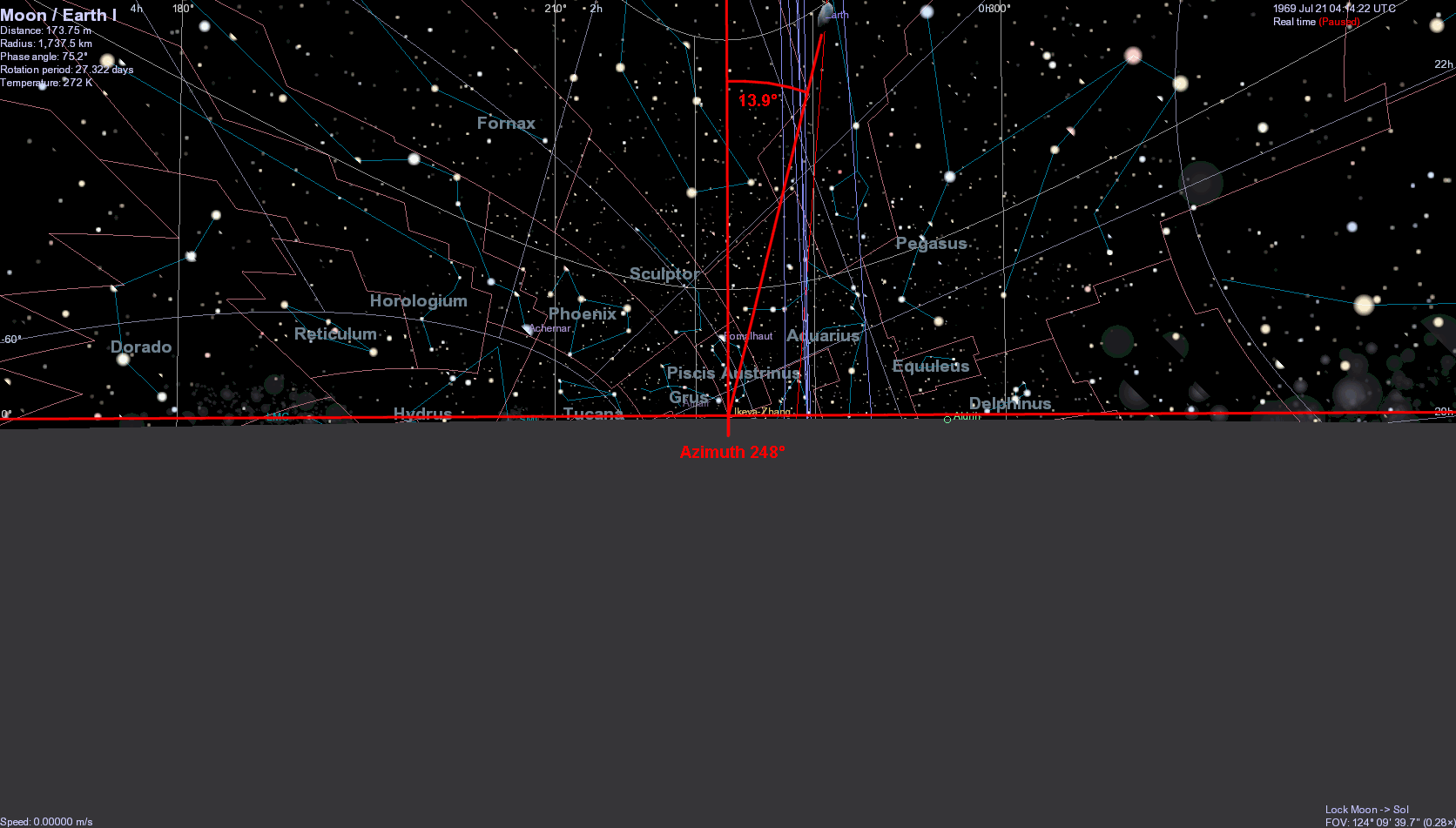
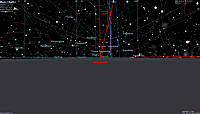 Armstrong-Aldrin position angle
(bearing) at which 5903 was taken — This is only a preliminary result
which assumes that the west lunar horizon, although elevated, is level. It
probably was not. In order to figure out the bearing, you have to mentally draw
a line from the camera on Armstrong's chest to its reflection off of Aldrin's
spherically shaped visor. You also have to realize that the exact point on the
surface of Aldrin's visor is the point on the visor which is closest to the
camera. Eventually I will create a CAD model to visually show this concept. Armstrong-Aldrin position angle
(bearing) at which 5903 was taken — This is only a preliminary result
which assumes that the west lunar horizon, although elevated, is level. It
probably was not. In order to figure out the bearing, you have to mentally draw
a line from the camera on Armstrong's chest to its reflection off of Aldrin's
spherically shaped visor. You also have to realize that the exact point on the
surface of Aldrin's visor is the point on the visor which is closest to the
camera. Eventually I will create a CAD model to visually show this concept.
In any event, assuming that the west horizon
was level and based on the above measured position angle of the Earth in the
visor sky (an angle of 13.9 degrees), I zoomed out as far as I could in
Celestia and through several iterations of tweaking the direction along the
horizon at which I was looking, I found that a bearing of 248 degrees produces
the correct 13.9 degree offset for the Earth relative to the zenith. Thus
Aldrin was standing on a bearing, relative to Armstrong's position, of 68
degrees east relative to lunar north, and of course Armstrong was standing on a
bearing of 248 degrees relative to Aldrin. |
|
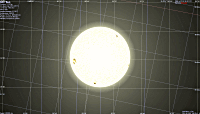 Exact sun altitude and azimuth
when 5903 was taken — As you can see, the sun was on a bearing of
approximately 88.87 degrees relative to lunar north. The sun's altitude was
approximately 14.78 degrees. Call the azimuth 89 degrees. 89 degrees minus 68
degrees is 21 degrees. Thus, assuming that the west lunar horizon was level,
photo 5903 was taken at a bearing of 21 degrees northward from the sun's
position in the sky above the eastern lunar horizon. Exact sun altitude and azimuth
when 5903 was taken — As you can see, the sun was on a bearing of
approximately 88.87 degrees relative to lunar north. The sun's altitude was
approximately 14.78 degrees. Call the azimuth 89 degrees. 89 degrees minus 68
degrees is 21 degrees. Thus, assuming that the west lunar horizon was level,
photo 5903 was taken at a bearing of 21 degrees northward from the sun's
position in the sky above the eastern lunar horizon.
|
|
|
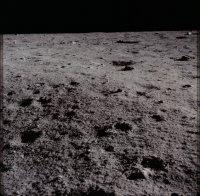 Photo
5910 — Photo taken from Panorama Station 3 looking towards the
north-northeast. Panorama Station 3 was located north of the LM roughly 17
meters away from the center of the LM. Photo
5910 — Photo taken from Panorama Station 3 looking towards the
north-northeast. Panorama Station 3 was located north of the LM roughly 17
meters away from the center of the LM.
|
|
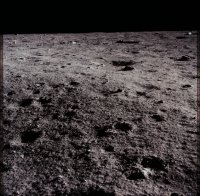 Photo
5910 — Enhanced version of the above photo. Here I adjusted curves in
order to boost contrast throughout the scene. The blast path as the LM skirted
above the lunar surface is obvious in this photo, assuming that this is what
this bright swath really is. This bright swath also has a different hue
compared to the surrounding terrain. Keep in mind that the LM windows and
astronauts were facing west or away from the sun or towards the left in this
photo during the descent. Apparently Armstrong "kicked it to the left" a bit in
order to avoid the boulders in the distance? And then apparently Armstrong
during the final few seconds kicked the LM forward (west) a couple of dozen
feet in order to land in an area that he could clearly see was free of boulders
since he and Aldrin had no way of seeing anything either behind or directly
underneath the LM? Anyway, this is my hypothesis regarding the final 30 seconds
of the LM descent profile. I wonder if Armstrong can confirm that he "kicked it
forward" by several feet just before surface contact, just to make sure that he
landed on a smooth spot that he could actually see through the LM
window. Photo
5910 — Enhanced version of the above photo. Here I adjusted curves in
order to boost contrast throughout the scene. The blast path as the LM skirted
above the lunar surface is obvious in this photo, assuming that this is what
this bright swath really is. This bright swath also has a different hue
compared to the surrounding terrain. Keep in mind that the LM windows and
astronauts were facing west or away from the sun or towards the left in this
photo during the descent. Apparently Armstrong "kicked it to the left" a bit in
order to avoid the boulders in the distance? And then apparently Armstrong
during the final few seconds kicked the LM forward (west) a couple of dozen
feet in order to land in an area that he could clearly see was free of boulders
since he and Aldrin had no way of seeing anything either behind or directly
underneath the LM? Anyway, this is my hypothesis regarding the final 30 seconds
of the LM descent profile. I wonder if Armstrong can confirm that he "kicked it
forward" by several feet just before surface contact, just to make sure that he
landed on a smooth spot that he could actually see through the LM
window.
|
|
|
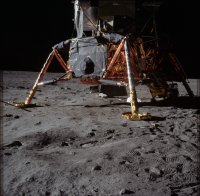 Photo
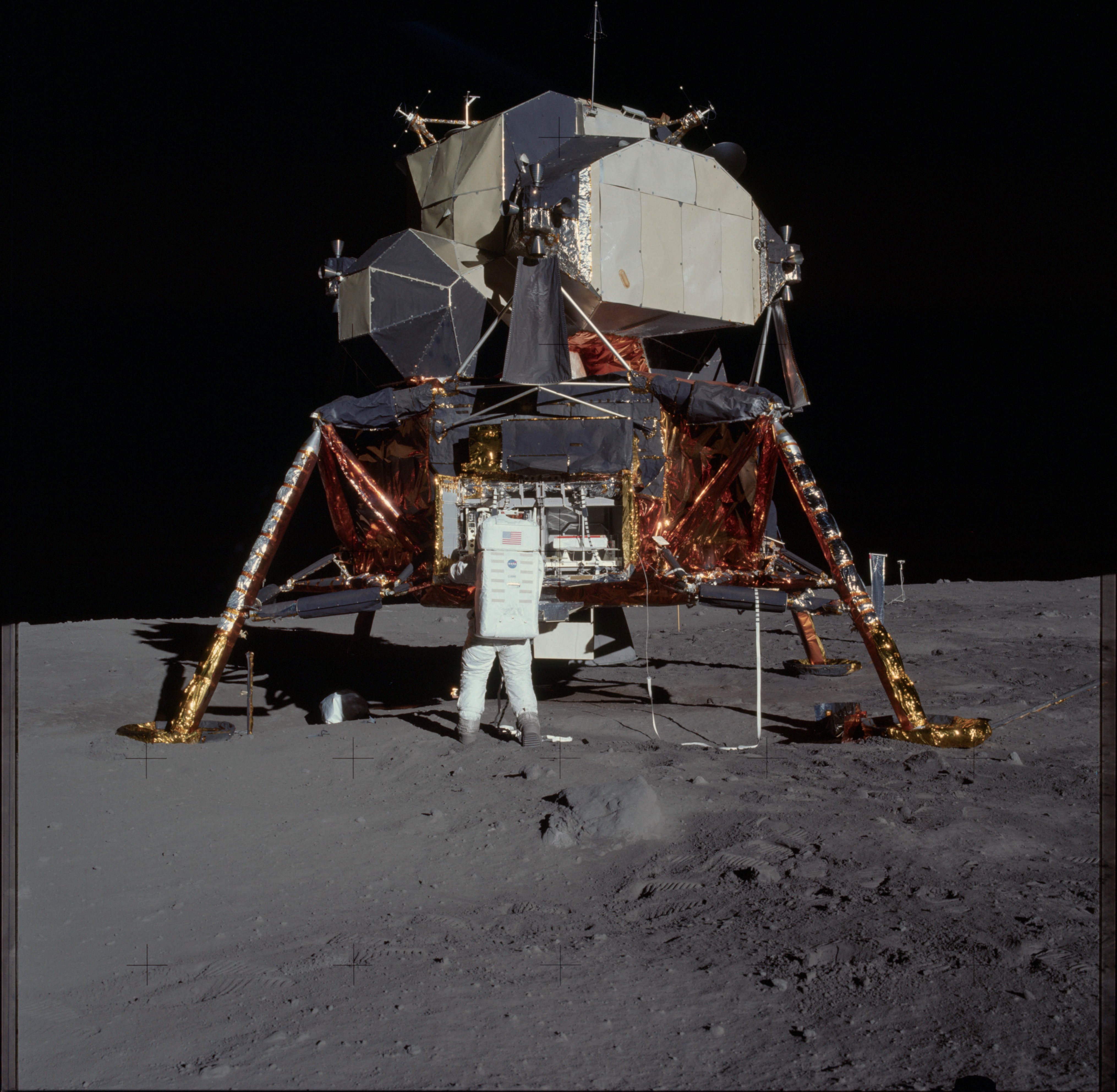
5915 — The LM on the lunar surface. That Biogon lens should have had
some more tick marks for additional focus settings besides near, medium and
distant. Note that the foreground is sharp (best focus) yet the LM itself is a
bit soft (out of focus). The large shallow crater in the foreground is the
crater which Aldrin was standing in when Armstrong shot the famous 5903 "Man On
The Moon" photograph. Photo
5915 — The LM on the lunar surface. That Biogon lens should have had
some more tick marks for additional focus settings besides near, medium and
distant. Note that the foreground is sharp (best focus) yet the LM itself is a
bit soft (out of focus). The large shallow crater in the foreground is the
crater which Aldrin was standing in when Armstrong shot the famous 5903 "Man On
The Moon" photograph.
|
|
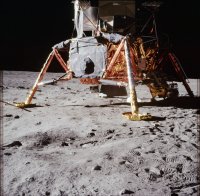 Photo
5915 — My enhanced version of the above photo. Photo
5915 — My enhanced version of the above photo.
|
|
|
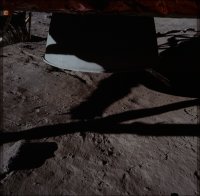 Photo
5921 — View of lunar surface underneath the LM's descent engine. Yes,
you can clearly see radial blast patterns created by the descent engine. You
will also note that the newly exposed lunar soil, exposed by the engine blast,
has a somewhat brownish color. See my following enhanced photo for a better
view of the blast patterns and the exposed soil hues. Keep in mind that some,
but nowhere close to all, of the exposed soil's reddish hue is due to the
actual color of the freshly exposed soil instead of being due to the reddish
gold colored aluminized Mylar protecting the underside of the LM's descent
stage. Photo
5921 — View of lunar surface underneath the LM's descent engine. Yes,
you can clearly see radial blast patterns created by the descent engine. You
will also note that the newly exposed lunar soil, exposed by the engine blast,
has a somewhat brownish color. See my following enhanced photo for a better
view of the blast patterns and the exposed soil hues. Keep in mind that some,
but nowhere close to all, of the exposed soil's reddish hue is due to the
actual color of the freshly exposed soil instead of being due to the reddish
gold colored aluminized Mylar protecting the underside of the LM's descent
stage.
|
|
|
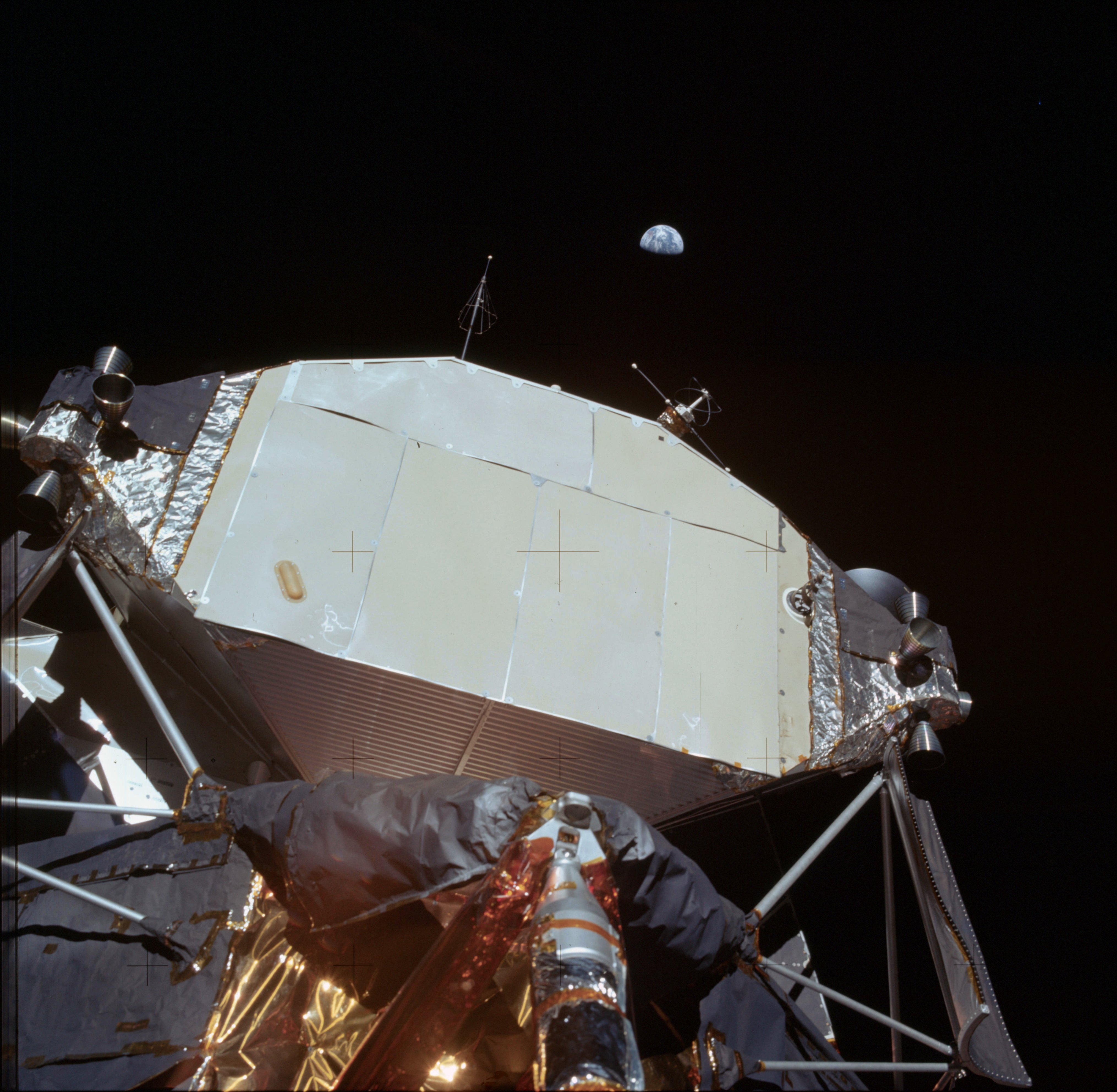
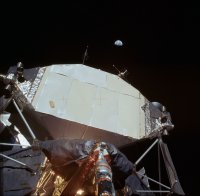 Photo
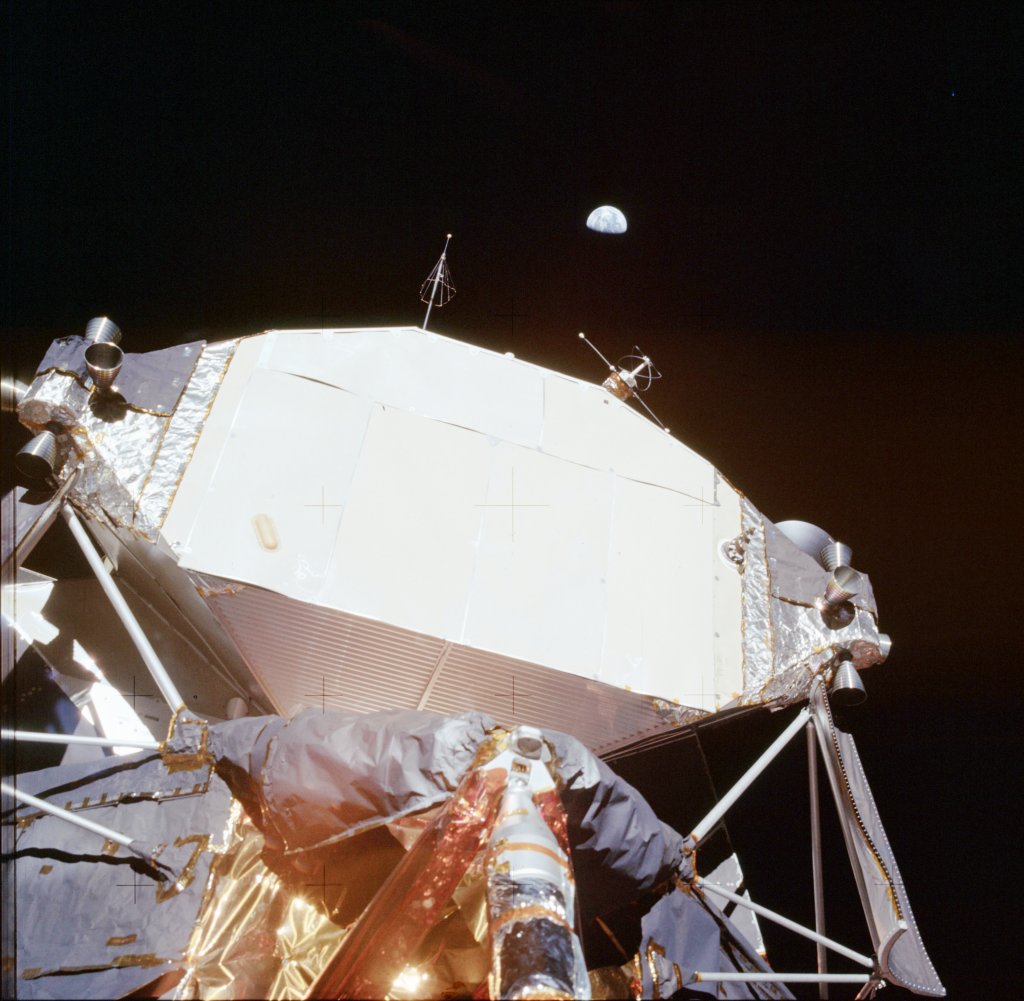
5924 — Fully color corrected view of the back side of the LM, looking
up towards the Earth. Photo
5924 — Fully color corrected view of the back side of the LM, looking
up towards the Earth.
|
|
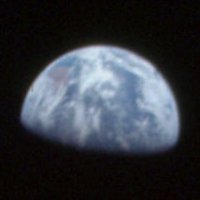 Earth in photo
5924 — This is the exact brightness and color of the Earth, as
recorded in the above photo, after only color correction was applied to the
original film slide. Note that you are seeing the Pacific Ocean and the
continent of Australia at the 10 o'clock position. Japan is at the 1 o'clock
position at the upper right, but it appears that Japan was covered by clouds.
Note that I increased the sharpness and boosted the contrast in the larger
linked image in order to make both the cloud patterns and land masses more
apparent. Earth in photo
5924 — This is the exact brightness and color of the Earth, as
recorded in the above photo, after only color correction was applied to the
original film slide. Note that you are seeing the Pacific Ocean and the
continent of Australia at the 10 o'clock position. Japan is at the 1 o'clock
position at the upper right, but it appears that Japan was covered by clouds.
Note that I increased the sharpness and boosted the contrast in the larger
linked image in order to make both the cloud patterns and land masses more
apparent.
|
|
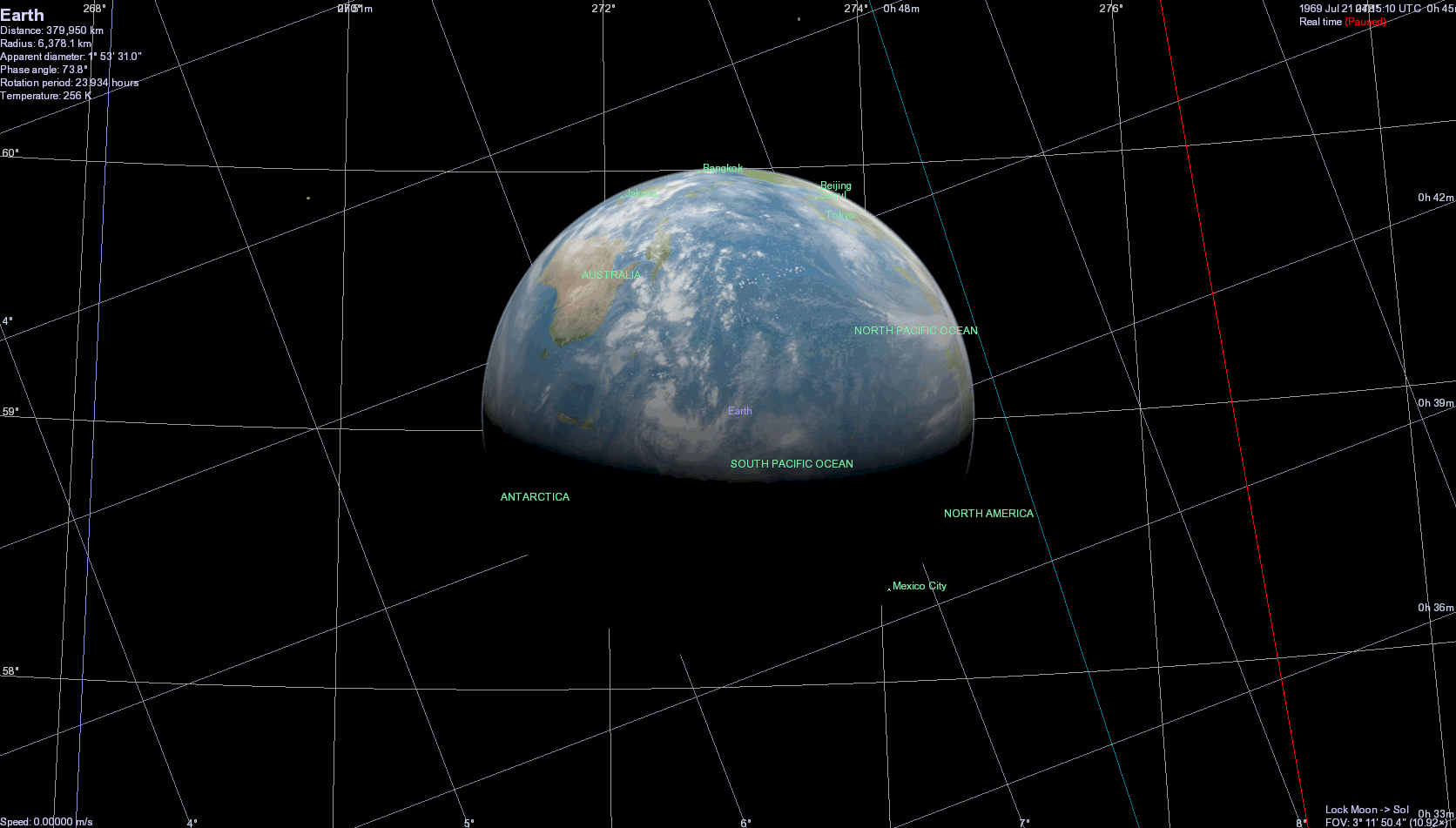
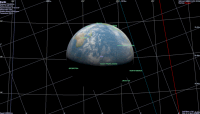 Celestia's representation of the
Earth from the Apollo 11 landing site on July 21, 1969 at 04:14UT —
Pretty much an exact match, isn't it? Well, except for Celestia's simulated
cloud cover. This Celestia image of the Earth is on the Earth's bearing
relative to the Apollo 11 landing site, and of course looking up at the Earth
and greatly zoomed in. Using the Celestia image and the above close-up view of
the Earth taken from photo 5924, one can calculate exactly how much the camera
was tilted relative to horizontal when photo 5924 was taken. Celestia's representation of the
Earth from the Apollo 11 landing site on July 21, 1969 at 04:14UT —
Pretty much an exact match, isn't it? Well, except for Celestia's simulated
cloud cover. This Celestia image of the Earth is on the Earth's bearing
relative to the Apollo 11 landing site, and of course looking up at the Earth
and greatly zoomed in. Using the Celestia image and the above close-up view of
the Earth taken from photo 5924, one can calculate exactly how much the camera
was tilted relative to horizontal when photo 5924 was taken.
|
|
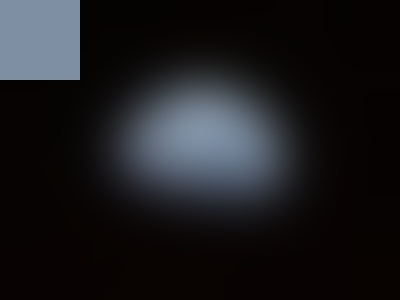 Earth in
photo 5924 — Blurred and with a hue swatch added to the upper left.
This is interesting since the hue comes really close to matching the hue of the
Earth shown in my color and distortion corrected visor reflection photo,
above. Earth in
photo 5924 — Blurred and with a hue swatch added to the upper left.
This is interesting since the hue comes really close to matching the hue of the
Earth shown in my color and distortion corrected visor reflection photo,
above.
|
|
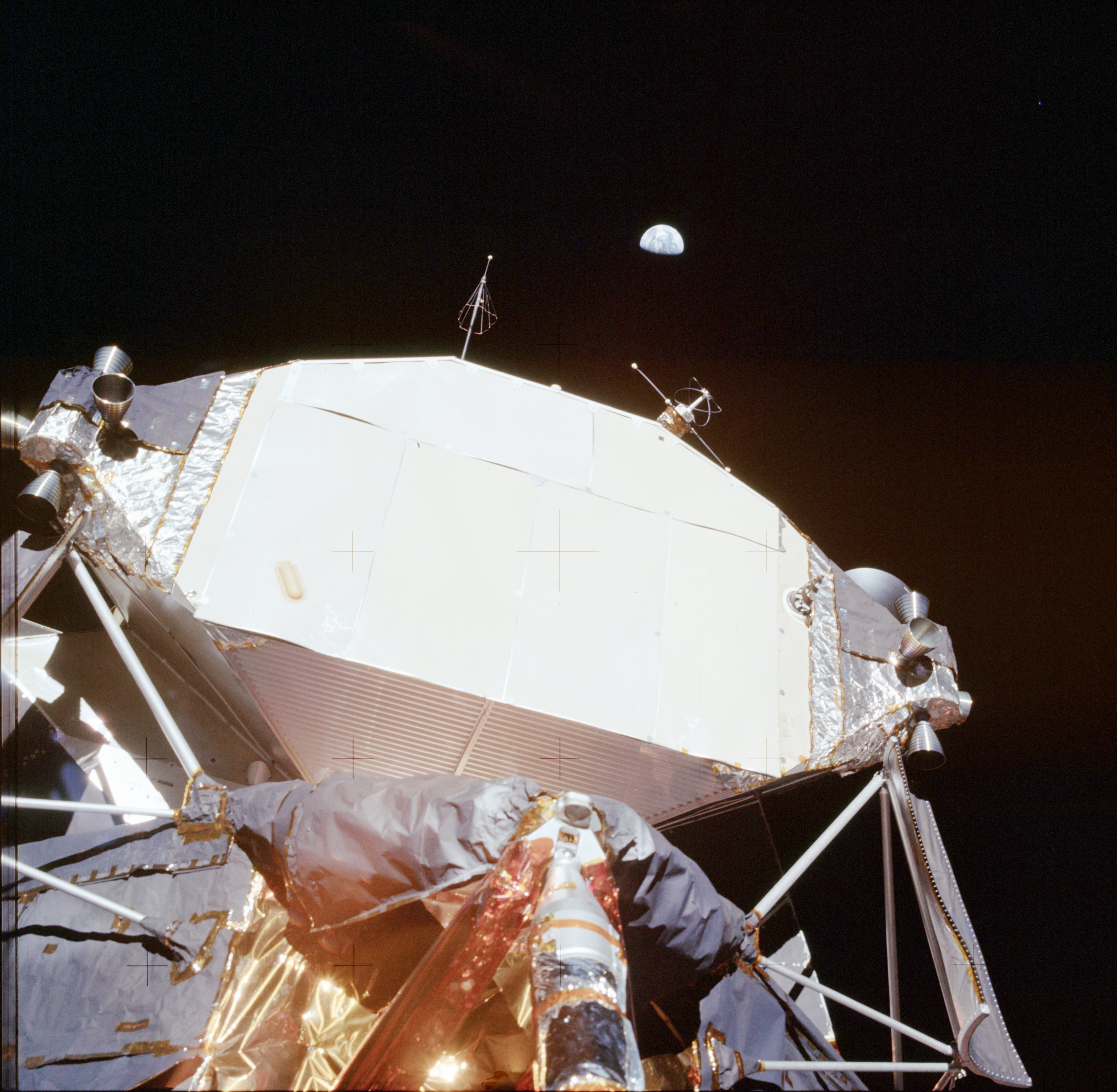
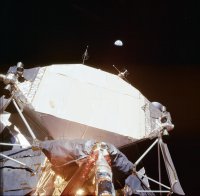 Photo
5924 — My enhanced version of photo 5924 further above. Photo
5924 — My enhanced version of photo 5924 further above.
|
|
|
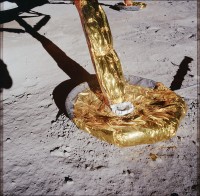 Photo
5926 — Enhanced version of the above photo. Examine the full
resolution version of this photo by clicking on the thumbnail photo and note
the patches of lunar dust atop the left half of the footpad. Photo
5926 — Enhanced version of the above photo. Examine the full
resolution version of this photo by clicking on the thumbnail photo and note
the patches of lunar dust atop the left half of the footpad.
|
|
|
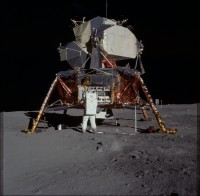 Photo
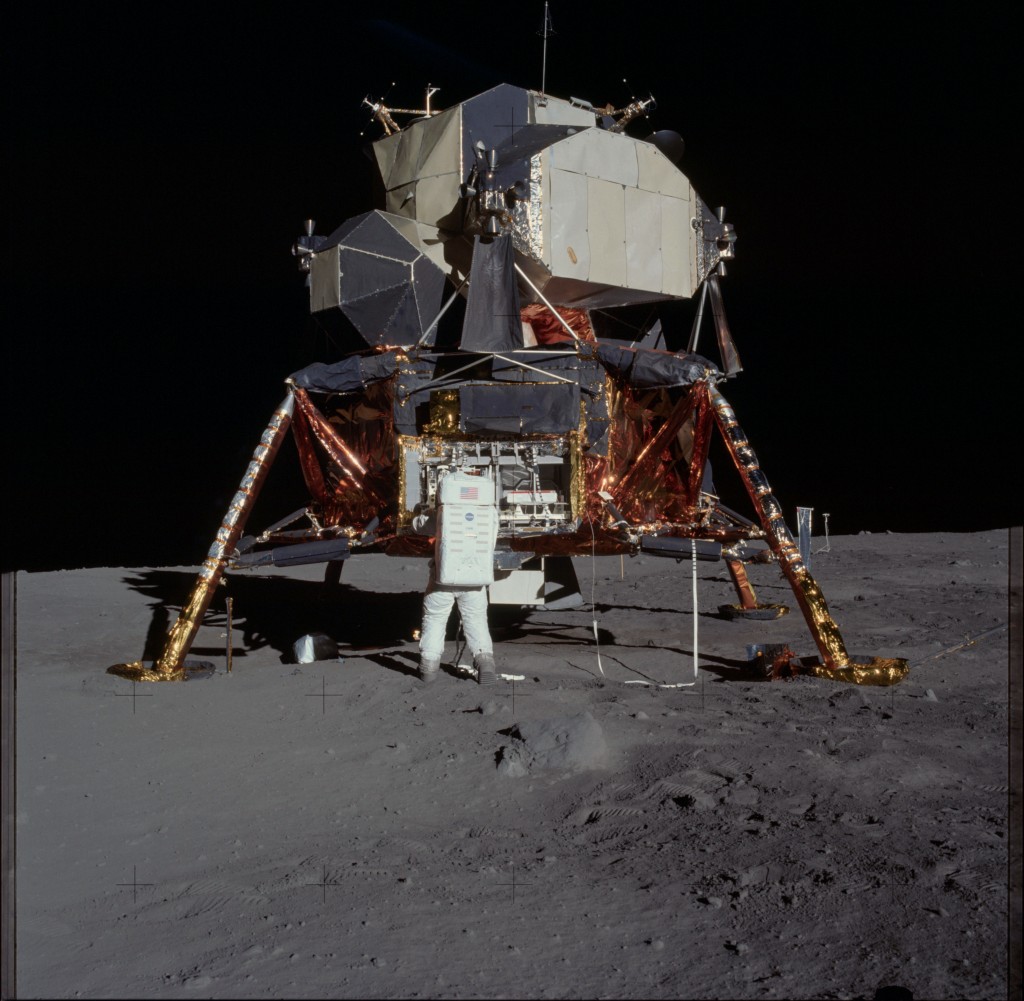
5927 — Aldrin removing equipment from the MESA. Photo
5927 — Aldrin removing equipment from the MESA.
|
|
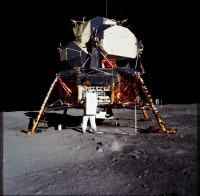 Photo
5927 — Enhanced version of the above photo, clearly showing the
astronaut foot paths. Photo
5927 — Enhanced version of the above photo, clearly showing the
astronaut foot paths.
|
|
|
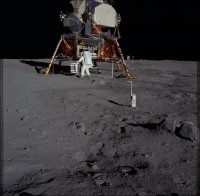 Photo
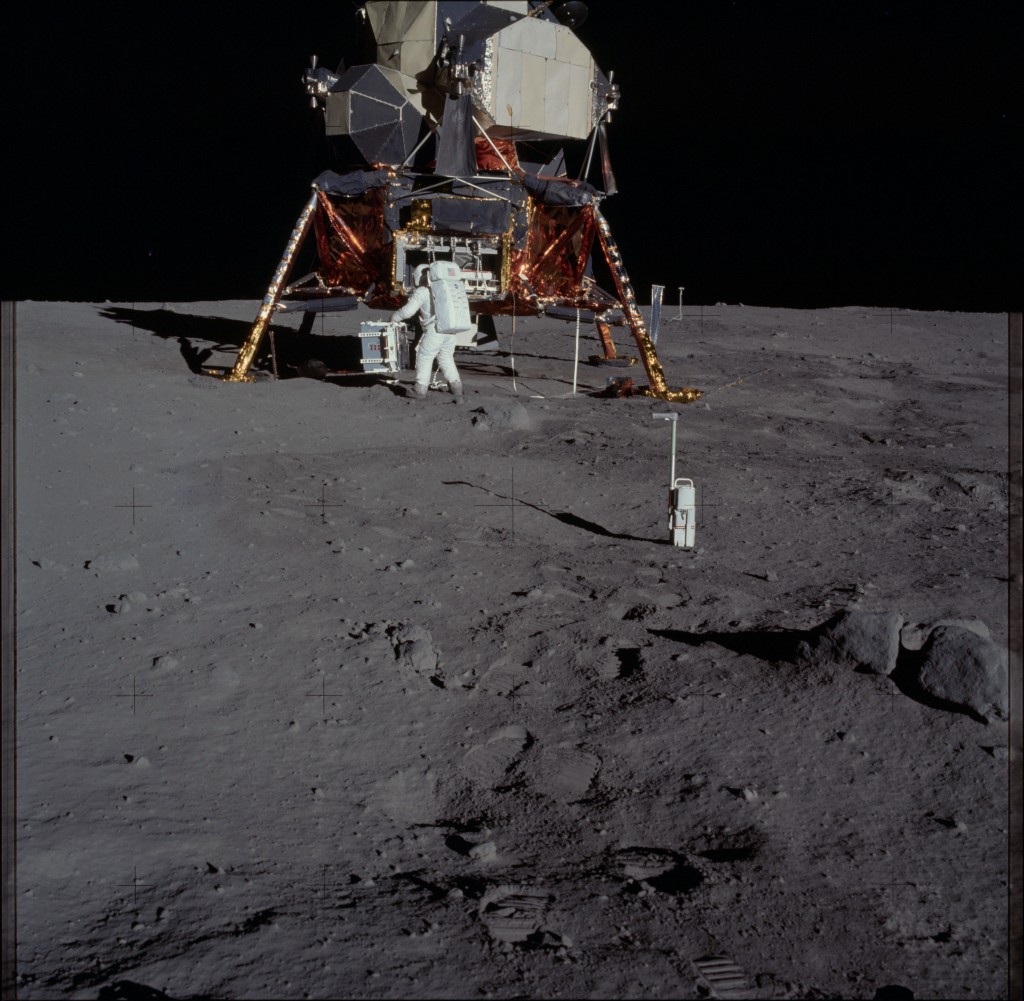
5931 — Aldrin removing equipment from the MESA. Photo
5931 — Aldrin removing equipment from the MESA.
|
|
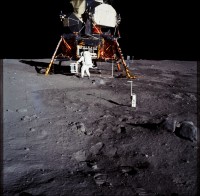 Photo
5931 — Enhanced version of the above photo, clearly showing the
astronaut foot paths. Photo
5931 — Enhanced version of the above photo, clearly showing the
astronaut foot paths.
|
|
|
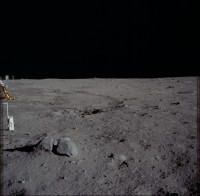 Photo
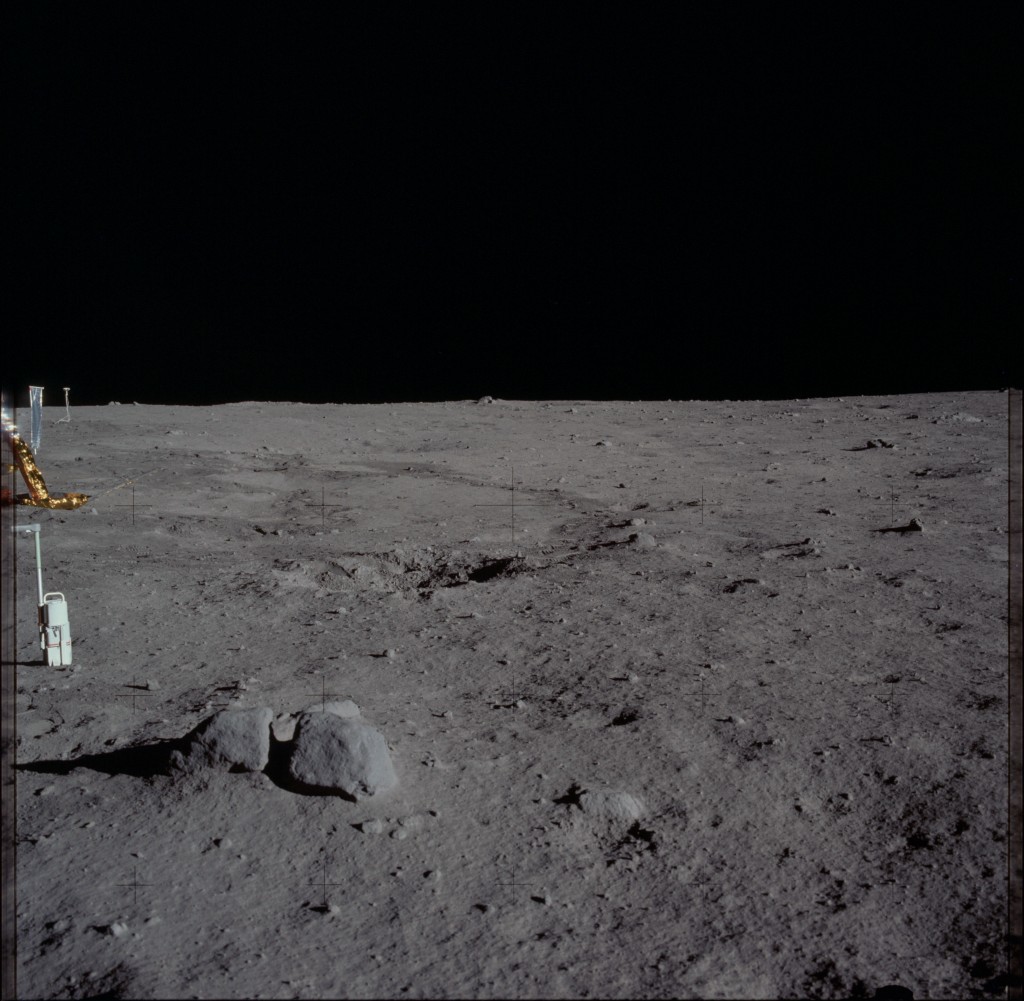
5932 — View to the right of photo 5931, above. Photo
5932 — View to the right of photo 5931, above.
|
|
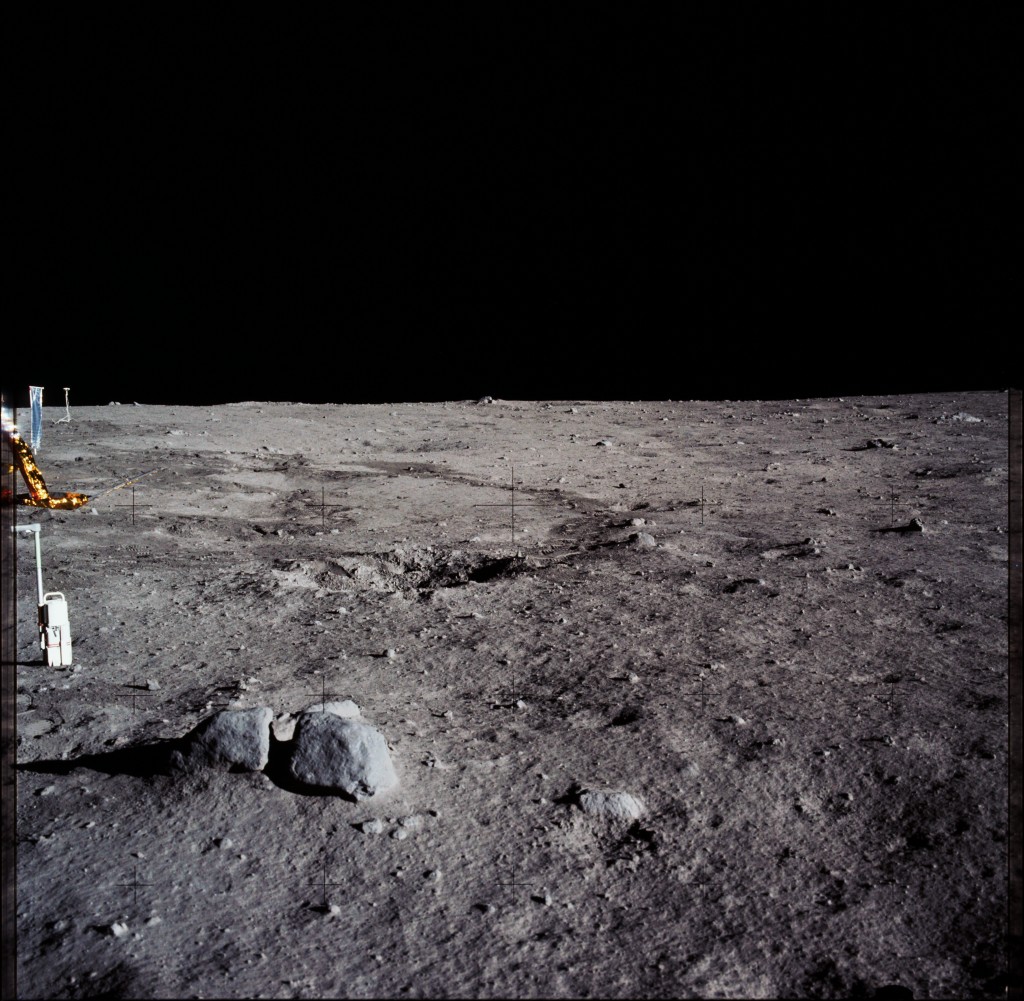
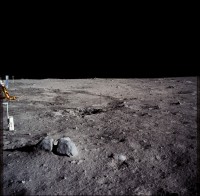 Photo
5932 — Enhanced version of the above photo, clearly showing the
astronaut foot paths. Photo
5932 — Enhanced version of the above photo, clearly showing the
astronaut foot paths.
|
|
|
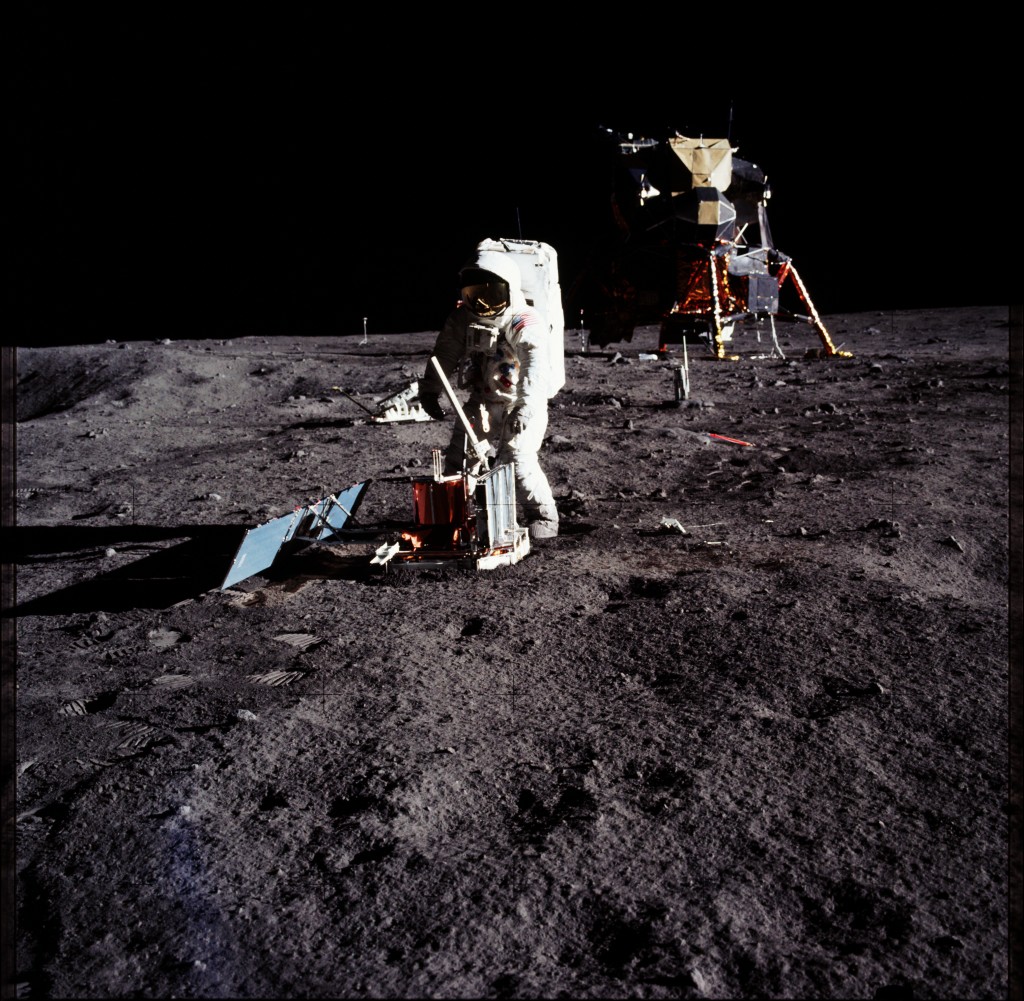
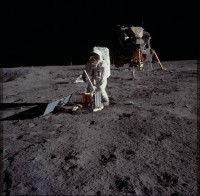 Photo
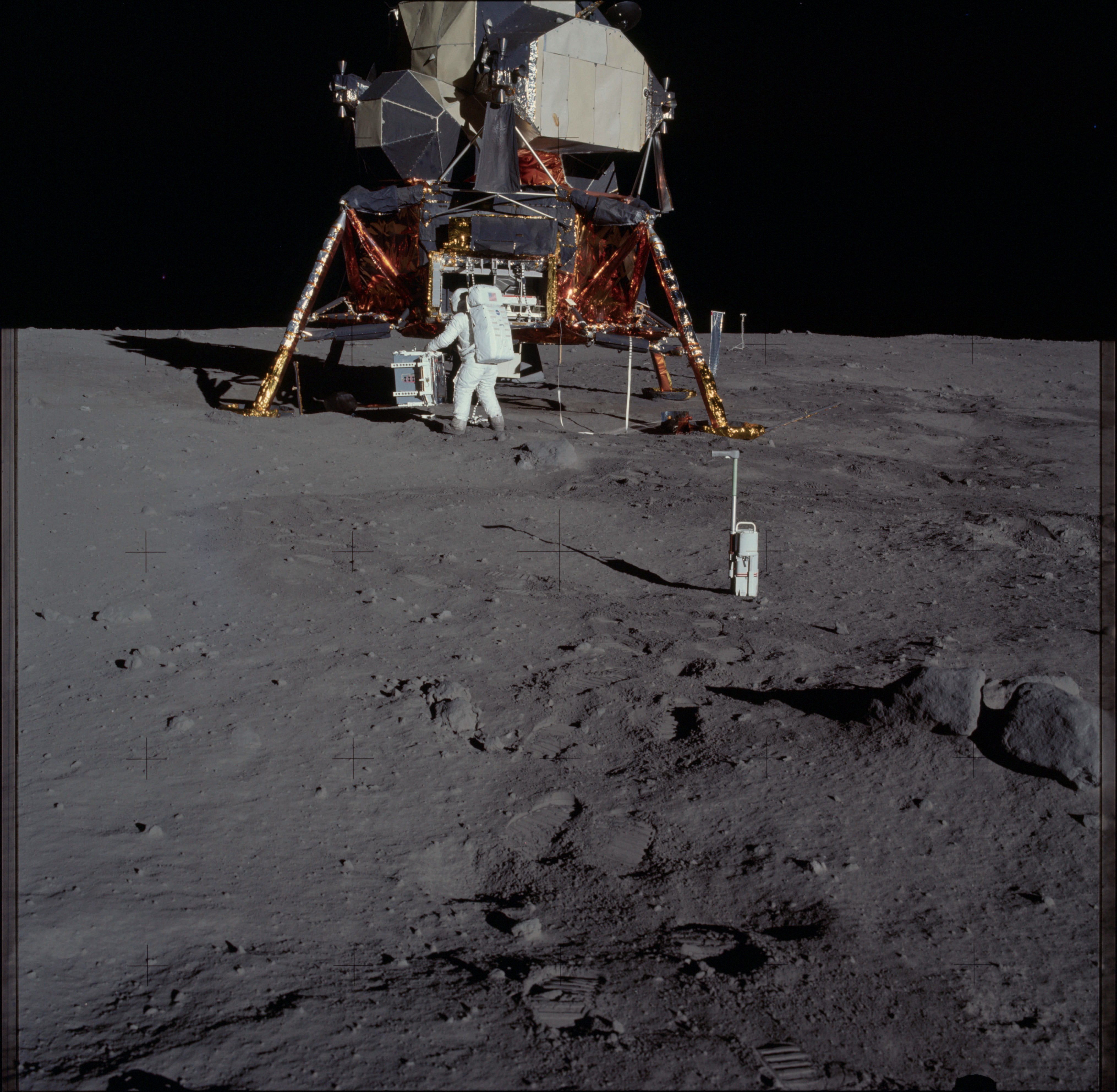
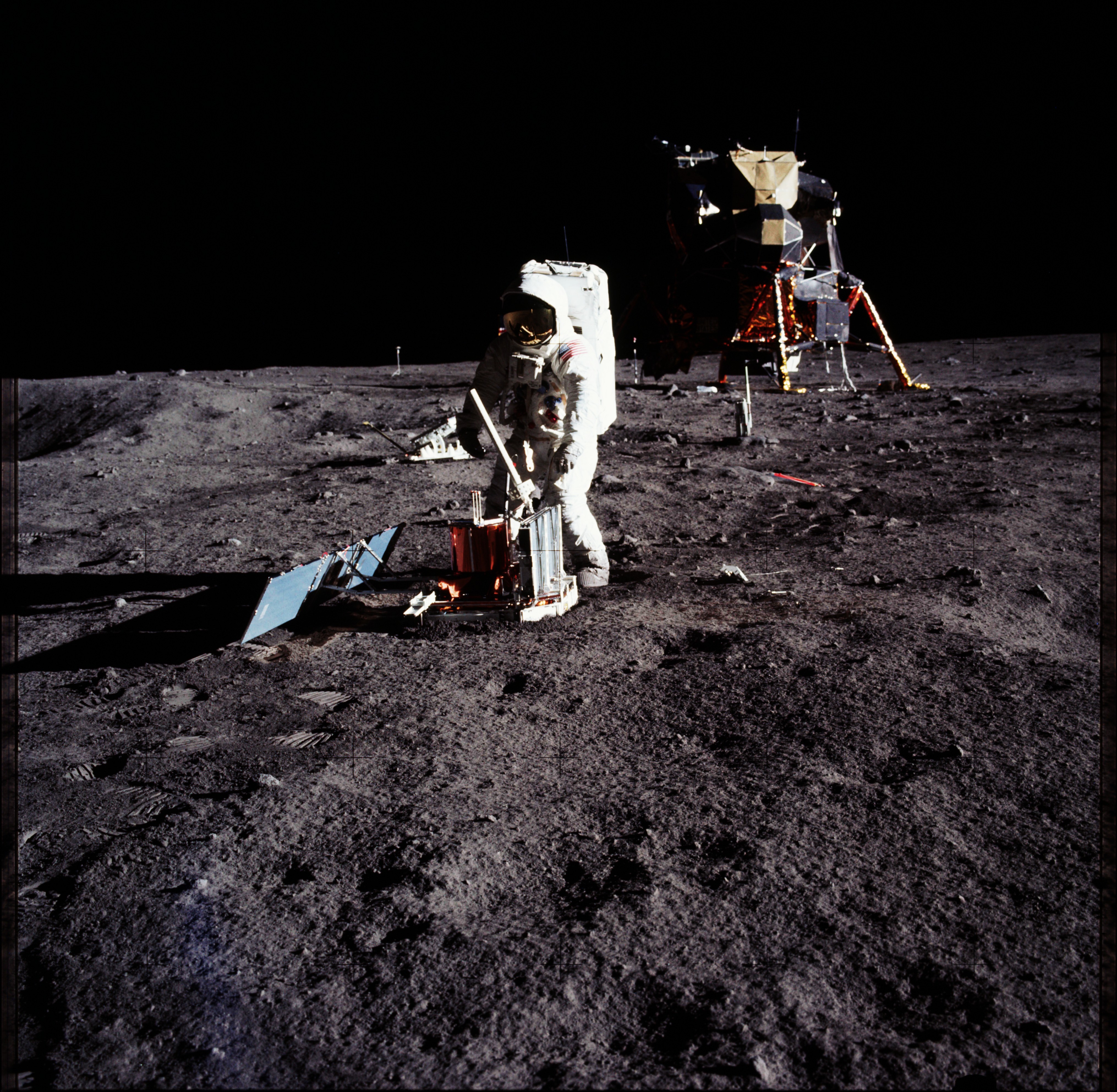
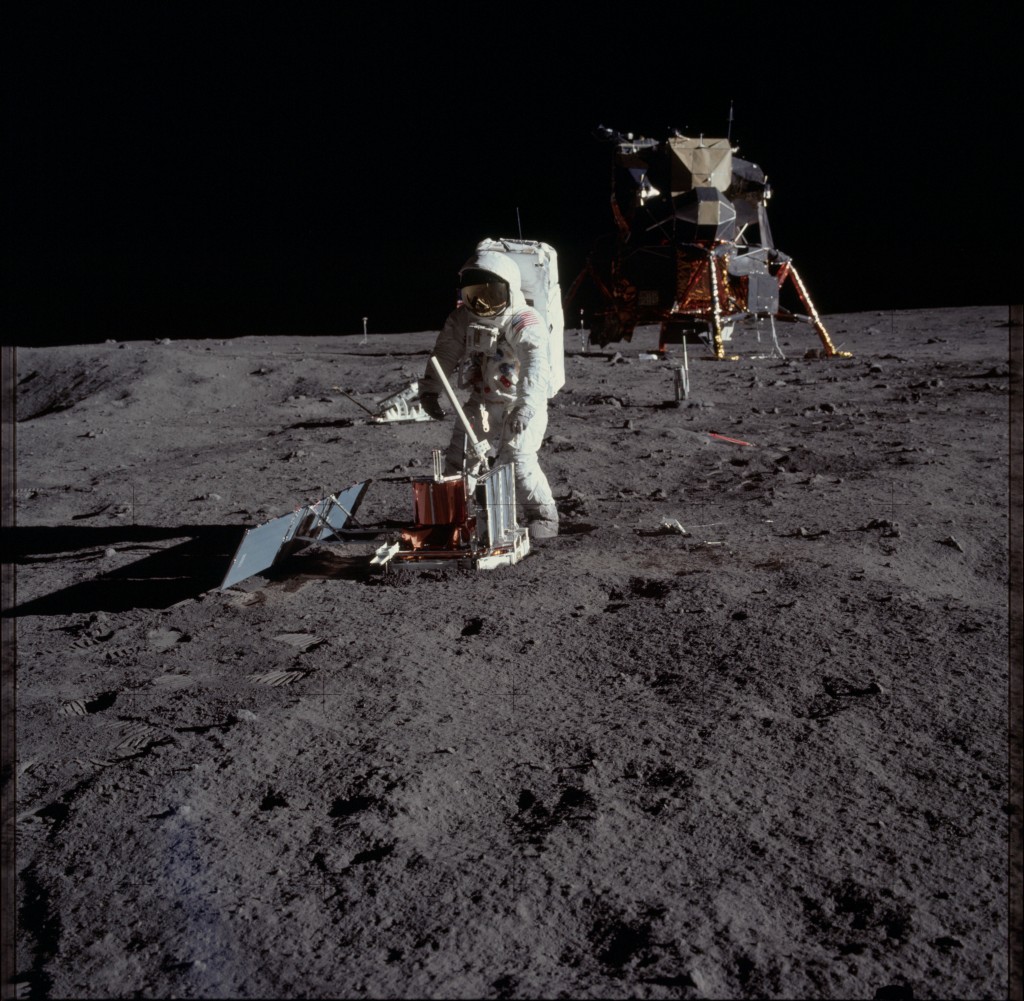
5947 — Aldrin setting up the seismology experiment. Note the laser
reflector experiment in the background which already has been set up. Photo
5947 — Aldrin setting up the seismology experiment. Note the laser
reflector experiment in the background which already has been set up.
|
|
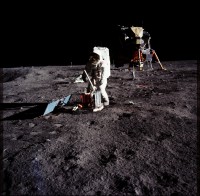 Photo
5947 — Enhanced version of the above photo, clearly showing the
astronaut foot paths. Photo
5947 — Enhanced version of the above photo, clearly showing the
astronaut foot paths.
|
|
|
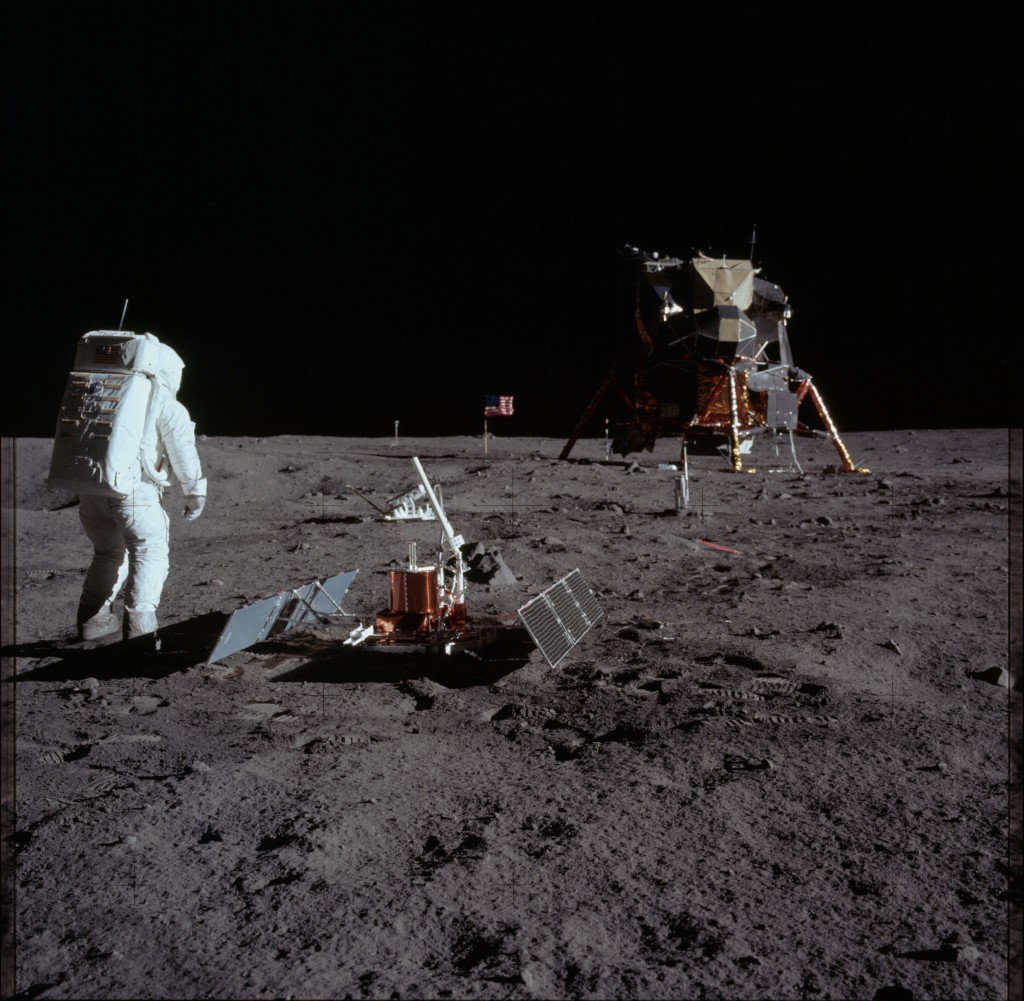
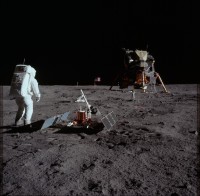 Photo
5948 — Aldrin has finished setting up the seismology experiment. The
laser reflector experiment and the TV camera are visible in the background
behind the seismology experiment. Photo
5948 — Aldrin has finished setting up the seismology experiment. The
laser reflector experiment and the TV camera are visible in the background
behind the seismology experiment.
|
|
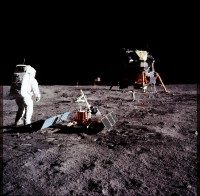 Photo
5948 — Enhanced version of the above photo, clearly showing the
astronaut foot paths. Photo
5948 — Enhanced version of the above photo, clearly showing the
astronaut foot paths.
|
|
|
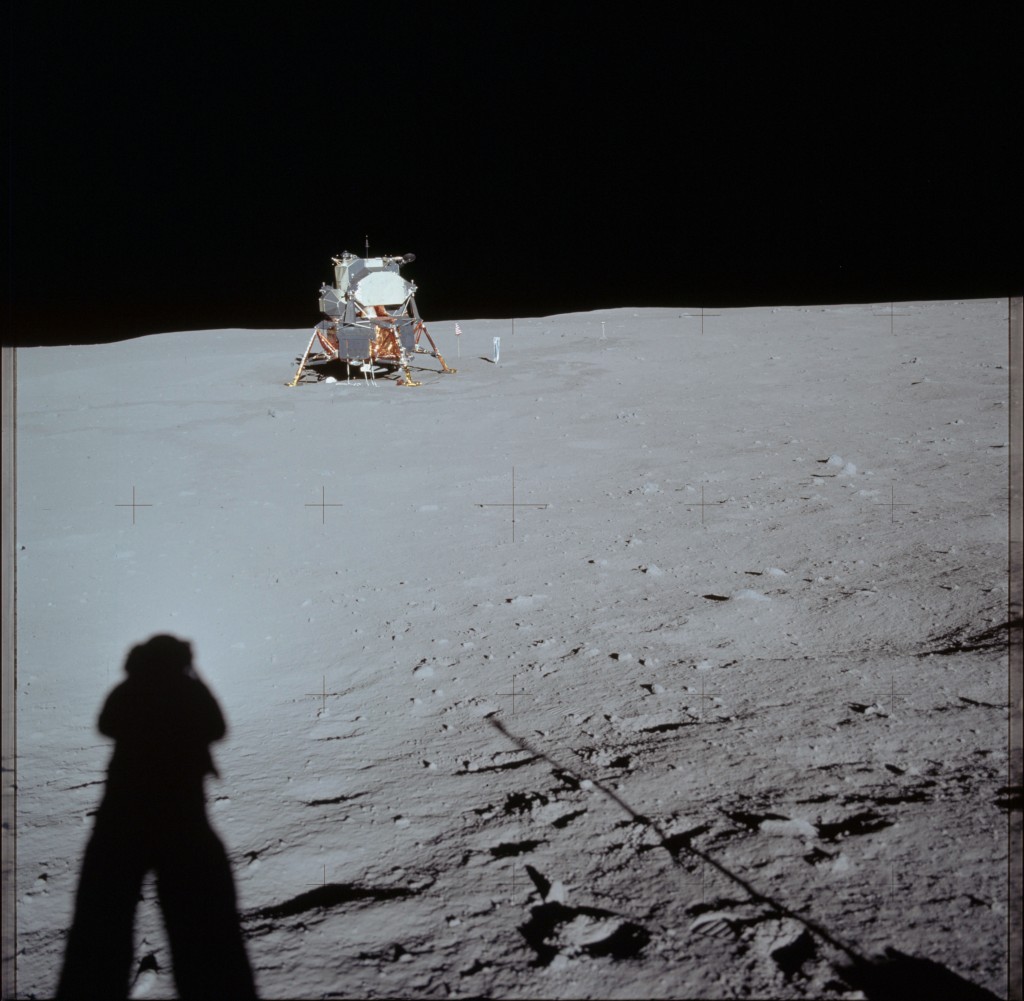
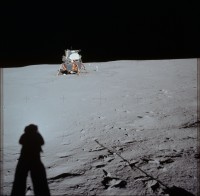 Photo
5961 — Photo of the LM. View is towards the west-northwest. Photo
5961 — Photo of the LM. View is towards the west-northwest.
|
|
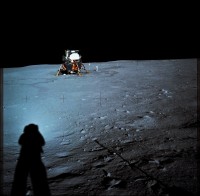 Photo
5961 — Same as above photo, but with special gamma curves applied to
make the astronaut foot paths much more obvious. Note how the lunar soil tends
to more strongly reflect sunlight back towards the direction of the sun and
with a distinctly bluish hue. Photo
5961 — Same as above photo, but with special gamma curves applied to
make the astronaut foot paths much more obvious. Note how the lunar soil tends
to more strongly reflect sunlight back towards the direction of the sun and
with a distinctly bluish hue.
|
|
|
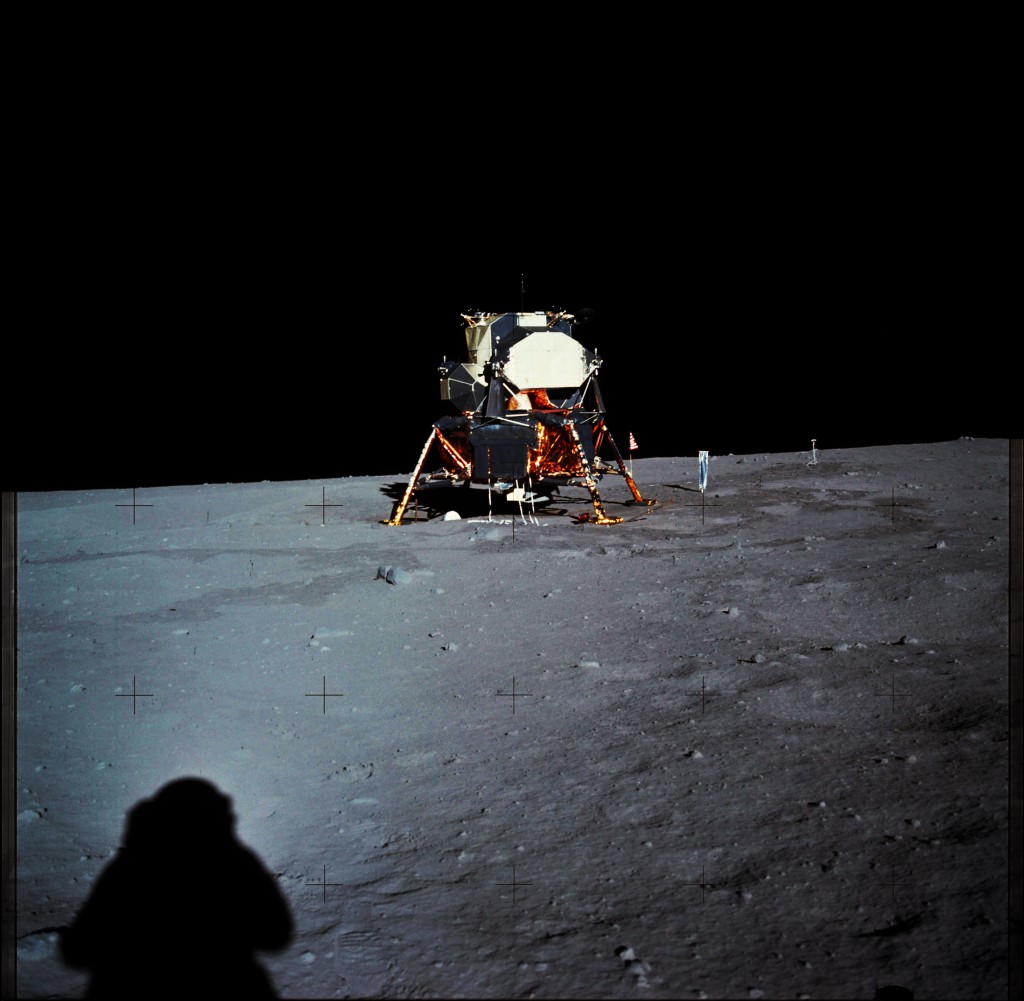
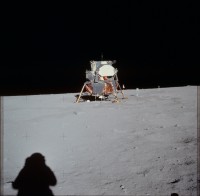 Photo
5962 — Photo of the LM. View is towards the west-northwest. Armstrong
was walking back towards the LM and snapped closer view of the LM compared to
photo 5961. Photo
5962 — Photo of the LM. View is towards the west-northwest. Armstrong
was walking back towards the LM and snapped closer view of the LM compared to
photo 5961.
|
|
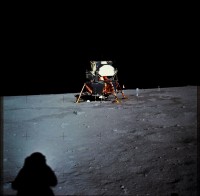 Photo
5962 — Same as above photo, but with special gamma curves applied to
make the astronaut foot paths much more obvious. Note how the lunar soil tends
to more strongly reflect sunlight back towards the direction of the sun and
with a distinctly bluish hue. Photo
5962 — Same as above photo, but with special gamma curves applied to
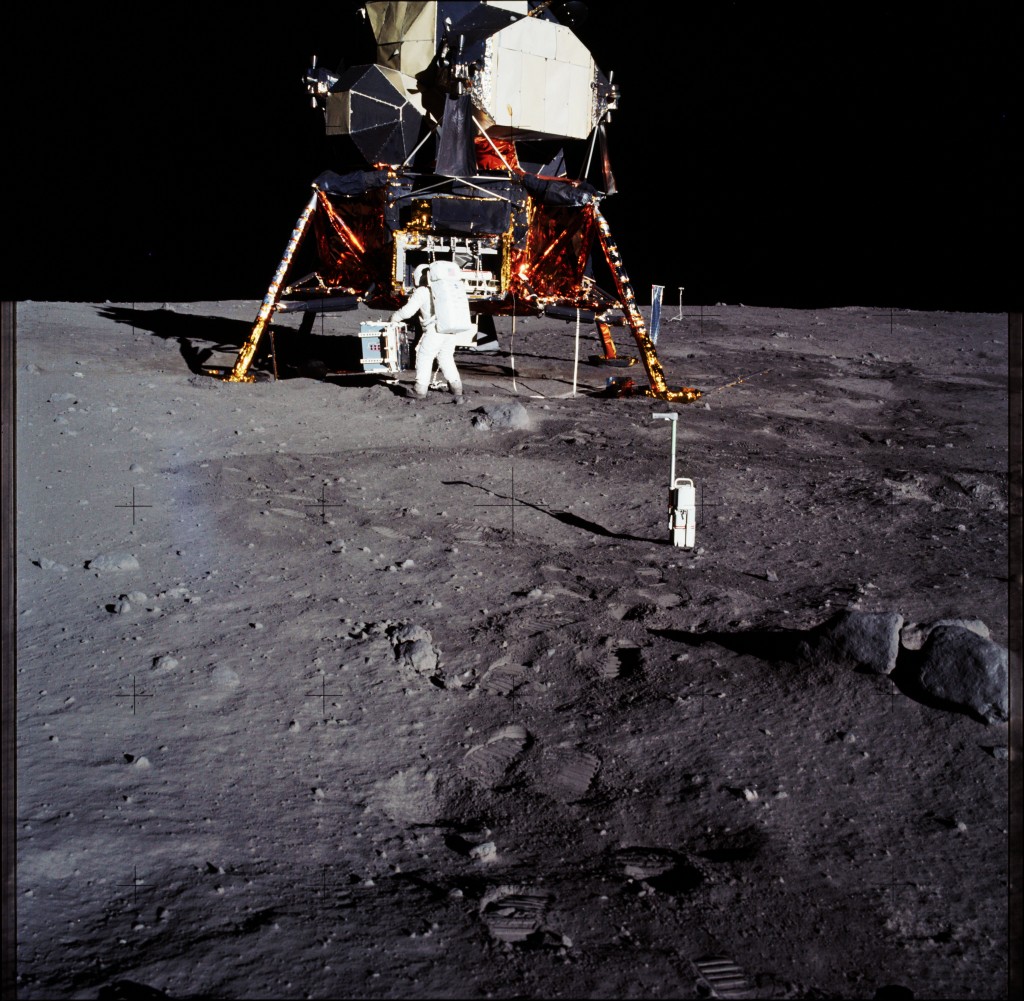
make the astronaut foot paths much more obvious. Note how the lunar soil tends
to more strongly reflect sunlight back towards the direction of the sun and
with a distinctly bluish hue.
|
|
|
|
|
|
|
Photo
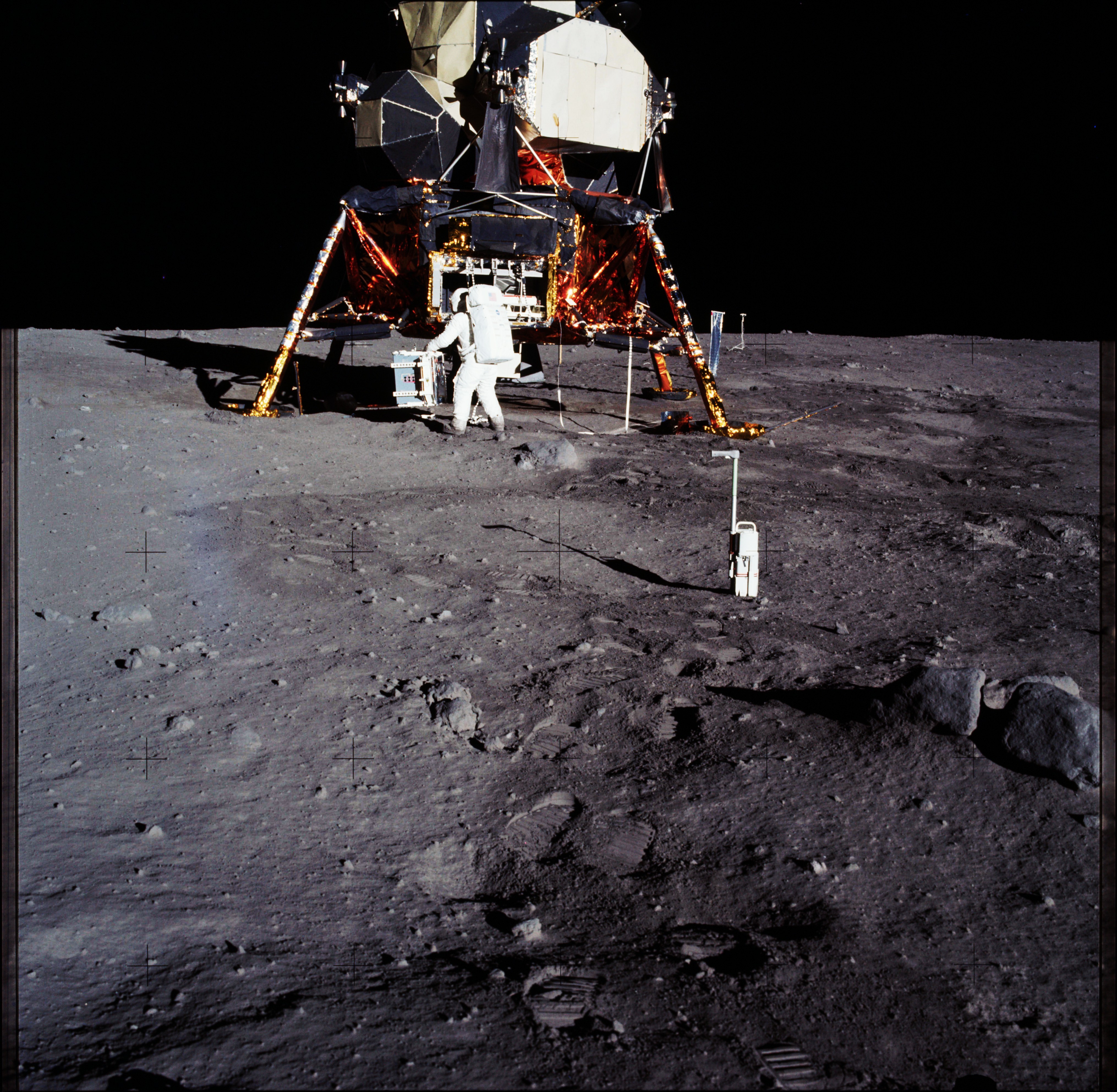
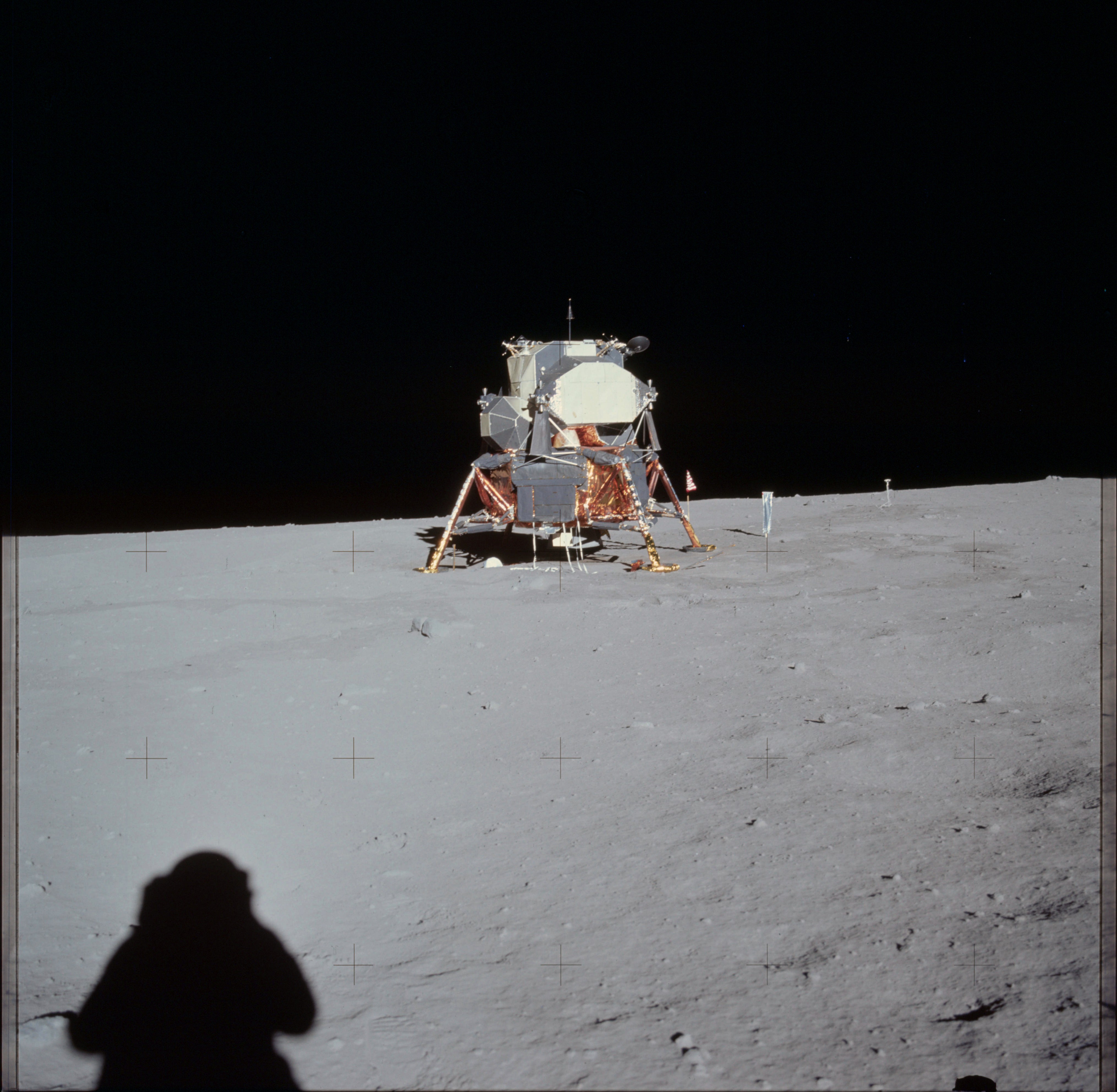
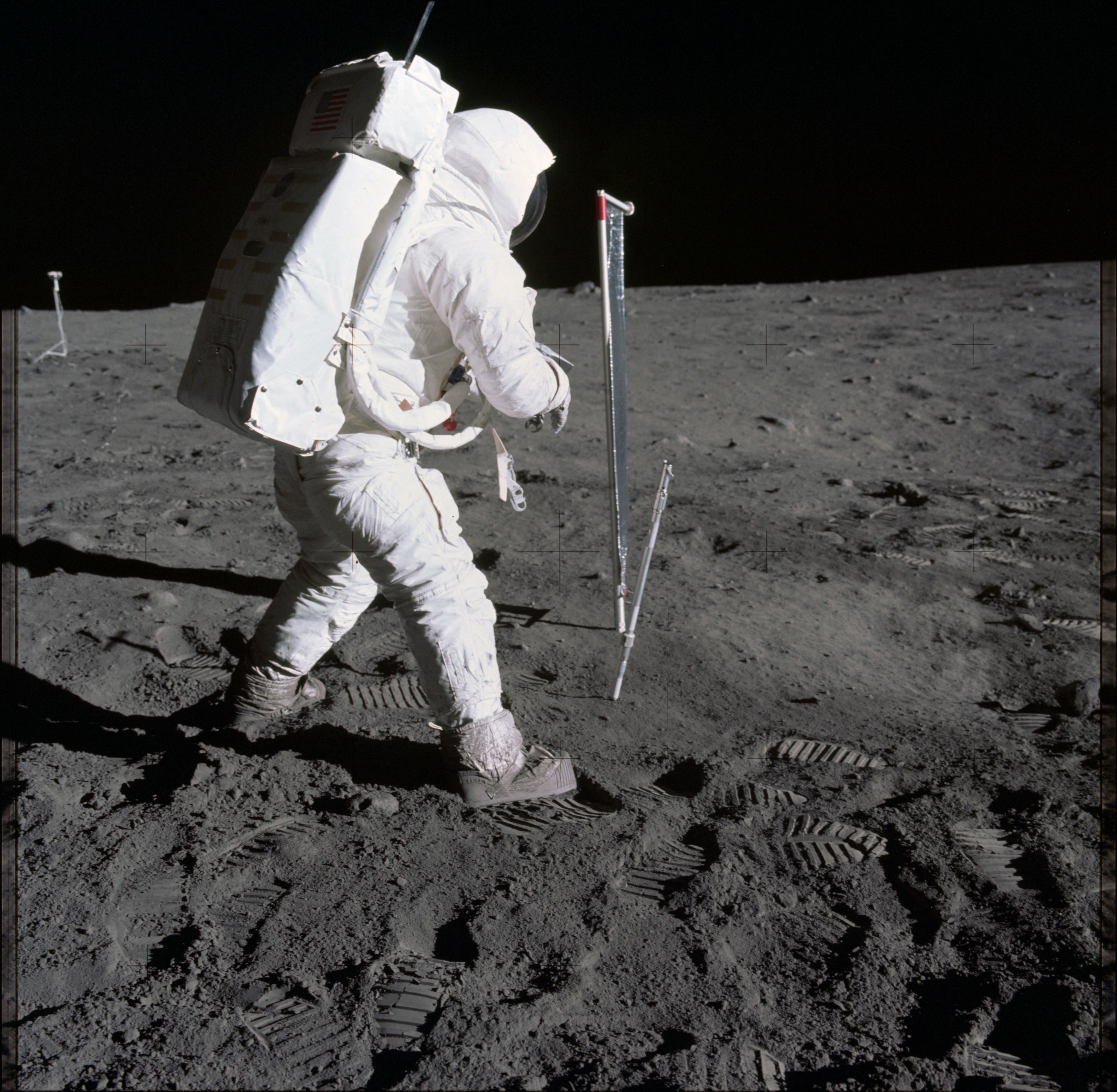
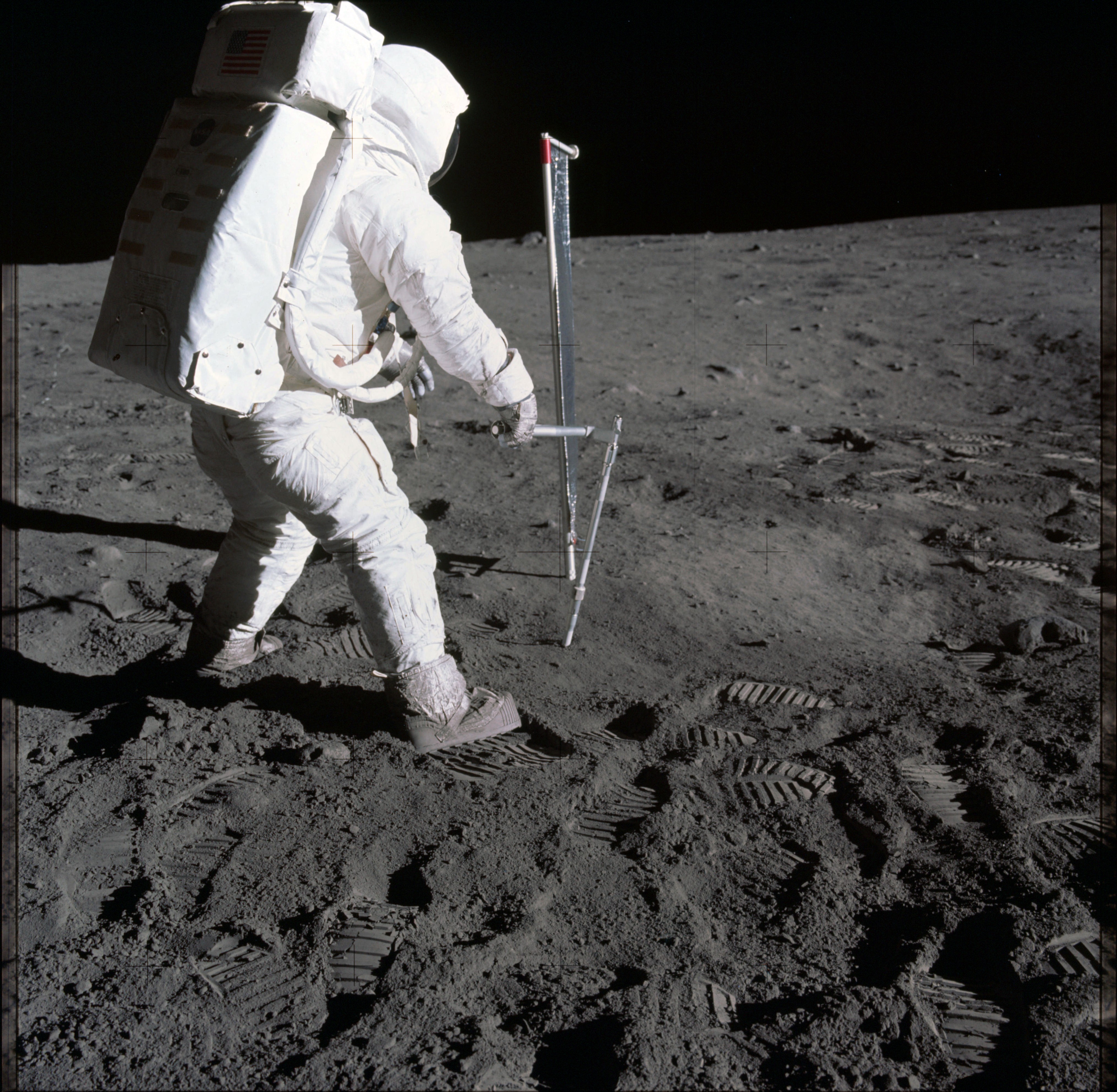
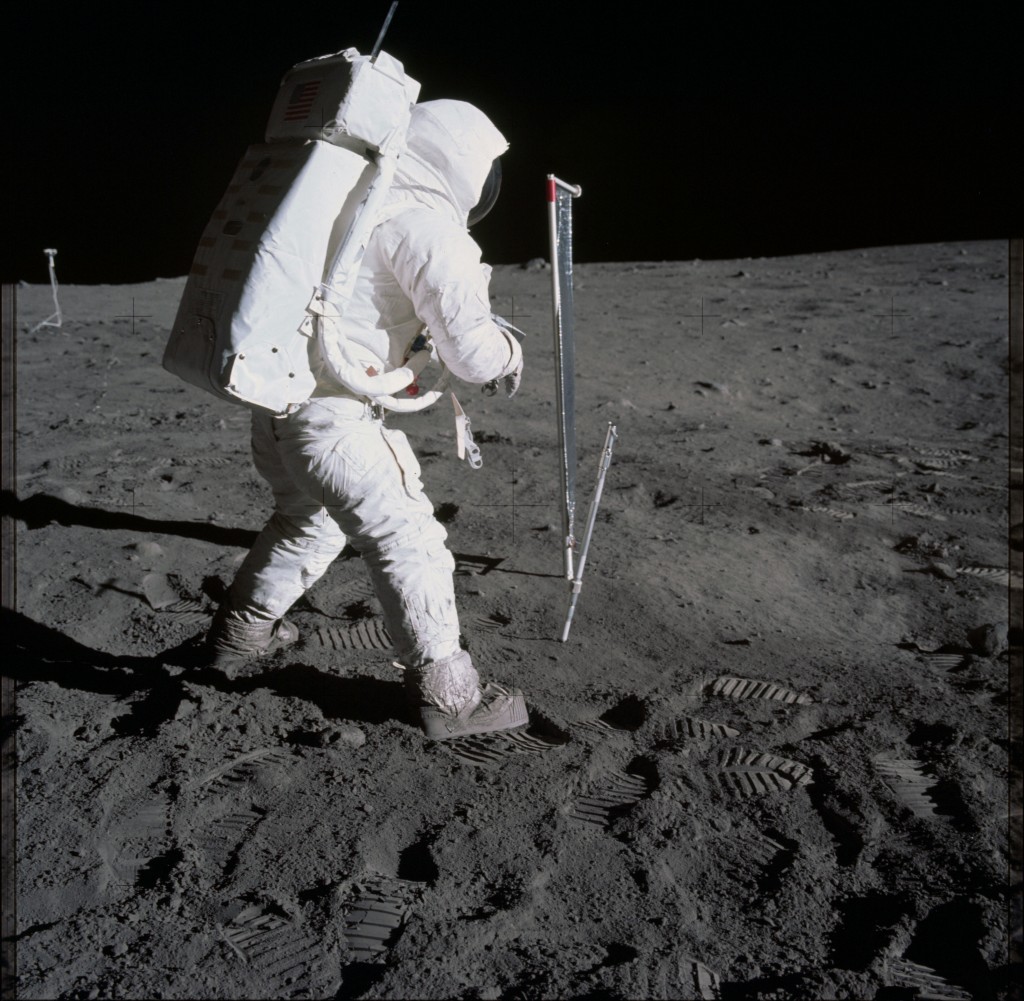
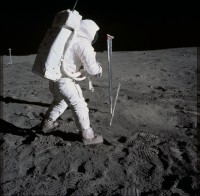
5963 — Color balanced. Aldrin preparing to retrieve the solar wind
experiment. |
|
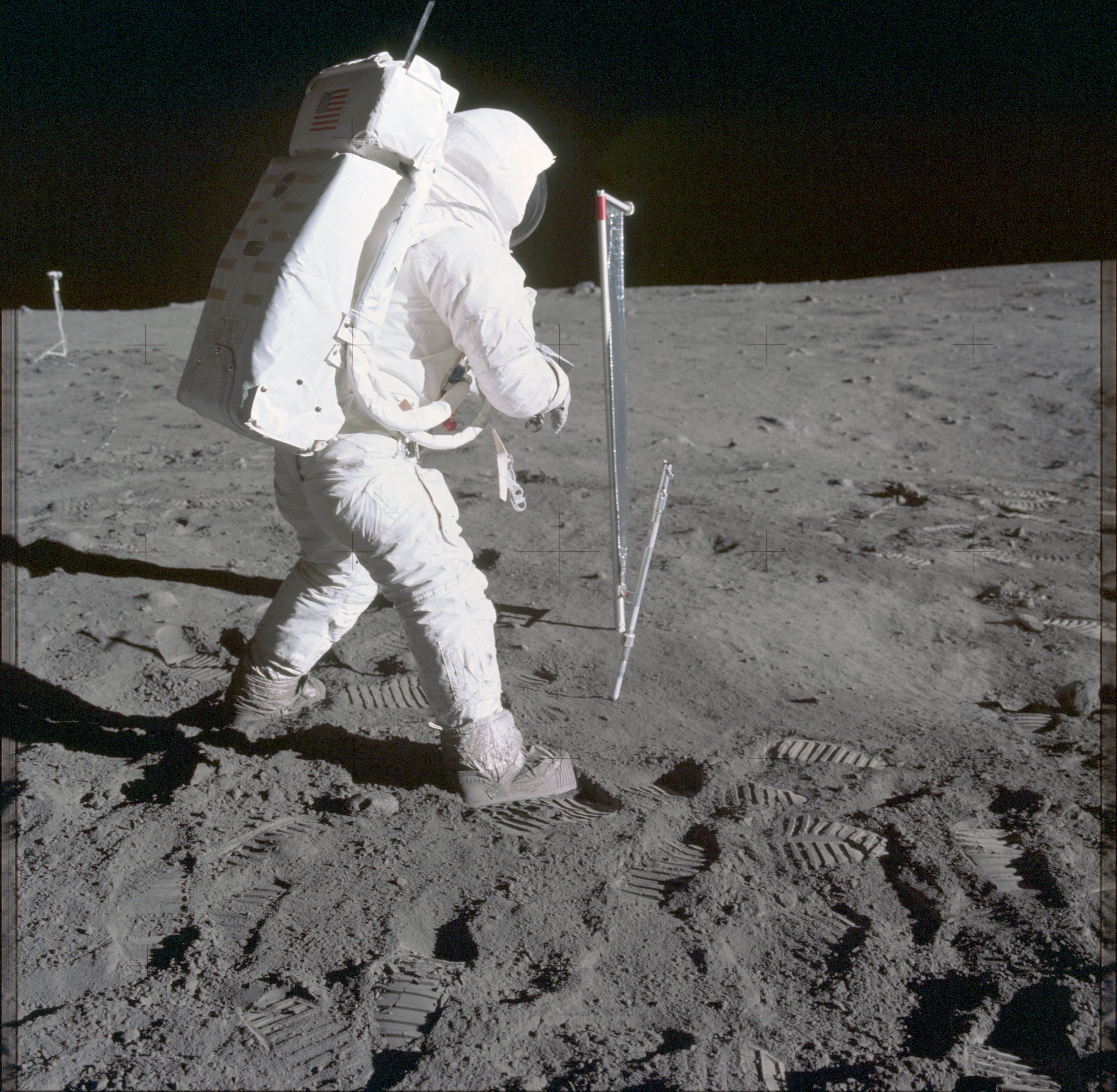
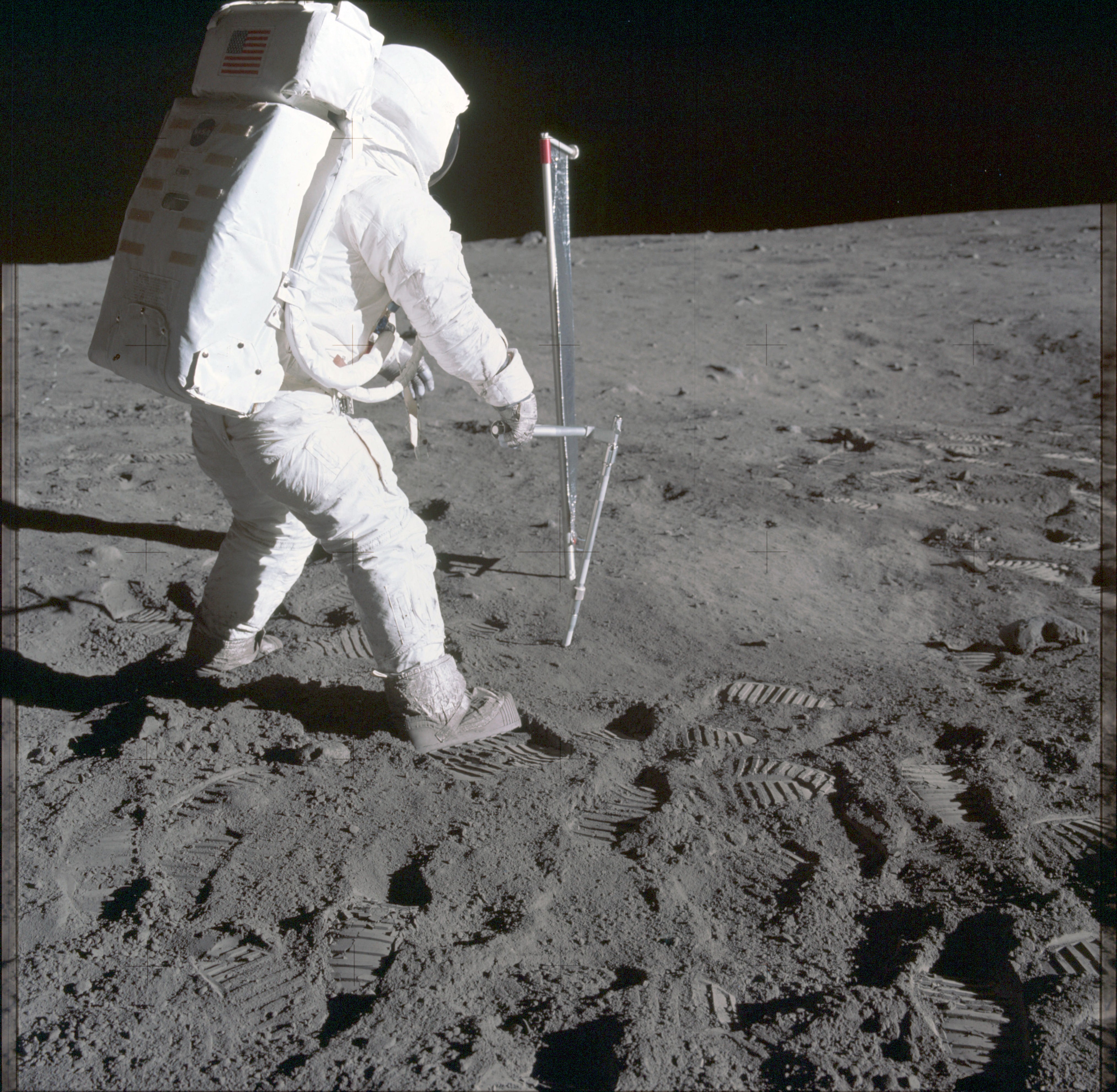
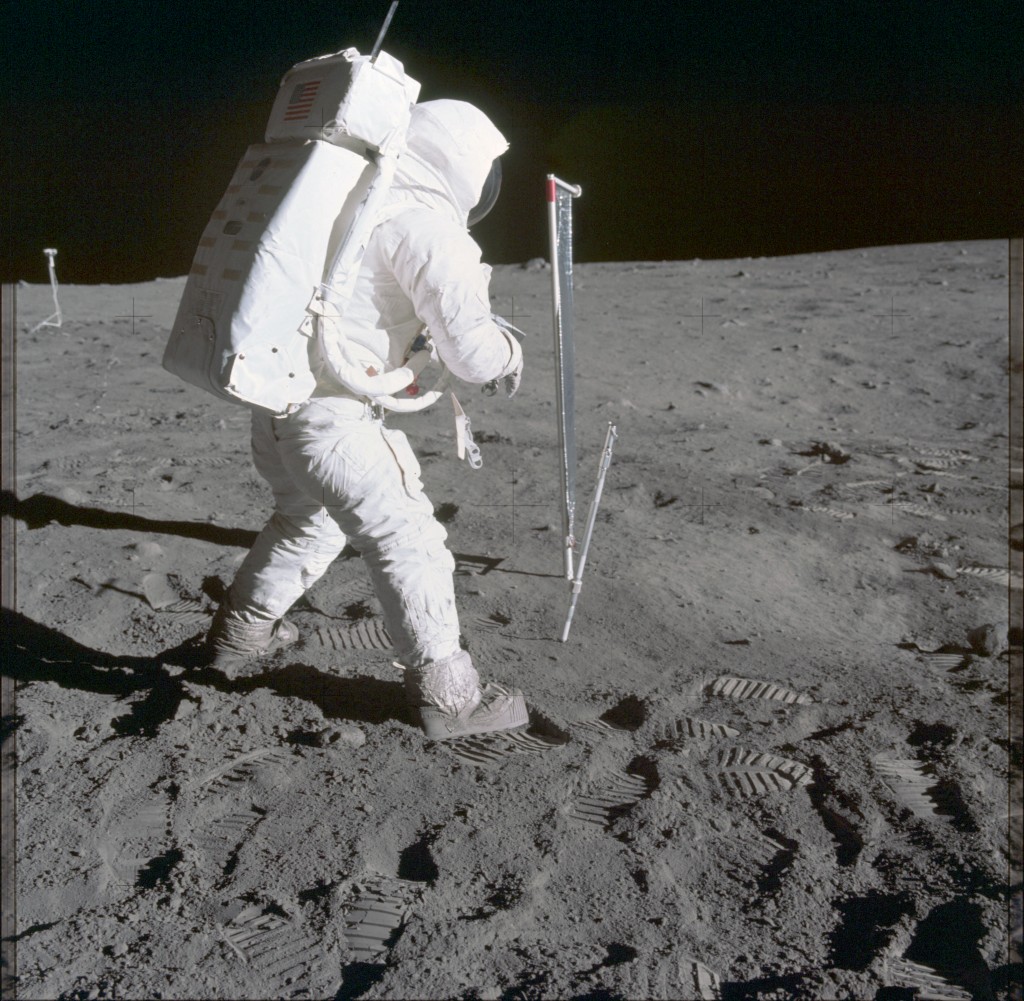
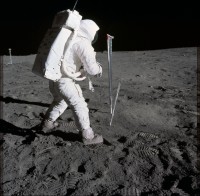
Photo
5963 — Same as photo at left, but with lens vignetting
removed. |
|
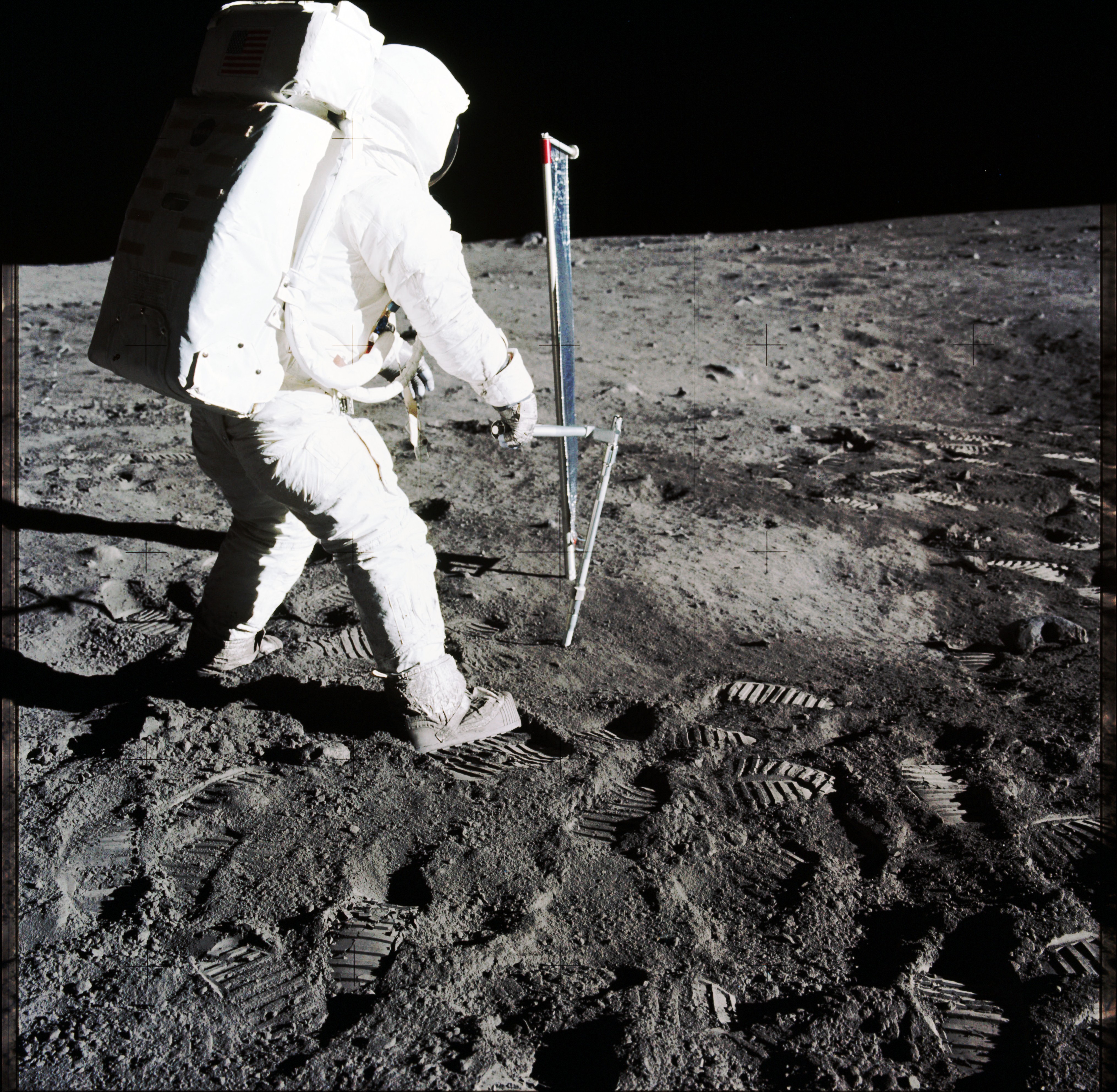
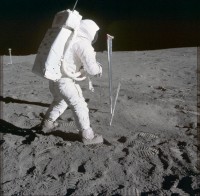 Photo
5963 — Same as above right photo, but gamma increased. Photo
5963 — Same as above right photo, but gamma increased.
|
|
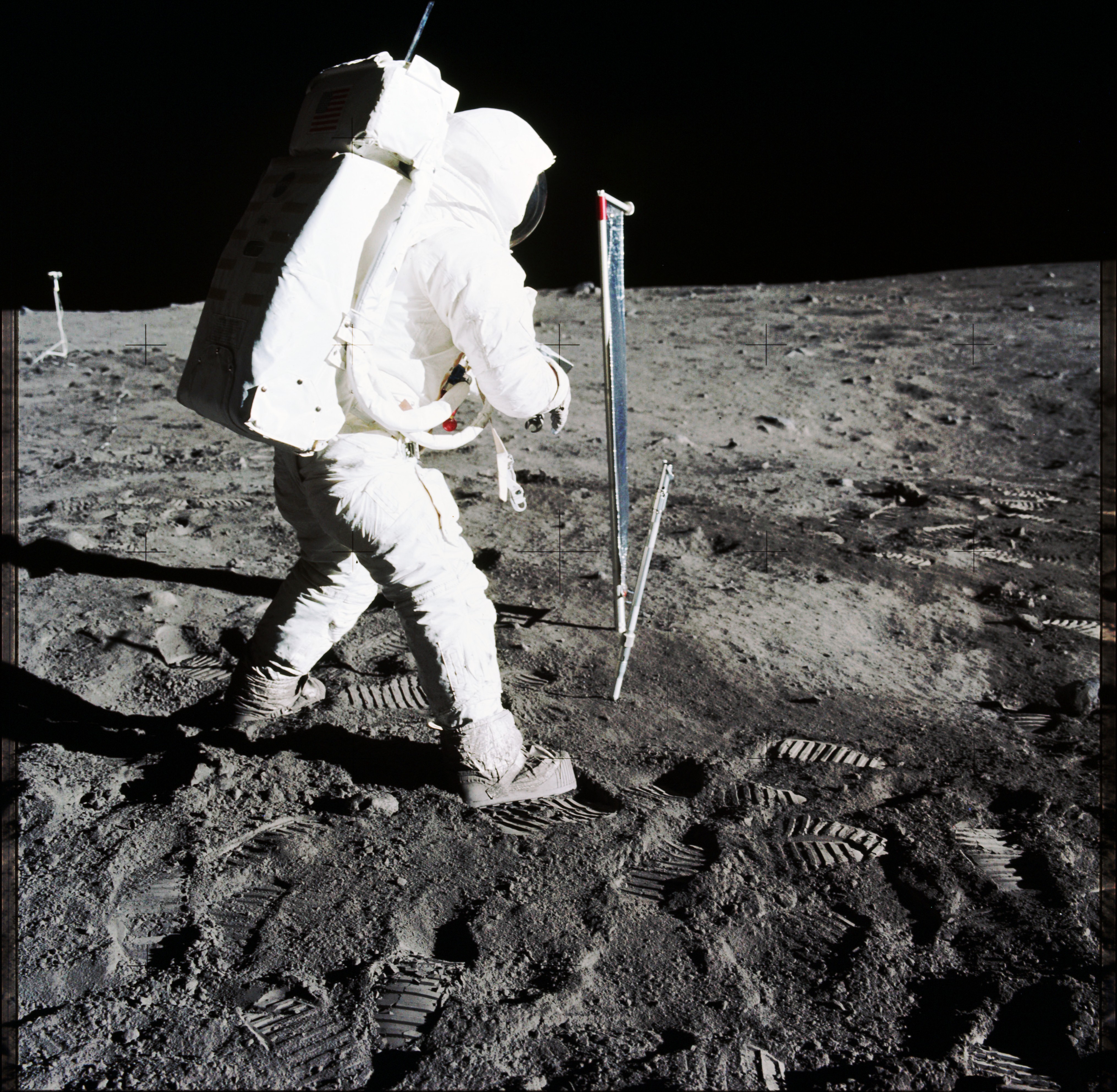
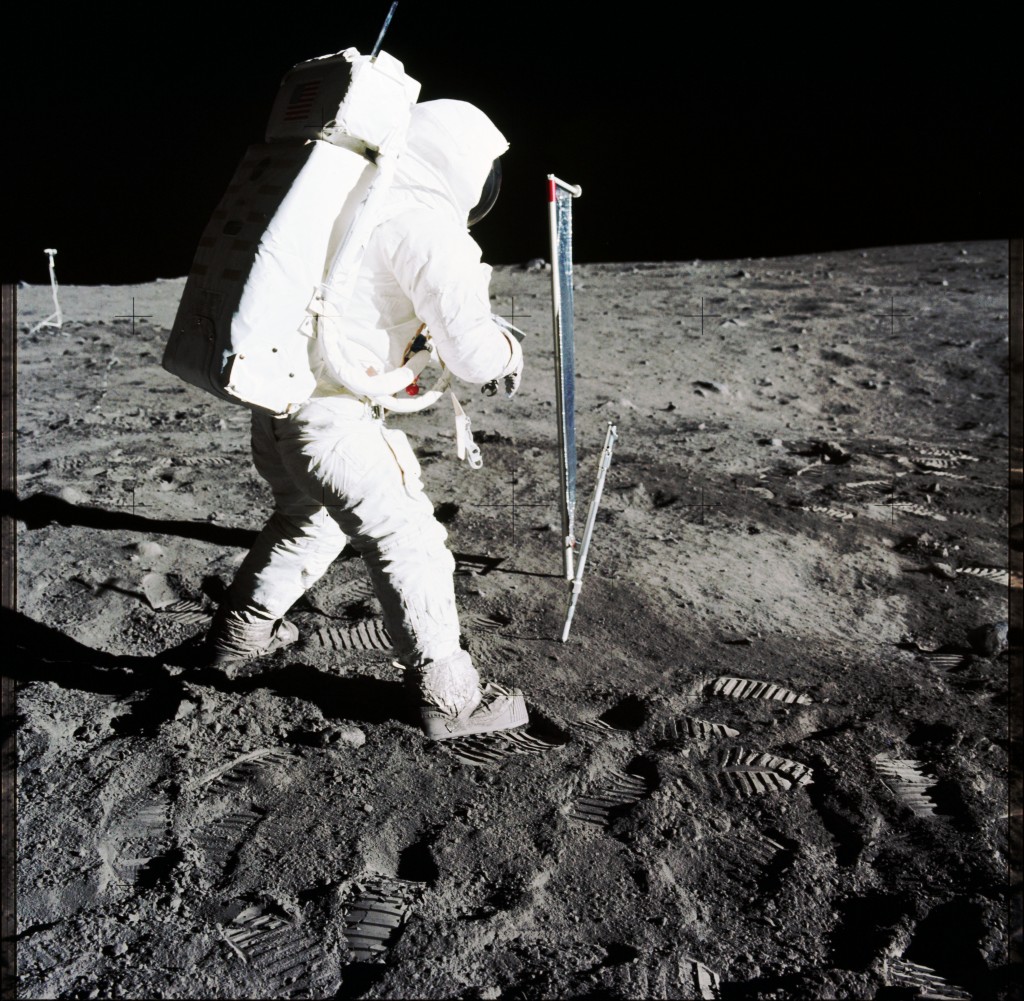
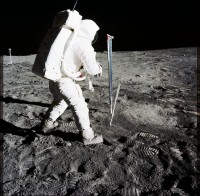 Photo
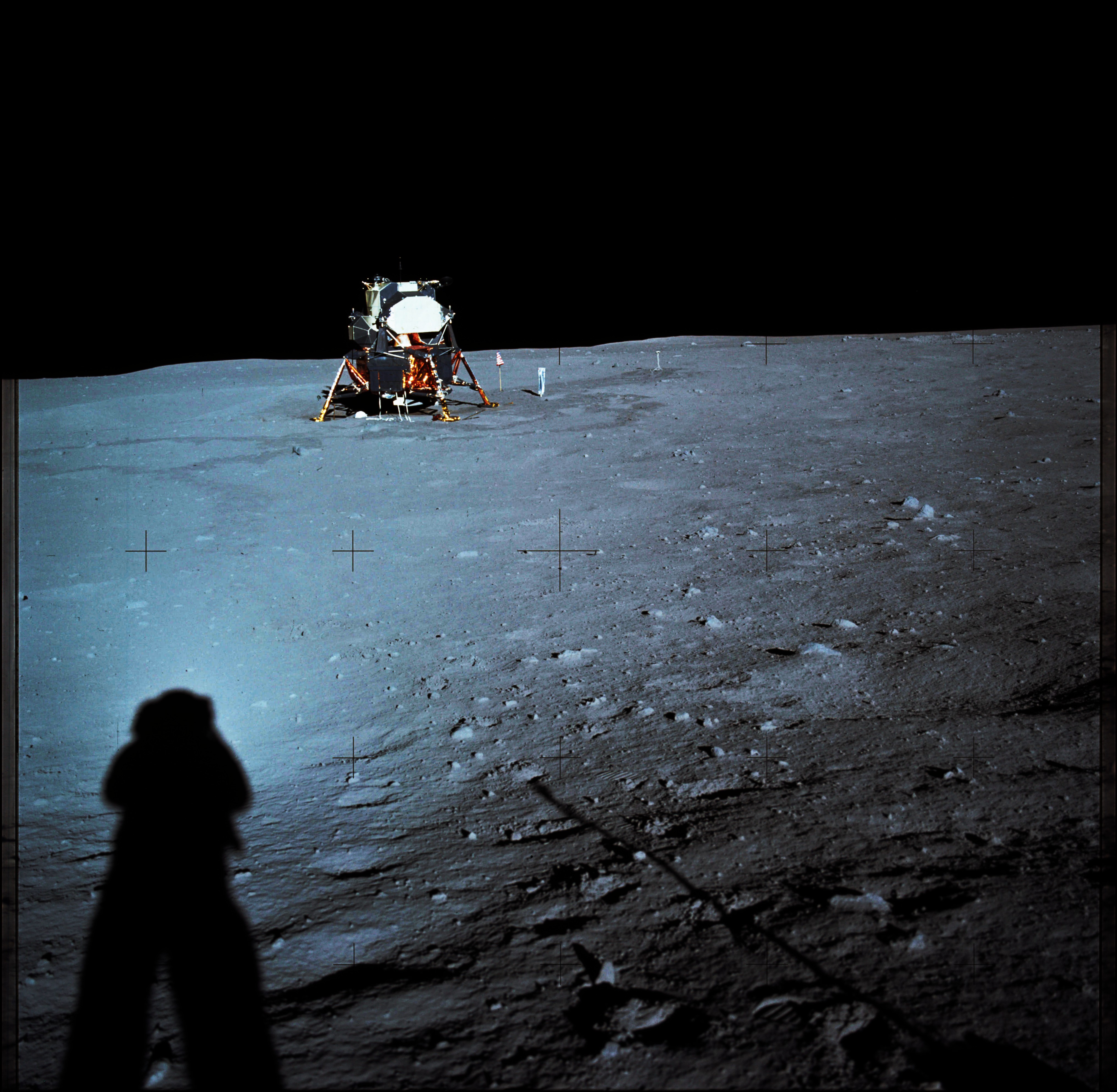
5963 — Same as 5963 photo with vignetting removed, but with special
gamma curves applied to bring out details in the terrain. Photo
5963 — Same as 5963 photo with vignetting removed, but with special
gamma curves applied to bring out details in the terrain.
The custom gamma curves make the LM decent
engine's bright blast trail quite obvious. Compare the blast trail to photo
5903 above. Remarkable, isn't it? Hoax believers claim that the blast trail
shown in 5903 is due to a spotlight. Yet here is the same blast trail, plain as
day, once this photo was enhanced to bring out details on the lunar
surface. |
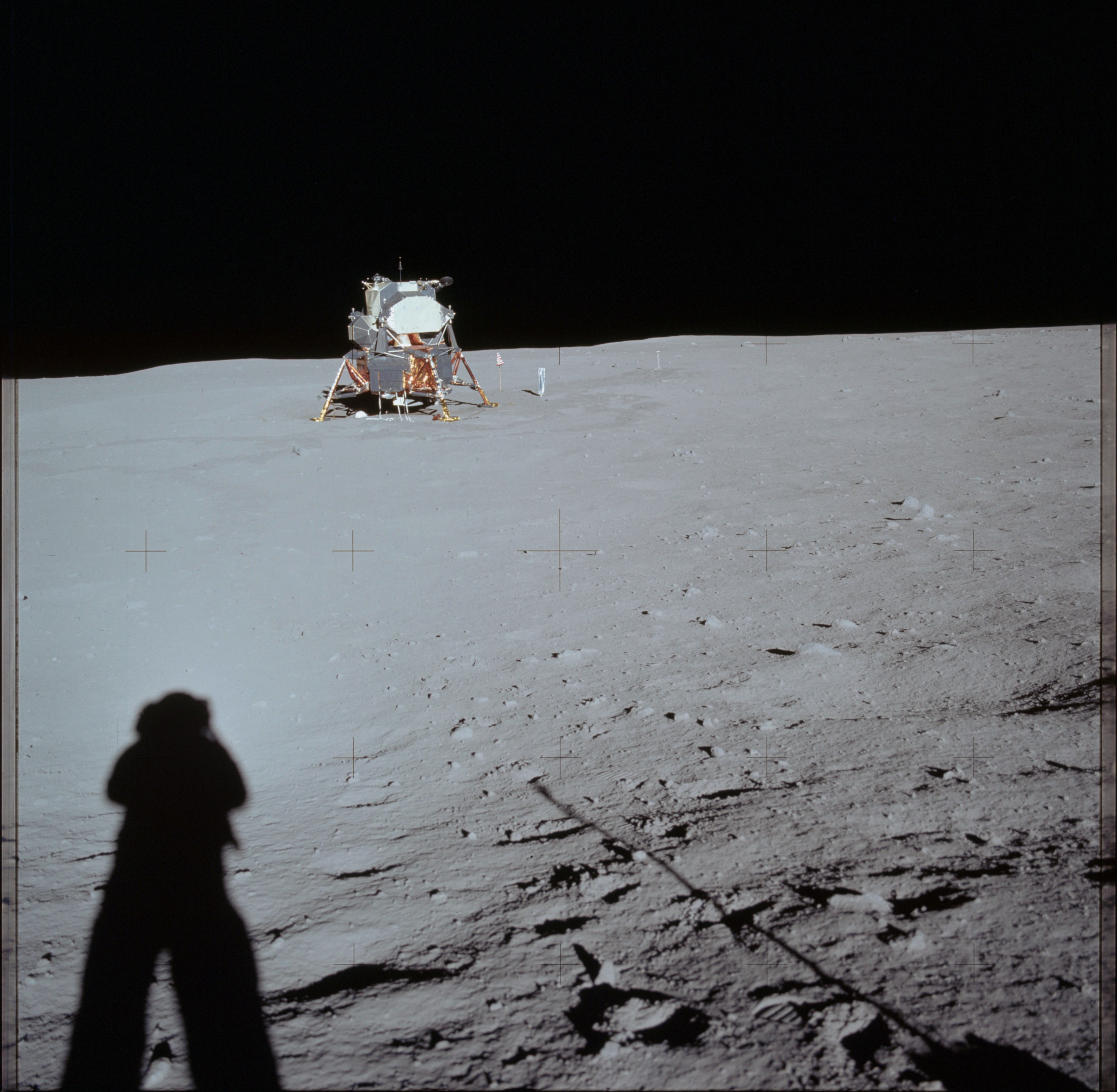
|
|
|
|
|
|
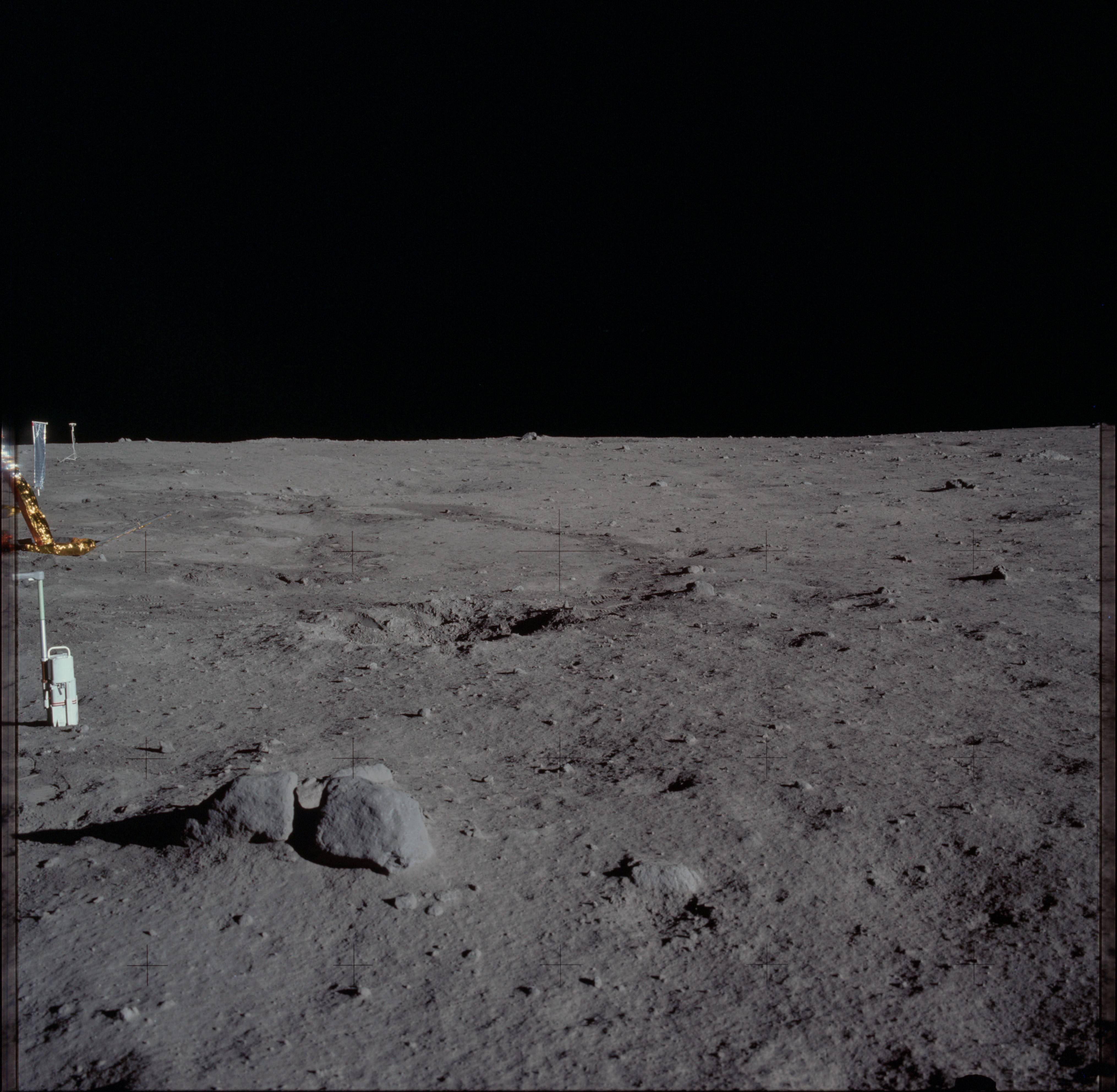
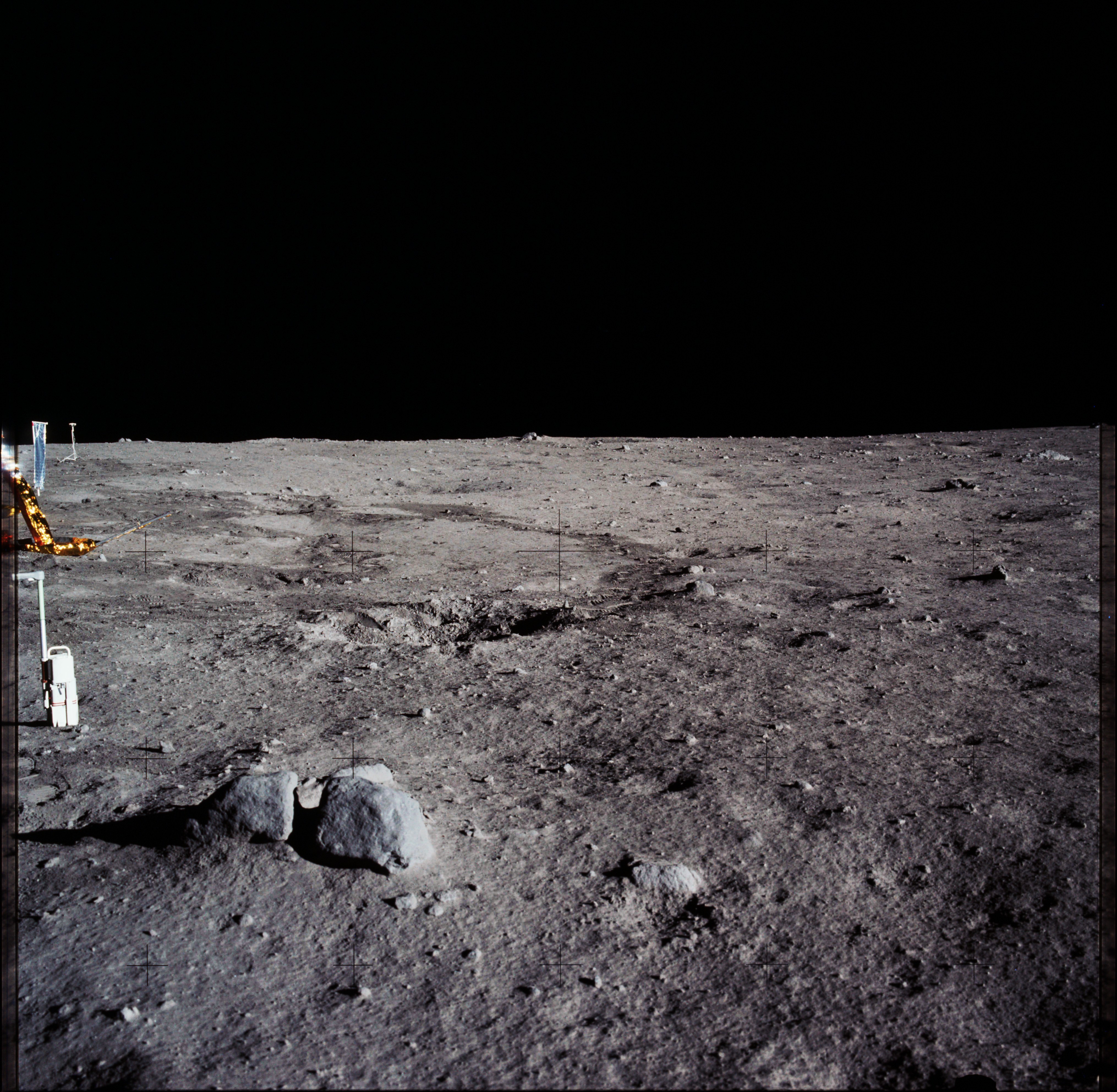
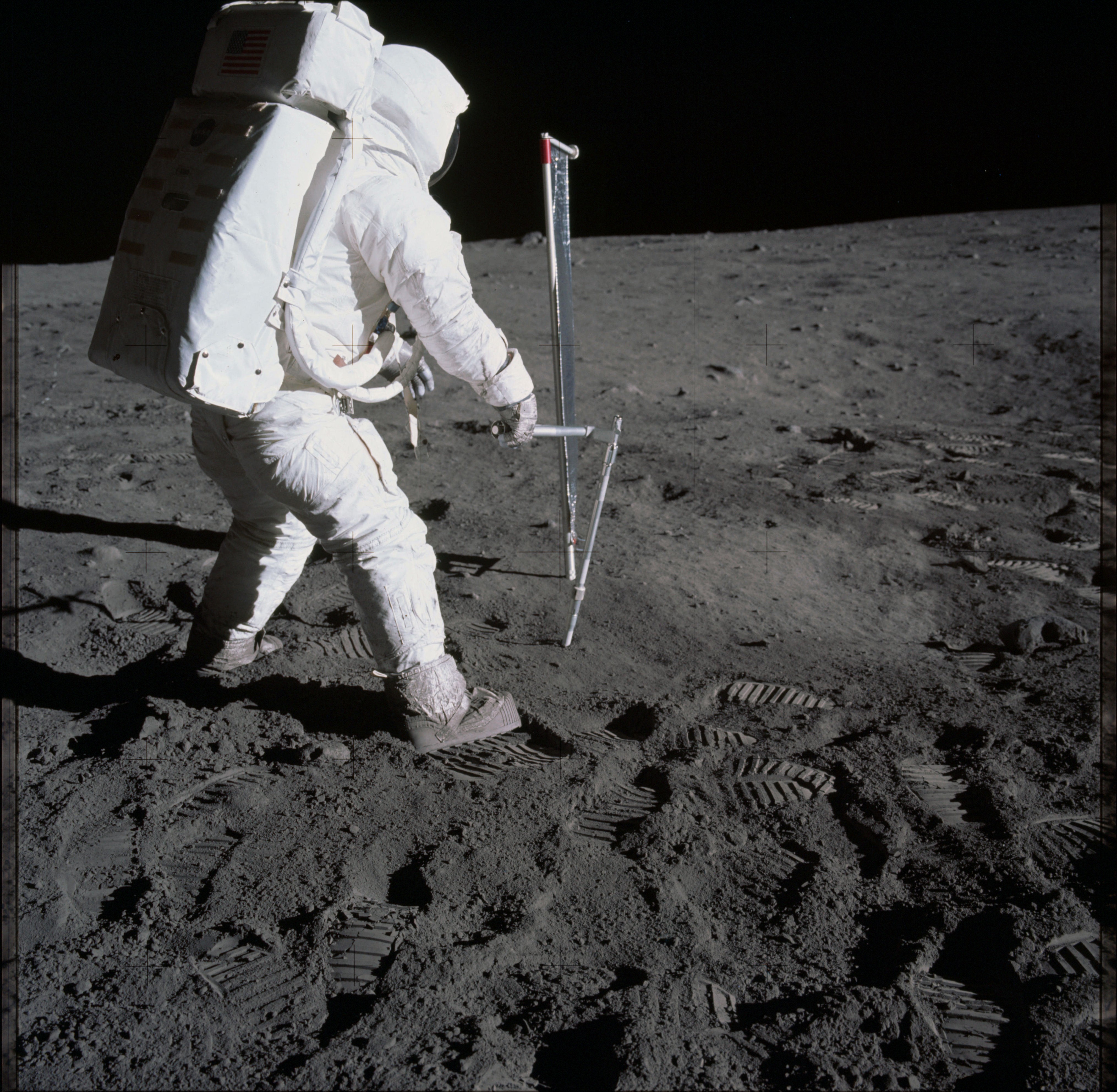
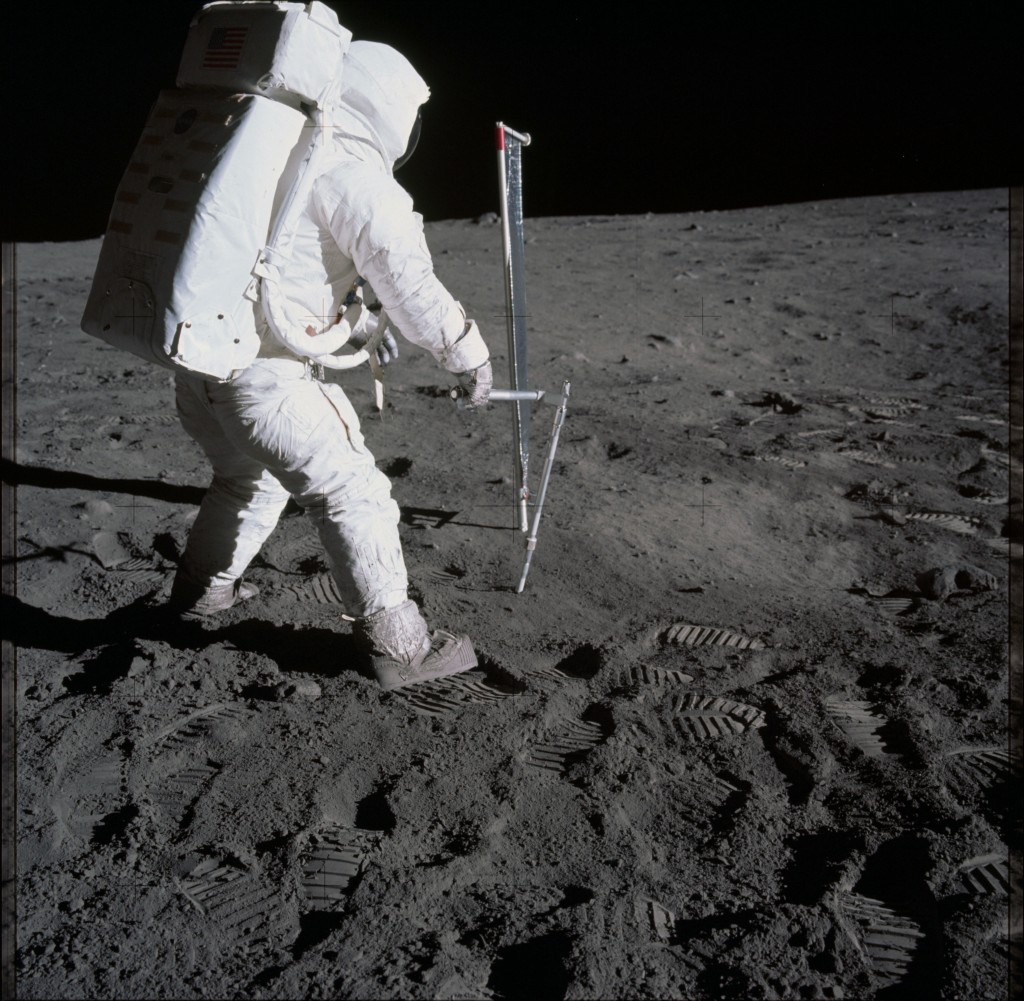
Photo
5964 — Color balanced. Aldrin preparing to retrieve the solar wind
experiment. |
|
Photo
5964 — Same as photo at left, but with lens vignetting
removed. |
|
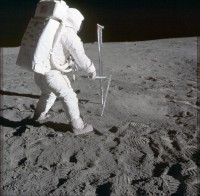 Photo
5964 — Same as above right photo, but gamma increased. Photo
5964 — Same as above right photo, but gamma increased.
|
|
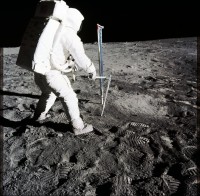 Photo
5964 — Same as 5964 photo with vignetting removed, but with special
gamma curves applied to bring out details in the terrain. Photo
5964 — Same as 5964 photo with vignetting removed, but with special
gamma curves applied to bring out details in the terrain.
The LM decent engine's bright blast trail is
obvious. |
|
|
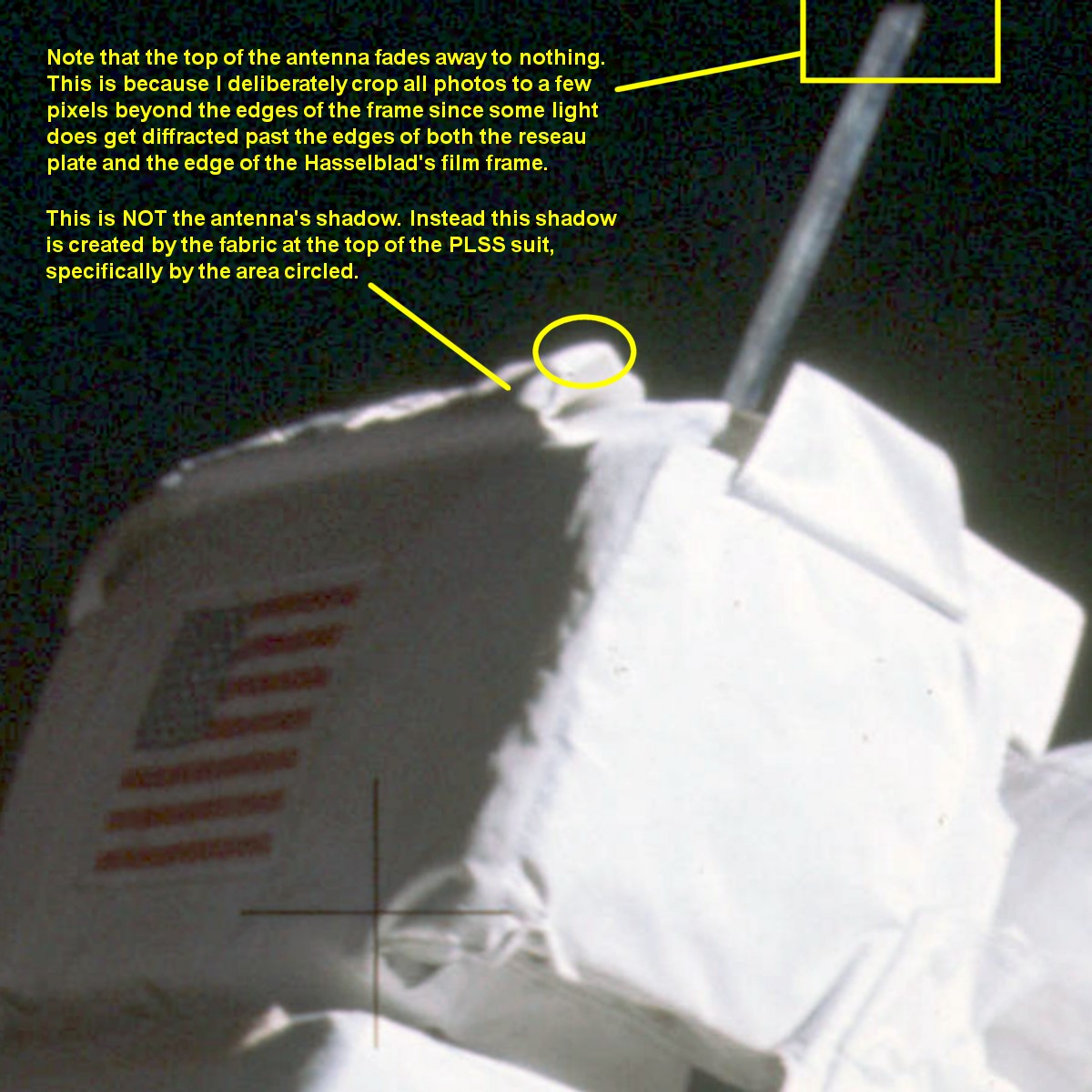
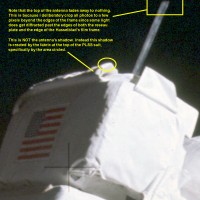 Photo
5963 Antenna Close-up — While the antenna appears to be located close
to the nearer side of this rear side view of the PLSS backpack, the antenna
really is located on the top left side of the PLSS backpack when the PLSS
backpack is viewed directly from behind. Read additional comments in the linked
high resolution photo. Photo
5963 Antenna Close-up — While the antenna appears to be located close
to the nearer side of this rear side view of the PLSS backpack, the antenna
really is located on the top left side of the PLSS backpack when the PLSS
backpack is viewed directly from behind. Read additional comments in the linked
high resolution photo.
|
|
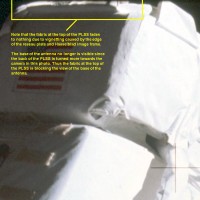 Photo
5964 Antenna Close-up — Fabric at top of PLSS backpack completely
blocks a view of the antenna's base since the back of the PLSS backpack is
turned more towards the camera in this photo. Photo
5964 Antenna Close-up — Fabric at top of PLSS backpack completely
blocks a view of the antenna's base since the back of the PLSS backpack is
turned more towards the camera in this photo.
|
|
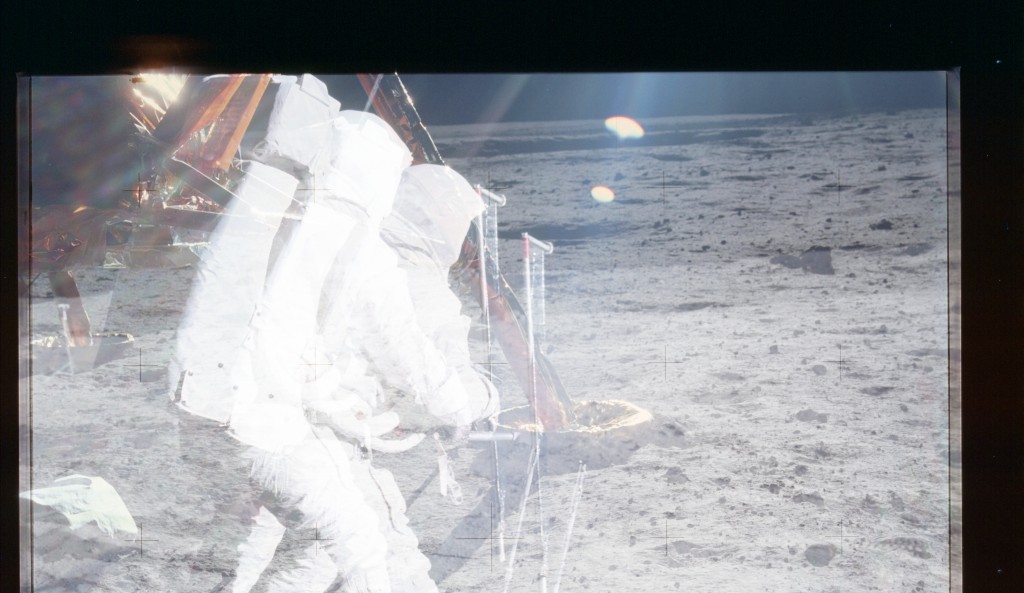
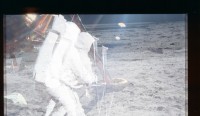 Overlay
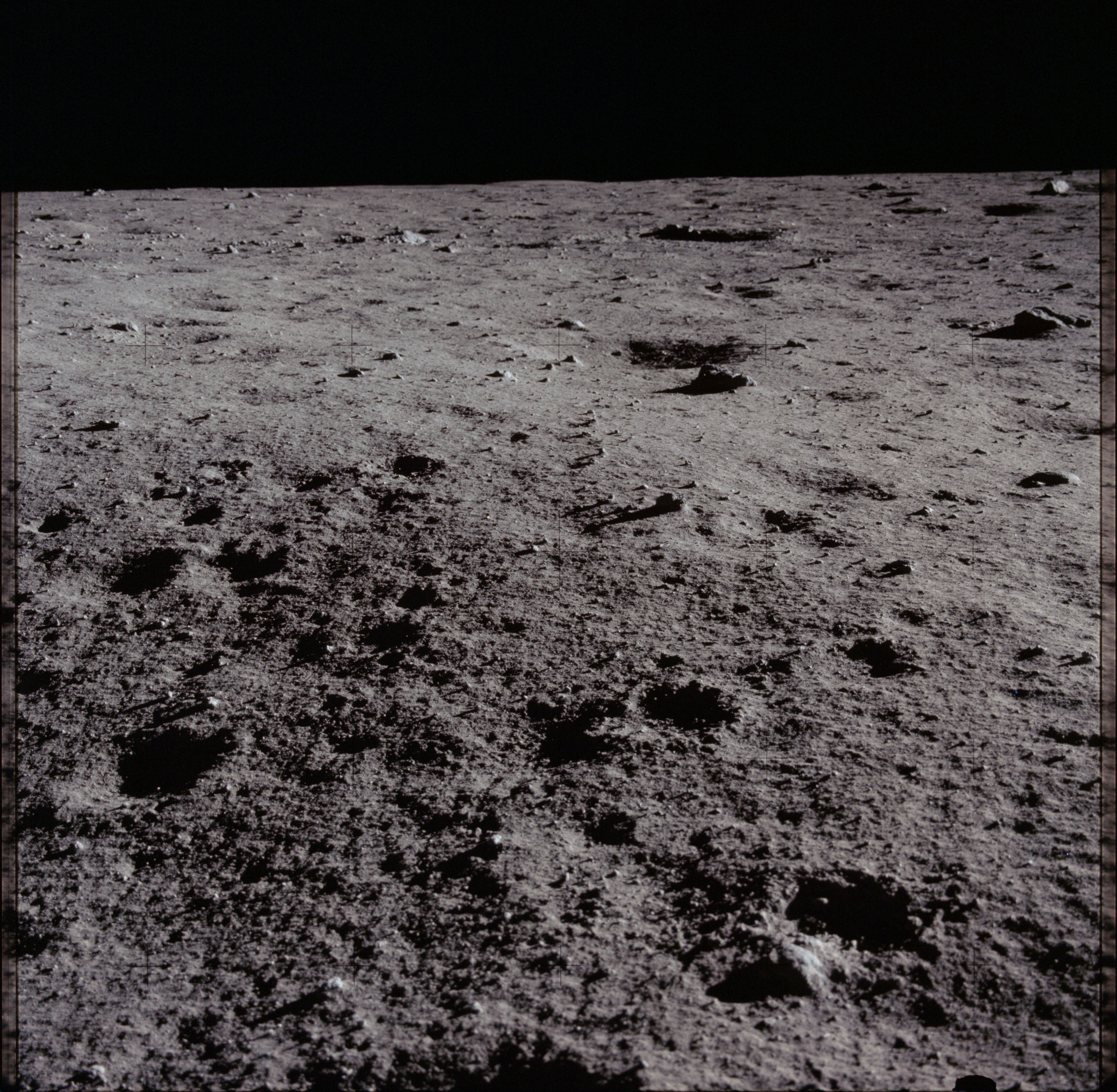
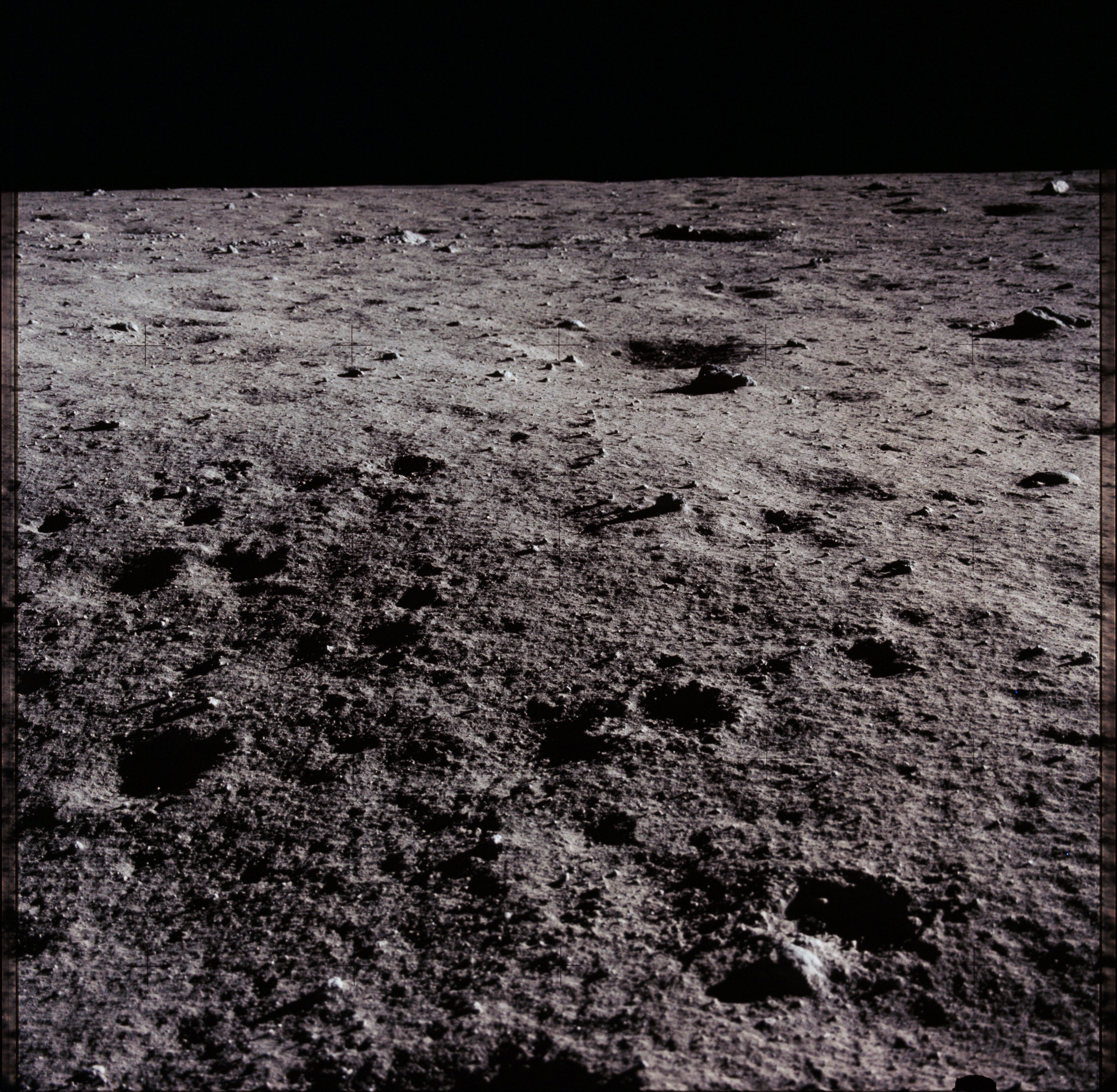
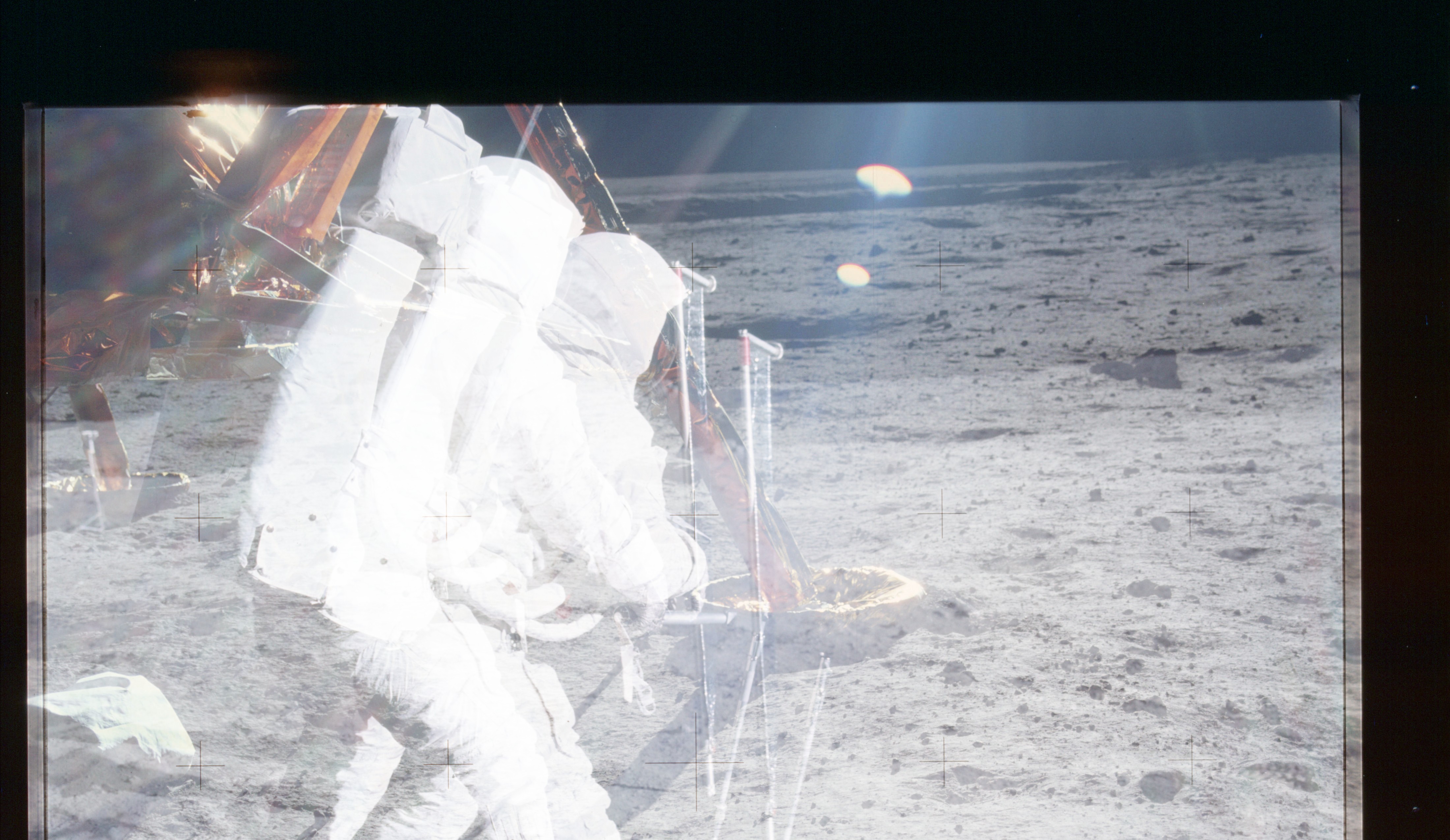
of photos 5865, 5963 and 5964 — I chose to overlay photos 5963 and
5964 atop photo 5865 since photo 5865 is nicely illuminated at the top of its
frame. I aligned the photos using the each photo's center reseau cross. As you
can see, all of the other reseau crosses line up as well. You can also see
exactly where the top edge of the frame is for photos 5963 and 5964 since the
well lit top portion of photo 5865 clearly shows the top edge of the
frame. Overlay
of photos 5865, 5963 and 5964 — I chose to overlay photos 5963 and
5964 atop photo 5865 since photo 5865 is nicely illuminated at the top of its
frame. I aligned the photos using the each photo's center reseau cross. As you
can see, all of the other reseau crosses line up as well. You can also see
exactly where the top edge of the frame is for photos 5963 and 5964 since the
well lit top portion of photo 5865 clearly shows the top edge of the
frame.
|
|
|
| Apollo 11 Film Roll
44 Images (AS11-44-*) |
|
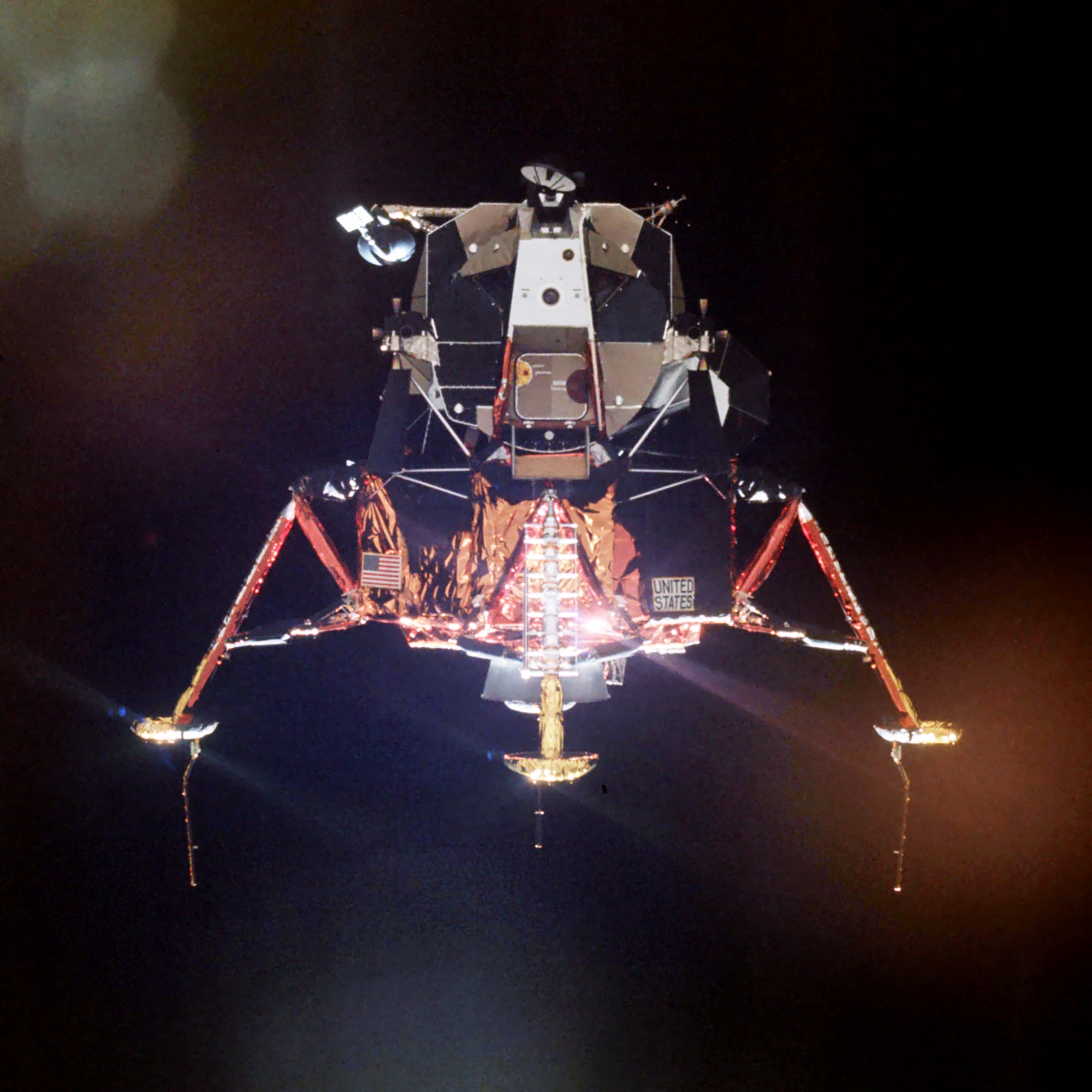
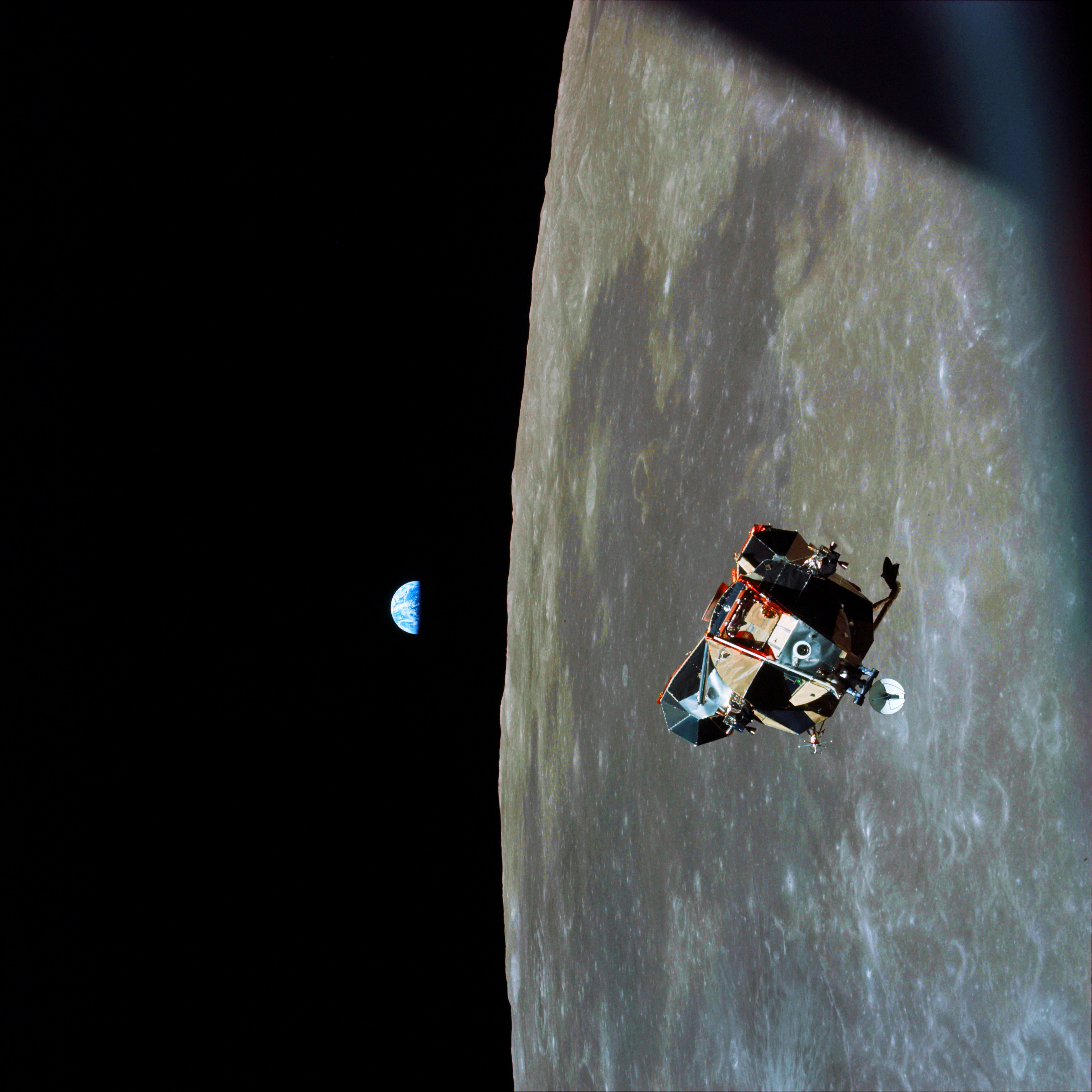
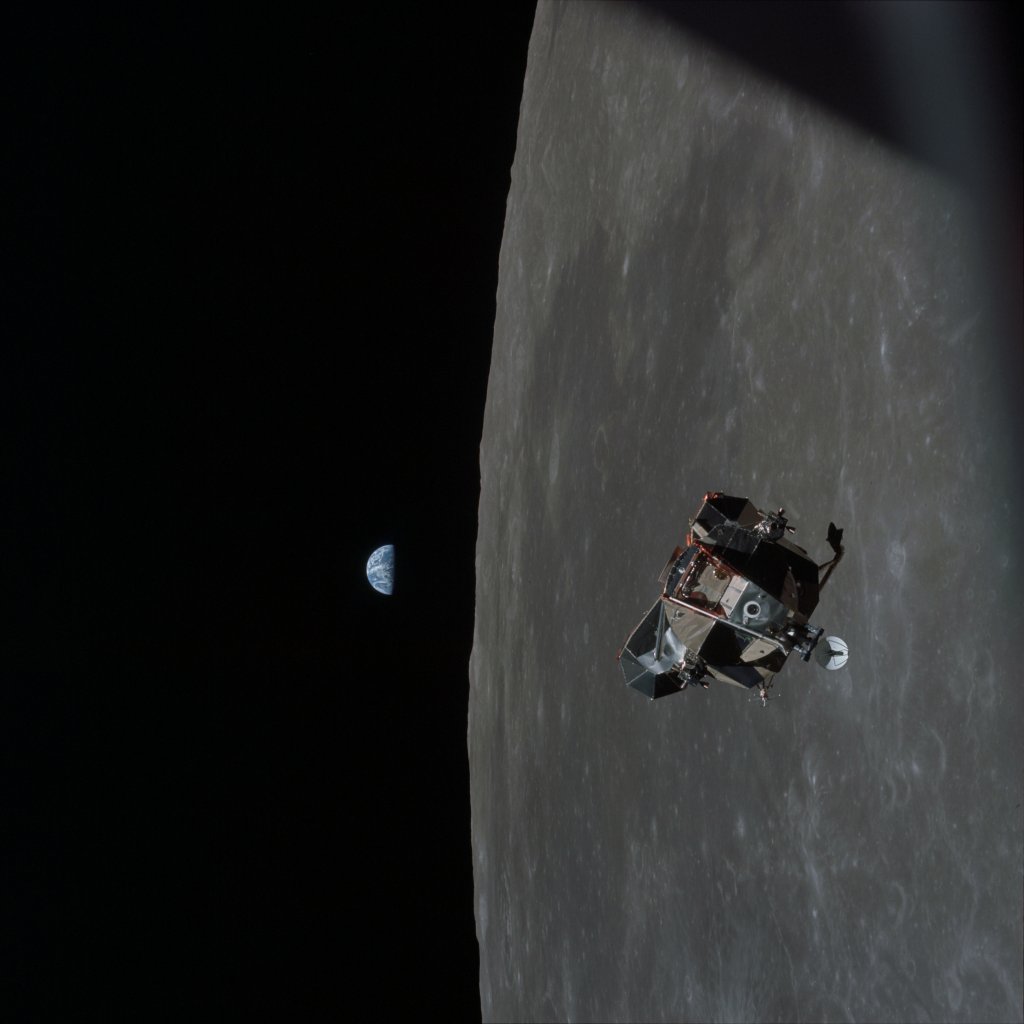
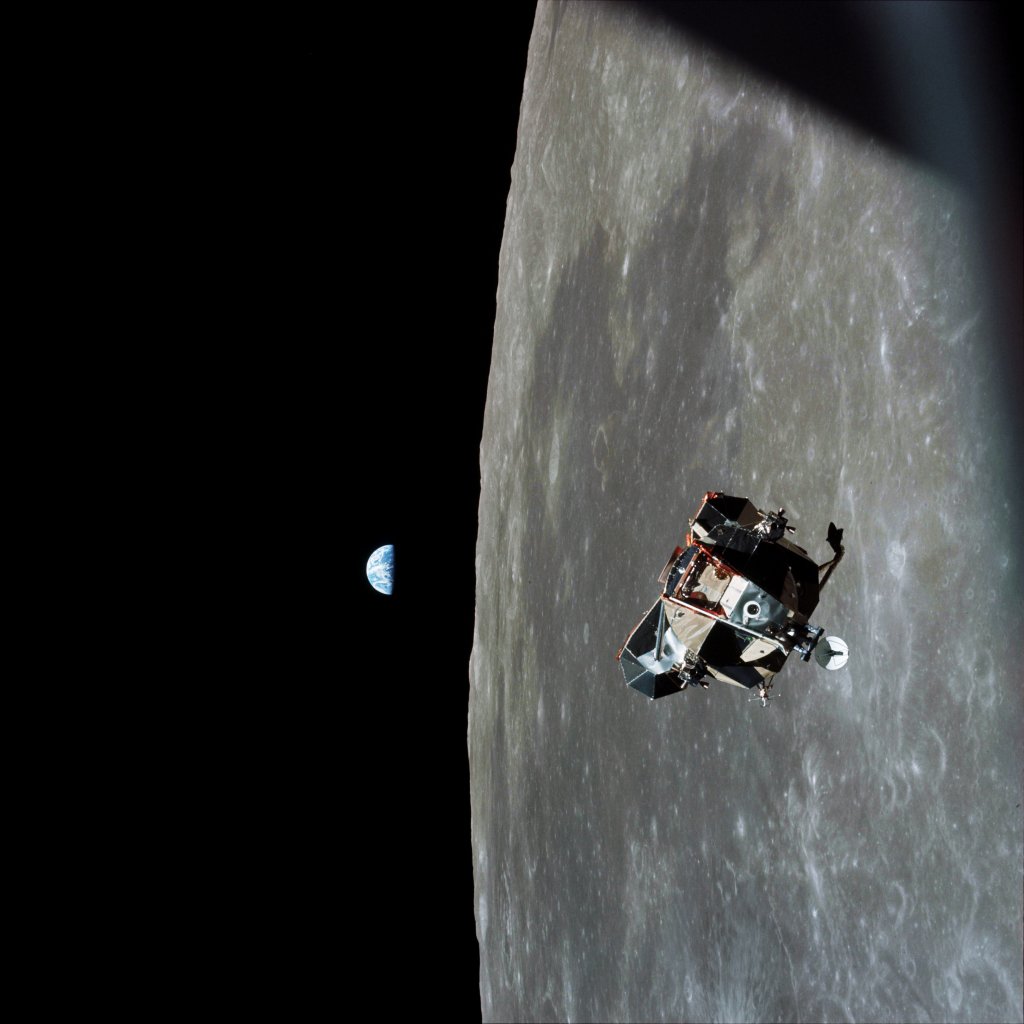
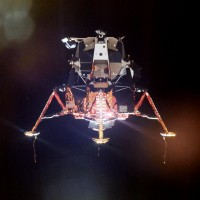 Close-up of the "Eagle" from
picture 6598 — This my cropped, color corrected and enhanced version
of photo 6598. Close-up of the "Eagle" from
picture 6598 — This my cropped, color corrected and enhanced version
of photo 6598.
|
|
|
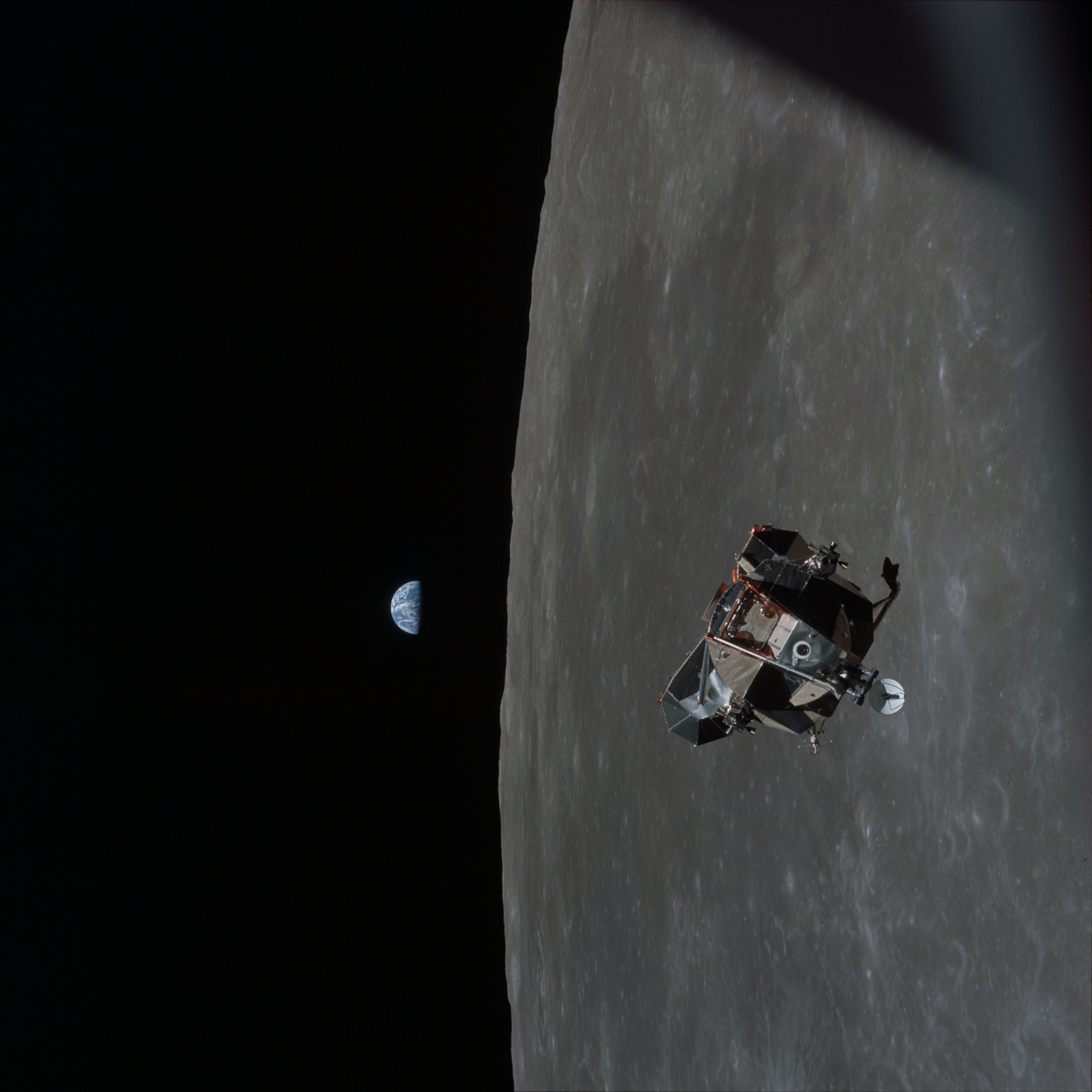
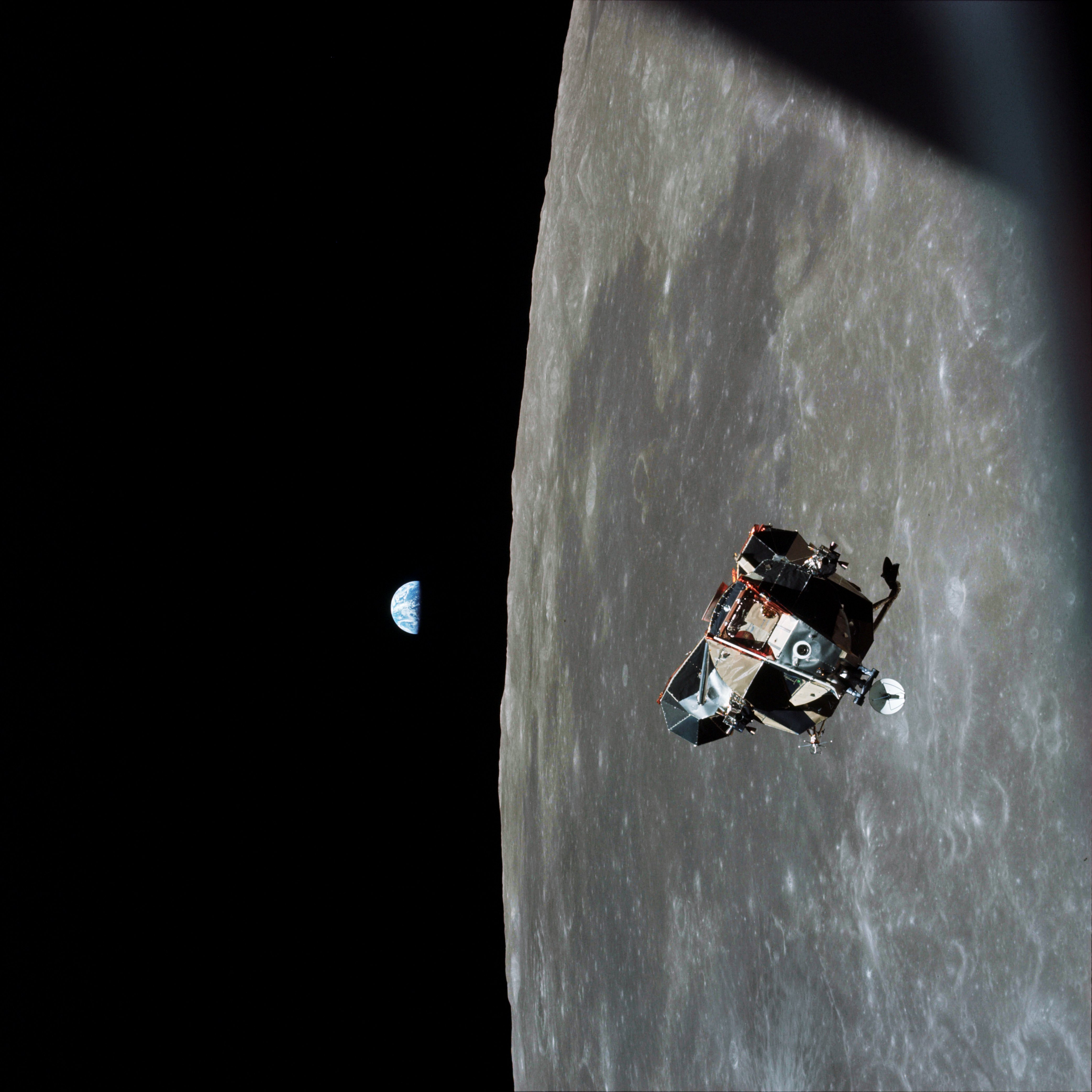
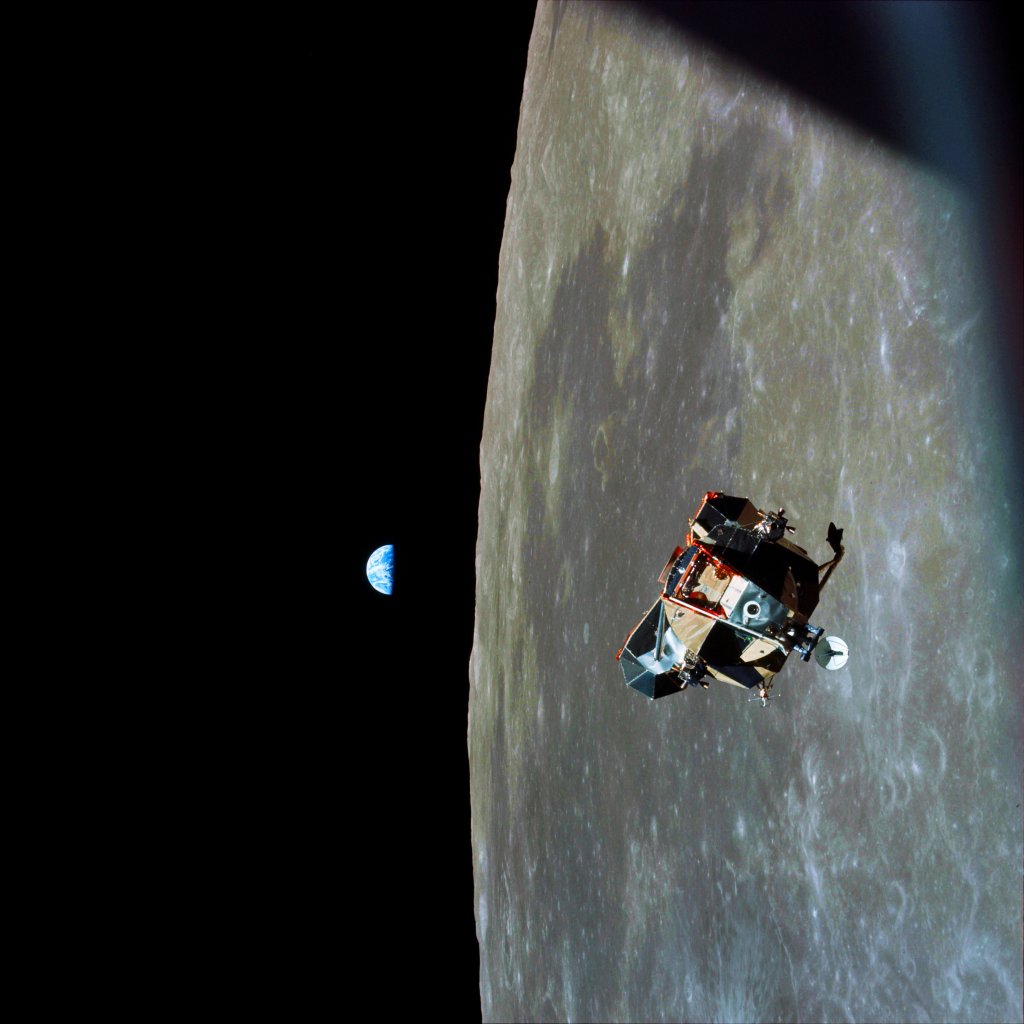
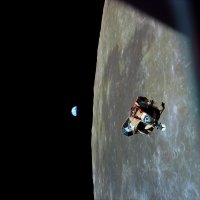 Photo
6642 — Above, but colors greatly enhanced to accentuate the moon's
hues. Photo
6642 — Above, but colors greatly enhanced to accentuate the moon's
hues.
|
|
|
| Apollo 15 Film Roll
87 Images (AS15-87-*) |
|
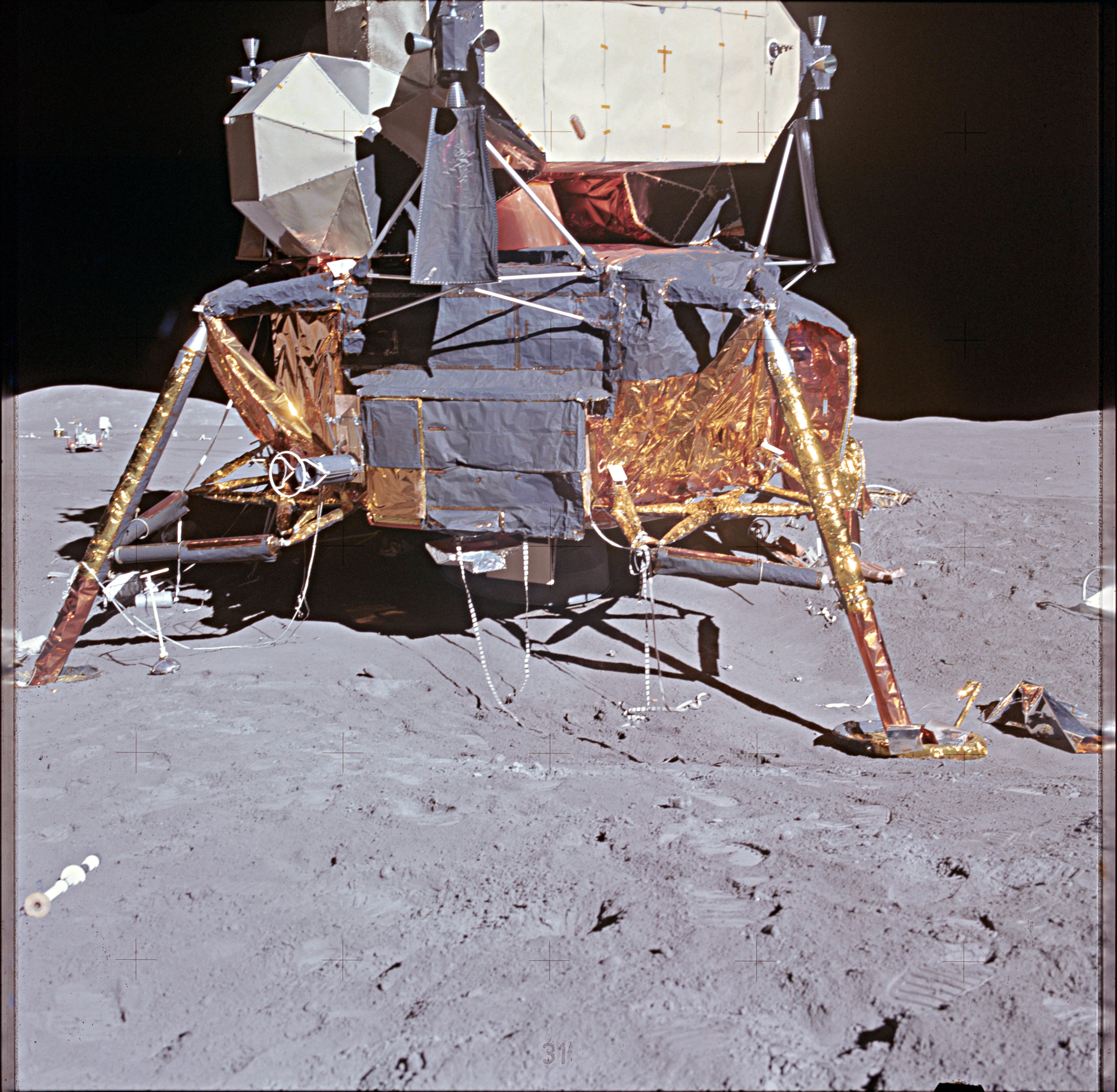
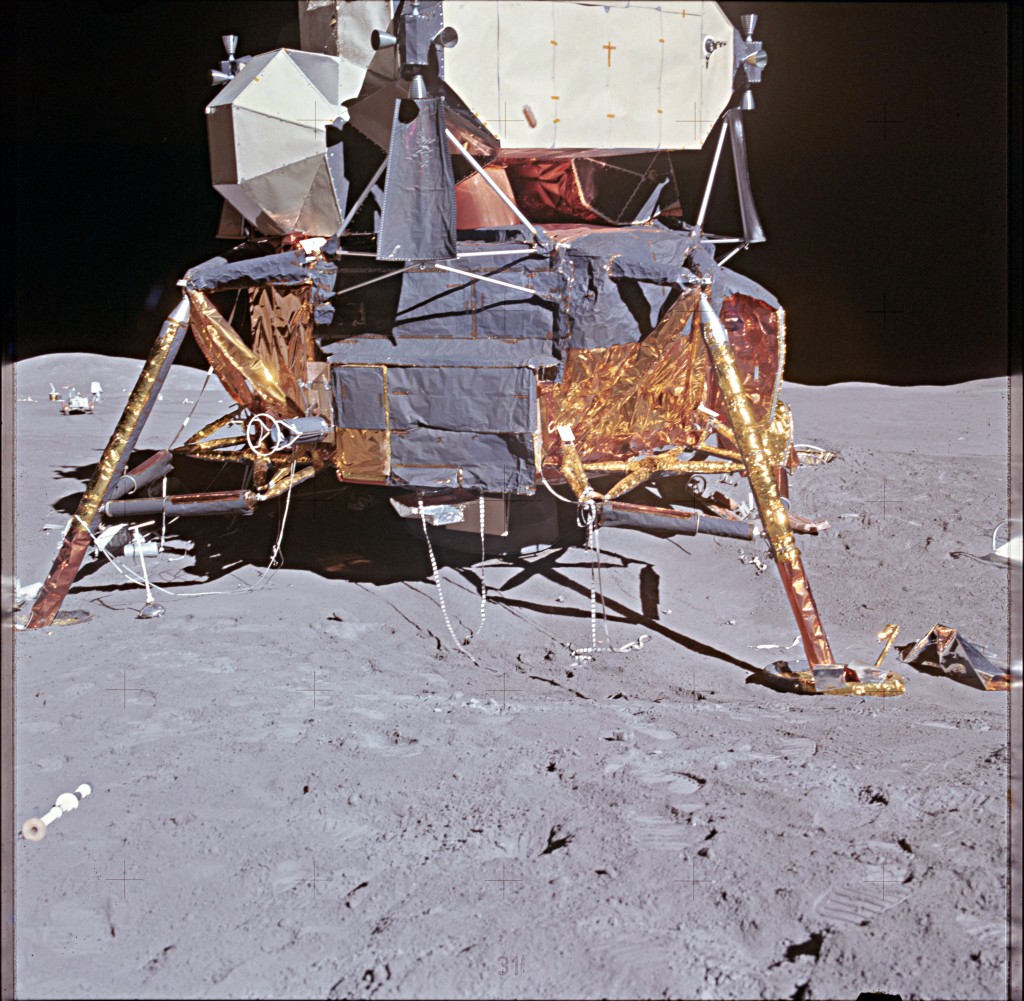
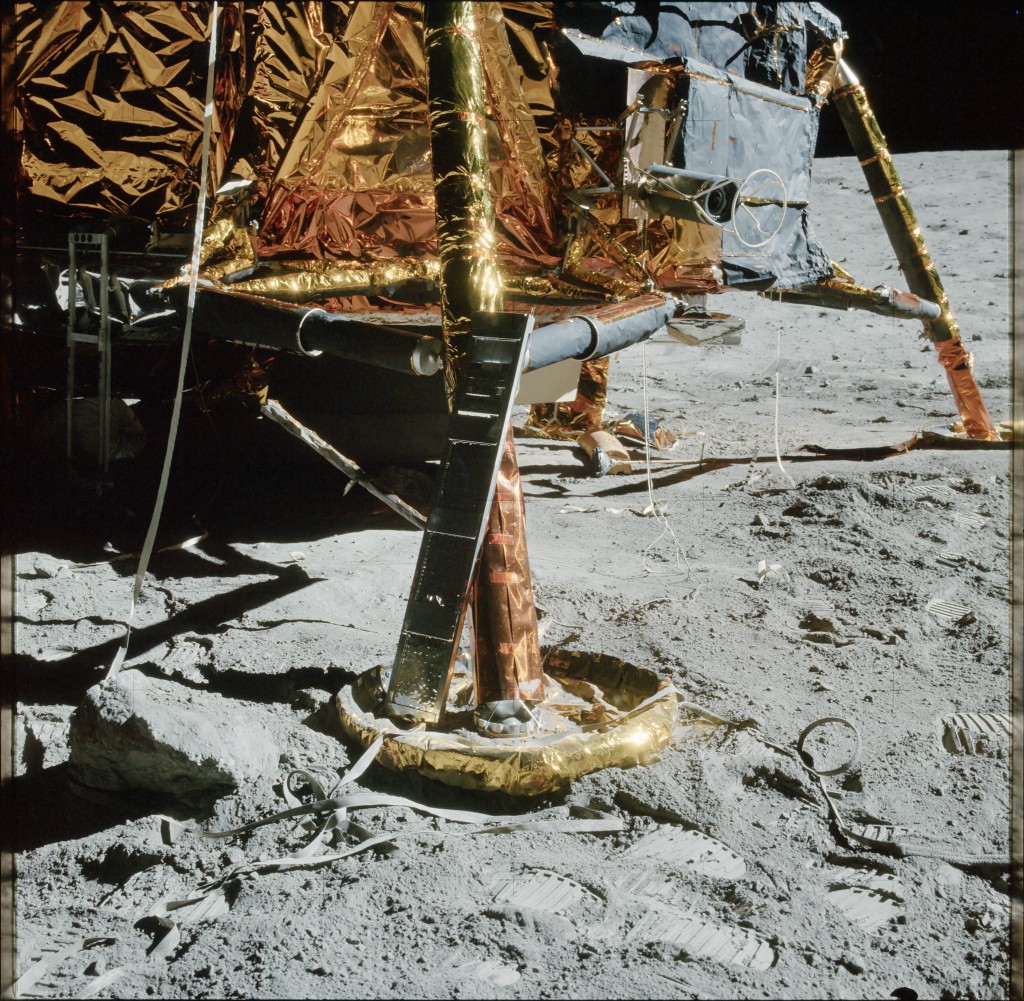
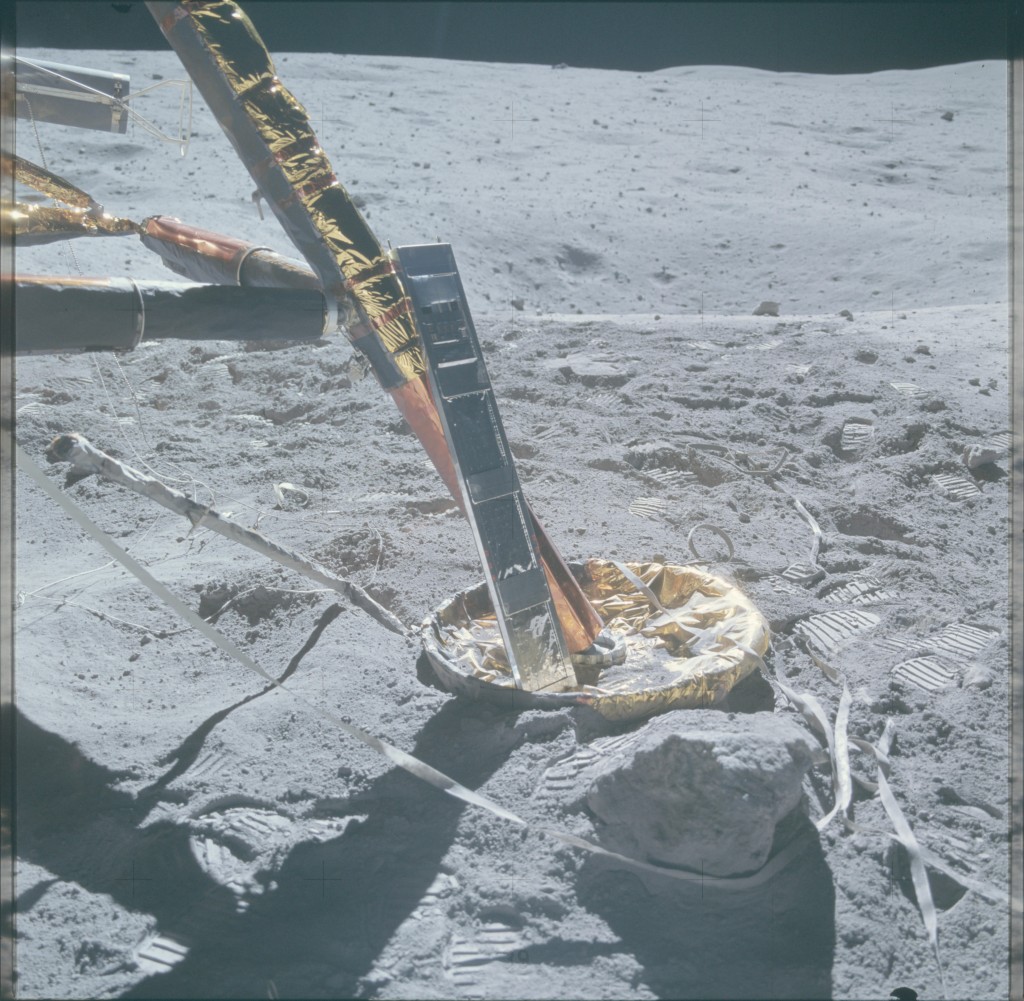
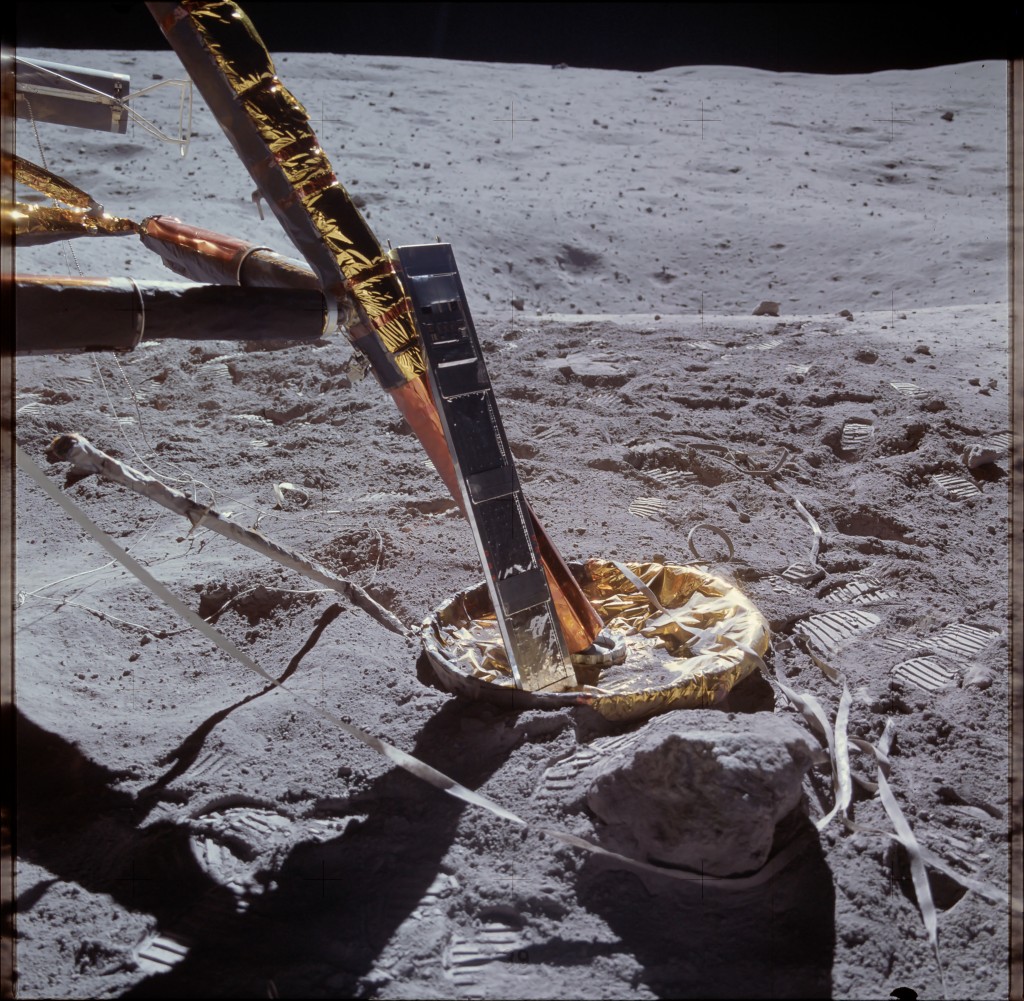
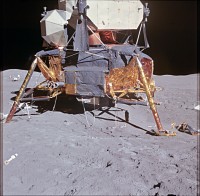 Photo
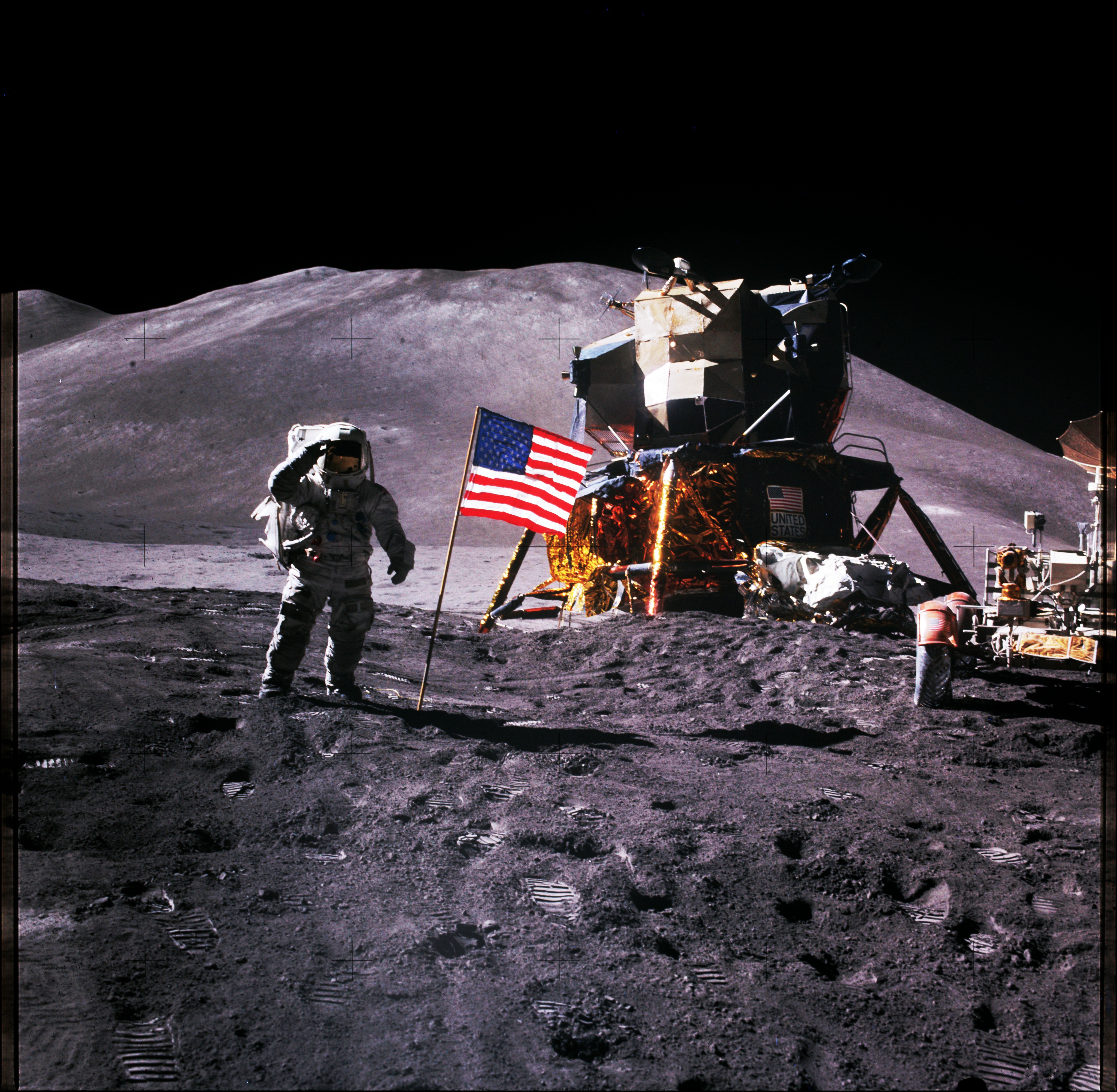
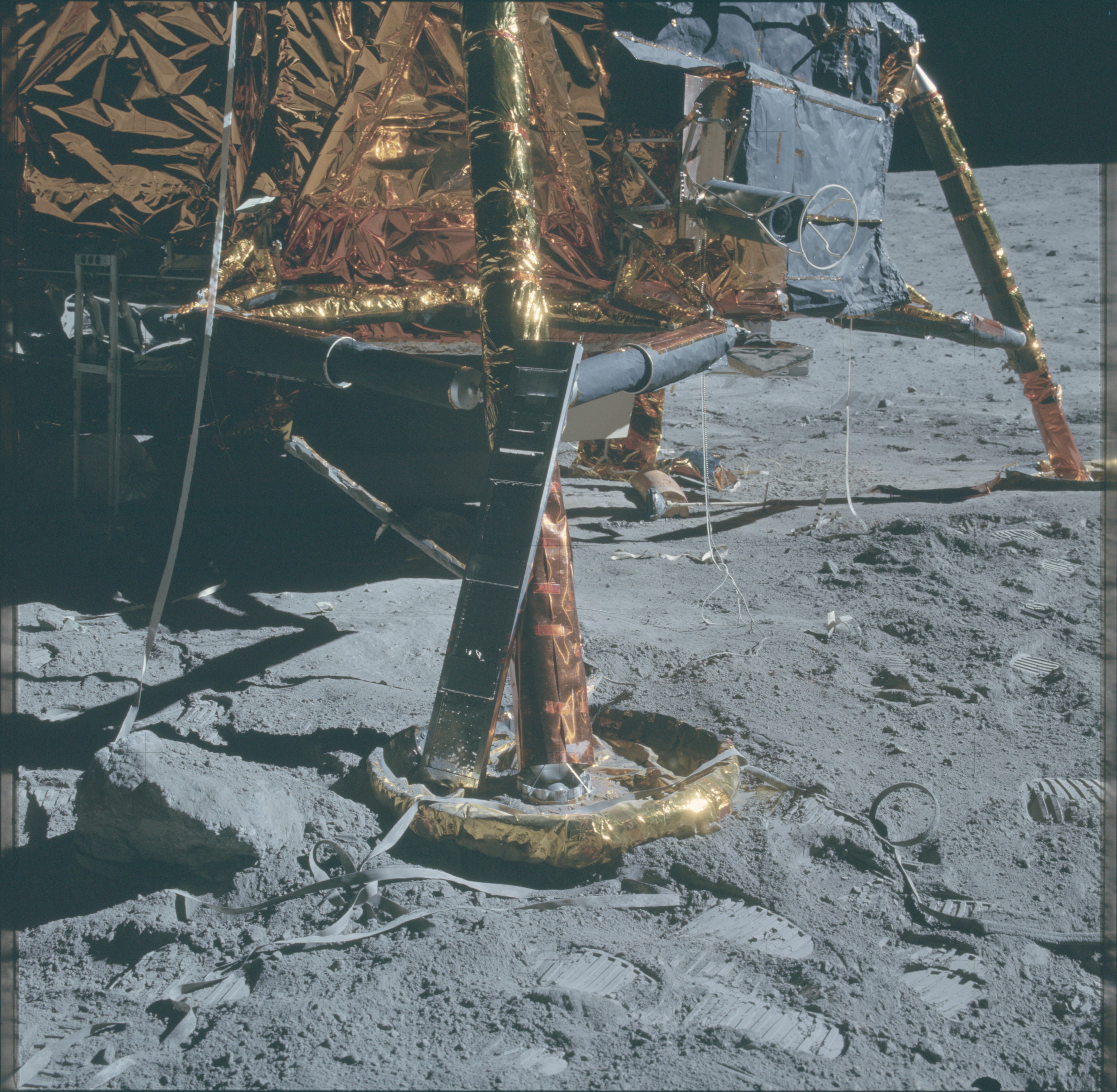
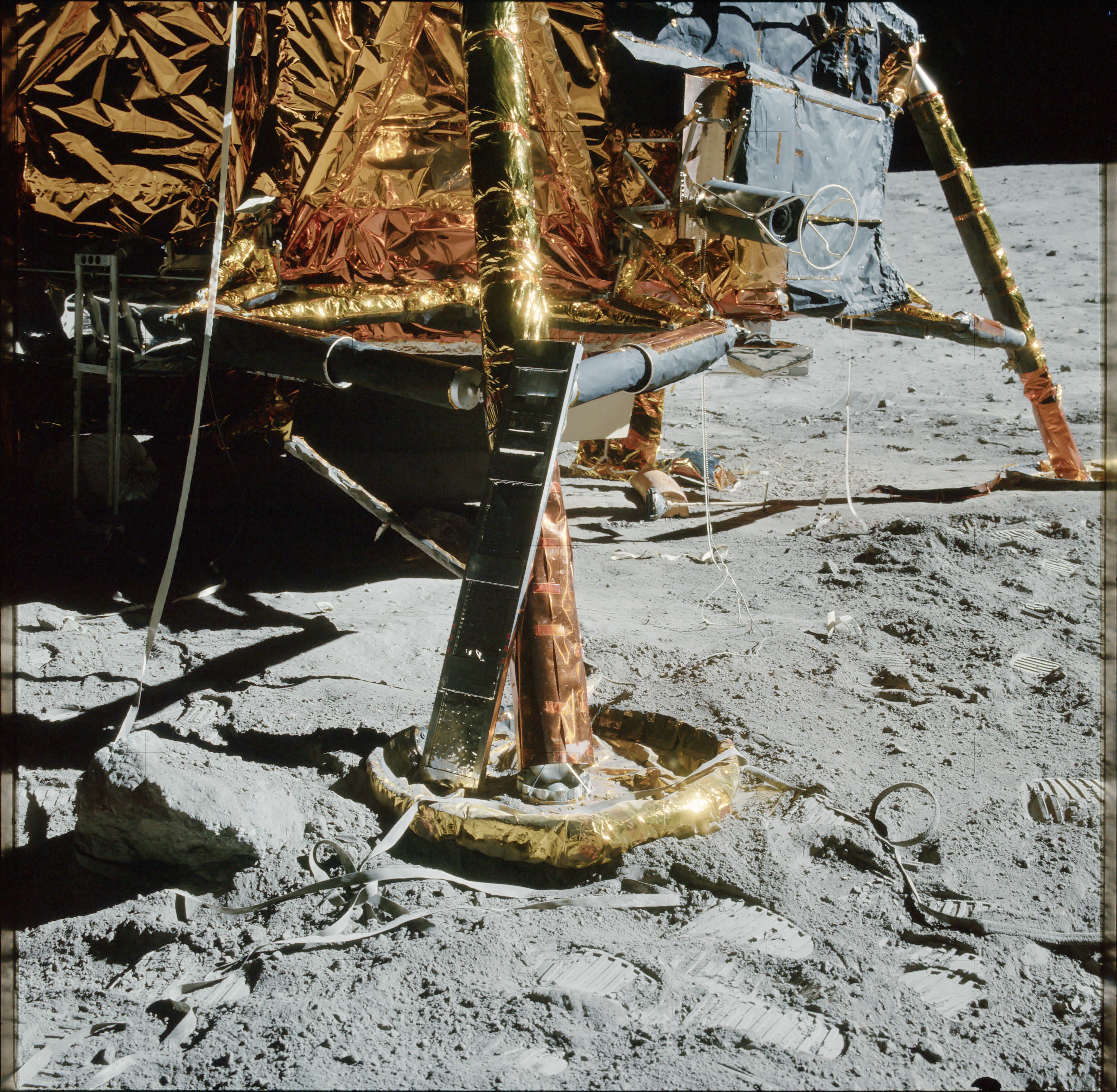
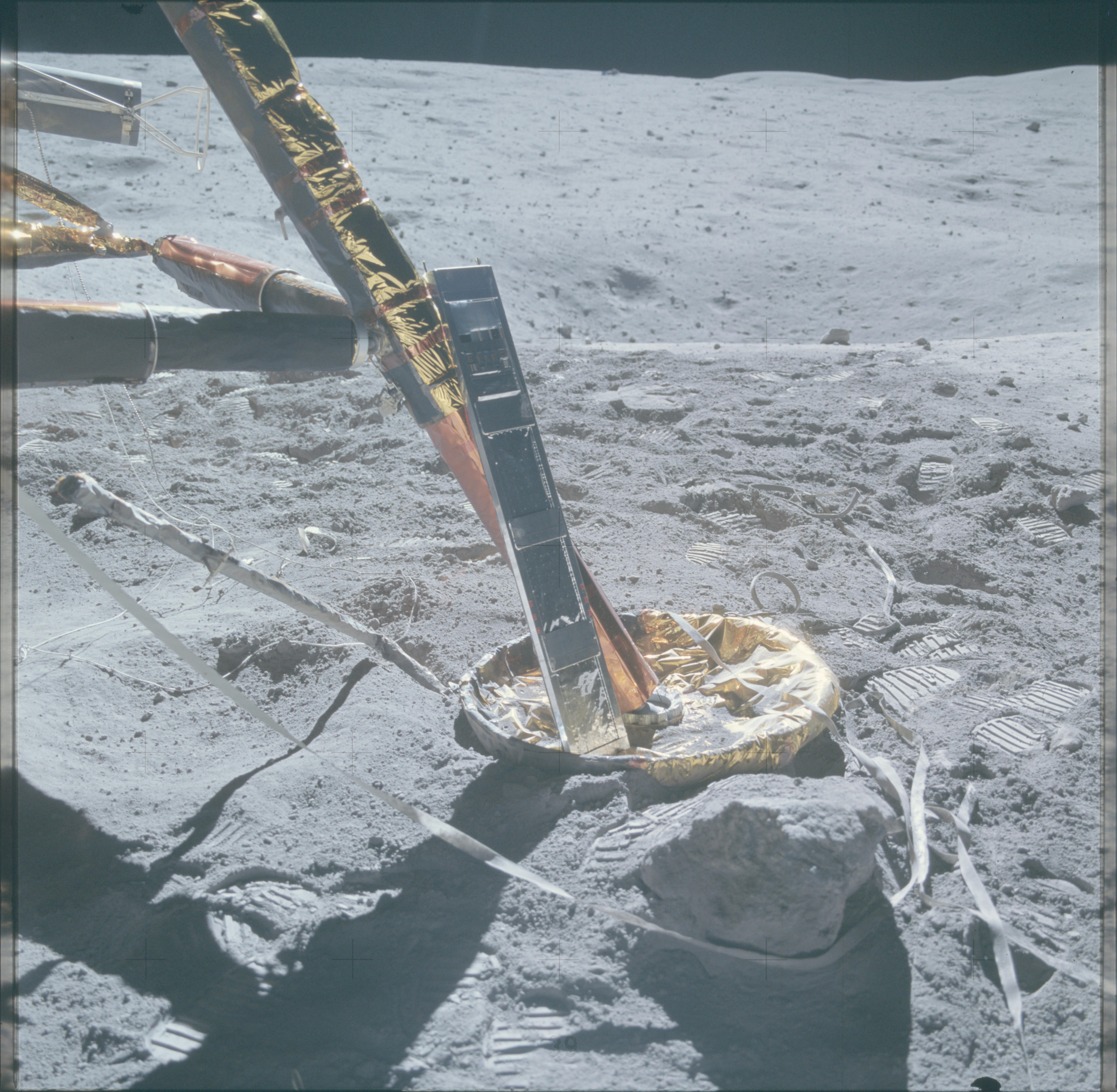
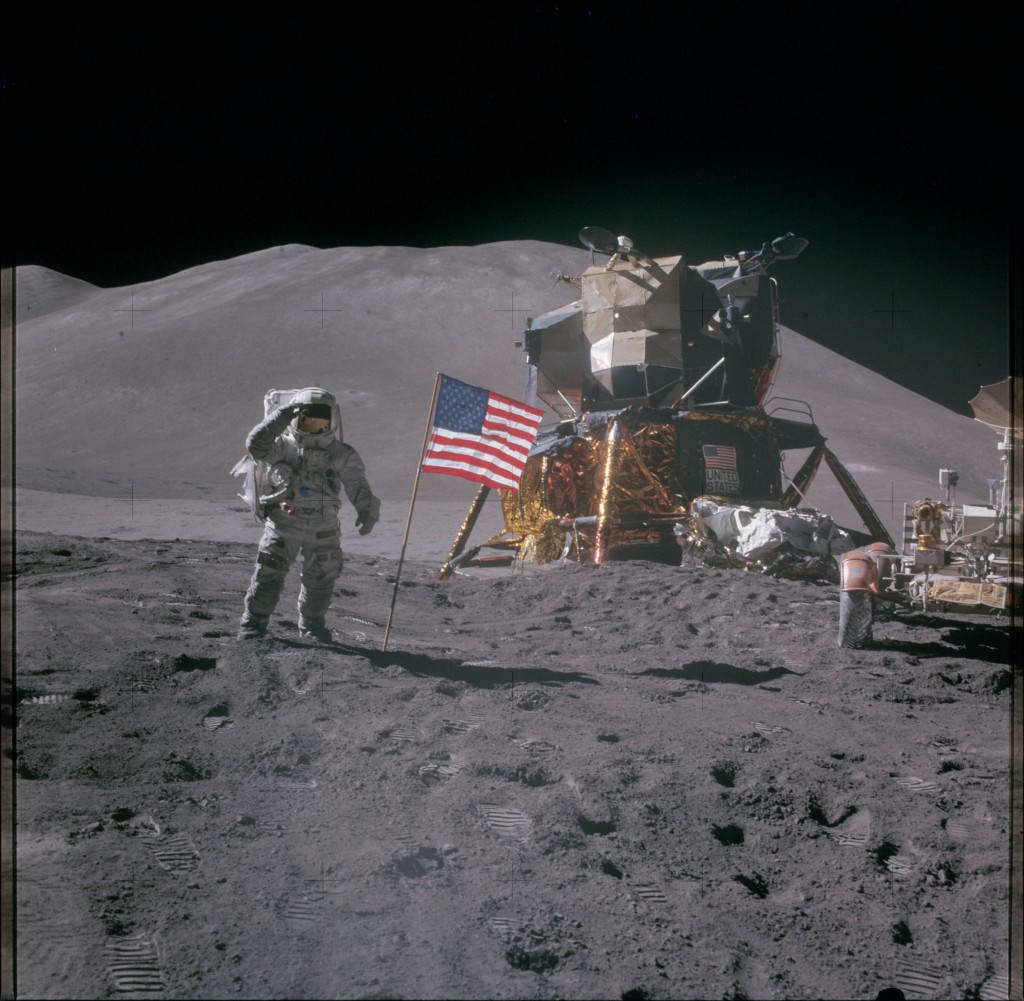
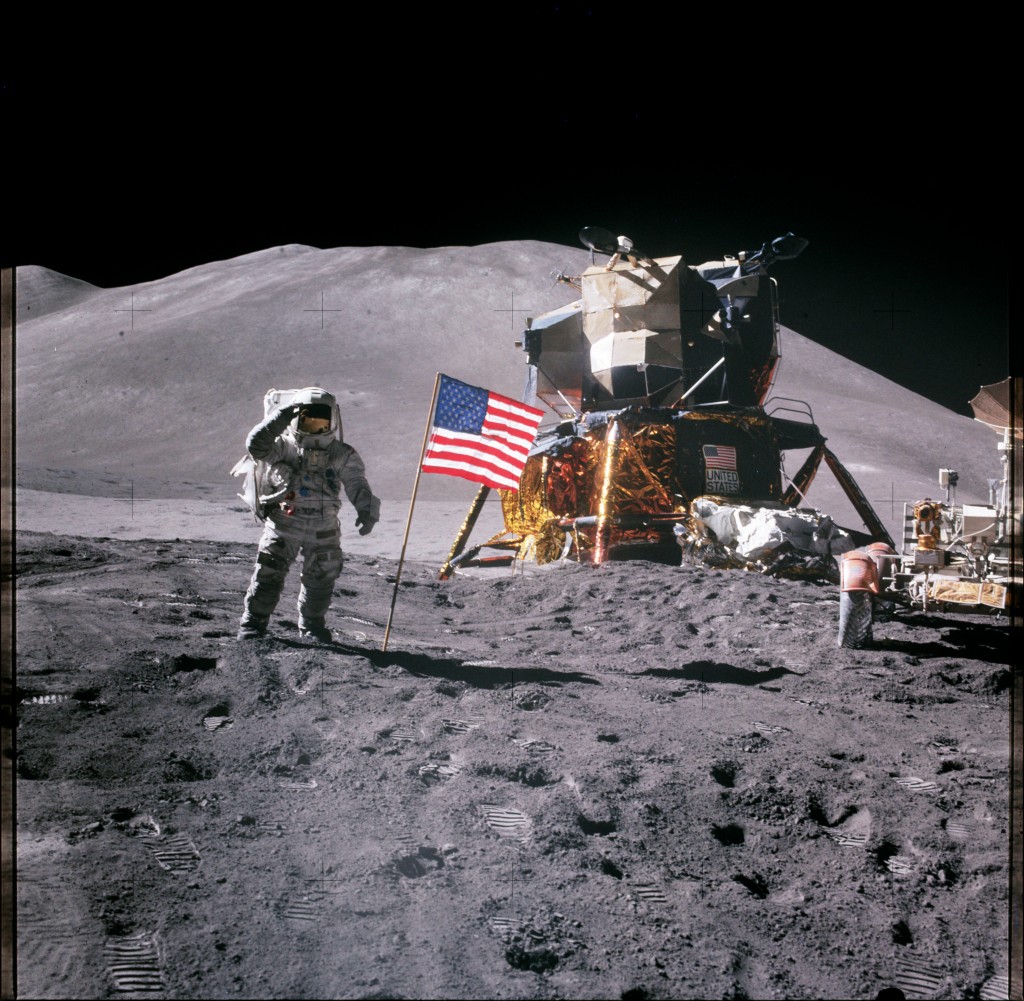
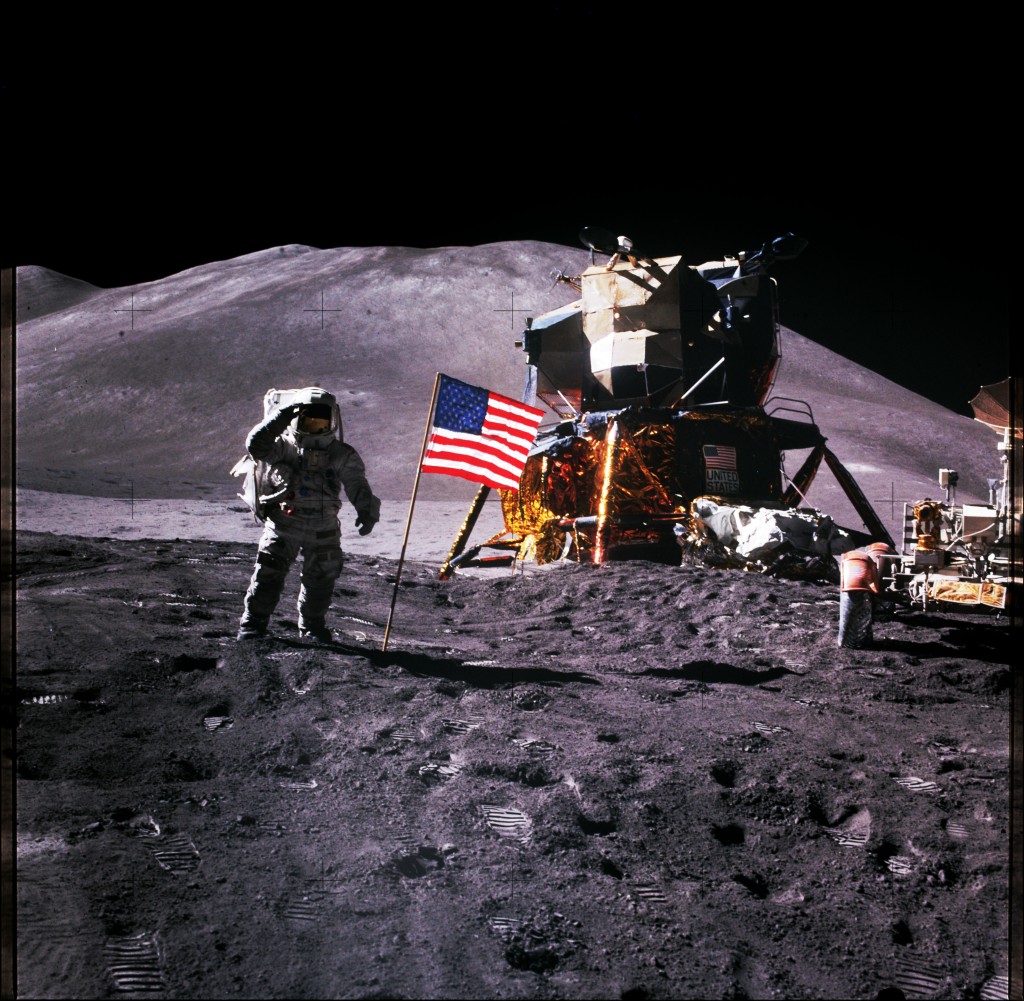
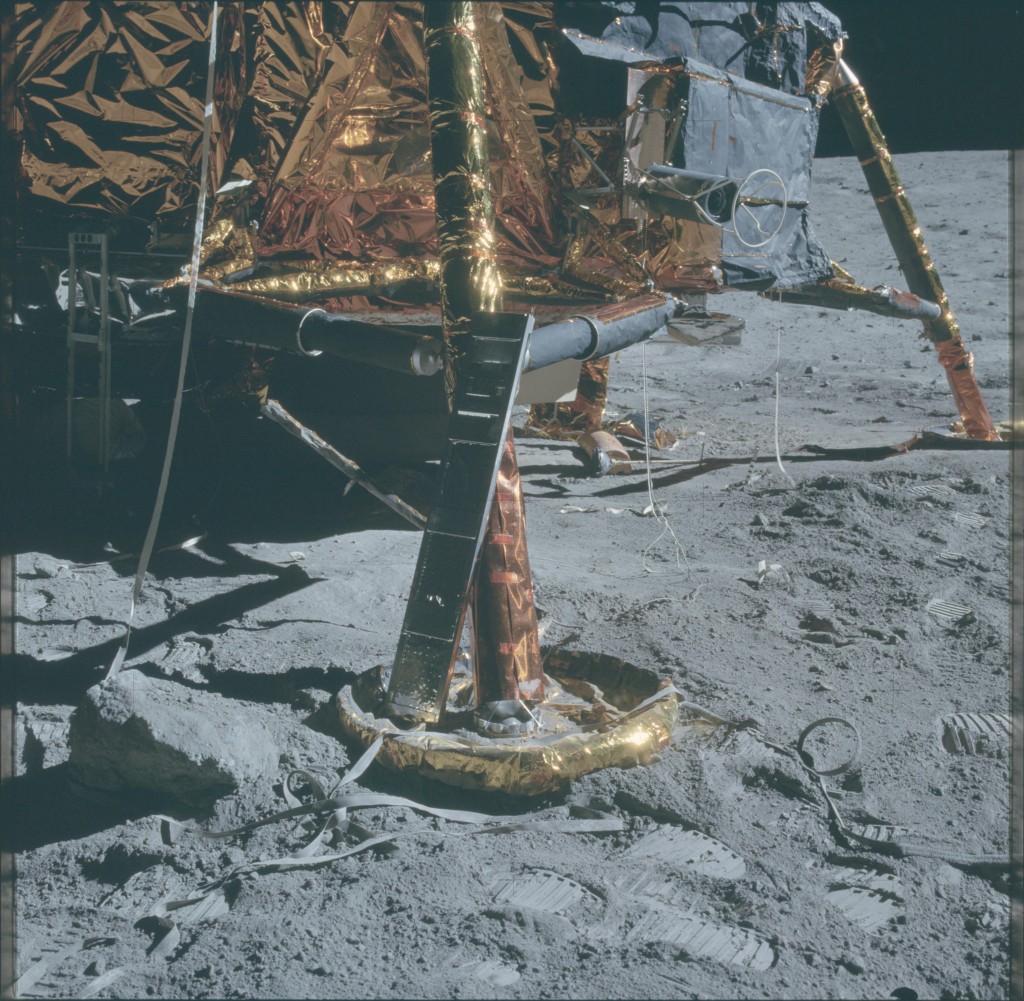
11839 — A nice photograph of the LM "Falcon" resting on the moon. Note
the pieces of metallized Mylar insulation both atop the near footpad and
resting on the surface to the right of the near footpad. Also note the lunar
rover and astronaut which is visible in the distance to the left of the
LM. Photo
11839 — A nice photograph of the LM "Falcon" resting on the moon. Note
the pieces of metallized Mylar insulation both atop the near footpad and
resting on the surface to the right of the near footpad. Also note the lunar
rover and astronaut which is visible in the distance to the left of the
LM.
|
|
|
| Apollo 15 Film Roll
88 Images (AS15-88-*) |
|
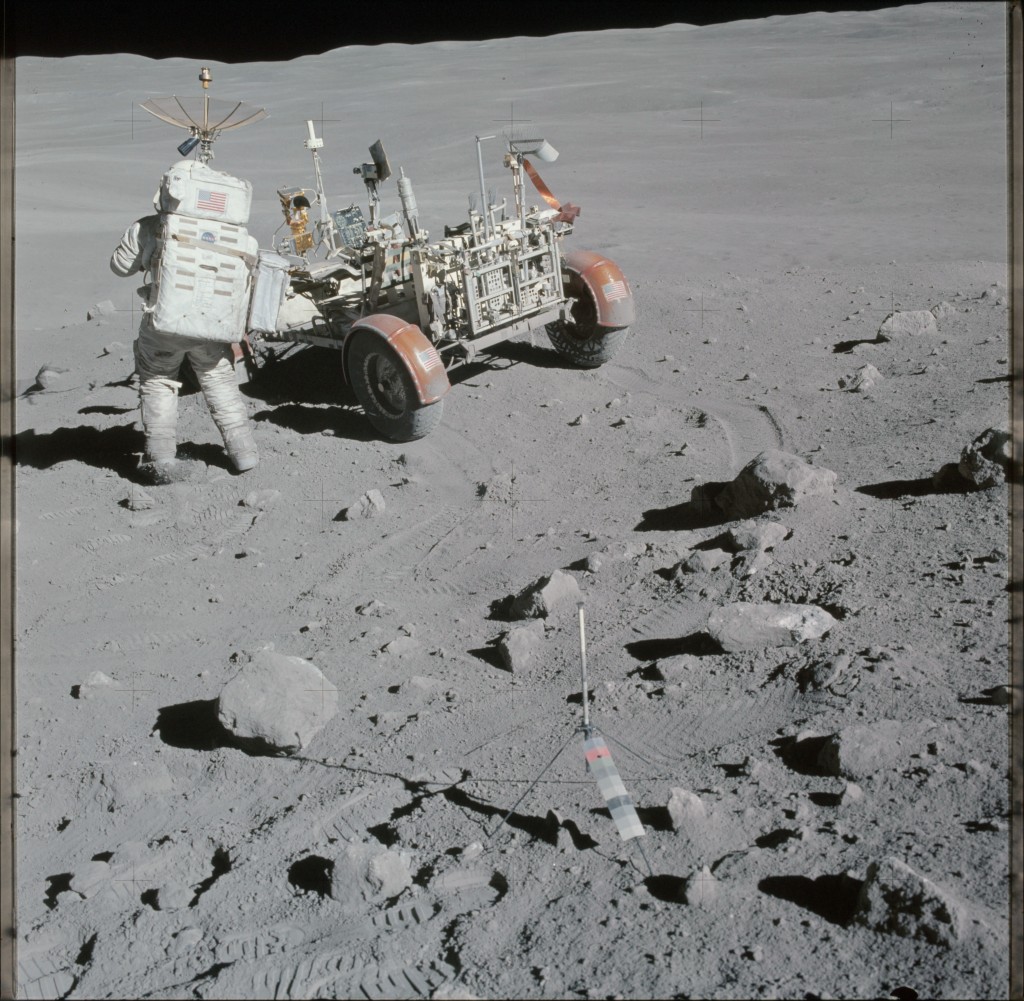
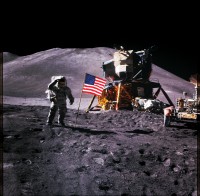 Photo
11865 — Same as above right, but curves were adjusted to accentuate
brightness and hue differences in the terrain, showing more terrain details
than what the astronauts could see with their eyes. Note the striking soil
differences which are visible on the distant mountain. Photo
11865 — Same as above right, but curves were adjusted to accentuate
brightness and hue differences in the terrain, showing more terrain details
than what the astronauts could see with their eyes. Note the striking soil
differences which are visible on the distant mountain.
|
|
|
| Apollo 16 Film Roll
107 Images (AS16-107-*) |
|
Note: In general, the
Apollo 16 photographs were overexposed by up to 1 f-stop. The higher sun
illumination angle significantly increased the apparent brightness of the lunar
surface, resulting in obvious blue fogging of the films due to internal
reflections within the Zeiss 60mm Biogon lens. The general fogging and loss of
overall contrast is a result of the two flat optical surfaces on either side of
the aperture diaphragm within the lens. Those surfaces only had single layer
MgF2 coatings since reliable lens multi-coating technology was still nearly a
decade in the future.
|
 Photo
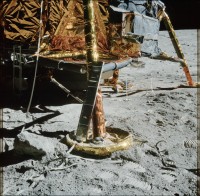
17441 — Above, but color corrected, noise removed, sharpened, and
gamma correction applied. Denoising the image adds faint swirl patterns to dark
areas of the photo. Photo
17441 — Above, but color corrected, noise removed, sharpened, and
gamma correction applied. Denoising the image adds faint swirl patterns to dark
areas of the photo.
|
|
|
 Photo
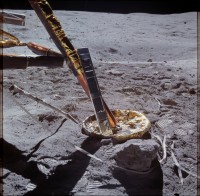
17442 — Above, but color corrected, noise removed, sharpened, and
gamma correction applied. Denoising the image adds faint swirl patterns to dark
areas of the photo. Photo
17442 — Above, but color corrected, noise removed, sharpened, and
gamma correction applied. Denoising the image adds faint swirl patterns to dark
areas of the photo.
|
|
|
|
|
|
|
Photo
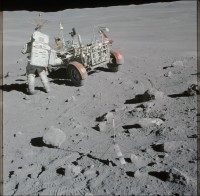
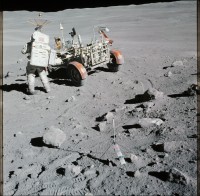
17446 — Color balanced. |
|
Photo
17446 — Same as left, but contrast and curves applied to better
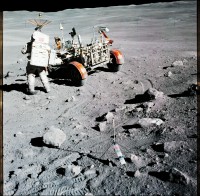
reproduce what the astronauts saw. |
|
 Photo
17446 — Same as above right, but curves were adjusted to accentuate
brightness and hue differences in the terrain, showing more terrain details
than what the astronauts could see with their eyes. The bright streaks are
interesting and likely are caused by meteorites impacting the surface at very
shallow angles. Also note that the hilltops generally are white. This perhaps
suggests that meteorite impacts at the tops of the hills throw debris down onto
the sides of the hills. This seems plausible since the lower sides of the hills
generally are darker than either the hilltops or the flat terrain. Photo
17446 — Same as above right, but curves were adjusted to accentuate
brightness and hue differences in the terrain, showing more terrain details
than what the astronauts could see with their eyes. The bright streaks are
interesting and likely are caused by meteorites impacting the surface at very
shallow angles. Also note that the hilltops generally are white. This perhaps
suggests that meteorite impacts at the tops of the hills throw debris down onto
the sides of the hills. This seems plausible since the lower sides of the hills
generally are darker than either the hilltops or the flat terrain.
|
|
|
| Apollo 16 Film Roll
117 Images (AS16-117-*) |
|
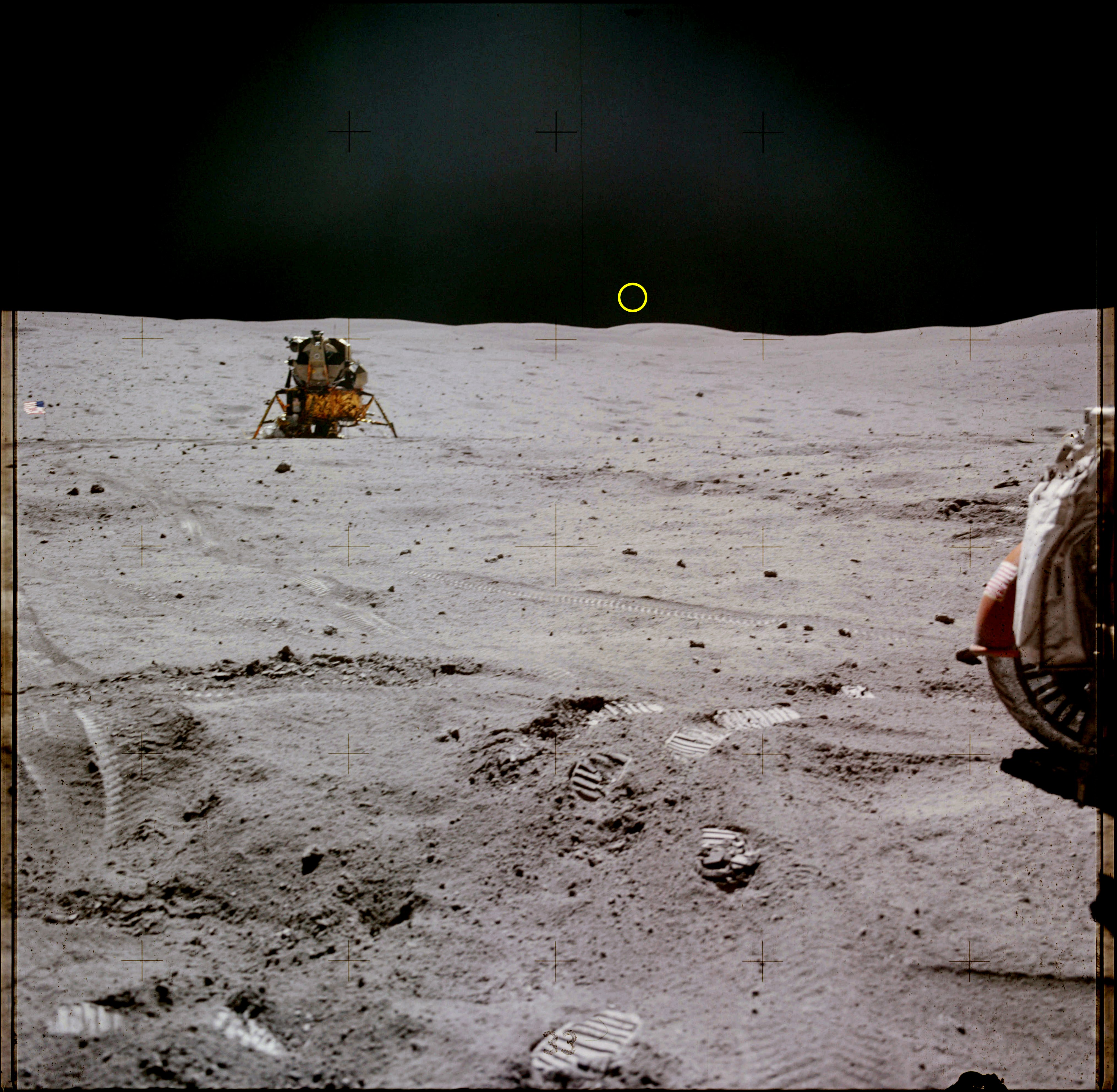
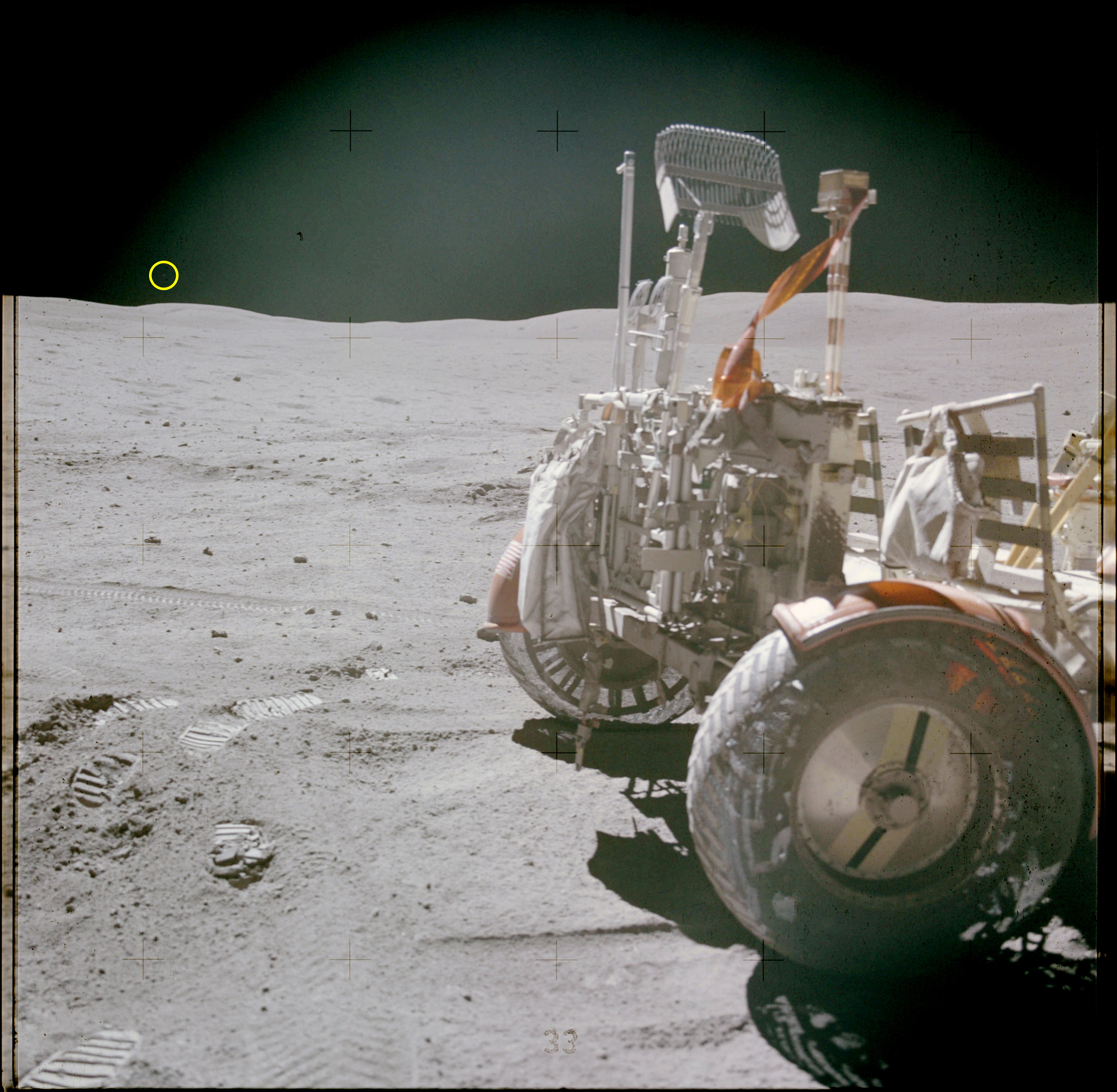
The astronauts unknowingly
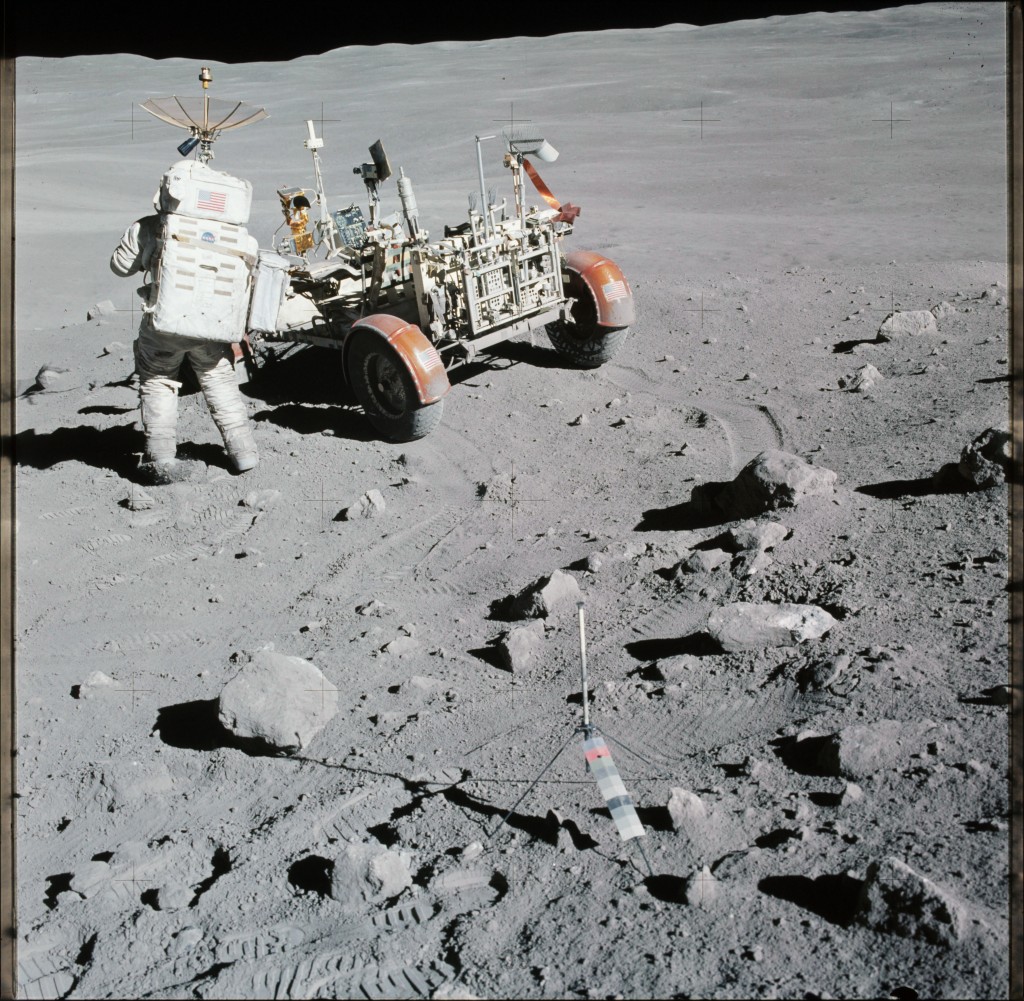
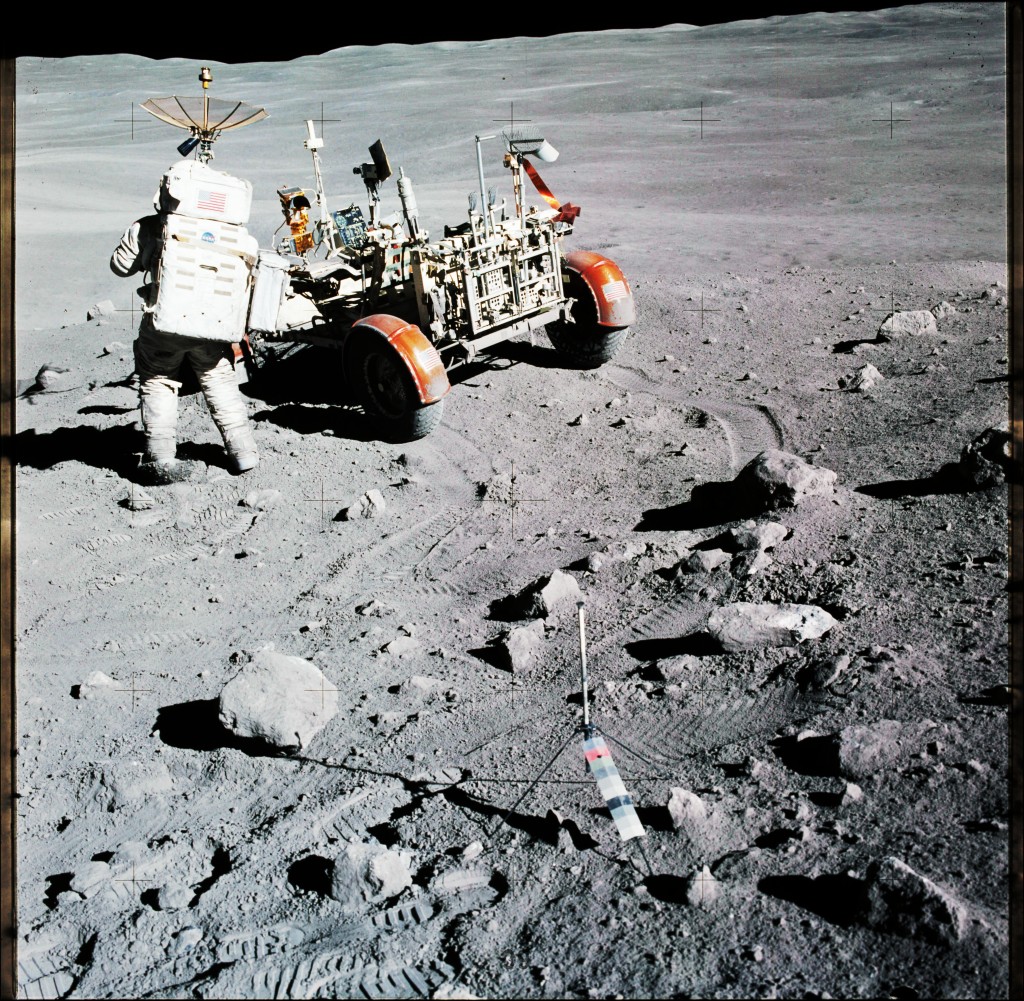
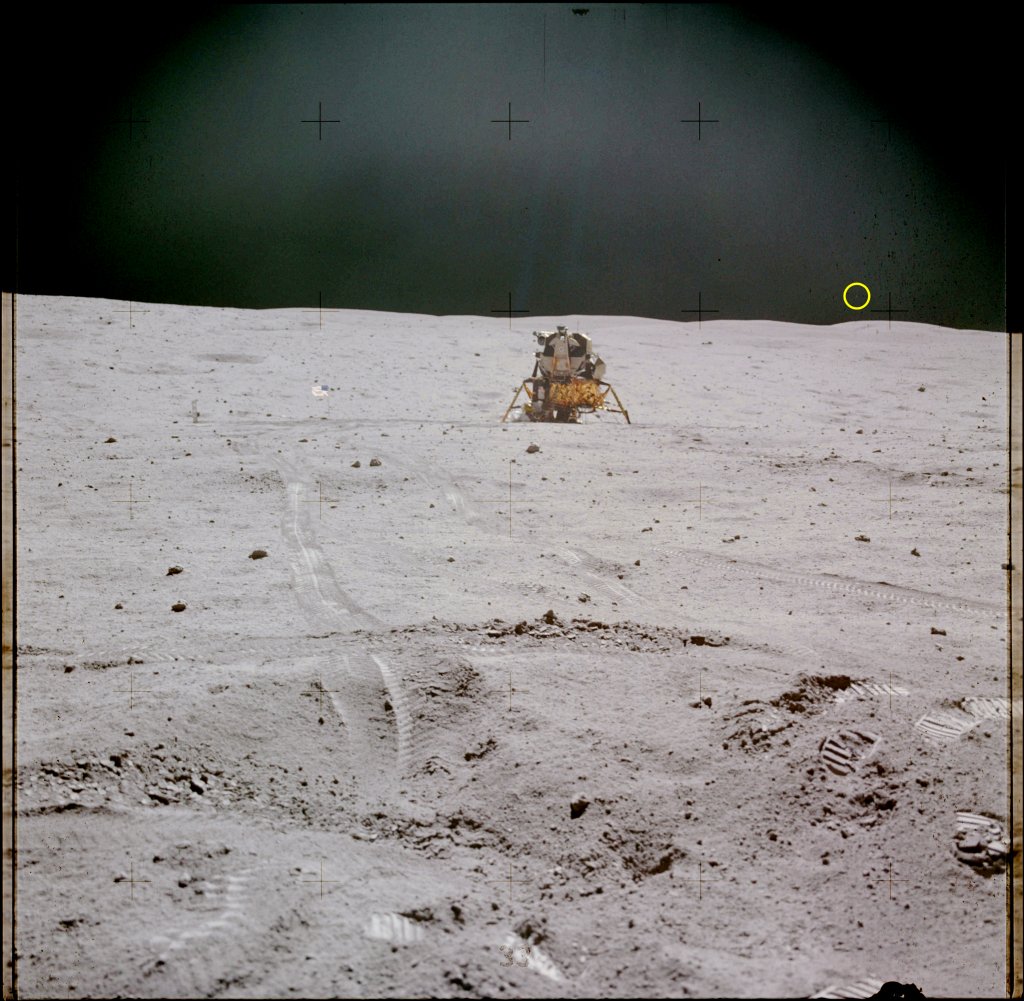
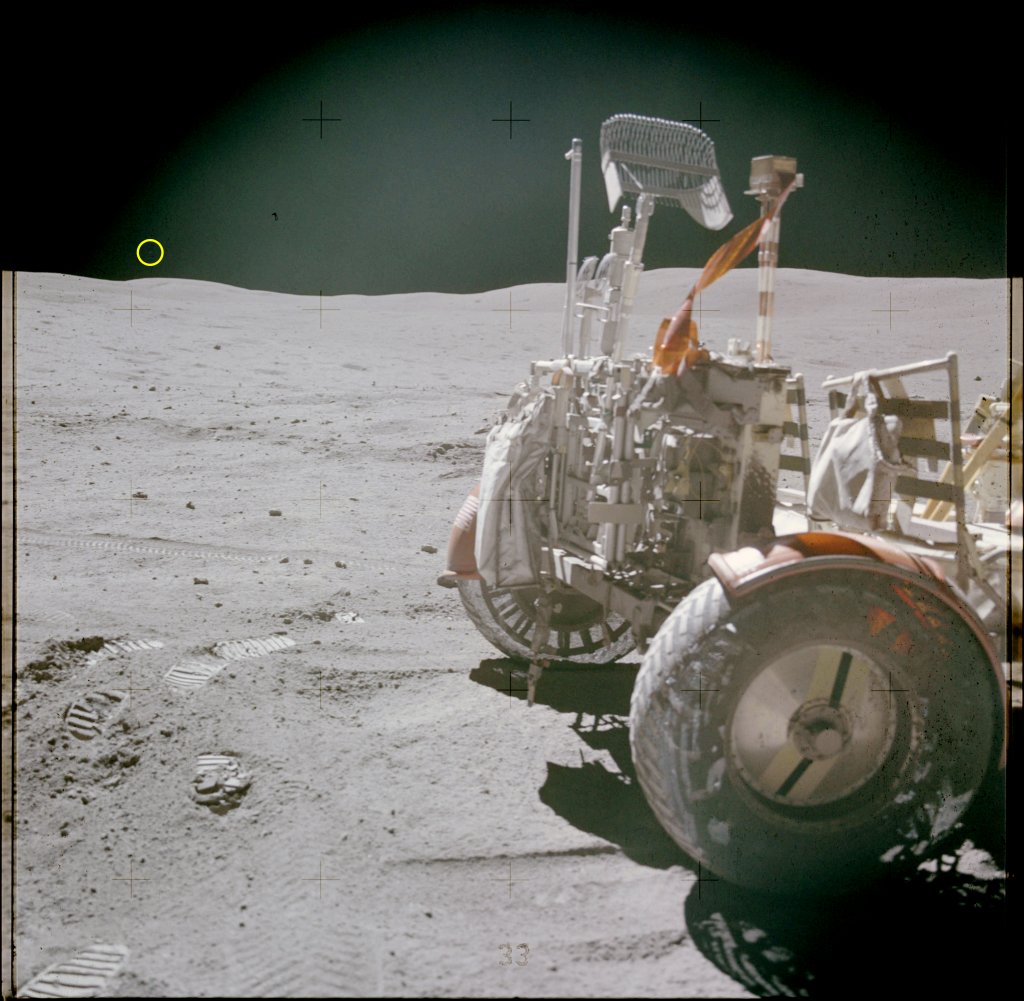
photograph Venus in three consecutive photos!
|
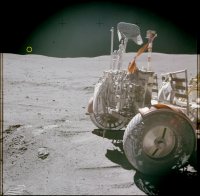 Photo 18817 Photo 18817
Venus is circled in yellow in all three of
these photographs. You really do have to look at the full resolution photos (by
clicking on the thumbnail pictures) in order to see Venus inside the yellow
circles. Look at the direction of the lunar rover's wheel shadows in the last
photograph and you will realize that the sun was fairly high in the sky above
Venus. |
|
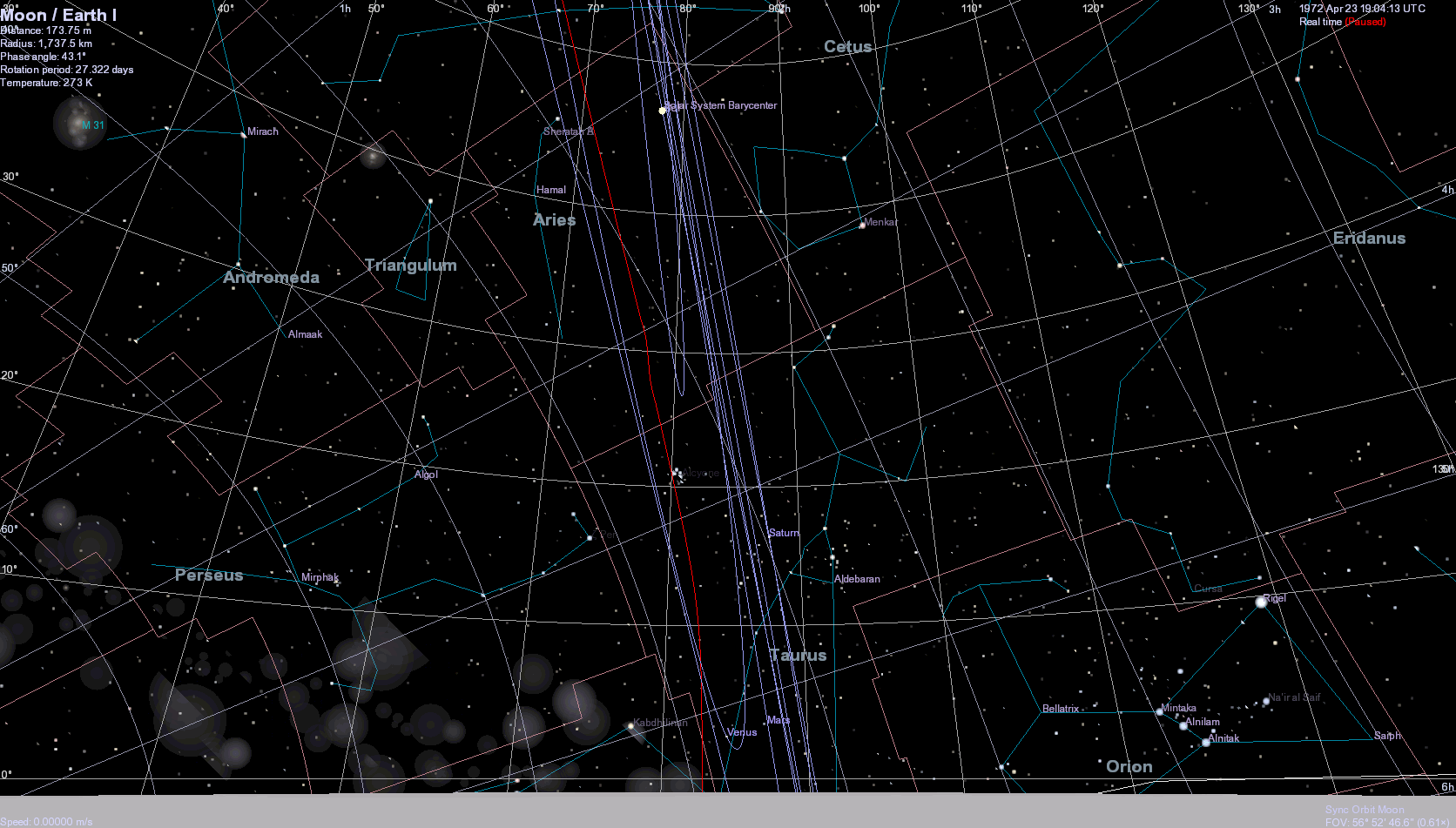
 Location
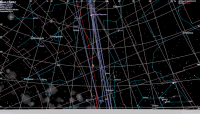
of Venus, Mars and the sun above the east horizon — Celestia shows us
that Venus was quite low in the east sky below the sun throughout the time
period of the EVA. Location
of Venus, Mars and the sun above the east horizon — Celestia shows us
that Venus was quite low in the east sky below the sun throughout the time
period of the EVA.
|
|
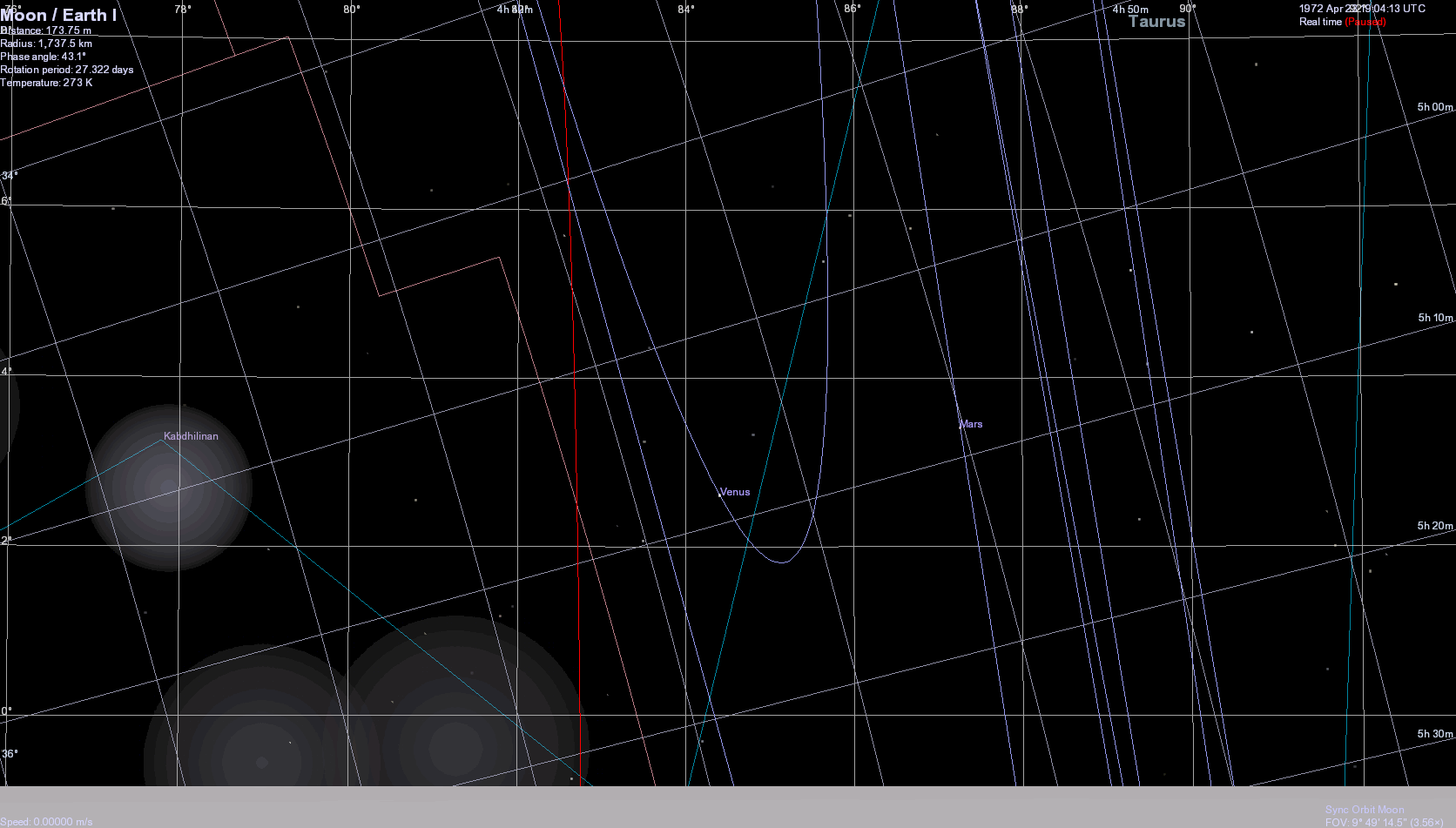
 Celestia
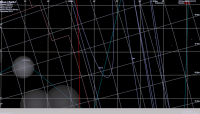
close-up view of Venus and Mars above the east horizon — Knowing the
true altitude of Venus (a bit over 2-1/2 degrees), one can deduce the ground
slope towards the east horizon in photo 18817, above, by using the 10mm spaced
reseau tick marks as your reference points and the knowledge that the Biogon
lens has a focal length of 61.1mm and virtually zero (well under 1%)
distortion. Celestia
close-up view of Venus and Mars above the east horizon — Knowing the
true altitude of Venus (a bit over 2-1/2 degrees), one can deduce the ground
slope towards the east horizon in photo 18817, above, by using the 10mm spaced
reseau tick marks as your reference points and the knowledge that the Biogon
lens has a focal length of 61.1mm and virtually zero (well under 1%)
distortion.
|
|
|
| Apollo 16 Film Roll
118 Images (AS16-118-*) |
|
Photo of the LM
"Orion"
|
 Close-up
of the LM Orion Close-up
of the LM Orion
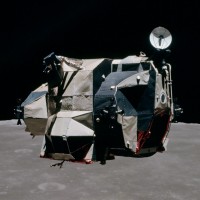
A rotated crop of the above right photo which
nicely shows the LM "Orion". Special filters were applied to remove background
noise. Orion looks a little worse for wear and tear after returning from the
lunar surface. Note what appears to be bubbled and peeling paint on the sides
of the LM. |
|
|
| Apollo 17 Film Roll
140 Images (AS17-140-*) |
|
Our planet Earth once again
reflected in an astronaut's visor — in three consecutive photos!
But I will just show the best of the three photos. Later I will add visor
close-ups from all three photos.
|
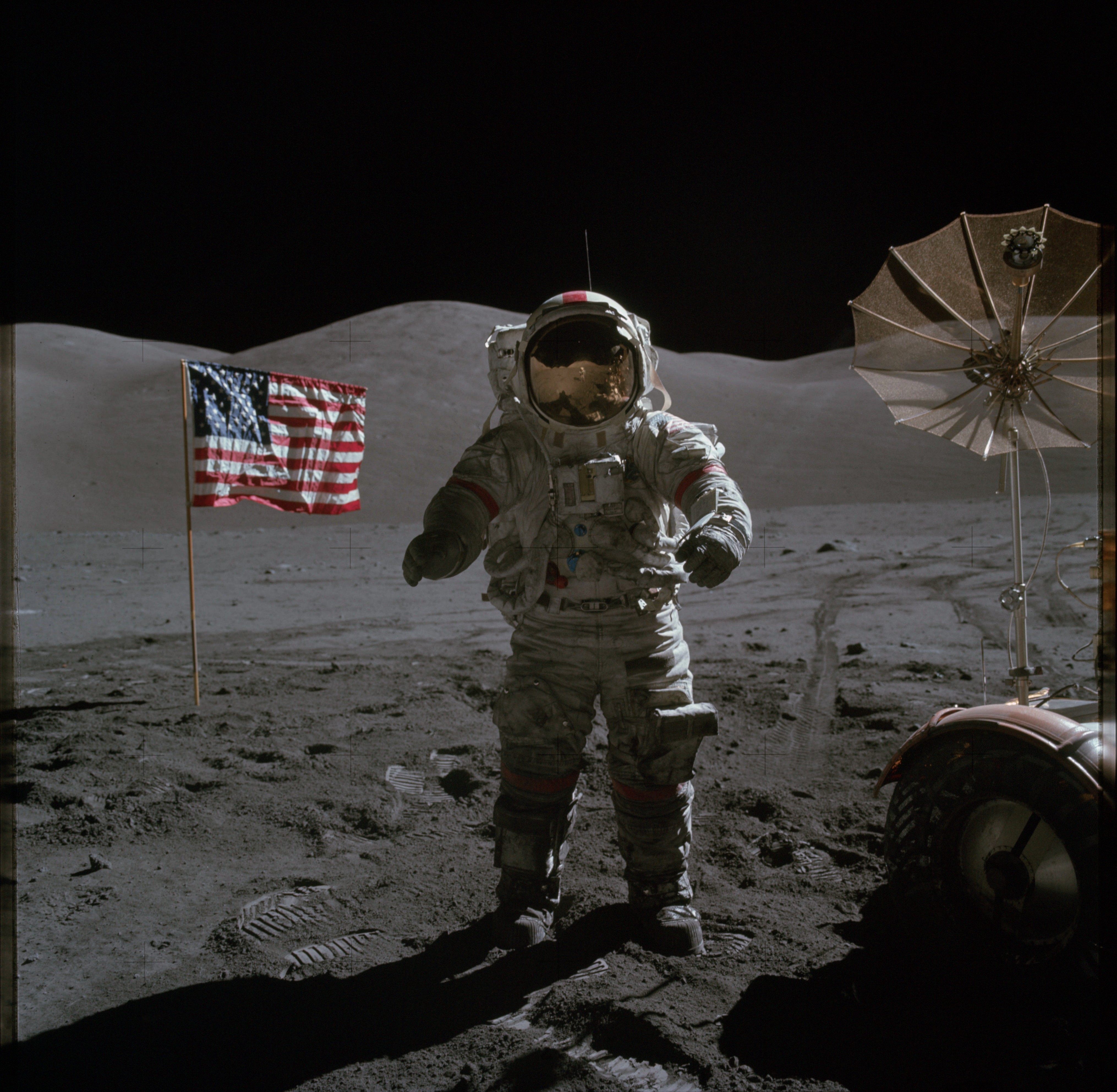
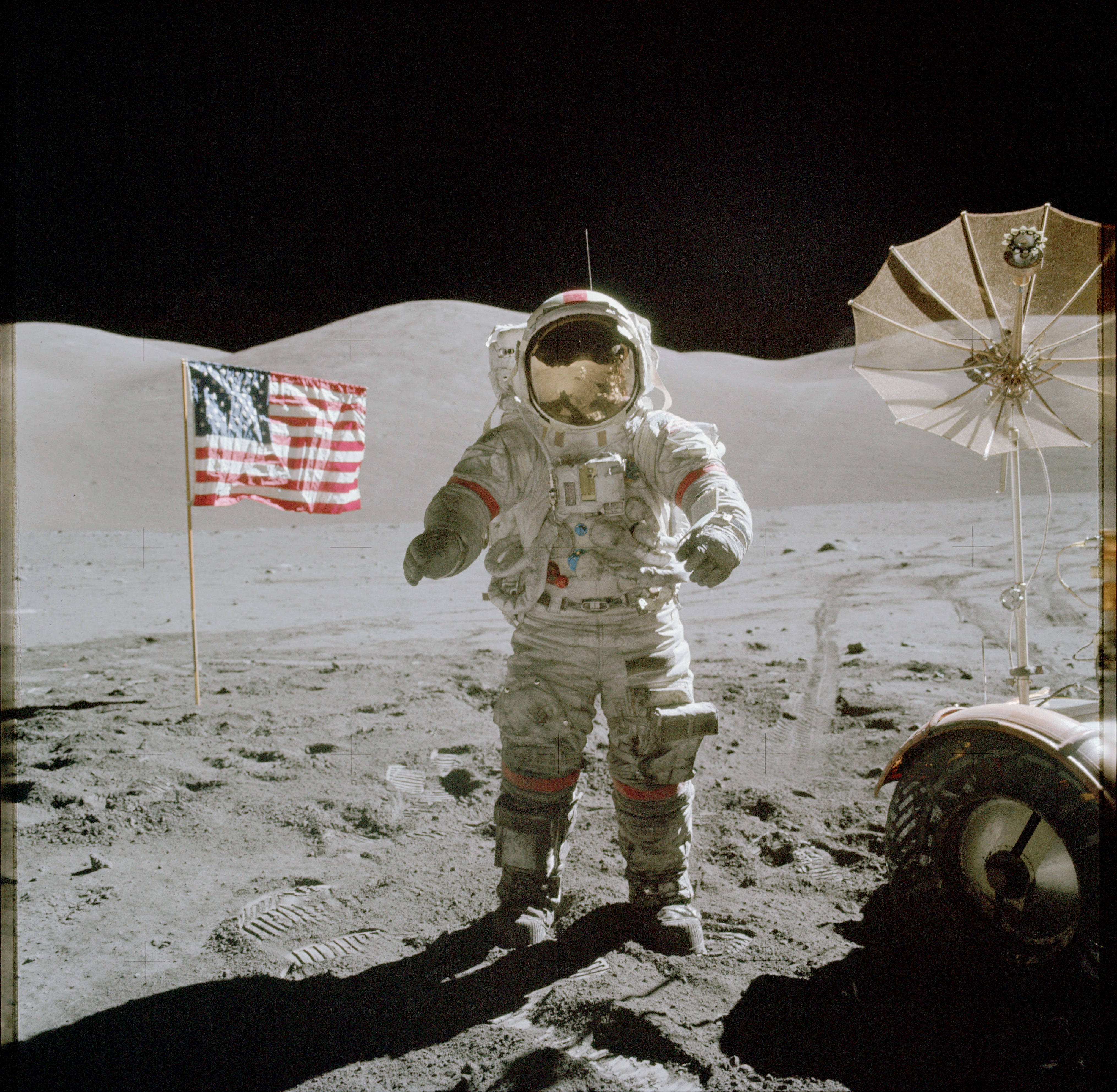
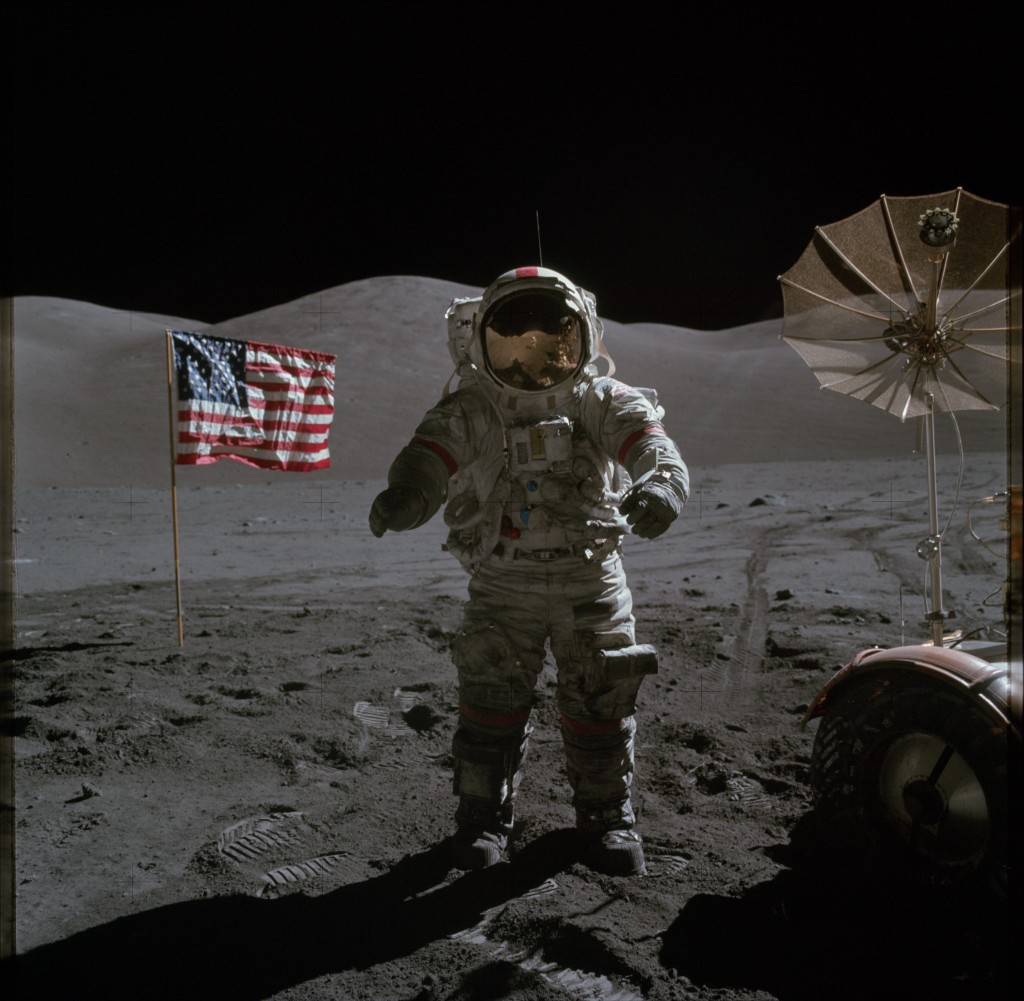
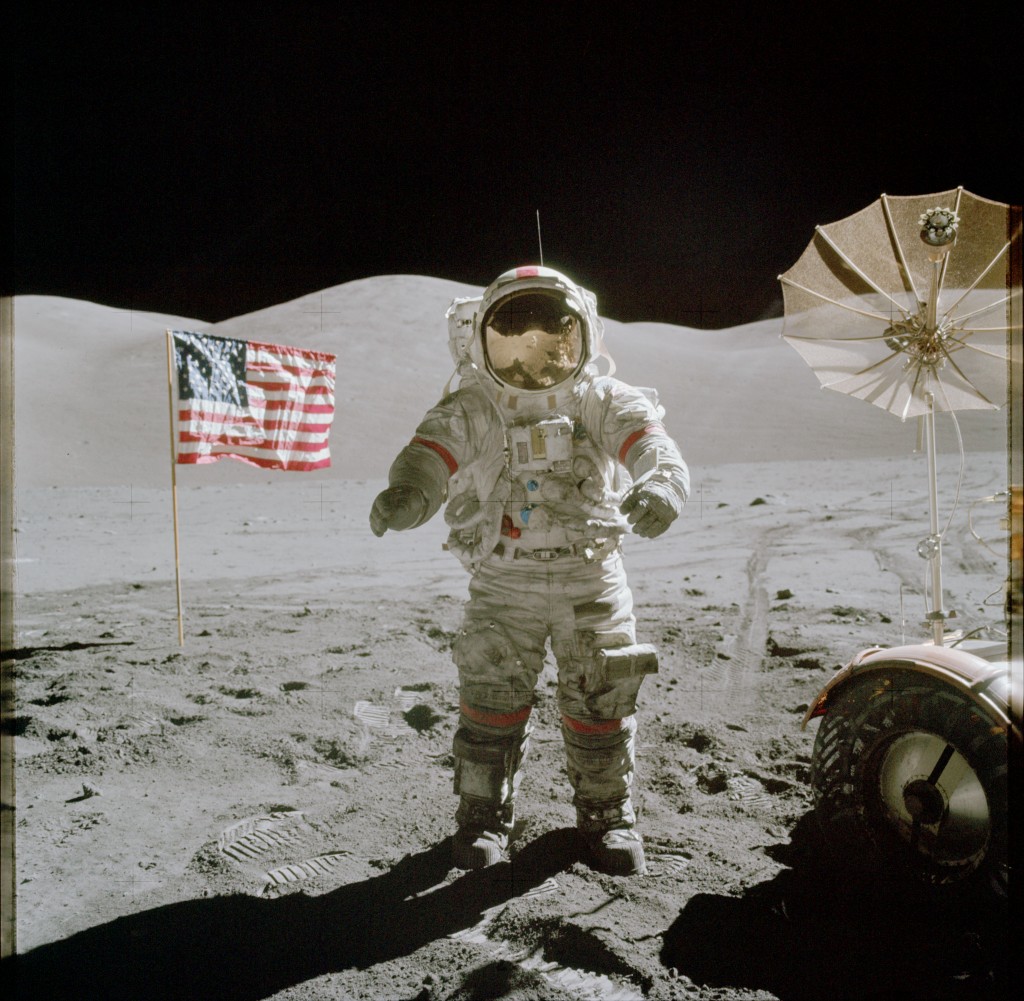
 Photo
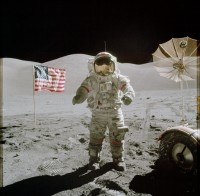
21391 — Raw image, color corrected, strong gamma curves applied. You
will clearly spot the earth in the visor. Photo
21391 — Raw image, color corrected, strong gamma curves applied. You
will clearly spot the earth in the visor.
|
|
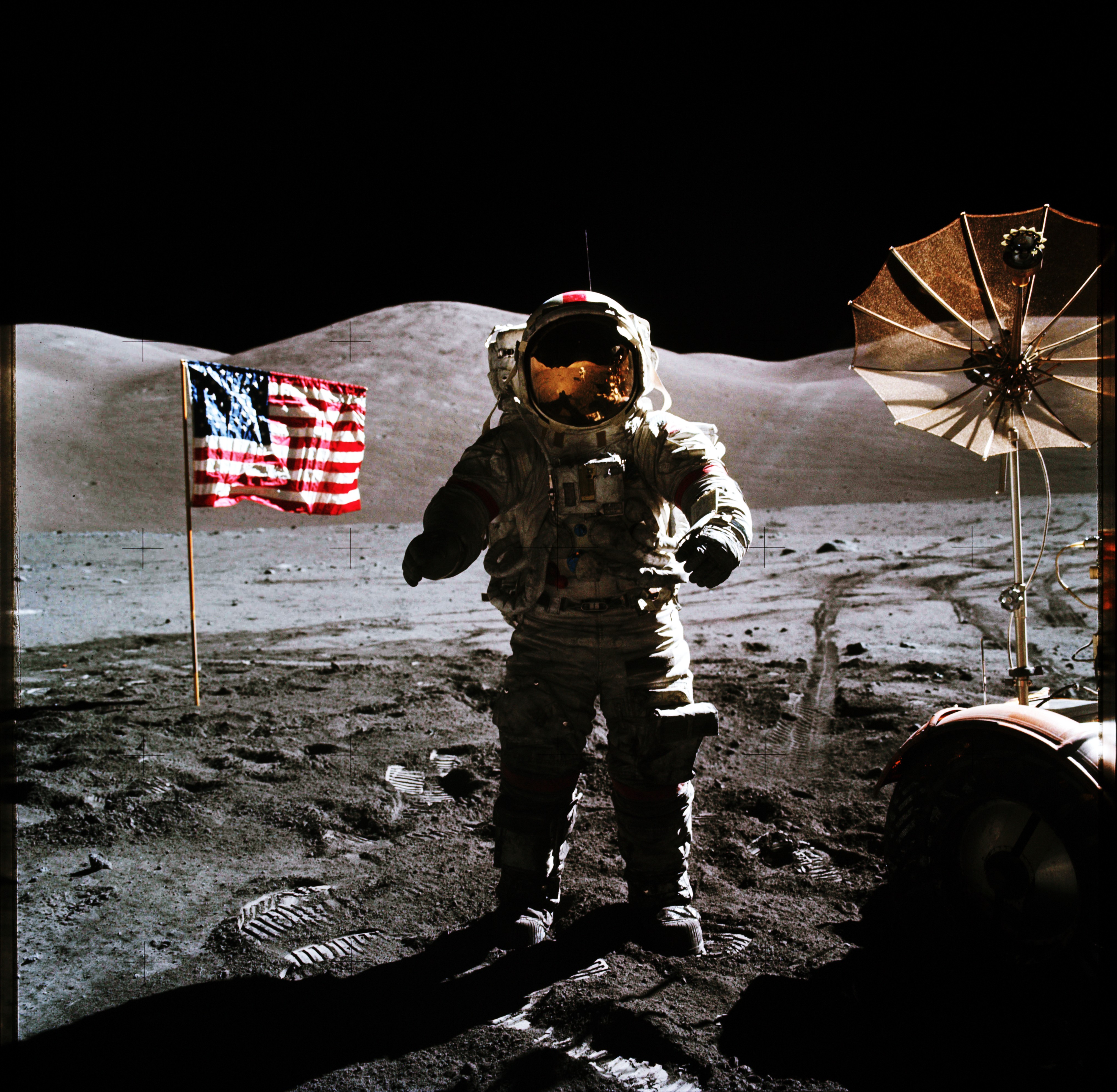
 Photo
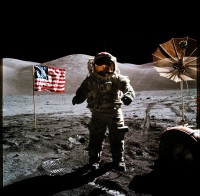
21391 — Raw image, color corrected, but with strongly shaped gamma
curves applied in order to bring out the terrain details as well as the subtle
hues. Look closely to the right of the astronaut. You will see two distinct
ridge lines before the distant mountain range. Also note the horizontal
rippling along the near side of the distant mountain. Photo
21391 — Raw image, color corrected, but with strongly shaped gamma
curves applied in order to bring out the terrain details as well as the subtle
hues. Look closely to the right of the astronaut. You will see two distinct
ridge lines before the distant mountain range. Also note the horizontal
rippling along the near side of the distant mountain.
|
|
|
| Apollo 17 Film Roll
149 Images (AS17-149-*) |
|
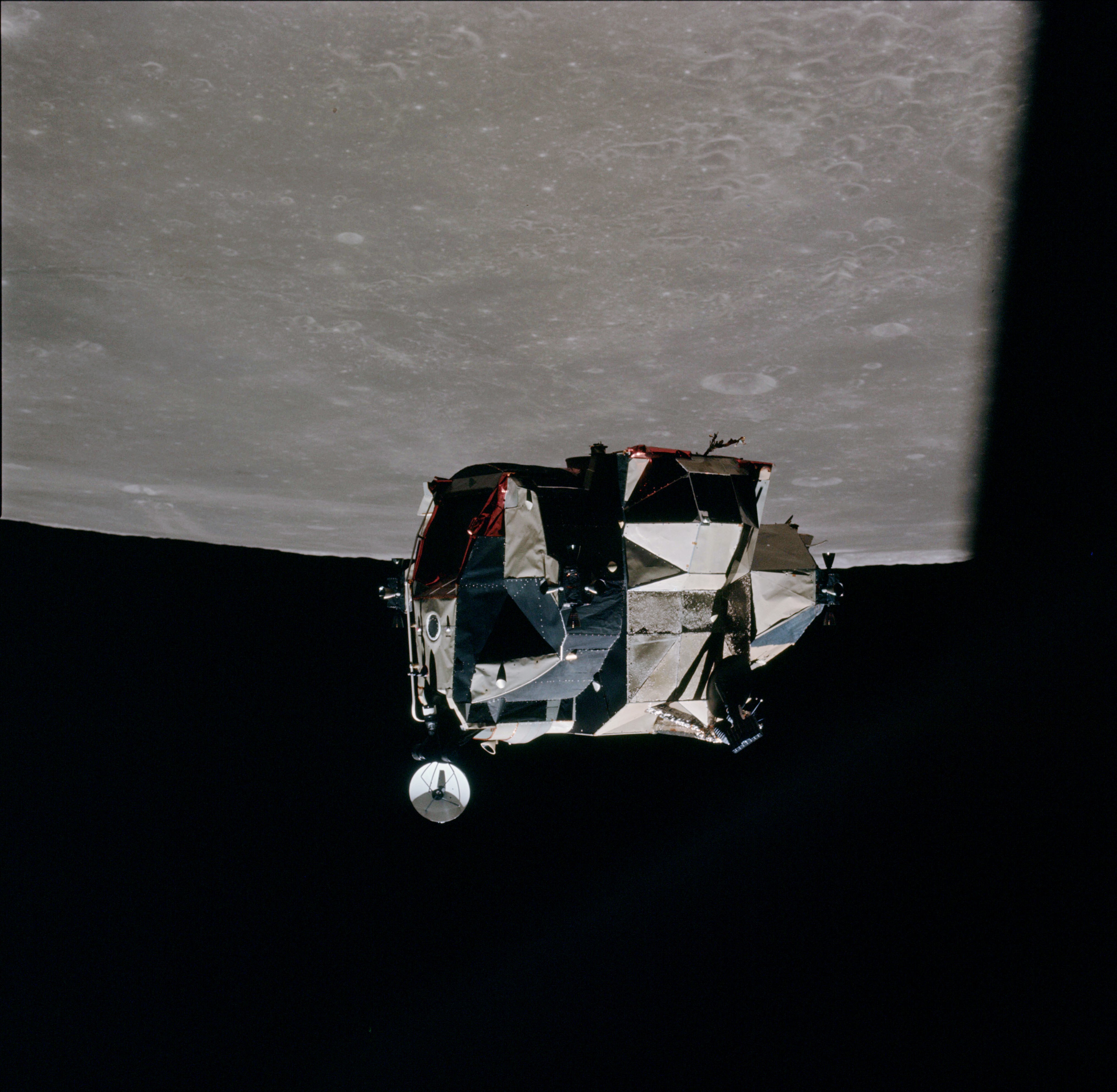
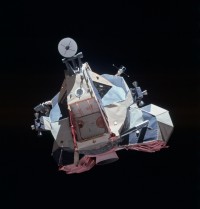 Photo
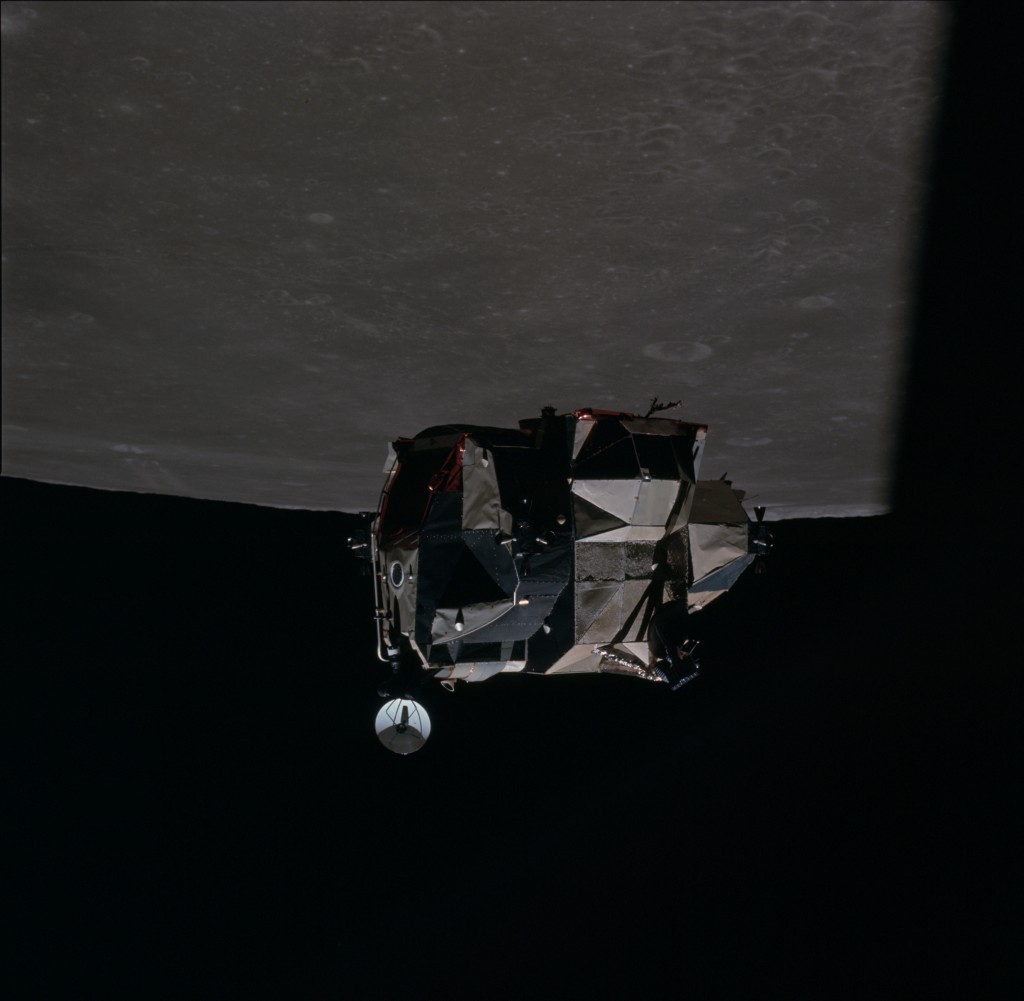
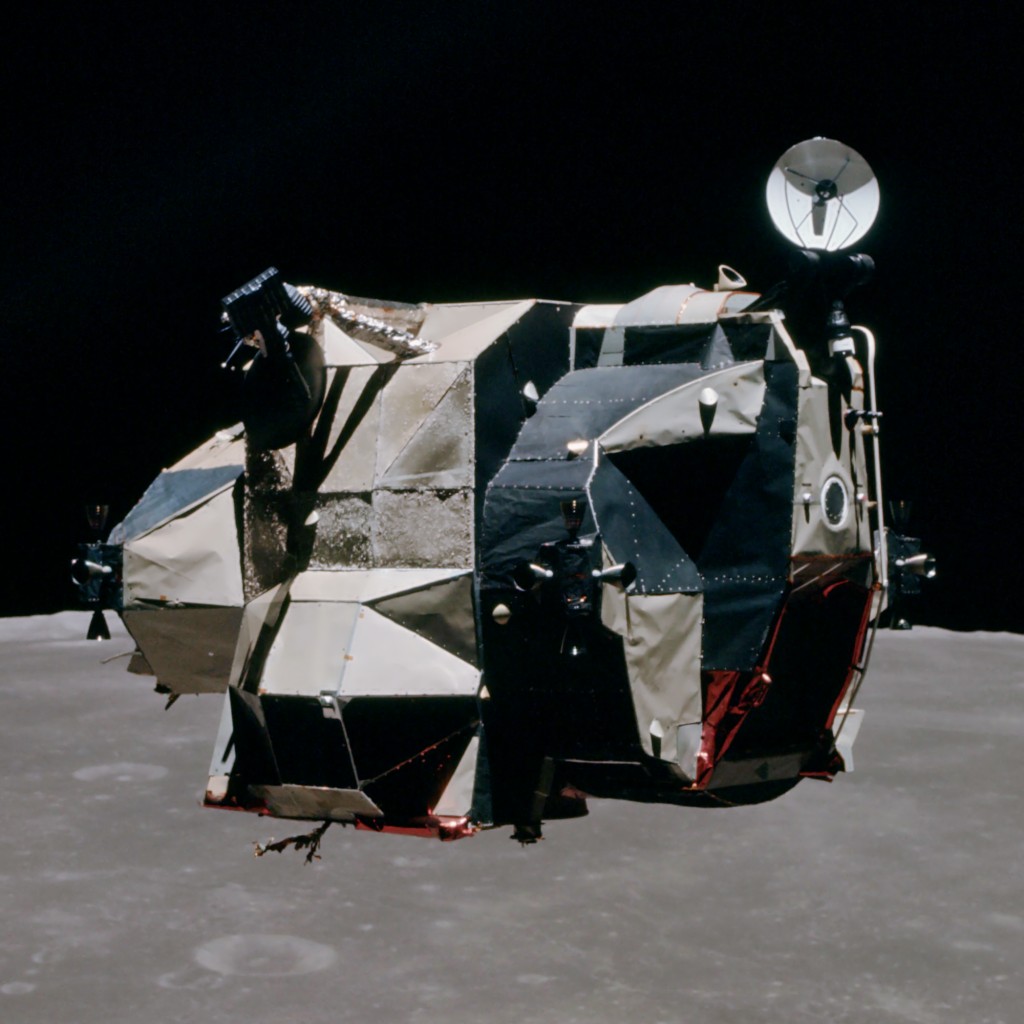
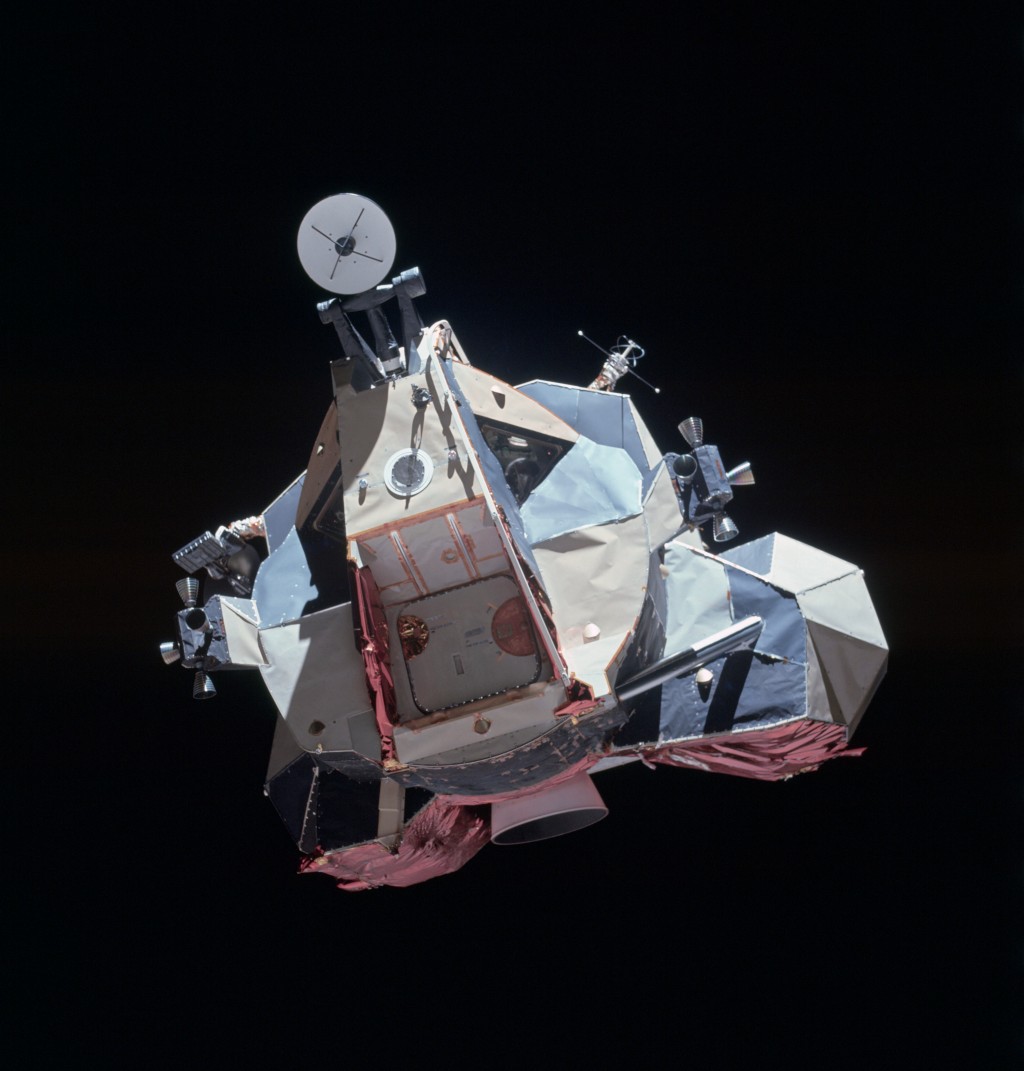
22857 — Color balanced. A really nice view of the the "Challenger" LM
ascent stage. Photo
22857 — Color balanced. A really nice view of the the "Challenger" LM
ascent stage.
|
|
|
| Copyright ©2005-MEM-TEK. All rights reserved. Site contents, services and terms of use
are subject to change without notice. |
|
|